



In a world where people can feel anonymous and disconnected, preserving memory is an act of hope.
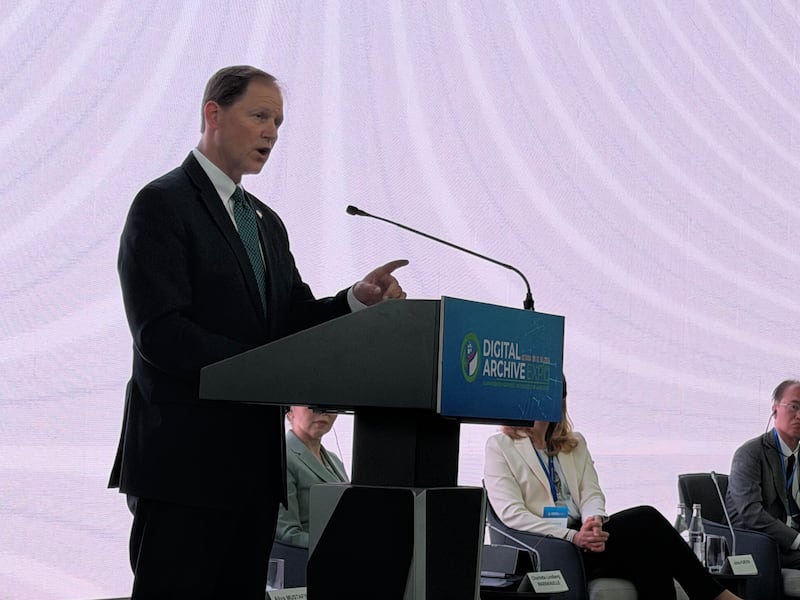
“It says that the past is not dead to us and that the future deserves more than fragments,” said Elder Mark A. Bragg, a General Authority Seventy of The Church of Jesus Christ of Latter-day Saints. Elder Bragg is also the executive director of the Church’s Family History Department and FamilySearch International.
He said records are never merely paper, data or a line in a database. Instead, records are, “in a very real sense, witnesses. They are memory. They are the thin but sacred thread that can tie a child to parents, a people to its past and an entire generation to its inheritance.”
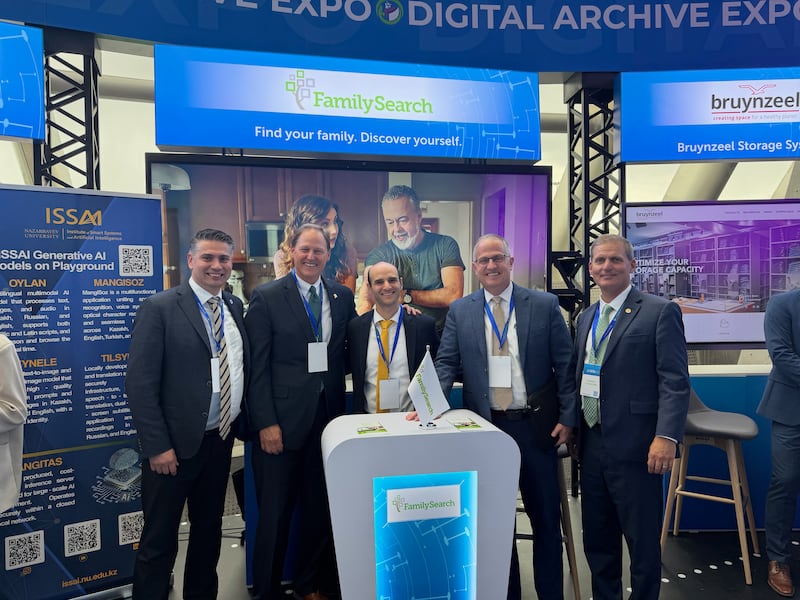
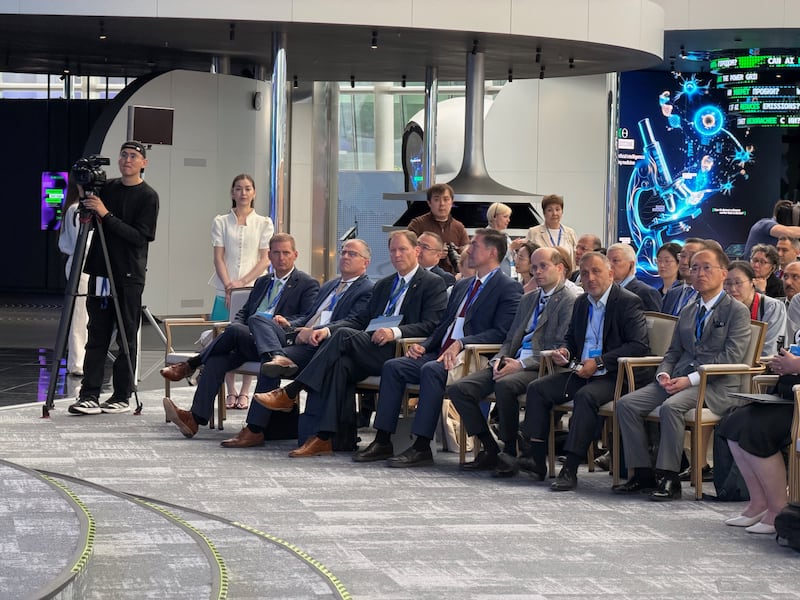
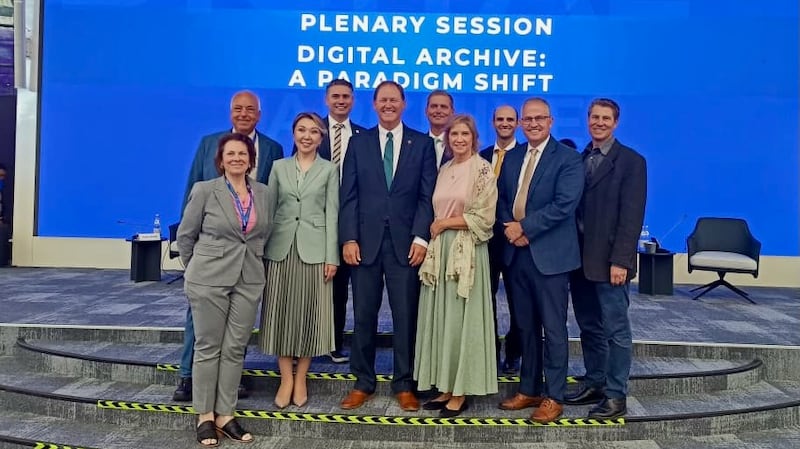
Elder Bragg spoke about the importance of memory and family history on Tuesday, June 9, at the III Congress of Archivists: Digital Archive Expo (DA-EXPO) held June 8-12 in Astana, Kazakhstan. The event was also reported in a FamilySearch news release.
The event is “an international platform for professional dialogue on the preservation and development of documentary heritage, with a strong focus on digital transformation, innovation and the use of artificial intelligence in archives,” according to the International Council on Archives website.
FamilySearch participated at the Congress as a main sponsor, and Elder Bragg was a keynote speaker.
3 principles for family history
Elder Bragg said the tools available now to genealogists would have seemed miraculous to those who founded FamilySearch’s predecessor, Genealogical Society of Utah, in 1894. For much of history, he said, access to records was shaped by proximity, resources and specialized knowledge, “creating natural distinctions between those who could engage and those who could not.”
But today, a record created in one place can be preserved in another, indexed in a third and discovered by someone on the other side of the world.
“The reach is astonishing. The speed is breathtaking. The possibilities are almost beyond measure,” Elder Bragg said, adding that as digitization efforts place vast collections within reach of anyone with an internet connection, “the playing field is being leveled in unprecedented ways.”
For all the wonder of digital technology, however, the deepest reasons for family history haven’t changed, Elder Bragg said. He outlined three principles for doing family history:
- The purpose of family history is enduring, even as methods change.
- Access is an act of kindness.
- Collaboration has a multiplying effect.
Regarding the first principle, Elder Bragg said genealogists and archivists don’t preserve records simply because they can — they preserve records because human beings matter, as well as their identities, memories, belonging and continuity.
“Long after a file format becomes outdated, long after a platform changes, long after a storage medium is replaced by another, the human need to know ‘Who am I?’, ‘Where do I come from?’ and ‘Where do I belong?’ remains as urgent as ever,” Elder Bragg said.
Regarding the second principle, “access is an act of kindness,” Elder Bragg said records only fulfill their divine and human purpose when they are found, understood and used. Genealogists and archivists aren’t merely safeguarding information — they’re opening doors, connecting families and “making possible the reunion of memory and meaning.”
“In that sense, your work is not only technical. It is profoundly kind,” Elder Bragg said, adding, “It is a kindness that is not always recognized or noticed, making it more profound and pure.”
Regarding the third principle, “collaboration has a multiplying effect,” Elder Bragg said no single archive, institution or nation can preserve the whole of human memory alone. But when communities share expertise, when institutions partner across borders and when record keepers choose cooperation over isolation, “the whole becomes greater than the sum of its parts.”
“Collaboration helps us preserve not only information, but integrity,” Elder Bragg said. “It helps us respect origin, honor cultural context and build trust across communities.”
A people-centered work
Elder Bragg pointed to FamilySearch’s own history as an example of these principles. In particular, he emphasized that technology hasn’t replaced FamilySearch’s original vision, only carried it forward.
“We imagine that new methods require new motives. They do not,” Elder Bragg said. “At their best, new tools should simply help us serve the same purposes more broadly, more faithfully and more generously.”
Ultimately, the role of archivists and records custodians is not only to keep the past from disappearing, he said, but to help the future know where it came from. This matters to families, communities and nations, but it especially matters to the individual search for belonging.
“People are not remembered by data, but they are often found through it,” Elder Bragg said. “They are not healed by indexes, but indexes can lead them to healing. They are not transformed by storage systems, but storage systems can preserve the fragile evidence that makes remembrance possible. …
“In many ways, your work is like preparing a way in the wilderness for memory to travel home.”
