

For members of The Church of Jesus Christ of Latter-day Saints, temple and family history go hand in hand with the Church’s mission of uniting families for eternity. As new temples are announced, built and dedicated around the world, more members than ever have access to do this sacred work for themselves and their ancestors.
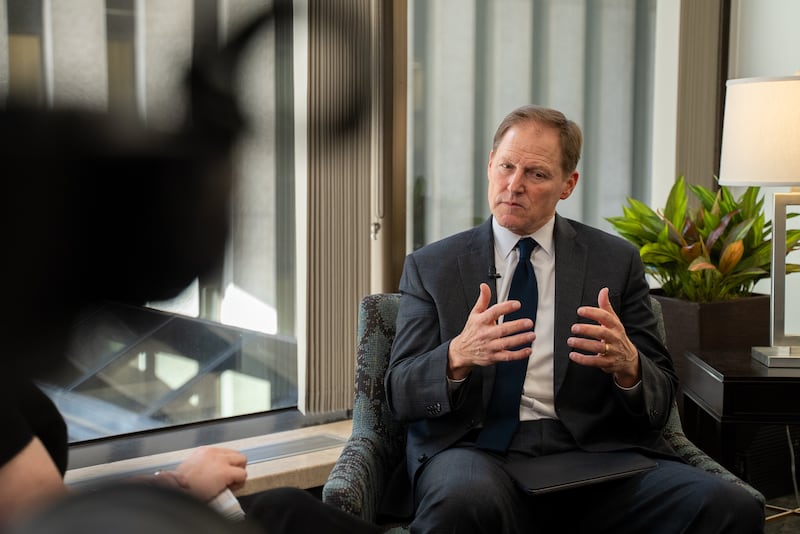
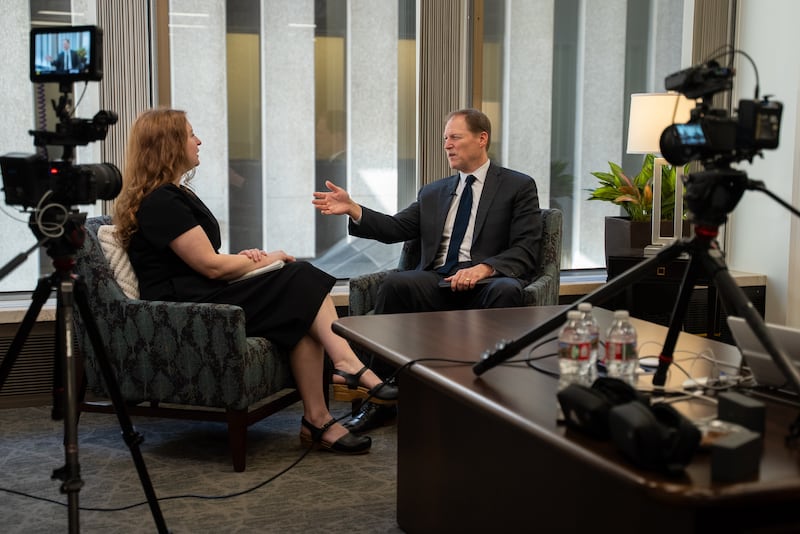
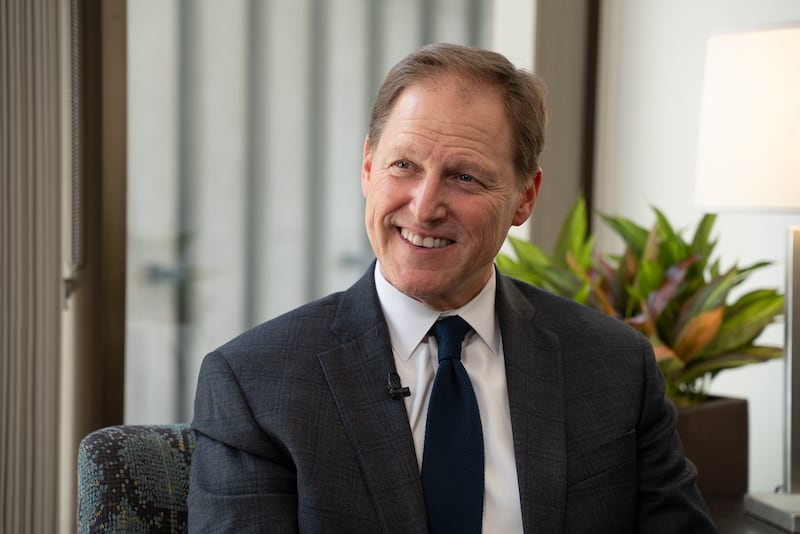
On this episode of the Church News podcast, Elder Mark A. Bragg, a General Authority Seventy and executive director of the Family History Department and FamilySearch International, joins Church News reporter Mary Richards to discuss how tools, resources and growing interest are helping connect families on both sides of the veil.
Elder Bragg reminds listeners that Latter-day Saints are promised greater blessings, understanding and a bolstered testimony of the Lord Jesus Christ and His Atonement as they gather family names to bring to the house of the Lord.
Listen to this episode of the Church News podcast on Apple Podcasts, Amazon, Spotify, bookshelf PLUS, YouTube or wherever you get podcasts.
Transcript:
Elder Mark A. Bragg: You know what I would love to see? As we add what we know, add photos, how great would it be that when you go into the baptistry, not only does the name of the individual that you’re being baptized for, their photo comes up, right? Maybe a little bit of information about them. You know, I think technology is getting to a point where we could probably do something like that. And it’ll just develop even a greater connection with our ancestors or with the individuals for whom we are performing those ordinances.
0:30
Mary Richards: This is Mary Richards, reporter at the Church News. Welcome to the Church News podcast. Today, we are taking you on a journey of connection as we discuss news and events of The Church of Jesus Christ of Latter-day Saints.
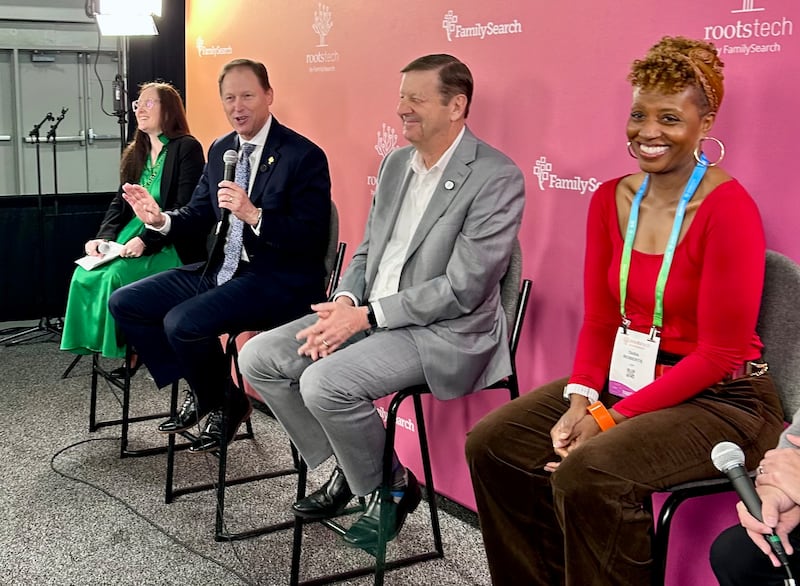
Elder Bragg, when you think about RootsTech being such a global event and really with such glad tidings, I think, is such a way to frame this event.
What do you think about why it is so widely attended and so widely loved?
1:00
Elder Mark A. Bragg: Well, I mean, the simple answer is that it’s a manifestation of the Holy Ghost. Sometimes we call it the spirit of Elijah, but it does touch hearts. I think that in a time where people are able to just isolate themselves with games, with the internet, just in their room, I think they long for a connection. And so here you have this great event that comes along, and they’re able to go on and hear about how they could find out about their families. They can do some fun things like, “Do I have other relatives that are attending this event?”
And so I just think that it’s twofold. It’s the spirit of this great work moving forward, the Holy Ghost touching hearts, prompting people to connect. And then that longing to connect, to belong. When we’re teaching the gospel, we always say, “Well, where did we come from? Why are we here? Where are we going?” Well, that question, “Where do we come from?” it also applies to: Where do we come from globally? Where do we come from in our family? And I think that it is an eternal question that really resonates with people. And I think that’s why it has taken off as much as it has. I think it’s an opportunity for people to connect.
2:31
Mary Richards: Yes. That theme from 2026, “Together,” really encompasses that. And I think about the themes from previous years: “Discover,” “Remember.”
Can you expound on those themes?
Elder Mark A. Bragg: Yeah. I love that we keep it simple. And it’s one term, one word, but it can mean so many things. So “Together” — this year, together — together we find our ancestors. Together, members of the Church can take their ancestors, accompany them to the temple, do the work for them together. They can celebrate together.
I think that is another really, really important part of this message, that you’re not alone. You’re never alone. And I love it. I love it when you have new converts that will say, “Well, I’m the only member of the Church in my family,” and we have this opportunity to say, “You’re probably not. You’ve got ancestors on this side of the veil who have heard about the gospel. Maybe they’ve accepted it. Maybe they’ve had the work done. But you can guarantee this by going in and doing the work for your ancestors.”
So this together, meaning you’re not alone. And together we can find, and I think this is important to think about the records custodians and the archivists. We can’t do this without them. So the message to them is: Together we can work together to preserve these sacred memories.
3:55
Mary Richards: Yes. Tell me more about records historians and archivists. What a role they play.
Elder Mark A. Bragg: I was just traveling through Europe, and we visited numerous archives. And the work that they do, and sometimes in darkrooms down in a basement, the way that they preserve and the way that they so lovingly collect their documents. We work with all kinds of records custodians, archivists, to help them preserve records at risk, to help them preserve digitally vital records. And we do that to help them, but it also helps us as we try to build this tree of humanity, get the records, get the vital information, so that we can continue to build this great tree.
And I think that is the ultimate gift that we could give our Heavenly Father, that we have remembered all of His children, that we have connected all of them. And I think everything that we can do, that’s what’s important.
Can I tell you a story? We were just in an archive in Vienna, a Lutheran archive, and the archivist is really supportive, and so we’re digitizing. And they took me down quite literally to the basement, where these two sisters, volunteers from The Church of Jesus Christ of Latter-day Saints, they were down there in a room half the size of the room we’re in, no windows. And they’re just digitizing eight to ten hours a day for 18 months. And they feel like they’re in heaven.
These two sisters had been going on missions. They met each other, they didn’t really know each other, they met each other about 10 years ago. They said, “Yeah, we ought to go on a family history mission.” So they went down to Australia, loved it. So then they came here to Salt Lake and did another mission. Then they went to the Midwest, did another mission. And then they heard about this opportunity in Vienna. They don’t speak the language. They said, “This would be fantastic.”
So for the last decade, quite literally, almost nonstop, they’ve just been serving a family history mission. And so then we ask the archivist, “How do you like them? They get along? Everything going OK?” And he’s just like: “These are the greatest people I’ve ever met in my life. They are so captured by this work.” And he says, “It inspires me to want to do more.” So, we can’t do this work without them, and we can’t say enough how appreciative we are of all that they do.
The other thing, we get to go to these archives, and we get to see these treasures. I always ask, “What’s your greatest treasure?” And last week, we were in Marburg, Germany, and St. Elizabeth is from Marburg, Germany. And they showed us this decree, I think it was from Pope Gregory, from the 700s, canonizing Elizabeth, and it’s just right there in your hands. It’s incredible the things that are captured in the world today, and we just never want to lose them.
7:16
Mary Richards: And we’re working together on all of that.
Elder Mark A. Bragg: Yeah, exactly.
Mary Richards: You might be inspiring some people to want to serve a mission.
Elder Mark A. Bragg: Well, I hope so. We need them.
Mary Richards: Those who are listening, that’s something to think about, and the work that can be done.
I think, too, about how: I’m not a professional, but what is my part to play in family history, temple and family history?
7:34
Elder Mark A. Bragg: Yeah, so this is the great question. And I want to answer this the right way. The best thing you can do is just go onto FamilySearch and add what you know. Start with the Savior. This is His work. He’ll lead you. He’ll inspire you. This is His, as He says, His work and His glory (see Moses 1:39).
But then you just go and add what you know — photos, documents, just start that — and that will touch your heart. And then if you’ll just go on to Ordinances Ready, all the work that’s being done by members and individuals throughout the world to build this tree, what we’re doing with artificial intelligence to help build the tree, you’ll see, you’ll go onto Ordinances Ready, and you’ll see members of your family, ancestors that need ordinances.
So the one thing I talk about is as glorious as this effort is to find our ancestors — and I love it, and it’s important — the finding does not exalt them. It’s the ordinances performed in the house of the Lord that allow them to progress and to be linked for eternity and to be with us in the celestial kingdom.
So I sometimes fear that we might fall short in our vision where we say, “OK, the finding is everything.” No, the main thing, what we say here in the Family History Department a lot, is the main thing is to keep the main thing the main thing. And the main thing is helping our ancestors receive the ordinances necessary to make the covenants that are required and to live a life that will allow them and to learn the things that they need to do and understand to be able to live in the presence of our Heavenly Father.

9:29
Mary Richards: This is why so many temples, so many houses of the Lord are being built closer to the people for their own saving ordinances, but for those on the other side of the veil, gathering Israel on both sides of the veil.
Elder Mark A. Bragg: Yeah. And that is the glory that we’re experiencing right now. We’re entering into this new, really incredible phase. So, what does the Lord know that we don’t know? He inspired President Monson and President Nelson in particular and is inspiring President Oaks to announce temples and build temples and dedicate temples.
But if we just continue to do things as we did in the past, we’d never be able to have enough names to take to the temple. But in His wisdom, He allows for the discovery of artificial intelligence and other scientific advances with DNA and other things that someday will play a big part in all of this.
But I just marvel at the timing. He inspires His prophets to really accelerate the building of temples worldwide, getting them close to the people. And knowing that we would have to be able to catch up to that, keep up with that, and even get ahead of that, He allows for the creation of artificial intelligence and other advances that will allow us to create this great tree, to stitch together this disparate information into trees.
We can buy a book that has just a dense book of family history information in a farmland in Germany — it’s literally what we’ve done — and we can scan it, upload it. And there’s programs now that can scrape that information and populate a tree that we can then put into the FamilySearch tree, which we couldn’t even imagine doing five years ago, but we need it now. And so that’s what we’re doing.
11:37
Mary Richards: I love that. And I want to go back to what you said, because it was at RootsTech in 2025, we heard Elder Neil L. Andersen and President Jeffrey R. Holland talking about adding what you know. And that really stuck with me.
And the Ordinances Ready, whenever my boys — I have three young men at my house and a returned missionary at BYU — and whenever we go to the temple, it’s immediately: “What names? Who is this?” and “I want to learn more about them, this name of somebody that I’m taking to the temple that came from FamilySearch.” And it just connects us so much. And you think about who came before.
Tell me more about this idea of getting the youth involved. How do we make it more — I mean, I’m trying with my boys. What other ways can we help get the youth more involved?
12:22
Elder Mark A. Bragg: Well, before I answer that — and I’ll come back to that, OK? This add, which you know is so important, and I’ve been a beneficiary of this. I had some information. I added it to my family tree on one of my ancestors. I put down the information that this ancestor literally told me — well, his son told me — this is where he was born, this is where he died. And I put that information in. I hadn’t found it, but I put it in.
And because we have other people that can look at your tree and add to your tree and can help you out, this one individual did the research, found birth records and death records, and I was wrong. So this family tradition that we had always heard, “Here’s where he was born, and here’s where —” it was incorrect. And so you add what you know, and then others will be inspired to help you out in your journey. So I love that.
Now, with the youth. We talked about Ordinances Ready. I think that’s a really important thing for the youth. I think the ability of a young woman to, as she’s walking up the stairs to the temple, she can go onto Ordinances Ready, find all of her ancestors that need the baptism and go in and do those baptisms for her ancestors. So I think there’s an immediate connection.
Back in 2011, Elder [David A.] Bednar spoke about the blessings of family history, particularly for the rising generation. And he talked about how it would increase their testimony, it would protect them against the challenges of this world, it would help them in every aspect of their life, spiritually and temporally. So it’s important that we get them involved.
And I think we talk about the weekly coordination meetings in the wards for missionary work and for temple and family history. And so in those coordinating meetings, they’re supposed to have the youth, the young men and young women, in both of those, to help them help their peers get involved in the work of salvation and exaltation on both sides of the veil.
So I just think that we try to make it interesting. I mean, there are some fun things you can do on FamilySearch. And there’s a balance there. We want to have people go and enjoy their time on FamilySearch. And so you can find your connection to famous people, or you can upload your photo and it searches all the photos in your family tree to see who you look like.
Mary Richards: I love that.
Elder Mark A. Bragg: You like that?
Mary Richards: And I looked like my grandma, and I was so happy.
Elder Mark A. Bragg: Oh, how great is that?
Mary Richards: I loved her.
15:10
Elder Mark A. Bragg: Oh, well, you’re lucky. Mine wasn’t as flattering as that. So, we do some things like that to make it interesting. But again — and I learned this from President Eyring — let’s not take our focus off the really important part of this. And the really important part of this — the fun things are great, and maybe it’ll bring you in — but the important thing is developing, is having our hearts turned, having our hearts turned to our ancestors.
And I’ll tell you this: I guarantee you, I guarantee you, their hearts are already turned to us. They’re thinking about us. They’re praying for us. You think of an individual, and you’ve heard this a lot, our good friend Paul, who’s in the room, he’s a convert to the Church. Only one in his family. And you see this all through the world. Only one in their family. Well, I am convinced that it’s ancestors on the other side of the veil praying for the missionaries or for the members to talk to someone that they know has an open heart and they’ll accept the gospel so that they will do their work in the temple.
We’re in an unprecedented time of baptisms, convert baptisms. But every mission president, every missionary can set a baptismal date. You can do it, and you can be pretty much guaranteed you can go use the font anytime. You set it anytime, any date, and you’ll get it done. Those on the other side of the veil are waiting for us. They cannot set their own baptismal date. We have to do that for them.
This is why I know their hearts are turned to us. We don’t have to worry about that. We just need to make sure our hearts are turned to them and find them and love them and accompany them to the house of the Lord.
Mary Richards: Yes. My son, on his mission in Bolivia, I think when he would speak to people about our Church and the gospel and covenants and sealings, that really, really spoke to their hearts. Don’t you think there’s just something, like you said, it’s the Spirit touching them? “This is truth, and I want to be a part of this.”
17:15
Elder Mark A. Bragg: Yeah. I will never forget: It was either the first or second general authority — or not general authority, excuse me — leadership meeting around general conference that he had as Prophet of the Church, President of the Church. And he made a comment, something like, “The ultimate reason, the real reason, why anyone would want to join The Church of Jesus Christ of Latter-day Saints is to be sealed to their family forever, for eternity.” And that hit me. That’s the real reason.
And we talk about other things, but in the voice of a Prophet, the real reason, if we explained it properly, the main reason why anyone would want to join the Church would be so that they could be sealed to their family for eternity. And that’s powerful.
So, of course, if that’s the highest desire of the Prophet, you know it’s the highest desire of the Savior and our Heavenly Father. So, when you speak that truth, like you just said, when you speak that truth, it resonates. It is impactful. And it changes lives.
18:23
Mary Richards: Yeah. This is so beautiful because I think about how everything you’ve been talking about, but I’ll ask it to you, I guess, formally.
How does everything ultimately tie to the Savior and making covenants with Him and with Heavenly Father?
18:38
Elder Mark A. Bragg: Well, it all ultimately ties there because everything we do directs people to the house of the Lord, to the temple. So everything that we do. In President Oaks’ last conference talk, it starts by saying the purpose of the Church is to exalt families. And the prophets always point us to the temple. We have to realize what that means, that everything that we do should lead us to gathering of Israel on both sides of the veil. And that’s always going to lead you to the temple.
So, what I learned — you and I had a couple of opportunities to work together — and as president of the North America West Area, I had this beautiful opportunity for four years to work with Elder Bednar. And Elder Bednar, I remember I was going to do the media day at the Feather River [California] Temple. And so I had an assignment with him the weekend before, and then this was on Tuesday, the following Tuesday. So I was just going to stay up in the Bay Area and do this in Yuba City.
And I asked him, “What should I say? Give me some counsel.” And he said, “The best thing you can do is that when you’re giving your remarks, you refer to the temple as often as you can as the house of the Lord.” And I thought, “That’s not helpful at all.” I just didn’t think that was great advice. But I was obedient, and so I went, and in my comments, I think I went seven for 11. I think seven times I said “house of the Lord,” and a couple of times I said “temple.”
But it’s true. His point is when you say “house of the Lord,” you start to think about what happens in the temple. When you say “temple,” you think of the structure, and it’s a beautiful structure, but “house of the Lord” forces you to think about what goes on inside.
And the great thing there was as I mentioned that, the next speaker was a city councilman, not a member of the Church. He referred to it almost exclusively as the house of the Lord. And then the mayor, who was not a member of our faith, did the same thing. And even the Sacramento Bee referred to it as house of the Lord. So there is power in doing that. So I had to go back and say, “Listen, I doubted you. I apologize. It was great advice.”
Mary Richards: You repented.
Elder Mark A. Bragg: Yeah, I repented very, very quickly.
21:15
Mary Richards: We were in Maui together after the fires there, and you spoke to the youth. And I remember you said that to them as well. This was before a house of the Lord was announced for Maui, but they wanted one. I remember that they — I think everybody wants one — but that I remember you telling them, “Refer to it as the house of the Lord,” and then that’s where your mindset goes, like you explained.
Elder Mark A. Bragg: That’s right.
Mary Richards: And now they’re getting one in Maui.
21:40
Elder Mark A. Bragg: They are. And they’re so excited about it. But that’s how we tie everything that we do. So, in the Family History Department, you can start to focus on a lot of different metrics — associated with FamilySearch and what’s going on in family history — but if we focus on, again, keeping the main thing the main thing, if we focus on Ordinances Ready names, if we focus on taking our ancestors, accompanying them — I like to use the word “accompany” them to the temple — to help them receive the ordinances that they need for exaltation, then it’s always naturally going to turn to the Lord, because that’s the focus.
22:21
Mary Richards: Yes. And turning our hearts to our ancestors. And I think, too, I tend to like to look for studies. I don’t know, I feel like it kind of helps justify my thoughts. And I’ll see studies that are done saying how much family history and knowing about where you came from helps your own sense of identity. And maybe that’s a secular study, but it’s all scriptural. It’s all doctrinal, this idea that when we know where we’re coming from and we’ve connected to our past. And now, like you said, we accompany them to the house of the Lord, there’s a strength in that that we’re getting from each other.
22:56
Elder Mark A. Bragg: I love that, because I think there are times where we say, “Oh, gosh, that study, that’s doctrinal.” It shouldn’t surprise us, because the doctrine is pure. The doctrine is truth. It’s eternal. So we should never be surprised when a study supports what we believed all along. But I do the same thing.
But the interesting thing about — there’s a study, Emory University, and the impact of family history on the rising generation, the youth. And what they determined was it does. It does give you this sense of belonging. It strengthens them. But there’s another nuance to it. It’s learning about the ups and downs of our ancestors, the challenges, the resiliency of our ancestors that allows us to say, “OK, I can do this. I can get through this.”
Going back to another experience, one of the archives we visited was in Warsaw, Poland. And we asked that question again: “So, tell me, what’s one of the treasures in this archive?” And you know what she brought out? She brought out the maps that were drawn up after the city of Warsaw was just absolutely decimated; 80% of the city was destroyed. Hundreds of thousands of people killed towards the end of the war. And her treasure was this was the map that was drawn up to say, “Here’s how we’re going to rebuild the city.”
And she talked about her ancestors that lived through that and some who died in that. And you could just see the strength that she got from that. And all of the people in that part of the world, that they said, “We can get through this. Whatever’s in our way right now in 2026, we can get through this because we have this in our DNA. We got through something much, much worse.” And I think that’s the key, is not only knowing the names but knowing the people. I think that’s key to this.
25:05
Mary Richards: Oh, I love that. And as well, as we join as more and more — my dad was a convert but I feel connected also to the broader Church as well, not just the pioneers who crossed the plains, but pioneers in every land who are learning from that resilience. They’re resilient themselves.
What advice do you have for those — and we’ve talked about this a little bit already — who are new to the Church, and they think, “Well, other people, they know how to do this.” Does it go back to adding what you know?
25:32
Elder Mark A. Bragg: Yeah. Well, I think it’s two things. It absolutely is add what you know. Now, in the very first week, they can have their interview with the bishop and get their temple recommend, and the bishop at the same time can go on to Family Name Assist, which is on the system, or any member of the ward council can go on and help them get their FamilySearch account and put information in about their ancestors and literally go and do the work right away. So I think that’s part of it.
But I think we have so many wonderful people, temple and family history consultants throughout the world, that can help with this. And the key is to not complicate it. The gospel of Jesus Christ is simple. It’s faith, it’s repentance, it’s baptism, it’s gift of the Holy Ghost, and it’s enduring to the end. And everything else kind of falls in that.
And I think that sometimes our love of family history research sometimes makes us complicated. It shouldn’t be that complicated. Just add what you know. And then, I think there’s a great deal of humility when we allow others to help us. So then, allow others. You don’t have to have the responsibility to do all of this research. We have experts that can help you.
So, what we’re seeing in Europe, for example, they’ll get a new convert — and I just presented this to the Quorum of the Twelve — there was a new convert in Aberdeen, Scotland, and he got baptized. And within a really short period of time, the temple and family history consultant met with him, got as much information as he could; wasn’t a lot, enough. And then the consultant went away for about two weeks and then came back with this tree of over a hundred names and then said, “Here, Paul” — that’s his name — “Paul, you just go and do this glorious temple work for your family, for your ancestors. Don’t worry about finding it and researching it. This is our gift to you. So you only have to focus on that.”
And I think we can do more of that, help our new converts, help people. And then they’ll get it. They’ll want to get more involved in it. But let’s not bog people down. Certainly, in particular at the beginning, I think we can help them find and, most importantly, take their ancestors, accompany their ancestors, to the house of the Lord.
28:10
Mary Richards: Yes. You’re making me think immediately of the fact that we have people who are called and set apart. There’s a power that comes with being set apart for that calling.
Elder Mark A. Bragg: Absolutely.
Mary Richards: Yes. And then they can be a part of that with you. And like you said, I think there’s probably a study somewhere that our new converts, if they are in the house of the Lord often, that’s just a beautiful thing for them and their testimonies.
28:33
Elder Mark A. Bragg: Well, it is; for them, for their spirituality and for their sense of connection to the gospel of Jesus Christ and to The Church of Jesus Christ of Latter-day Saints. And so their retention is much, much higher. The sooner we can get them — again, it’s not complicated — get them a calling. If they’re male, get them the priesthood. Get them a temple recommend. And get them into the house of the Lord, doing work for their ancestors. Then those roots really start to develop.
29:07
Mary Richards: And same for our longtime members. Don’t just think, “Oh, that’s for somebody else.” Everybody can be doing this.
Elder Mark A. Bragg: That’s right.
Mary Richards: And those ancestors, like you said, are maybe paving the way, opening, softening some hearts, getting it ready.
29:19
Elder Mark A. Bragg: No doubt. And that’s why we’ve — I know we’ve spoken about it a couple of times, but that’s why Ordinances Ready is so great, because anybody can get on FamilySearch, open up Ordinances Ready, and the algorithm will find someone in your tree. And if there’s not someone in your tree that needs ordinances done — which could happen, but it doesn’t happen very often — then it’ll look at those in your ward who have ancestors, and they’ve submitted these names to the temple that can be done by other people, and they’ll search your ward. And then if that’s not available, then they’ll search your stake.
But certainly in the United States — and it’s growing throughout the world, of course — but certainly in the United States, you’re about 100% hit rate. You’re going to find someone to take, to accompany, to the temple.
Mary Richards: I love doing that. I’ve said to people I love doing that with my boys, baptisms. And it’s just so neat to talk to them about this ancestor, and now they’re going to go, yeah.
30:14
Elder Mark A. Bragg: Listen, I don’t know — you know what I would love to see is as we add what we know, add photos, how great would it be that when you go into the baptistry, not only does the name of the individual that you’re being baptized for, their photo comes up, maybe a little bit of information about them. I think technology is getting to a point where we could probably do something like that. And it’ll just develop even a greater connection with our ancestors or with the individuals for whom we are performing those ordinances.
30:48
Mary Richards: Yes. What do you wish more Church members knew and understood about temple and family history?
Elder Mark A. Bragg: I’ve had this impression since I was so blessed to receive this assignment just last August. I wish people would understand that the Lord is pleased with them, that they’re doing — I might even get emotional about this — that they’re doing great things. And listen, there’s always more we can do. So just add what you know, but I know the Lord would say, “Well done, thou good and faithful servant. Keep doing those great things.” And as you get involved in it and feel that Spirit, it’ll take off, and it’ll be glorious.
But I guess I wish the members would know that they’re really doing great things. And we wouldn’t be where we are without these great members. We’ve spoken about some of them and these temple and family history consultants and these great bishops and stake presidents and Relief Society presidents and elders quorum presidents and youth. Without them, we wouldn’t be where we’re at. So, my prayer would be that they’ll just take a moment and say, “All right, we’re doing OK. We’re doing OK.”
32:05
Mary Richards: Yes. This leads, I think, perfectly to our last question on the Church News podcast, as always, “What do you know now?” And we give our guests the last word, so you’ll have the last word and the opportunity to bear a testimony, if you’d like, about this whole subject we’ve been talking about.
And so I would love to know, Elder Bragg, what do you know now about temple and family history leading us to the Savior, helping us gather Israel and prepare the world for His Second Coming?
32:35
Elder Mark A. Bragg: Yeah, a couple things come to mind. One is — and it came to me, I won’t take the time to look it up, but if you look up Elder [Quentin L.] Cook’s talk from a couple of years ago, “Roots and Branches,” he spoke about Heber C. Kimball’s wife, Vilate, who spoke about hearing for the first time from Joseph Smith about this great work of salvation, exaltation and doing proxy baptisms. And she thought, “This is incredible. I want to do this for my mother.” And she wrote Heber C. Kimball the excitement that she felt.
And I hope we feel that excitement, because I think sometimes we feel guilt. We feel, “Oh, I’m not doing enough. I’ve got to do this. I’ve got to get my family history work done.” And even just saying it, it’s just there’s a burden. And I have loved going back and reading the words of the early Saints as they heard about this work.
And the scriptures, section 124 talks about this was — and section 128 — this work, this effort for our ancestors, was put in place before the foundation of this world. So it was from the very beginning. This wasn’t something that we had to think of, “Oh, what do we do for those that didn’t hear about Jesus Christ?” No, no, no, this was from the very beginning. And so the early Saints, they received it with joy and were like, “This is the greatest thing I’ve ever heard.” And I hope we can be there, because that’s where we need to be. It is joyous.
I’m also — and we started off talking this way — I am amazed at how the Lord leads us. We talked about RootsTech. RootsTech is we’ll probably have 10 million people participating worldwide. And I thought about it. The reason why the internet — well, the reason we can do this is because we have the internet. And the reason we have the internet is to move the work of salvation and exaltation forward. It gets used for a lot of different things, good and bad. But when you break it down, the Lord allowed for the invention of the internet so that we could disseminate the good news more readily, more easily and more broadly.
And so, I have just been amazed, and even in these short number of months, how we’ve reached a crossroads and the Lord’s already there saying, “Here’s the right individual that you need to speak to. Here’s the right technology. Here’s the right company.” And it all just comes together, and then we lurch forward. And so those are the things that I’ve really learned.
And then I can’t emphasize enough the doctrinal nature of the gospel of Jesus Christ is that it’s about individuals. I mean, it’s about families being exalted, but the Lord ministers one by one. And the reason this great work touches us so deeply is because we can help the one. We can literally help the one. And so all of these things have been kind of brewing in my soul as I’ve studied this. And I do; I think the one thing that we have to remember is that as beautiful as this work is, as beautiful as it is to find our ancestors, the glory is in accompanying them to the house of the Lord.
And I guess that would be my testimony, that this is the work and the glory of a loving Heavenly Father and His Son, Jesus Christ. And They just — we talked about archivists who try to capture all the records and not lose anyone. The greatest at not losing anyone is our Heavenly Father and His Son, Jesus Christ. And family history, temple, that is a manifestation of their love for us, that they will never forget the one. And I just bear witness that this is a glorious work. It is the reason why people are starting businesses and reaching out to RootsTech and doing other things, is because the Lord is touching their hearts.
And why? Because He never forgets His children. And so that would be my testimony. I would share with you personally and with anyone else who is listening, in the name of Jesus Christ, amen.
37:46
Mary Richards: Thank you for listening to the Church News podcast. I’m Church News reporter Mary Richards. I hope you learned something today about The Church of Jesus Christ of Latter-day Saints and had your faith in the Savior increase by looking through the Church News window as a living record of the Restoration. Please subscribe, rate and review this podcast so it can be accessible to more people. And if you enjoyed the messages we shared today, please share the podcast with others. Thanks to our guests; to my producer, KellieAnn Halvorsen; and to others who make this podcast possible. Join us every week for a new episode. Find us on your favorite podcasting channels or with other news and updates about the Church on TheChurchNews.com or on the Church News app.