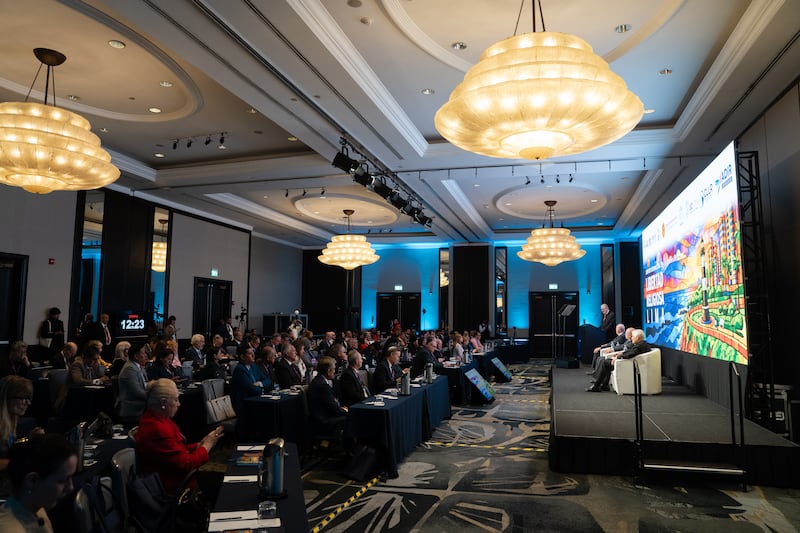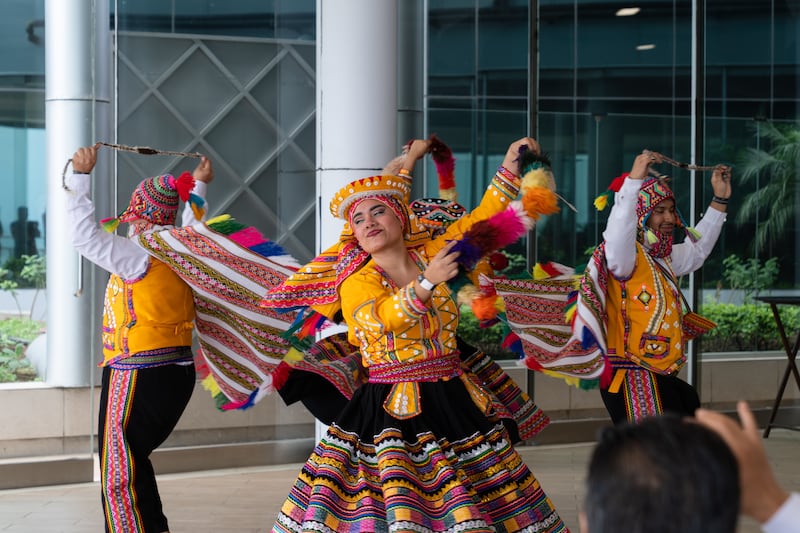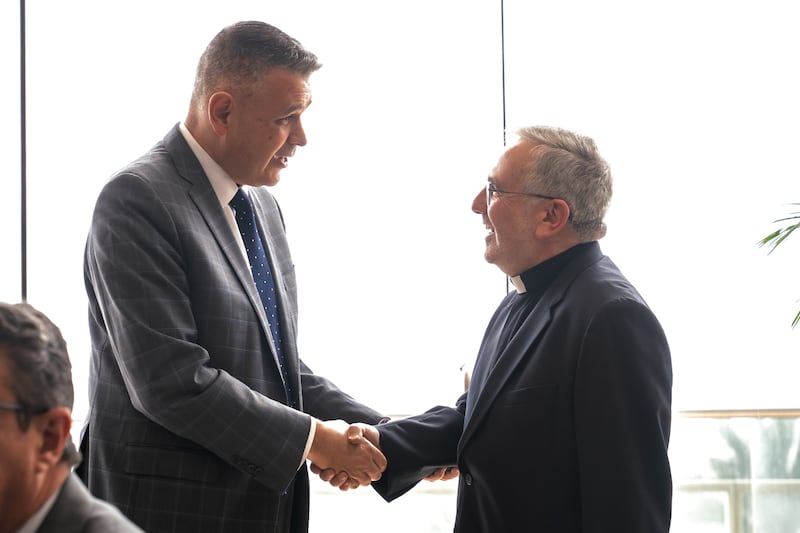

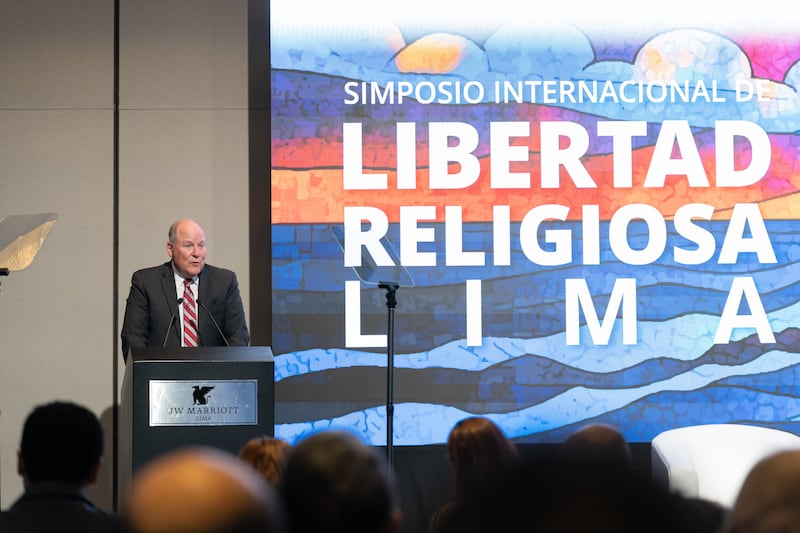
Religious leaders, legal scholars, academics and other experts from nine countries gathered in Lima, Peru, for that South American nation’s first International Symposium on Religious Freedom, held Aug. 4-5. While there, they explored ways of building bridges that strengthen and promote freedom of religion and belief.
Building bridges of friendship and understanding to strengthen and promote religious freedom is of the utmost importance in today’s world, said Elder Juan Pablo Villar, a General Authority Seventy, president of the Church’s South America Northwest Area and one of the event’s featured speakers.
“Religious freedom is a fundamental human right,” Elder Villar said in his Aug. 4 address. “It is one of the essential foundations for building just, compassionate and peaceful societies, and it affects the lives of everyone, regardless of their faith — or whether they have any faith at all. Religious freedom belongs to everyone.”
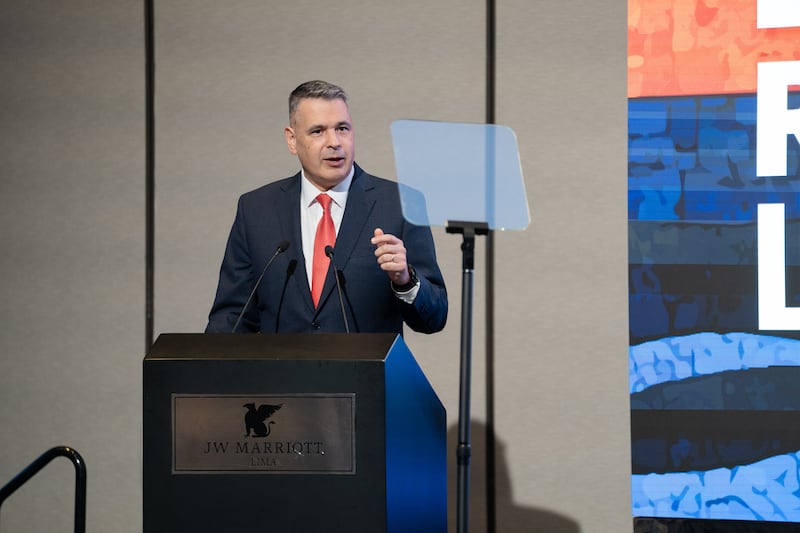
The two-day event was organized and sponsored by BYU’s International Center for Law and Religion Studies and The Church of Jesus Christ of Latter-day Saints, with the support of various academic and interfaith organizations in Latin America.
‘A historic milestone’
In an email to Church News, Elder Villar called the symposium “a historic milestone,” noting it was the first religious freedom event to gather participants from most of South America’s countries.
“This is a crucial chance to emphasize the value of collaboration among religious groups to foster understanding in an increasingly divided world,” he wrote. “We can serve as models by supporting the right to believe and practice our faith both privately and publicly.”
Attendees from nine countries across the Americas — Argentina, Bolivia, Brazil, Chile, Colombia, Ecuador, Paraguay, Peru and the United States — shared experiences and considered ways to strengthen freedom of religion and belief.
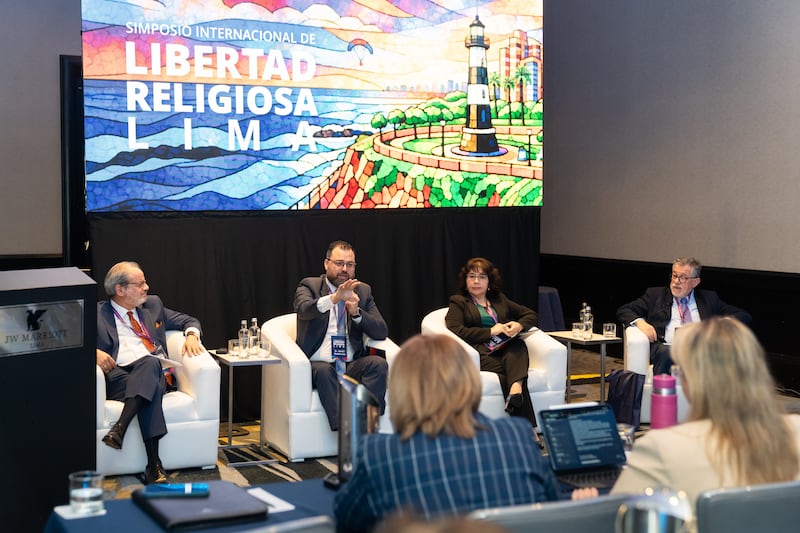
Discussions examined the relationship between governments and faith communities, religious autonomy, interfaith cooperation and the protection of fundamental rights. Participants analyzed methods to prevent discrimination, build more inclusive societies and foster peace through institutional dialogue and collaboration.
Attendees also focused on the ethical challenges that artificial intelligence poses to freedom of conscience, human dignity and the exercise of fundamental freedoms, according to the Church’s Peru Newsroom.
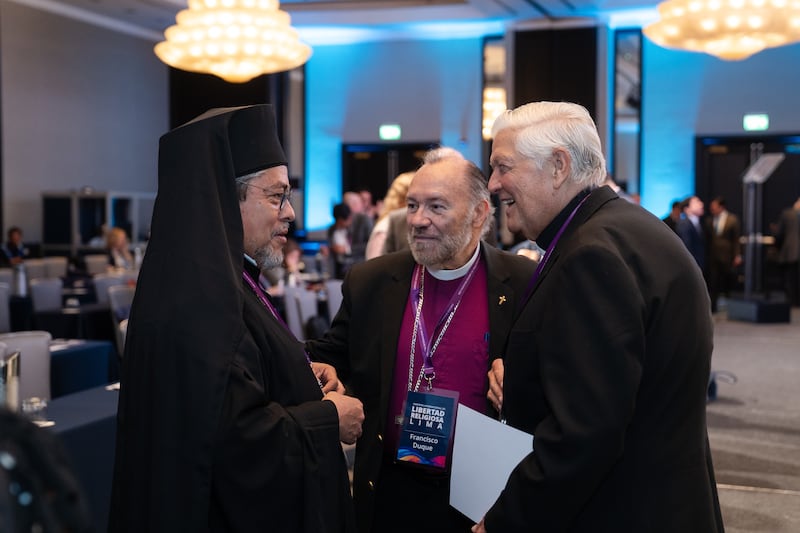
Elder Villar’s address
In his keynote address, Elder Villar cited the 11th Article of Faith, which affirms the right of all people to worship God as they see fit — and the responsibility to extend the same courtesy to others, regardless of how or what they choose to worship.
Elder Villar noted that Church President Dallin H. Oaks has repeatedly taught about the importance of religious freedom and called for “solidarity, civility, mutual respect and a public square open to all voices of goodwill.”
Religious freedom is a defining part of early Church history, he said, describing how members were driven from homes, imprisoned, persecuted and stripped of property as they moved from place to place before settling in Utah.
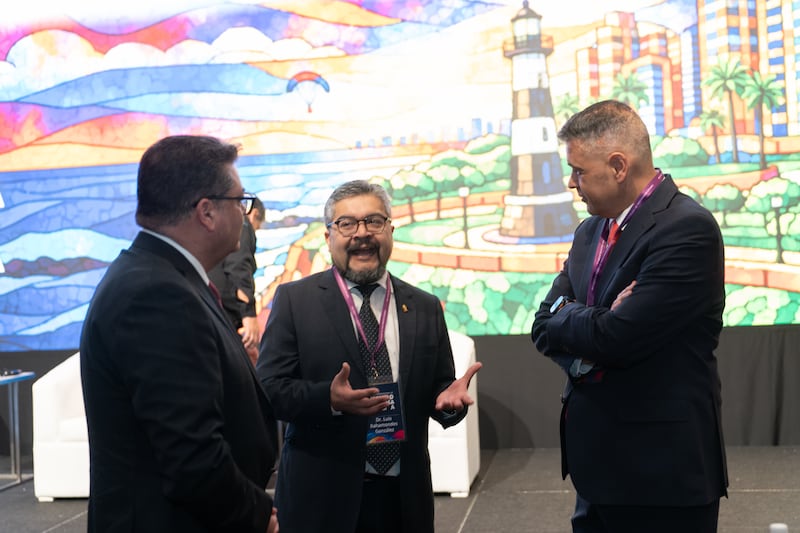
Elder Villar said more than 80% of the world’s population lives in countries with restrictions on religious liberty. He hopes more people will see defending and promoting religious freedom as a shared responsibility.
Religious freedom, he said, encourages the free exchange of ideas, protects freedom of conscience and validates differing viewpoints.
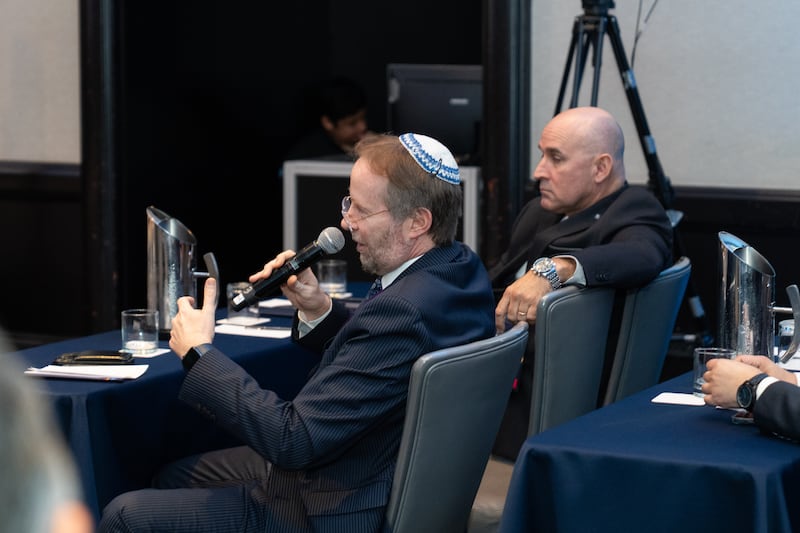
“What must be clearly understood — and is too often overlooked — is that where religious freedom is protected by law and valued by citizens, society enjoys greater peace and security,” he said.
Elder Villar concluded: “Religious freedom is a key mechanism for ensuring that religion can contribute its greatest possible benefit to society. It also enables us to live together peacefully in a world filled with diverse opinions, which is essential for democracy to flourish.”
Looking ahead
Gary B. Doxey, associate director of BYU’s International Center for Law and Religion Studies, said the symposium offered a chance to build relationships, engage in dialogue and learn from one another.
“It is our hope that each of us will leave with a greater understanding, with gratitude for the freedoms we enjoy, and with a renewed commitment to defending and strengthening religious freedom for all people, everywhere,” he said.
Looking ahead, Elder Villar expressed hope that the ideas shared at the symposium will inspire lasting change.
“I hope all participants leave this event committed to defending religious freedom, especially as it faces growing attacks and criticism,” he wrote to Church News. “The most effective way to support this is by setting an example — living in a society that respects diverse beliefs and perspectives.”