




Fifty years ago, on Saturday, July 3, 1976, Latter-day Saints in the Upper Snake River Valley in Southeast Idaho gathered for a rodeo in celebration of the nation’s 200th birthday.
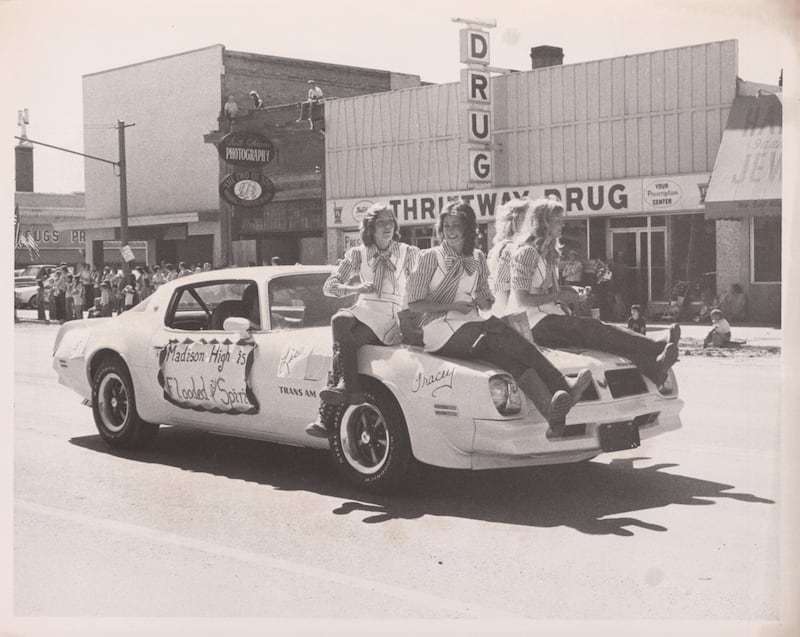
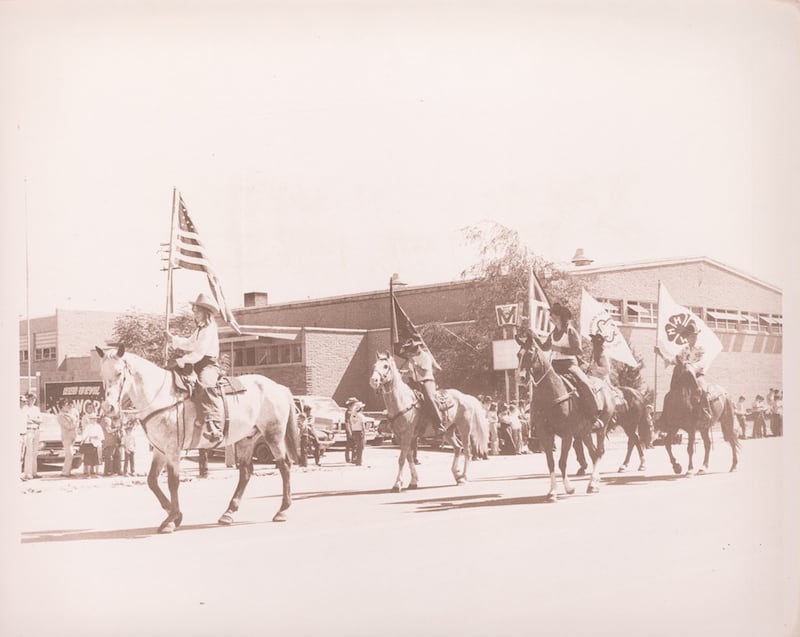
Earlier in the day, many residents had also participated in a bit of a haphazard Fourth of July parade down the streets of Rexburg, Idaho. Some of the floats for the parade had been borrowed from other cities. Other floats had been thrown together that morning, consisting of flatbed trucks or cars embellished with hand-painted signs and carrying flag-waving children and youth.
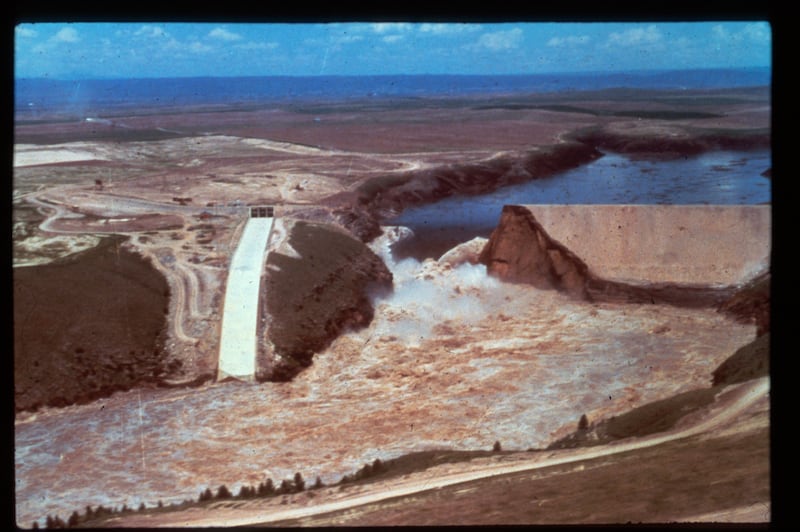
The parade and other bicentennial activities almost didn’t happen. Plans for elaborate festivities had been in the works for months, but four weeks prior to the commemoration, disaster struck. The Teton Dam ruptured and sent a raging wall of water through Wilford, St. Anthony, Sugar City, Rexburg and other nearby communities.
The events surrounding America’s 200th birthday were canceled, as residents focused on monumental cleanup efforts.
However, “we couldn’t see letting the day go by without a parade,” Clyde Anderson, chairman of the bicentennial committee, told Ensign magazine. “The community needed the morale boost of a parade, and we wanted to show that, although the people around here had lost practically everything they owned, we were still proud to be Americans and still proud of our heritage” (“After One Flood — Another of Faith, Hope and Good Hard Work,” Ensign, September 1976).
What the parade lacked in glitz and glamour, it made up for in the enthusiasm of its participants, the magazine reported.
During the rodeo, which was held in nearby Rigby, Idaho, because the Rexburg rodeo grounds had been destroyed, a bucking bull leaped out of the chute, quickly unseating its rider. With a deep breath, the dusty cowboy stood and headed back to the chute to try again.
“The rodeo rider seemed like a symbol of the people here,” said the article. The community, about 95% Latter-day Saint, had been knocked down but one month later were picking themselves up to start again.
Now 50 years later, that resiliency is the true legacy of the disaster, said Jed Platt, Rexburg City cultural arts director. Platt was instrumental in planning and coordinating the bevy of activities surrounding the 50th anniversary and in curating a commemorative exhibit at Rexburg City Hall.
“Beyond the devastation that happened in the dam breaking, this is true Church history of how Saints showed up and lived their religion,” said Platt.
The disaster
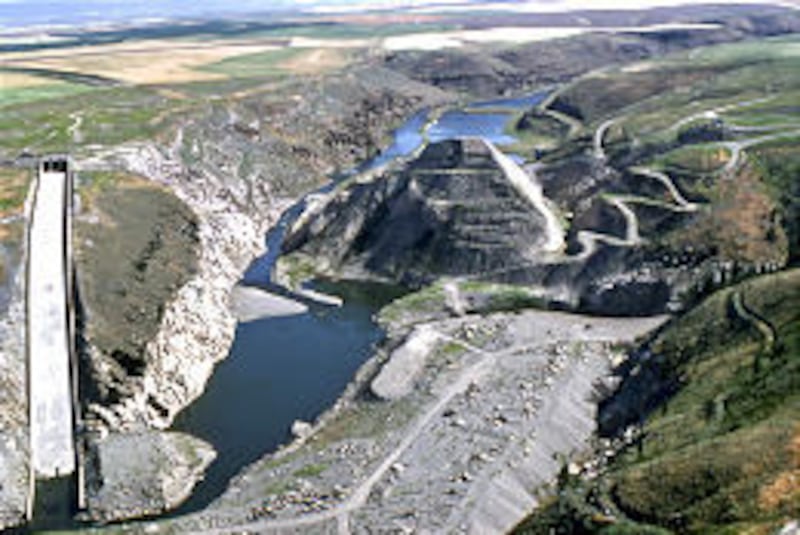
At roughly 300 feet high — about the height of the Statue of Liberty — the earthen Teton Dam was built to provide flood control, hydropower and supplemental irrigation to thousands of acres of farmland in the Upper Snake River Valley.
For its maiden fill during the spring and summer of 1976, the plan was to let the 17-mile-long reservoir fill slowly, but an exceptional snowpack caused a heavy spring runoff, and the basin filled quickly.
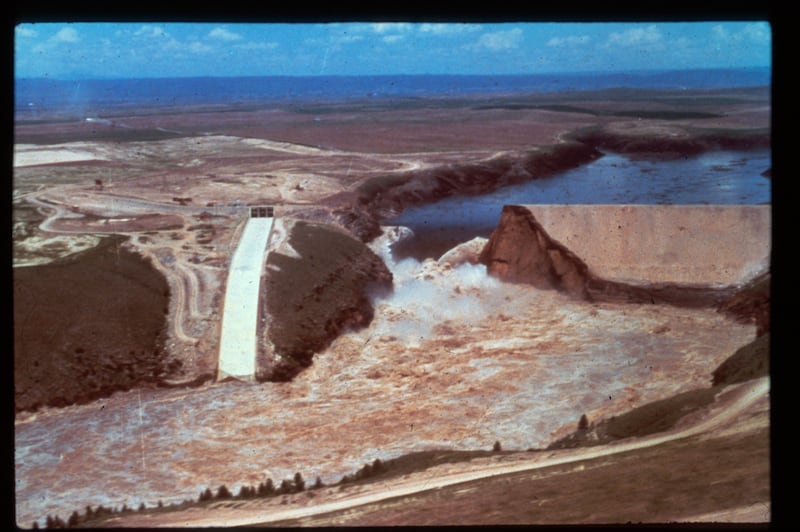
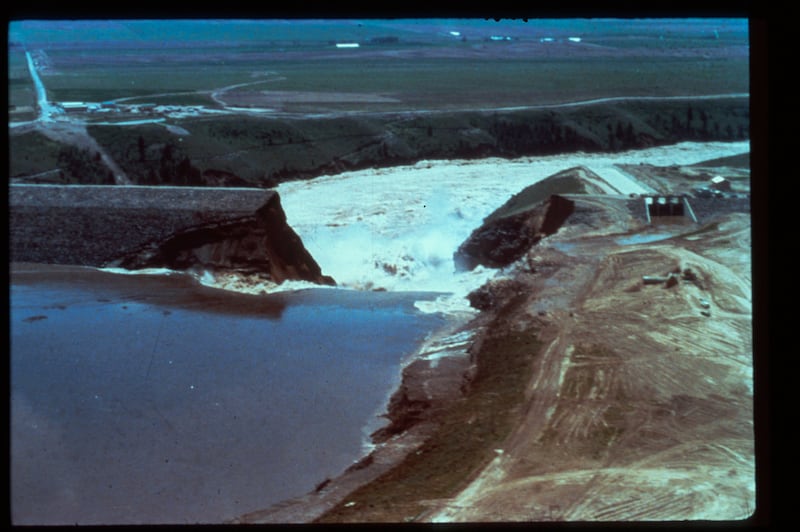
At 8:30 a.m. on Saturday, June 5, 1976 — with the reservoir nearly full — parts of the newly constructed dam leaked like a sieve, the Church News reported. By 10 a.m., small leaks were becoming gaping holes (“Path of Destruction Continues 4 Days,” Church News, June 12, 1976).
At 11:57 a.m., the dam failed; a 1,000-foot-long, wedge-shaped gash appeared. The reservoir began emptying through the gap at the rate of 2 million cubic feet per second, triple the volume of Niagara Falls, according to the National Fire Protection Association.
Besides warnings to evacuate being blared over the radio and television, local police paraded up and down the streets with bullhorns, and neighbors spread the word house to house. Some 35,000 were evacuated from their homes and businesses. Many gathered at Ricks College (now Brigham Young University–Idaho), which was located on higher ground.
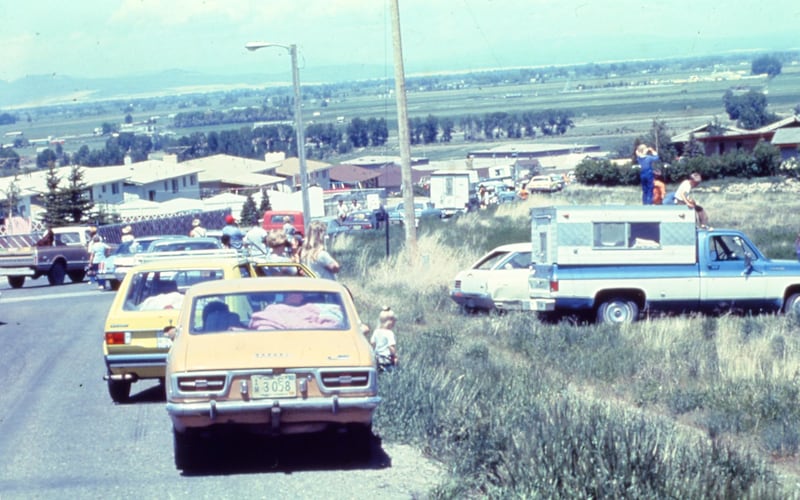
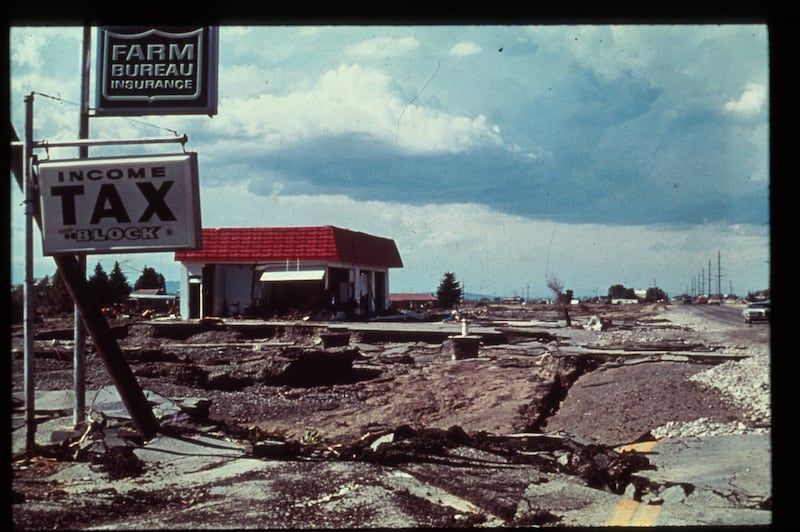
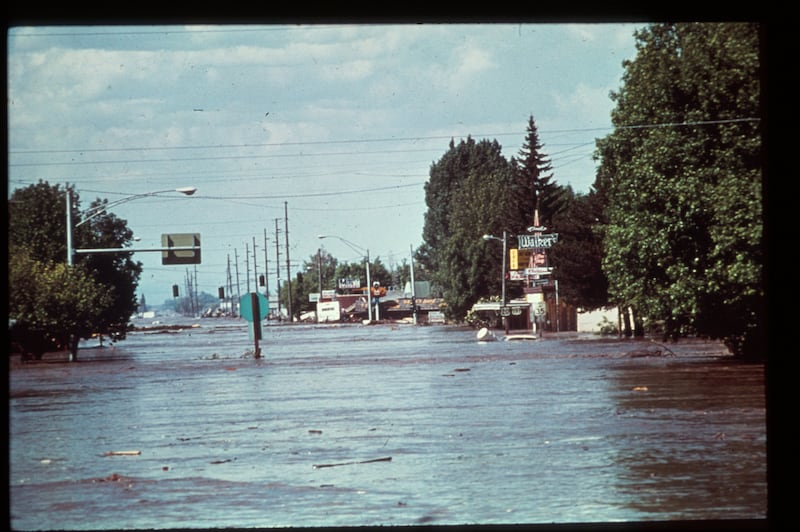
Floodwaters reached heights of 10 to 30 feet. By 2 p.m., an estimated 15-foot tidal wave hit Sugar City. By 2:30 p.m. it bombarded Rexburg. By late afternoon, the town looked “like an army war zone,” the Church News reported.
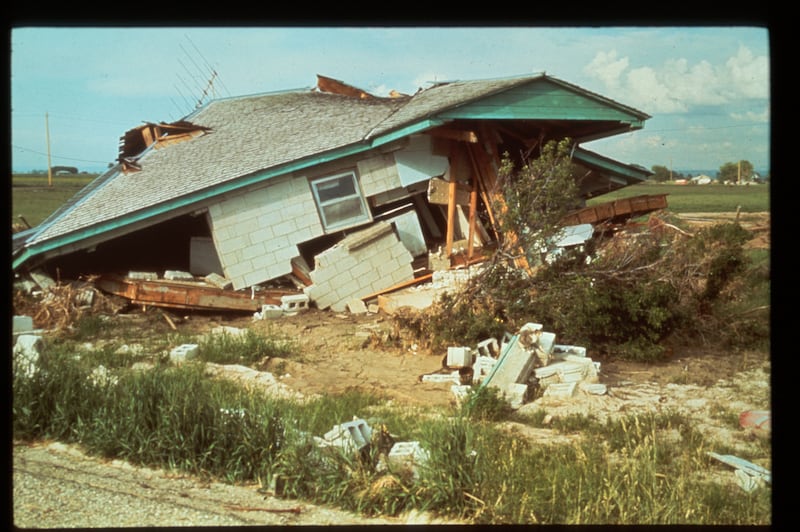
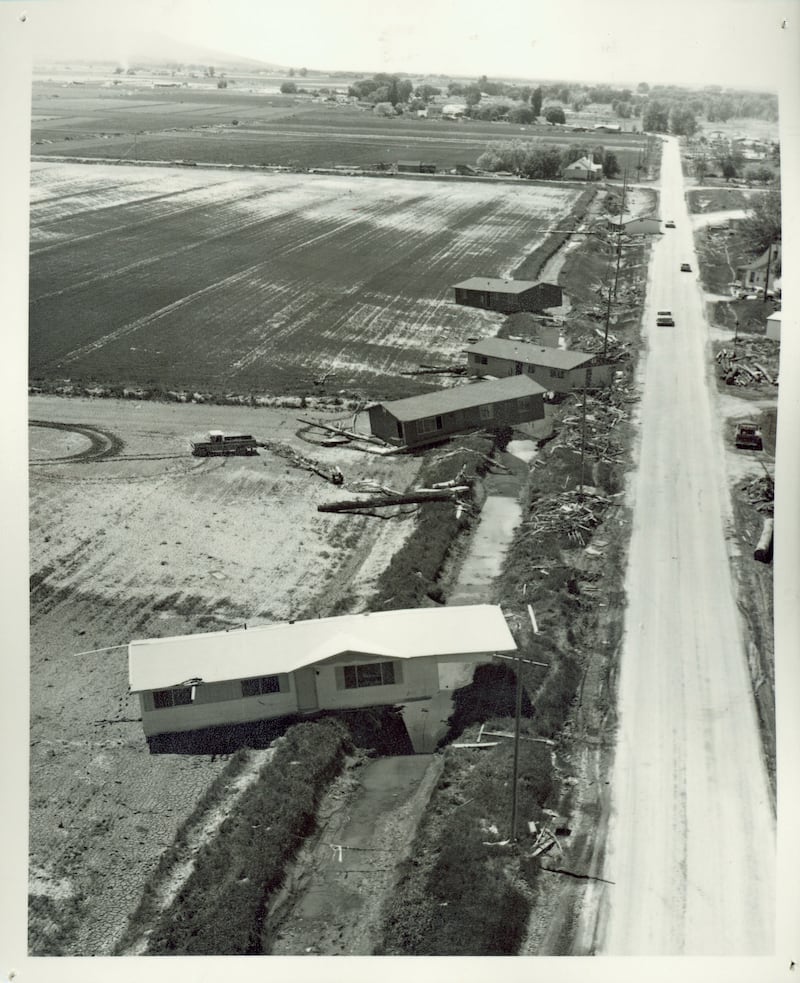
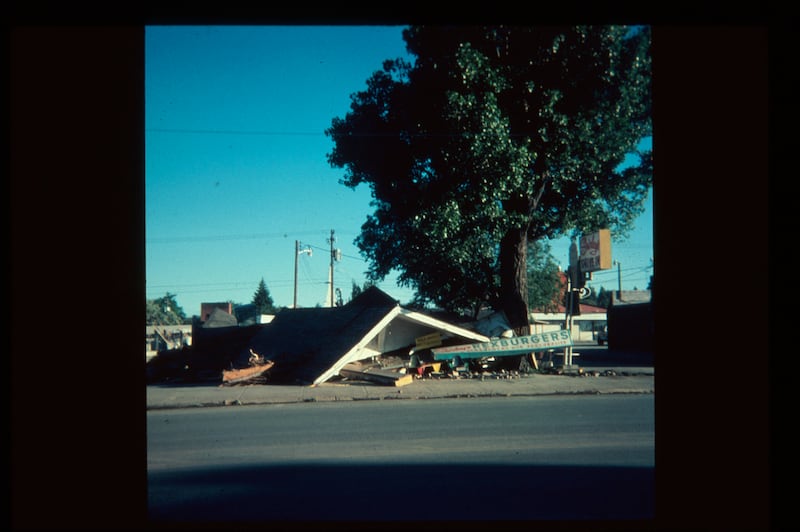
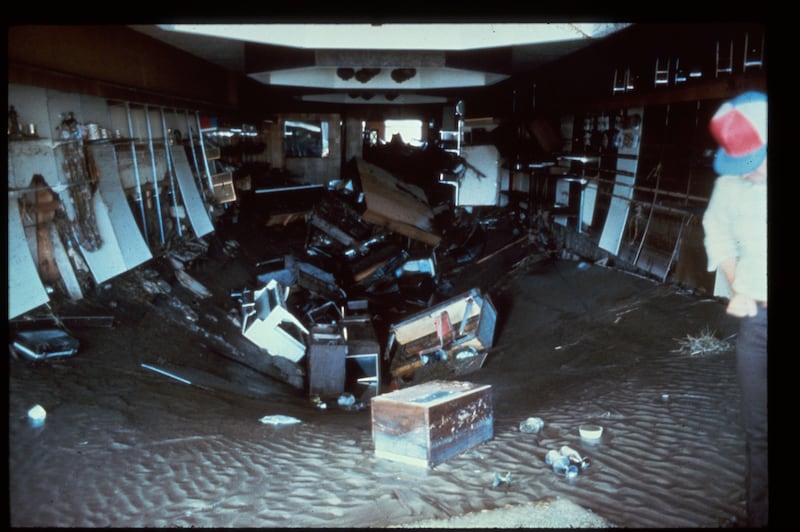
When Church President Spencer W. Kimball and other Church leaders surveyed the damage firsthand the following week, they witnessed houses wrenched from their foundations; cars deposited in trees; road surfaces ruptured, eroded or moved; downed power and telephone lines; houses turned into kindling; buildings blasted open as if by a bomb; walls that had been stripped of their brick facing; and mud-covered debris everywhere (“Thousands of Saints Left Homeless by Idaho Flood,” Ensign, August 1976).
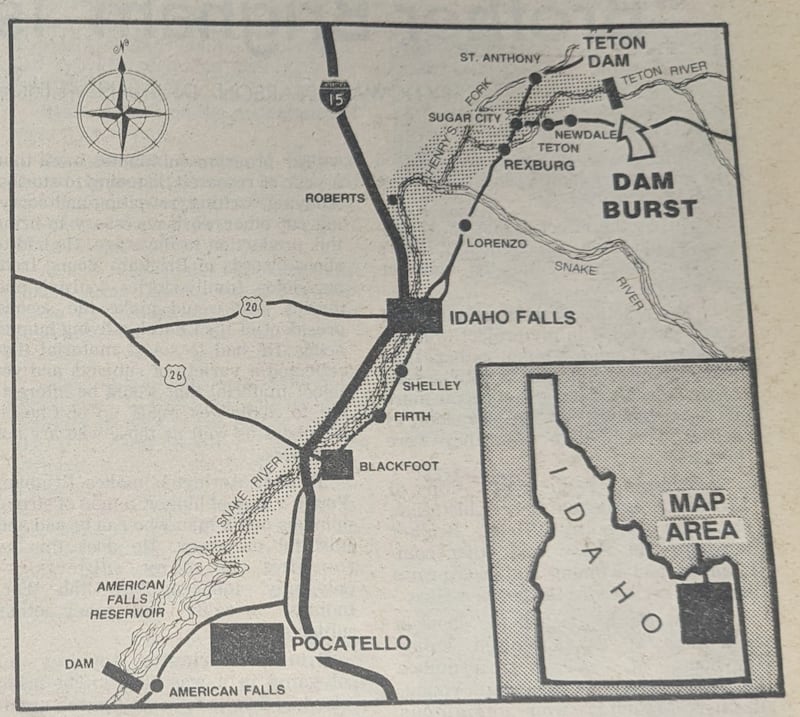
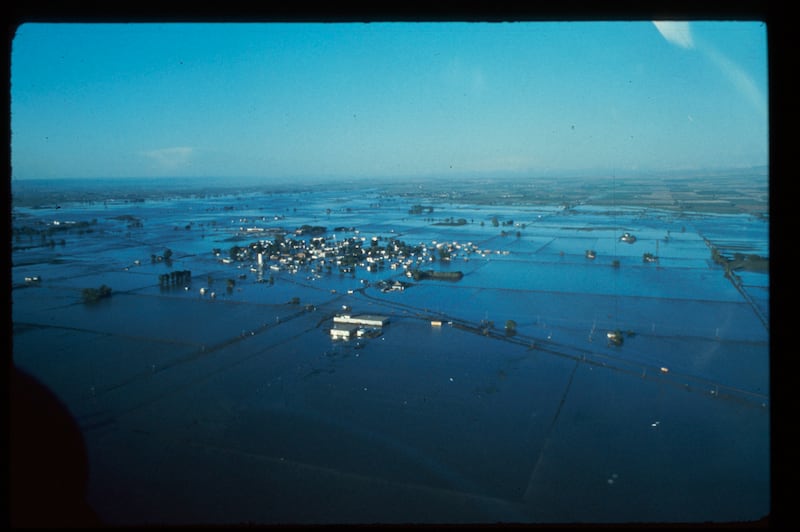
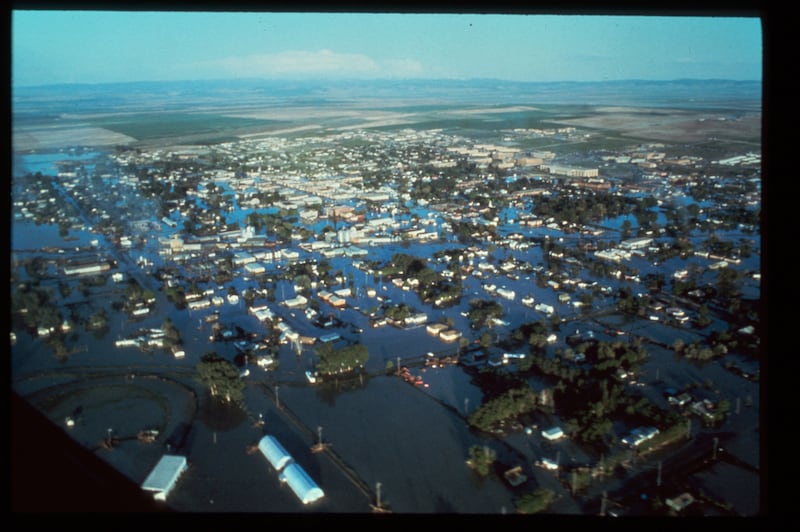
The flood waters traveled for three days and roughly 90 miles southward along the Snake and Teton River basins to Idaho Falls, where the river rose dangerously close to the sandbagged Idaho Falls Idaho Temple, then on through Blackfoot and finally into the American Falls Dam, where the water was finally controlled.
In all, the flood resulted in 11 deaths, and 25,000 were left homeless. Between 16,000 and 20,000 livestock were killed, 32 miles of railroad tracks were damaged, and hundreds of miles of roads and seven bridges were destroyed.
The flood also laid waste to farmland. In some areas, the force of the water stripped the topsoil down 4 to 6 feet to bare rock, while in other areas the water left behind a layer of rock and gravel up to 2 feet deep across the once arable land. Damage estimates for the flood would go as high as $2 billion.
Martell Grover of the Rexburg First Ward owned a jewelry and watchmaking business on Rexburg’s Main Street. He and his family lost everything. “We had a dead calf between our house and its foundation, and a dead cow in our backyard,” Grover recounted to Ensign magazine. “We’ve lost our home and our business; there’s nothing to salvage.
“We come into the world naked, and I guess that we’re being shown that we can go out that way, too,” he said (Ensign, August 1976).
Church response: From chaos to order
Roger Wiblin is a history professor at BYU–Idaho who has gone through hundreds of hours of oral histories of locals sharing their stories and experiences of the flood. In collaboration with a professor from Brigham Young University, Wiblin recently published those recollections into a book in conjunction with the 50th anniversary of the disaster.
In listening to hundreds of reminiscences, Wiblin said he saw a few lessons or themes that emerged in the aftermath of the flood. One is the effectiveness of the Church’s disaster and welfare response.
“The organization of the Church is a major factor in the recovery happening as quickly as it did,” said Wiblin.
In the immediate aftermath, Church leaders worked hand in hand with emergency personnel to account for individuals and families.
Blair Siepert, chief of police for Rexburg City in 1976, spoke of a board in the command center with a list of 300 names of citizens to be accounted for. They spoke with Church leaders who called on home teachers and visiting teachers, and by the afternoon, the list had been whittled down to about 15, he recalled in a documentary about the flood for BYUtv.
Wiblin explained that as the federal government sent in disaster relief organizations, they asked for a count of damaged and destroyed homes and businesses. “The state says, ‘OK, we’ll get you that tomorrow.’ The federal aid people said: ‘There’s no way you can get that to us tomorrow. That’s going to take months, or at least weeks, for you to gather.’ But the next morning they have those numbers because through the home teaching program, they get the information quickly. So the civil recovery is aided by the Church, which is a great blessing,” said Wiblin.
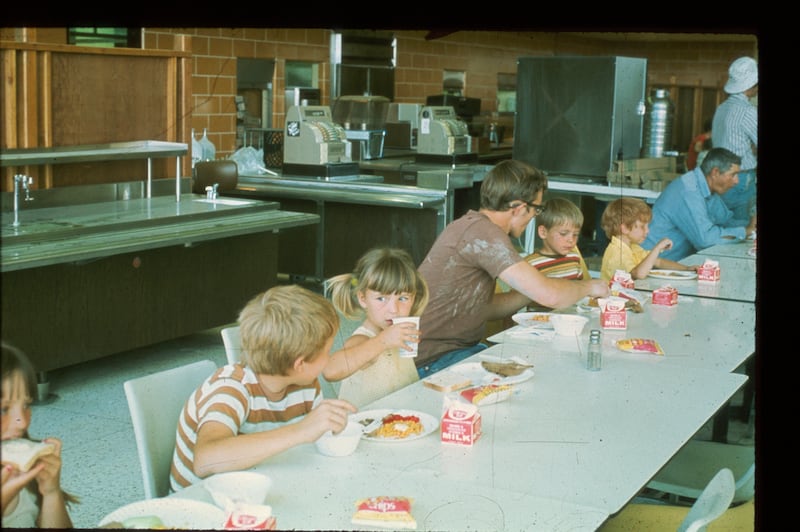
In addition to its preestablished communication structure, the Church was also able to offer relief for the immediate needs of flood refugees. The president of Ricks College at the time, President Henry B. Eyring, who now serves as the first counselor in the First Presidency, opened the campus, including student housing, to homeless families, while the food services on campus served hundreds of thousands of meals.
The flood hit Rexburg around 2:30 p.m. on Saturday afternoon. By 5 p.m. a tractor-trailer laden with relief materials — wool blankets, tents, mattresses, sheets, diapers and water purification tablets — was on its way to Idaho from Church headquarters in Salt Lake City. Two more trucks carrying 5,000 pounds of food arrived in the wee hours of Sunday morning.
“Let’s bring chaos into order the priesthood way” was the slogan adopted by the Rexburg Idaho North Stake (“From Chaos to Order: The Priesthood Way,” Church News, June 19, 1976).
Six of the Rexburg North stake’s nine wards were severely impacted by the flood, so the stake president at the time, President Ferron Sonderegger, asked six stakes in Idaho Falls to each help a ward on a one-to-one basis through the crisis.
President Sonderegger shared how bishops met with ward members daily to assess needs. Bishops then met nightly with stake presidents to coordinate efforts and to receive progress reports.
“I feel that I have seen the welfare plan work perfectly,” said President Sonderegger. “Oh, I thought I understood the welfare plan pretty well before this happened, but now I’ve seen it in action, and it can be an example to all the world,” said President Sonderegger (“Flood Victims Receive Aid,” Ensign, August 1976).
A flood of tender mercies
Another theme Wiblin has seen in the experiences of flood refugees is a recognition of the mercies of the Lord. “It’s a devastating experience, but as people reflect on it, they see the positives. They’re looking at what blessings have come from experiencing this,” he said.
One of the great miracles of the flood that is talked about is the timing, said Wiblin. The flood occurred on a Saturday afternoon in June, when everyone was awake but no children were in school. What if it had happened at night or during the first big winter blizzard?
Platt explained how one of the big worries following the disaster was the spread of disease and pestilence from an infestation of mosquitoes and flies due to all the standing water. “But there were flocks of seagulls that came during those weeks,” Platt related. The birds gorged themselves on larvae, and that summer was relatively mosquito-free.
Many of the volunteers working in food services on campus shared instances where they worried whether the soup or the bread or the chili would stretch to feed the masses, but, miraculously, it was enough. “And it happened over and over and over again,” Platt said.
A man who lost his home in the flood shared with Platt how devastated he was to lose his family history records, which in those days were all hand-written documents. However, months later, the man got a call from someone near American Falls — nearly 100 miles away — who had found the man’s genealogical book in a tree, and the documents were still legible.
These experiences and many more are a testimony to Platt, he said, “that God can make miracles from mud.”
A legion of volunteers
Another blessing to flood survivors was the veritable army of volunteers from Idaho, Utah, Wyoming, California and elsewhere who became the driving force in the cleanup effort.
“There are several [flood survivors] who say, ‘if the volunteers hadn’t arrived, I was ready to quit,’” said Wiblin.
Idaho Falls South Stake President Harold Hillam, who later became a General Authority Seventy, served as a liaison between the stricken areas and the volunteer effort.
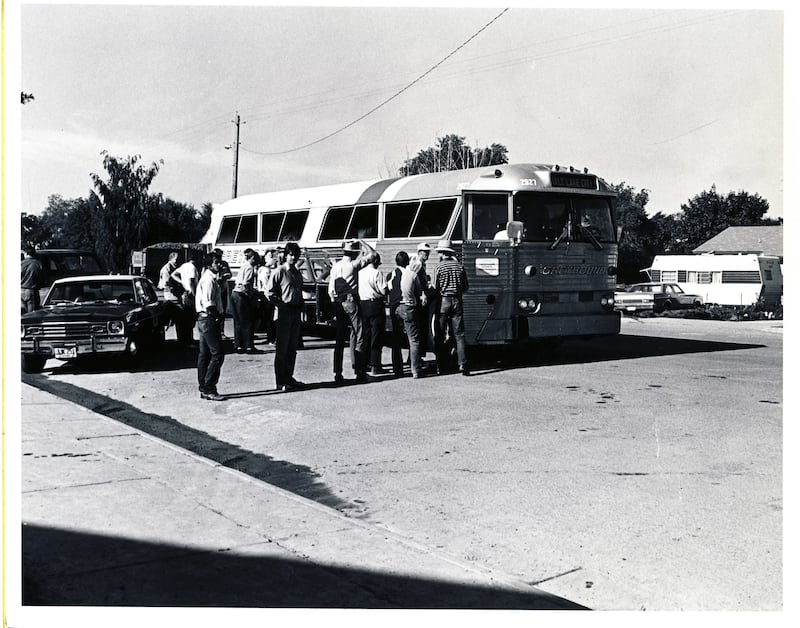
“I estimate that by the first week in July we had passed the half-million mark in donated man-hours,” he said. By summer’s end, that number would increase to one million.
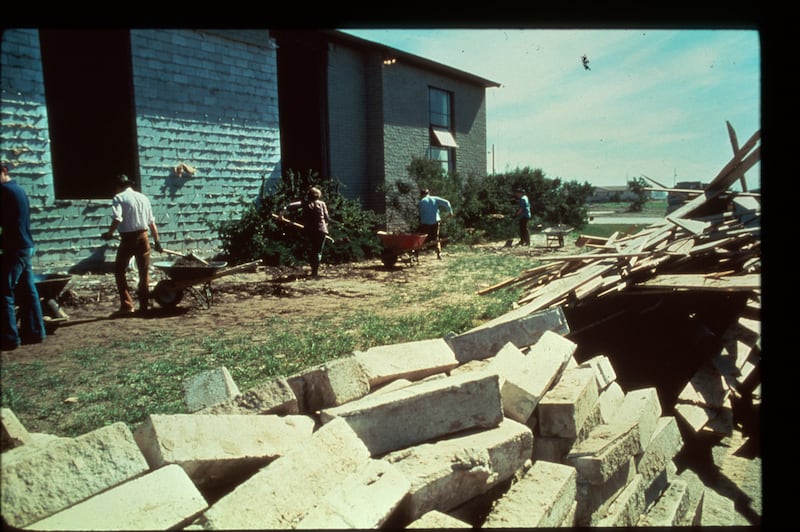
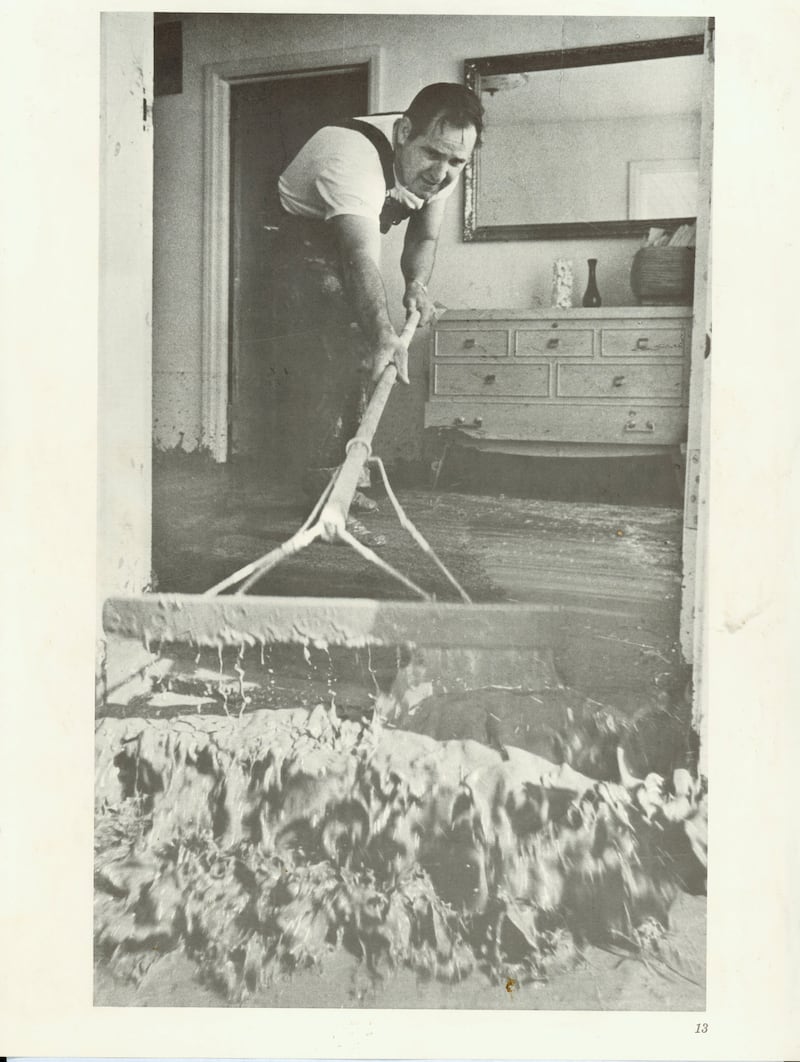
In a letter to Ensign magazine, Rexburg resident Pat Hepworth wrote of the “love of the gospel in action” as volunteers showed up to muck out sludge, remove debris and clean out homes and businesses.
“Every morning countless buses and cars, packed with enthusiastic helpers, pull into town. As I see this, my heart swells and the tears flow. Here are people who are truly showing their love by sacrificing their time in order to help their brothers and sisters in need. It seems to me that this is what the gospel is all about,” Hepworth wrote.
She then added, “The Teton Dam disaster has been a tragedy, but spiritually it has been a feast. The term ‘Latter-day Saint’ has new meaning for me now.”
In addition to volunteers, southern Idaho Latter-day Saints donated dozens of loaders, dump trucks, cranes, backhoes and other needed heavy equipment to help gnaw away at the rubble clogging homes, streets, sidewalks and parking lots (“Cleanup Runs Smoothly Under Church Leadership,” Church News, June 26, 1976).
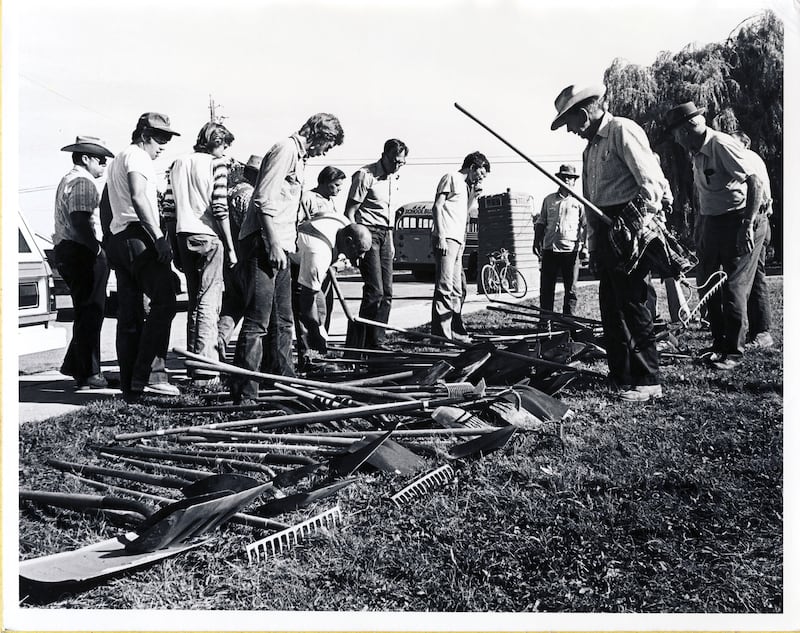
As clean up progressed, skilled laborers such as plumbers, carpenters, welders and others were desperately needed. A week before the Fourth of July bicentennial celebrations, the call went out for volunteer electricians. President Hillam said he expected about a hundred electricians at the most. Five hundred arrived.
When U.S. President Gerald Ford signed the relief bill for flood victims in September 1976, he acknowledged the many volunteers who jumped in to help.
“Great credit must also be given to the many volunteer and church groups represented here today which played such a key role in the initial relief efforts. Each of them displayed great courage under exceptionally difficult conditions,” President Ford said.
A visit from the Prophet
The event that impressed Garrett Case, a member of the Rexburg 2nd Ward, and his family most was the visit of President Kimball one week after the flood. “Just to hear him speak gave us encouragement,” Case told Ensign magazine. “Without the Church, we would have been very discouraged” (Ensign, August 1976).
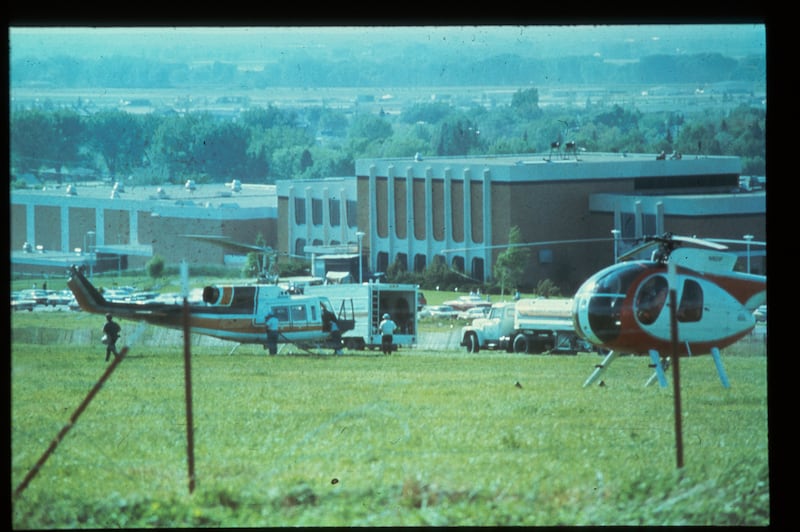
Arriving by helicopter with then-Elder Boyd K. Packer of the Quorum of the Twelve Apostles, President Kimball surveyed the ravaged ruins of Sugar City. On Sunday, June 13, he and Elder Packer spoke to roughly 8,000 Latter-day Saints, most of whom had lost every possession they owned, during two meetings in the Hart Building’s basketball arena at Ricks College.
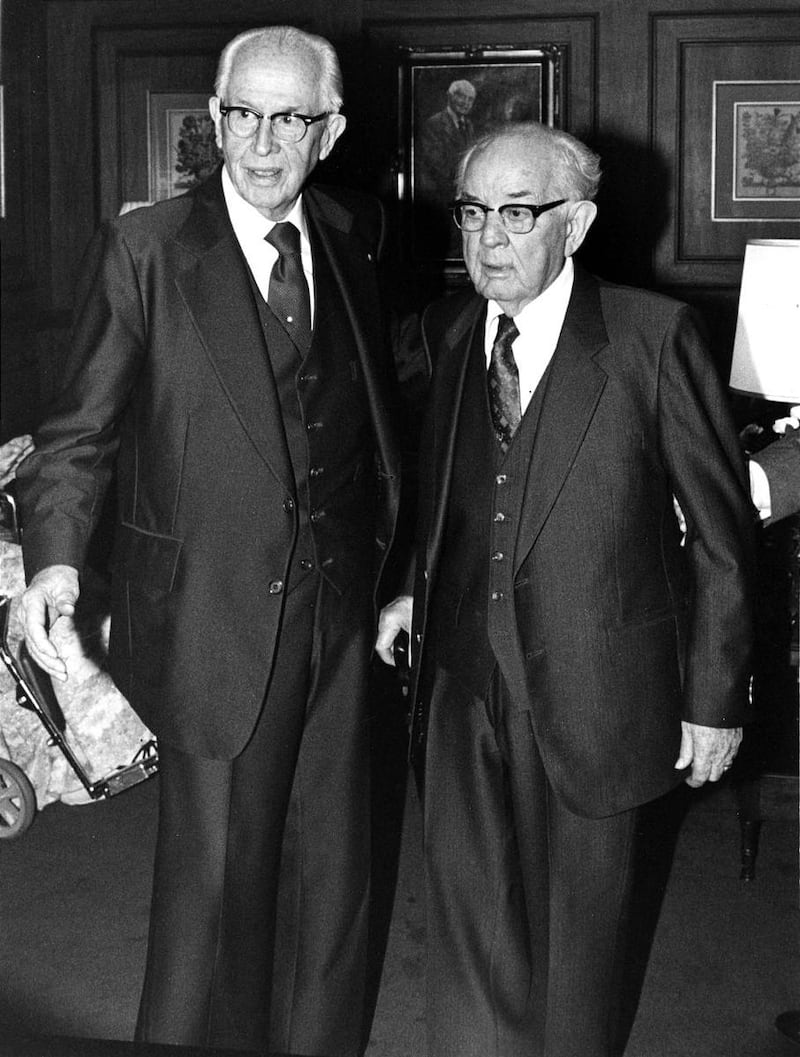
In his journals from that time, President Eyring wrote of how he was struck by how President Kimball was able to convey great love but only a modicum of sympathy. The Prophet’s focus instead was on moving forward (“I Will Lead You Along: The Life of Henry B. Eyring,” p. 282).
President Kimball counseled the men to exercise their priesthood to bless their wives and children and “call upon the heavens for inspired words of comfort.” He encouraged parents to keep family patterns — home evening, family prayer, etc. — and to let their children talk about their fears and frustrations.
“In some ways the greatest challenge lies ahead. Let us rebuild in a manner pleasing to the Lord,” he counseled (“Flood Victims Get New Hope,” Church News, June 19, 1976).
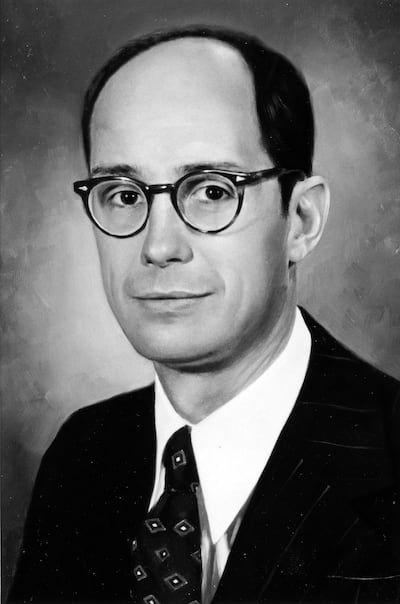
Elder Packer said many had asked him, “What have I done wrong?”
“Probably nothing,” he answered. “If you attach tragedy, disaster and calamities to sin, how can you explain the suffering of Christ? Fine people, living worthily, can be subject to disasters such as you have faced here. The difference will be in how you face it.”
Between the first and second meetings, President Kimball was to address priesthood leaders in the area. However, following the first meeting individuals flocked to the front to shake the Prophet’s hand.
“Parents brought their young children onto the stage by the scores, and President Kimball graciously shook hands with each of them, even squeezing the small hands of babies. It was a heartwarming occasion, and something the people, who had suffered so much, needed to buoy them up,” the Church News reported.
When asked about his tour of the area, President Kimball replied, “The devastation is terrible, but the people are courageous and have great strength.”
President Kimball’s visit validated flood victims’ experiences, Platt said. “His message of hope, it gave them courage to say, ‘OK, we haven’t done anything wrong. Let’s tighten our bootstraps, and get to work.’”
Said Wiblin, “He encouraged them to get to work, and they did.”
Larry Saunders, longtime resident and former member of the Ricks College faculty, noted that visitors to Rexburg today would have a hard time knowing there was a flood. “Because everything got built back again. A lot of things changed but today you wouldn’t know it,” noted Saunders (“Teton Dam Disaster,” PBS documentary).
Teton Dam 50 years later
The week of the anniversary, individuals from across the country gathered in Rexburg for commemorative events, including new exhibits, walking tours, a river float, a car show, a flashback fashion show, discussion panels and several service opportunities.
The flood “was an event that shaped our community,” said Platt, “and it was not a spectator event. It impacted everyone.”
Giving people the opportunity to “remember, connect and serve” and to reflect on the lessons learned was powerful, said Platt. “It’s worth remembering.”
Platt noted they are still recording and gathering stories and experiences of the flood. Those interested can email arts@rexburg.org.
