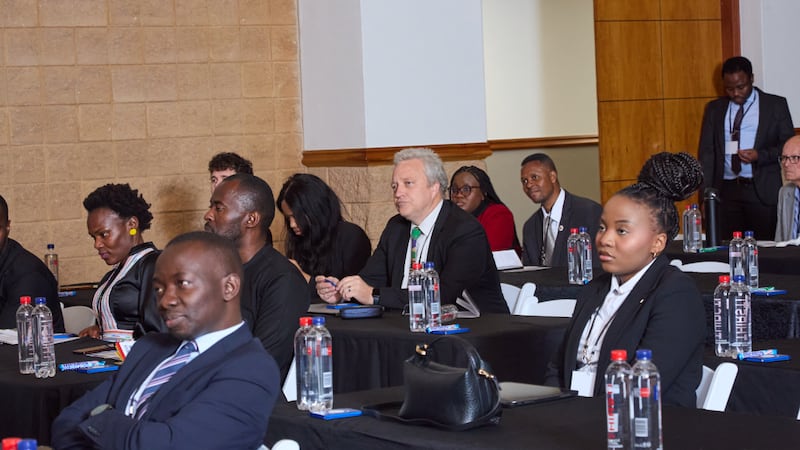

A conference in Johannesburg, South Africa, highlighted the role of law, faith and civic engagement in building stronger communities and nations.
Legal professionals, judges, academics, government representatives, religious leaders and law students from the Church’s Africa West, Africa Central and Africa South Areas gathered on Aug. 8 for the J. Reuben Clark Law Society Tri-Africa Conference.
Religious freedom is important to The Church of Jesus Christ of Latter-day Saints, and the Church strives to protect and defend religious freedom for those of all faiths or no faith.
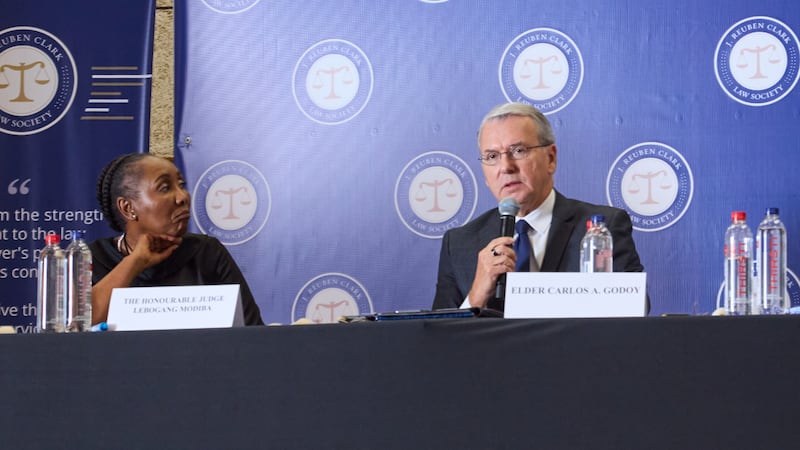
In a keynote address, Elder Carlos A. Godoy, General Authority Seventy and president of the Africa South Area, described religious liberty as a fundamental principle that protects human dignity, freedom of conscience and the right of individuals and faith communities to worship, serve and contribute positively to society.
“Faith communities play an important role in strengthening families, promoting moral values, caring for vulnerable populations and responding to humanitarian needs,” he said in a report on the conference from the Church’s Africa Newsroom.
Elder Godoy told the audience about the eleventh article of faith, which says, “We claim the privilege of worshiping Almighty God according to the dictates of our own conscience and allow all men the same privilege; let them worship how, where, or what they may.”
Said Elder Godoy: “This principle reminds us that the freedoms we seek for ourselves must also be extended to others. Religious freedom flourishes where mutual respect for the rights and consciences of others prevails.”
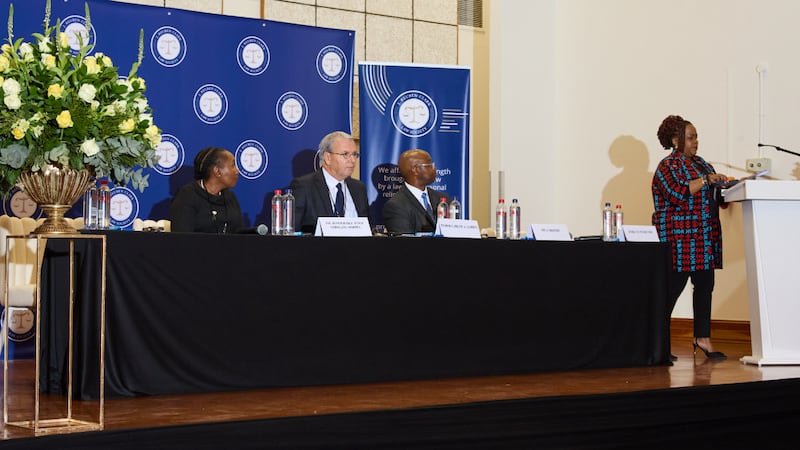
Josina da Graça, Mozambique’s deputy national director of the Department of Religious Affairs, explained that religious freedom is not a privilege granted by government but a fundamental human right protected by Mozambique’s constitution. The country’s diverse religious communities live together peacefully and contribute to national unity, she said.
She also highlighted the positive role religious organizations play in peacebuilding, humanitarian relief and community development, and acknowledged the Church’s contributions in Mozambique.
Rory Wellington, chair of the J. Reuben Clark Law Society Zimbabwe Chapter, spoke about how the strength of the rule of law is measured by the willingness of public institutions to uphold constitutional principles. Zimbabwe has a history of protecting religious freedom, but Wellington said constitutional safeguards remain meaningful only when they are applied and defended.
Religious freedom also has a personal dimension, said Lloyd Allen, area legal counsel for the Africa South Area.
“While constitutions and legal systems provide essential protections, the future of religious liberty also depends on individuals choosing to live with integrity, respect and concern for others,” Allen said.
The conference concluded with a shared commitment to advancing the rule of law, protecting religious freedom and promoting greater collaboration between legal, governmental, academic and religious institutions across Africa, the Africa Newsroom report said.