
Is a college education still worth it? How can a Latter-day Saint young adult choose the right college for them? How can parents and leaders help prepare young adults for college?
These were just a few of the questions addressed during a livestream event hosted by the Church Educational System of The Church of Jesus Christ of Latter-day Saints on Tuesday, Sept. 1.
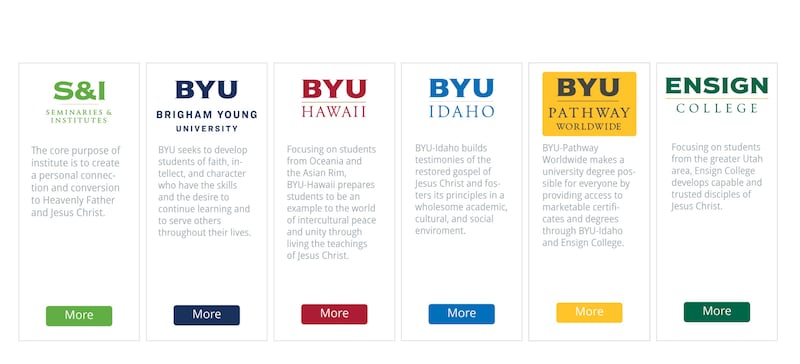
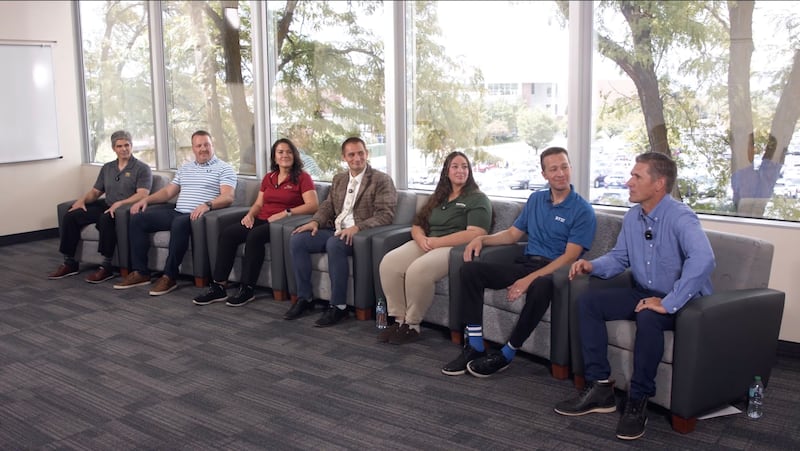
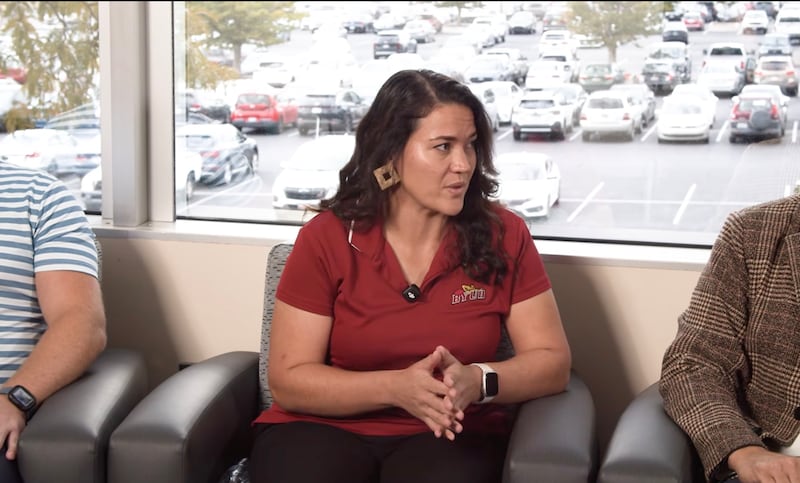
Representatives from each of the six institutions within CES — Brigham Young University, BYU–Idaho, BYU–Hawaii, BYU–Pathway Worldwide, Ensign College and Seminaries and Institutes of Religion — participated in the livestream, answering questions, offering advice and discussing the unique role and strategy of each institution.
Among other topics, the panelists highlighted the global accessibility of BYU–Pathway Worldwide, the academic and research excellence of BYU, the global mission of BYU–Hawaii, the spiritual foundation provided through seminary and institute, the career-focused skills of Ensign College, and the student-centric culture of BYU–Idaho.
“The Church provides education — no matter who you are and where you’re at in your life and what you’re going through,” noted Ben Lotze, manager of enrollment services for Seminaries and Institutes of Religion.
Is college education still worth it?
Dan Taylor, the admissions outreach administrator at BYU who served as the event’s host and moderator, noted that with the rising cost of higher education, many wonder if college is still worth a young person’s time and investment.
“Higher education has never been more important,” responded Chad Johnson, director of admissions at BYU.
Both the late Church President Russell M. Nelson and current Church President Dallin H. Oaks have taught that education is a religious responsibility, Johnson pointed out. “And we still see across the board that those who have a college education have better outcomes when it comes to your income, to your health, to family structure, to so many other things that matter to provide a joyous life.”
The Church Educational System has the added benefit of incorporating discipleship of Jesus Christ into the learning process, Johnson added. “We hope that it’s something that builds the foundation on Jesus Christ throughout the rest of your life.”
CES institutions are affordable options compared to secular competitors, said Riley Hall, director of admissions at BYU–Idaho.
“Don’t let cost be the reason not to go to college,” said Hall. As prospective students look at the sometimes-daunting cost of higher education, “remember that the CES options are very, very affordable, and you don’t have to pay for it all on your own. With scholarships, federal financial aid, work opportunities, all those things on top of the things that you bring with you, you’re going to find that you can pay down those costs pretty quickly.”
For example, at BYU–Hawaii, where the cost of living is exceptionally high, the school offers work study programs where students can work on campus or the adjacent Polynesian Cultural Center and graduate debt free.
“Which is a miracle,” said Amber Stevenson, admissions officer at BYU–Hawaii.
How can students select the college that is right for them?
Each institution within CES has the mission of developing disciples of Jesus Christ who are leaders in their homes, in the Church and in their communities. However, each school has a distinct role, strategy and culture.
“When you’re looking at the different schools, you have to find what best fits you and the community that you’re looking for,” noted Sarah Bermudes, outreach and recruitment admissions counselor at Ensign College.
For example, while Ensign College has “a robust student life” with unique activities and opportunities, students wanting to attend a soccer game or cheer at a big football game might choose a different school, said Bermudes.
Look at the school community and what the school can offer post graduation, Bermudes advised.
BYU–Hawaii is a good example of that, added Stevenson. While all the schools have a business program, BYU–Hawaii is focused on developing leaders in the Pacific and Asian Rim. “So if it’s your dream to build a business in Europe, maybe BYU–Hawaii is not the place for you.”
Several panelists recommended taking a tour of the college campuses and noted that online tours are available if travel is prohibitive.
“Make yourself familiar with the campuses. They all have something very unique to offer, and a lot of these positive surprises that we talked about, you’ll uncover as you get familiar with them,” said Taylor.
Lotze emphasized that no matter where a student decides to go, they can attend an institute class, which is free. “Anywhere you go, there is institute and a place where you can develop your discipleship,” said Lotze.
What to know about admissions to CES schools
The institutions vary widely in admissions. One of the purposes of BYU–Pathway Worldwide, for example, is to remove barriers to education. As such, their application is simple, noted Mike Cordon, Utah area operations manager at BYU–Pathway Worldwide. BYU–Pathway does not require ACT or SAT scores or an ecclesiastical endorsement.
BYU, on the other hand, has about a 69% acceptance rate for its incoming freshmen. A BYU education aims to be spiritually strengthening, intellectually enlarging and character building, leading to lifelong learning and service, explained Johnson. So BYU is going to look at applicants who are aligned with those aims.
Johnson also explained that this year, the university is taking a “do no harm” approach to applicants’ ACT and SAT scores, “which means for those where the test is optional, we will only use your score — either ACT or SAT — if it actually strengthens your application.”
BYU–Idaho and Ensign College, meanwhile, have unique semester tracks which enable them to enroll many more students while BYU–Hawaii prioritizes a large percentage of its student slots (around 76%) for students from Oceania and the Asian Rim.
No matter where they decide to apply, Stevenson advised parents and leaders to help students develop resilience and independence. If something goes wrong with their financial aid, it’s going to be the students who need to pick up a phone and call the financial aid office.
“There’s lots of different options, but the bottom line is, no matter what option, the gospel of Jesus Christ and deepening discipleship will always be part of it,” said Cordon.
Those interested can view a recording of the livestreams, one for parents and leaders and another for youth, at enrollment.byu.edu/ces-livestreams.