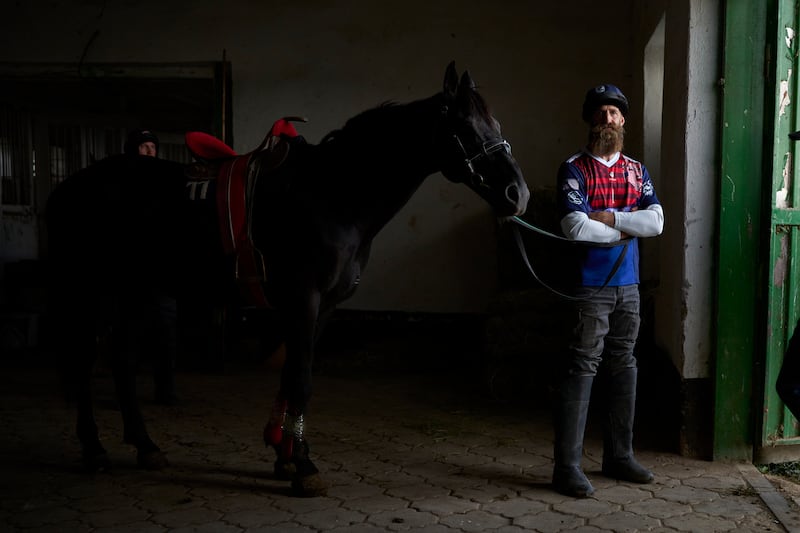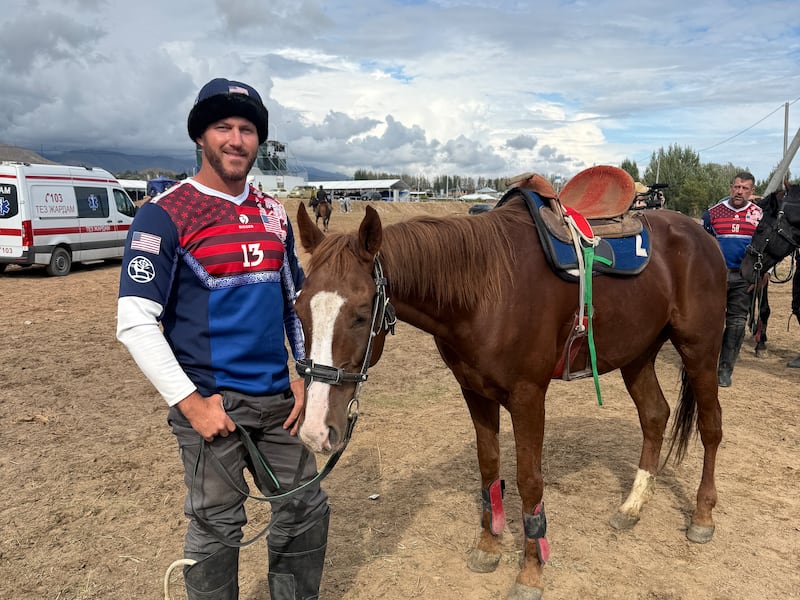

When Kyrgyzstan President Sadyr Japarov stepped off an airplane in Utah on Sept. 18, he greeted those waiting with handshakes and formal embraces.
Then the president spotted U.S. Kok-Boru team captain Ladd Howell, and his face broke into a broad smile.
“Oh, Ladd Howell, the Utah hero,” the president said, stepping forward to embrace the bearded cowboy.
Japarov grinned as he recalled watching Howell compete weeks earlier at the sixth World Nomad Games in Kyrgyzstan. After falling from his horse during a game, Howell had gotten back up and raised his fist to signal he was OK.
Howell replied in Russian, smiling: “We learned everything from Kyrgyzstan.”
The two had never met, but the warmth of the greeting was unmistakable.
For Howell, an Idaho-born rodeo cowboy and a Latter-day Saint returned missionary, the memorable moment was forged in a shared love of horses and competition.
“To receive that kind of an embrace from the president was really special,” Howell said later.
Elder Marcus B. Nash of the Presidency of the Seventy witnessed the greeting. To him, it illustrated something a divided world desperately needs.
“Real friendships are needed in our fractured world,” he said. “Oh, we need them so desperately. Genuine friendship.”
Howell and his teammates, including other returned missionaries, have built those friendships through Kok-Boru, a rugged horseback sport. Their experience demonstrates how Latter-day Saints can develop their talents to bless others and build understanding across cultures, Elder Nash said.
“The Lord gives us talent and invites us to develop that talent, whatever it is. As cowboys they’ve developed their talent as horsemen and they’ve played it out on the national and international stage,” he said. “And as they’ve done so, they have developed friendships and built bridges of understanding that will help tie communities and nations and peoples together. We all are, after all children of the same Heavenly Father.”

An unexpected invitation
Raised in Rexburg, Idaho, Howell grew up riding horses and competing in rodeo. He served in the Russia St. Petersburg Mission from 2006 to 2008 and attended Weber State University on a rodeo scholarship, where he competed in tie-down roping, team roping and steer wrestling.
In 2012 and 2013, Howell returned to Russia to help establish cattle ranches, adding business and agricultural vocabulary to the language skills he had developed as a missionary.
Those experiences and skills came together unexpectedly in 2018 when a former mission companion sent him a video showing Kok-Boru, the national sport of Kyrgyzstan.
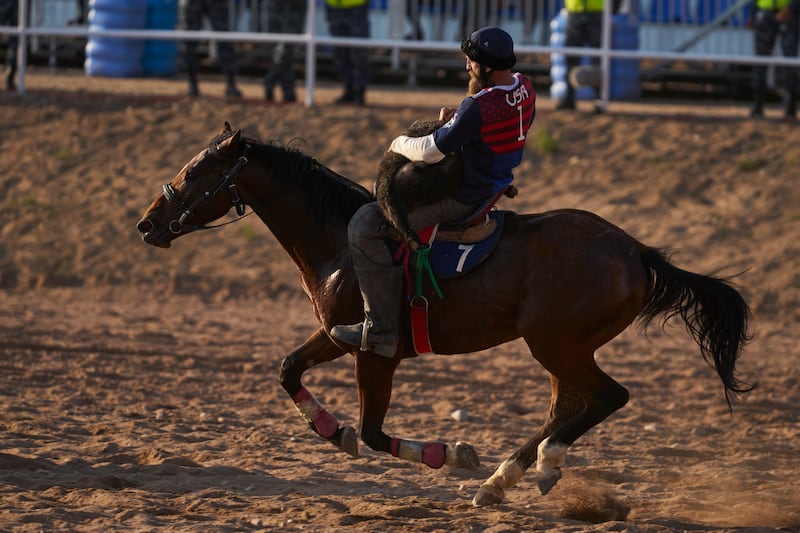
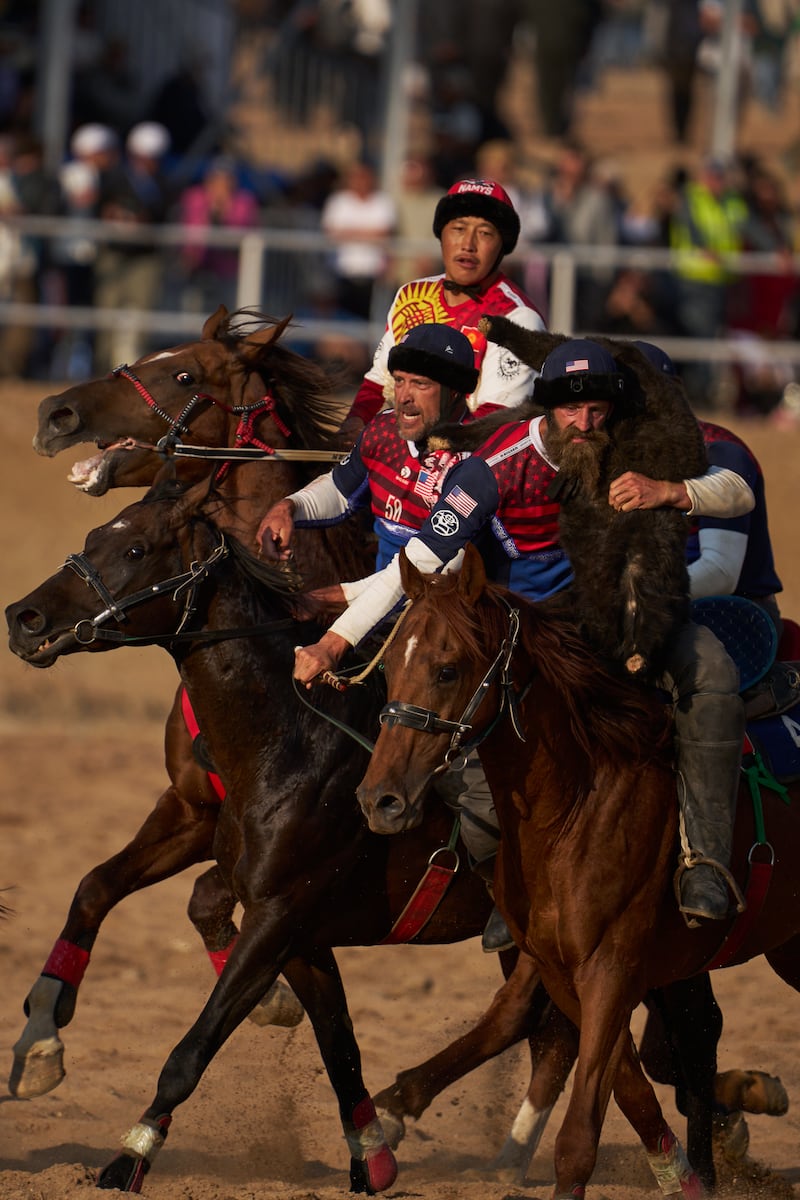
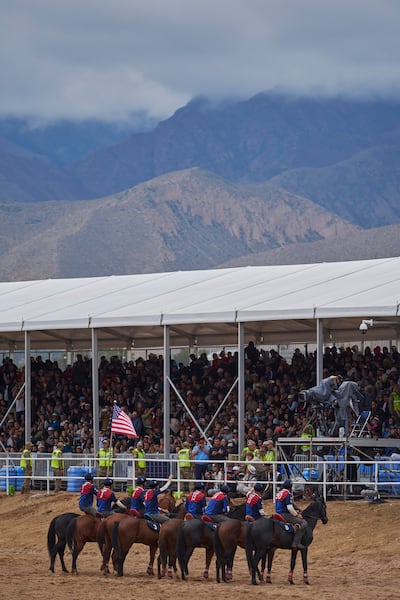
Howell calls Kok-Boru “goat rugby.” It’s a traditional, high-contact team sport played across Central Asia on a field slightly larger than a rodeo arena. Top teams compete at the World Nomad Games.
Within a week, a man helping Howell with a welding project in Wyoming mentioned the same sport. Knowing Howell spoke Russian and competed in rodeo, he invited him to play for the U.S. Team in the World Nomad Games.
Within a month, Howell was headed to Kyrgyzstan.
Learning Kok-Boru
Kok-Boru is a centerpiece of the World Nomad Games, an international celebration of traditional sports and nomadic cultures featuring wrestling, archery and equestrian competitions. Like the Olympics, the Games bring together athletes from around the world.
Since first participating in 2018, Howell has returned repeatedly, recruiting fellow horsemen from the American West to join the U.S. team.
The Americans have improved, but their opponents’ skill remains a formidable challenge. Howell compares the matchup to a good high school basketball team facing NBA players.
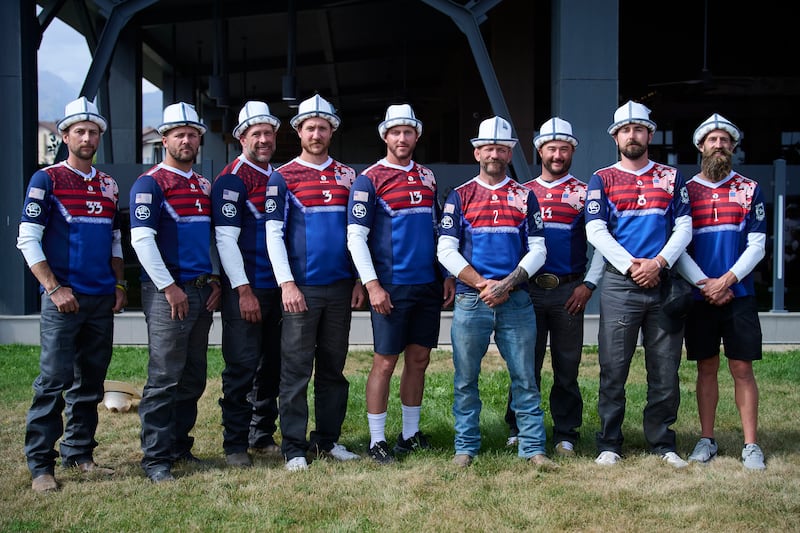
“We’ll score a few points, but the main teams over there will control the game,” said Howell, a member of the North Park 1st Ward in the Hyde Park Utah North Park Stake. “They are just that good at it.”
Although Team USA lost all three games, Howell scored 15 goals and emerged as a fan favorite in Kyrgyzstan. He and his teammates praised their hosts’ generosity toward the less-experienced Americans.
“For us to be able to play them and learn from these guys, that’s why it’s been so fun,” Howell said. “They’re such good teachers.”
Six of the nine team members were returned missionaries. Howell said the team sought to represent their country, their faith and cowboy culture through their conduct on and off the field.
Seeing all as children of God
Howell’s first Kyrgyz coach, Mirlan Srazhdinov, did more than teach the Americans the sport. He matched players with horses, made difficult practices enjoyable and once invited Howell to train alongside the Kyrgyz national team — an opportunity Howell compared to a young basketball player shooting free throws with Michael Jordan.
Their friendship continued as the coach would call Howell and ask him to help his children practice English.
“It went beyond just the game,” Howell said. “So, we got to be good friends on and off the field.”
Srazhdinov tragically died during a Kok-Boru game in 2025. During Howell’s recent visit to Kyrgyzstan, he and his teammates visited the late coach’s wife and children. The gathering was emotional, an opportunity to express his love for a man who had welcomed him into both a sport and a community.
While they compete and “want to win,” Howell and his teammates stay in touch with other Kyrgyz “lifelong friends.”
At a gathering of athletes in Kyrgyzstan, Brian Ewell, a 49-year-old rancher from Genola, Utah, sensed some initial distance between the Americans and a group of Iranian athletes. Rather than keep to himself, he approached with a smile, a handshake and a thumbs-up. They used Google Translate to help bridge the language barrier. He had a similar experience with athletes from other regional countries.
Soon, they were talking and taking photographs together.
For Ewell, who serves as second counselor in the bishopric of the Genola 2nd Ward, Goshen Utah Stake, the experience reinforced that everyone is a child of God.

“It doesn’t matter, you know, our backgrounds, ethnicity, where we live, where we come from, the country we live in, we’re all just children of our Heavenly Father,” said Ewell, who served in the Chile Concepción Mission from 1996 to 1998.
“The way we interacted with people, we wanted to show lots of kindness and love.”
For teammate Zanen Pitts, of Dixon, Montana, one friendship began with half a candy bar.
Pitts, a 40-year-old returned missionary who served in the Colorado Denver South Mission, was attending the opening ceremony when an Iranian wrestling coach offered to share a Snickers bar.
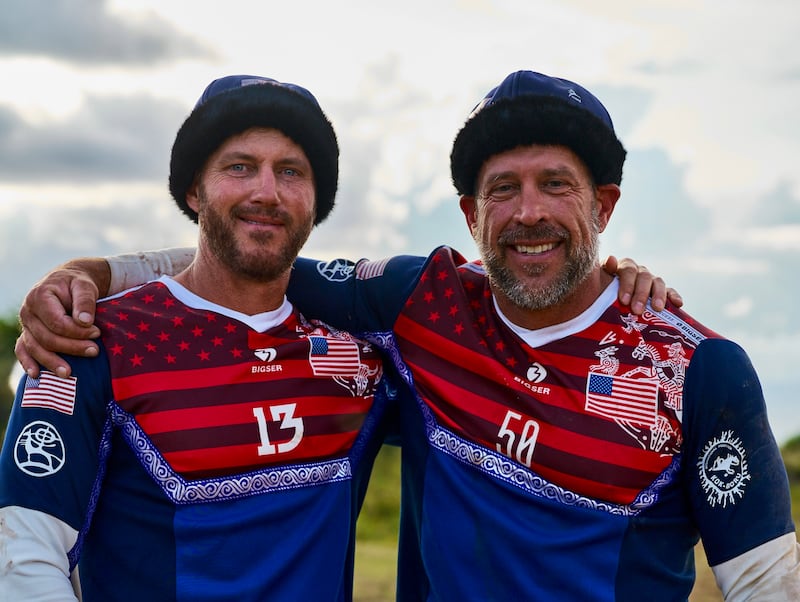
The coach broke it in half and handed him a piece. Pitts took a bite and gave him a thumbs-up. The coach then touched his own heart and said, “We are friends.”
The simple gesture reflected the genuine welcome Pitts experienced throughout the trip — and reinforced his belief in their shared identity as children of God.
“God’s children are everywhere, man. They’re beautiful,” said Pitts, a member of the Frenchtown Ward in the Ronan Montana Stake.
John Forsgren, a 50-year-old horseman and farmer from Cornish, Utah, described the trip as “life-changing,” strengthening his conviction that all people are children of God.
“I think the biggest thing for me was just faith in humanity and kind of the love and broadness of the love of God,” said Forsgren, a member of the Cornish Ward in the Lewiston Utah Stake.

A returned missionary who served in the Arkansas Little Rock Mission, Forsgren saw God’s hand in the timing of the trip — and in the teammates and people of Kyrgyzstan he came to know.
“I needed those people of Kyrgyzstan,” he said.
A wife’s faith and support
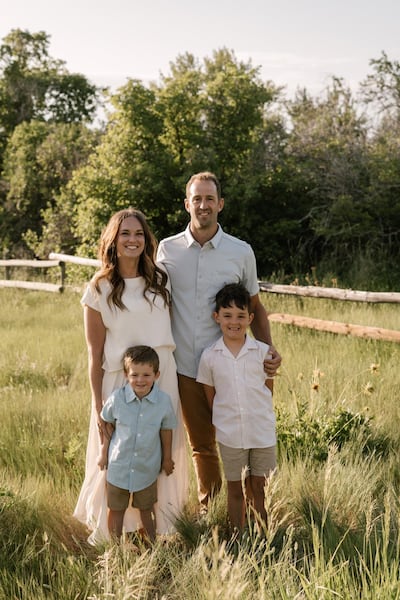
Howell’s trips to Kyrgyzstan would not be possible without his wife, Brittney Howell.
The couple’s daughter was born just six days before he made the 6,600-mile trip to Kyrgyzstan in early September, leaving her to care for their newborn and two boys with help from family.
Brittney Howell was also worried about her husband’s safety. Team USA players reported deep bruises, cuts and shoulder injuries — among other close calls.
“I’m always more nervous about him coming back in one piece,” she said.
Brittney Howell described relying on prayer and seeing answers in small details. Although she has not accompanied Howell overseas, she believes his participation matters.
“I know he’s making a difference for sure,” she said.
Attending the Sept. 18 meeting and dinner with President Japarov and Church and government leaders gave Brittney an opportunity to share in the relationships those trips had helped build.
“For us to be able to be together at that dinner,” she said, “it was really special.”

Use talents to bless others
For Elder Nash, the lesson extends far beyond horses or international competition. Whether someone’s abilities lie in athletics, music, the arts or science, those gifts can bless others.
“The Lord asks us to develop our talents, do good works, and hold up our light to the world,” he said, referencing the Savior’s words in Matthew 5:16 and 3 Nephi 18:24.
Howell and his teammates have done that by sharing something they love and taking time to know the people they meet. The resulting friendships offer an example of what can happen when people see beyond their differences.
“We are invited to let people see our good works. Sometimes that is on a national or international stage, but it is usually one on one, where it is most impactful. Doing this tends to erase stereotypes, break down walls and build friendship,” Elder Nash said in reference to 1 Peter 2:12. “It tends to help people see us as fellow children of God who simply want to bring goodness to the peoples of the world.”
Howell never imagined that the Russian he learned as a missionary and the horsemanship he developed growing up would one day help him build friendships in Central Asia.
Looking back, he sees the Lord’s hand in that preparation. His experience has reminded him that opportunities to serve do not end when a missionary returns home. He hopes other returned missionaries will often read their patriarchal blessings and recognize opportunities to use gifts and talents to serve and bless others, even when the path is unexpected.
“Just because you’re home from a mission doesn’t mean you’re not still able to do something for growing the kingdom,” he said.
His advice: “Use your talents and be prayerful because the Lord will put you in the situations where you’re supposed to do His work.”