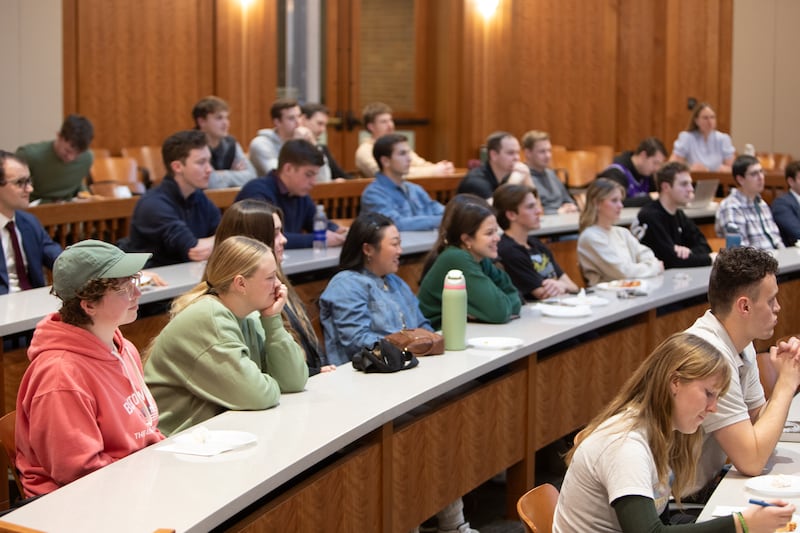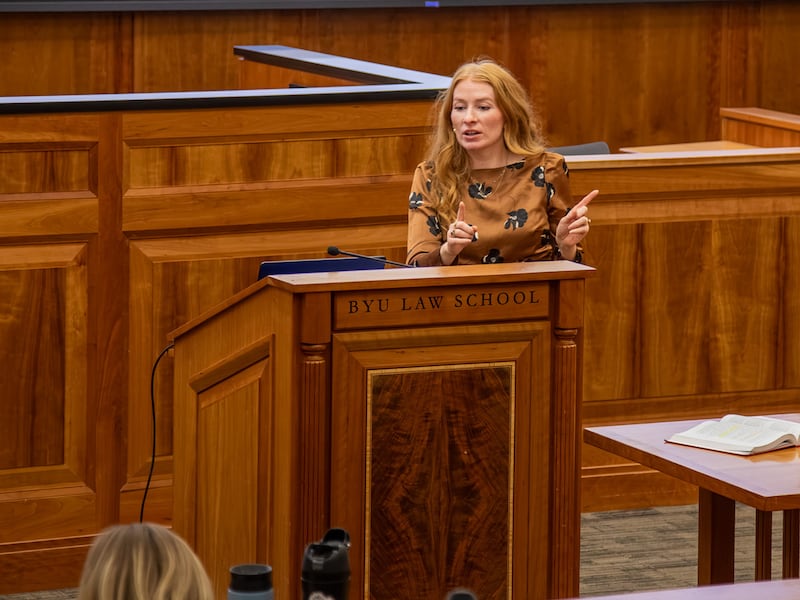

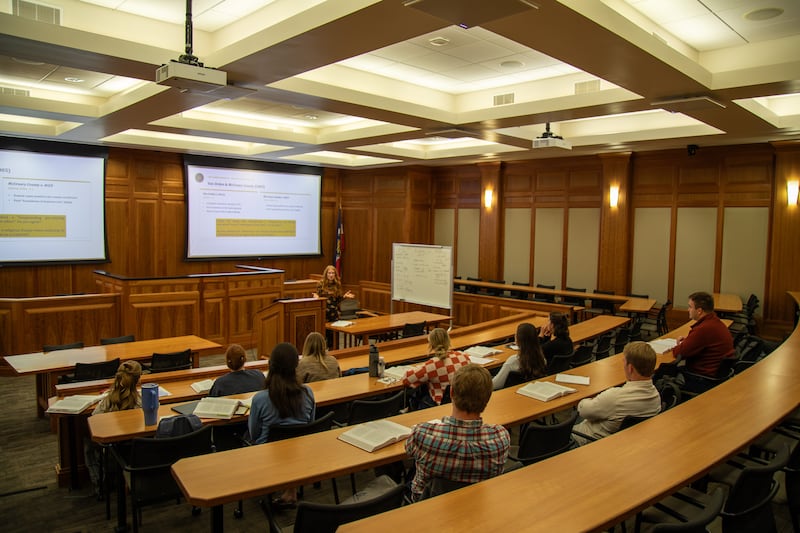
Brigham Young University’s law school announced Tuesday, Oct. 27, that it will launch a Religious Liberty Clinic, giving students hands-on experience drafting appellate briefs in religious freedom cases.
The clinic will welcome its first students during the winter 2027 semester, according to a news release.
In launching the new clinic, BYU joins a group of law schools offering similar programs. Stanford Law School launched the nation’s first religious liberty clinic in 2013; law schools at Harvard, Yale, Notre Dame, the University of Texas, Pepperdine and St. Thomas have also established similar clinics.
BYU Law Dean David Moore said the clinic represents an important milestone in BYU Law’s continued growth and national prominence. It will also provide an educational experience in an area especially relevant to the school.
“The Religious Liberty Clinic places BYU Law among a select group of leading law schools offering students the opportunity to engage deeply with religious liberty law,” Moore said in a news release. “As a faith-based law school, BYU Law exists because of religious freedom.”
President Dallin H. Oaks and other leaders of The Church of Jesus Christ of Latter-day Saints have championed religious freedom for many decades. President Oaks spoke on the need for preserving religious freedom at Washington National Cathedral on Sept. 16.
Directed by Kelsey Baer Flores, an associate professor of law who helped establish Harvard Law School’s Religious Freedom Clinic, the clinic will serve religious organizations and coalitions representing a variety of faith traditions, including religious minority communities.
Students will focus on drafting amicus curiae — “friend of the court” — briefs for state and federal appellate courts, including the U.S. Supreme Court. Working with clients and other attorneys, students will develop legal research, writing and advocacy skills.
Flores said she wants students to have their “fingerprints all over the briefs we file,” gaining practical experience while serving clients of many faith traditions.
“Religious liberty cases raise some of the most important constitutional questions,” she said. “Students in this clinic won’t just study those questions. They’ll engage with them through meaningful client work, appellate advocacy and legal writing that prepares them for practice.”
The clinic will be open to second- and third-year law students who have completed prerequisite coursework in religious liberty law.