
Former NFL and BYU quarterback and Latter-day Saint Steve Young had long challenged transactional approaches to faith when he recognized the same thinking in himself: he believed worrying enough could protect him and those he loved.
Young had warned against treating God like a vending machine — offering obedience and expecting a particular blessing in return. Yet his worry reflected a similar attempt to guarantee outcomes.
“The deepest transaction in my life was fear,” he told BYU–Idaho students. “And I had been living in it the whole time I was preaching against it.”
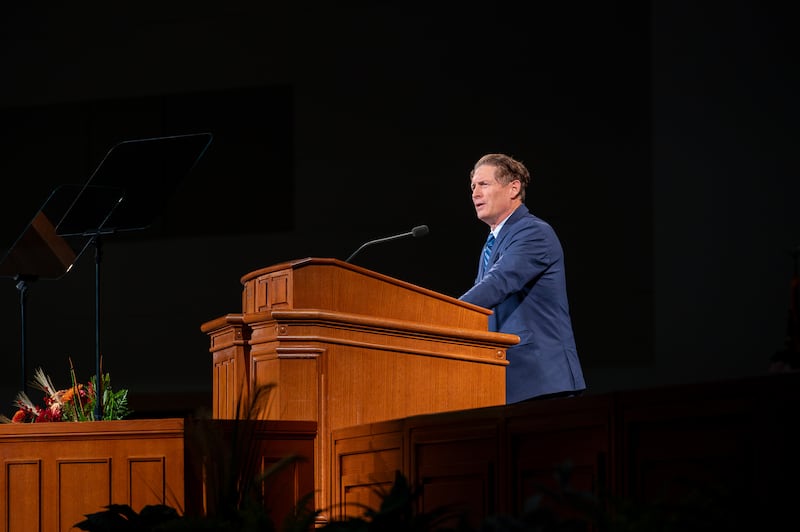
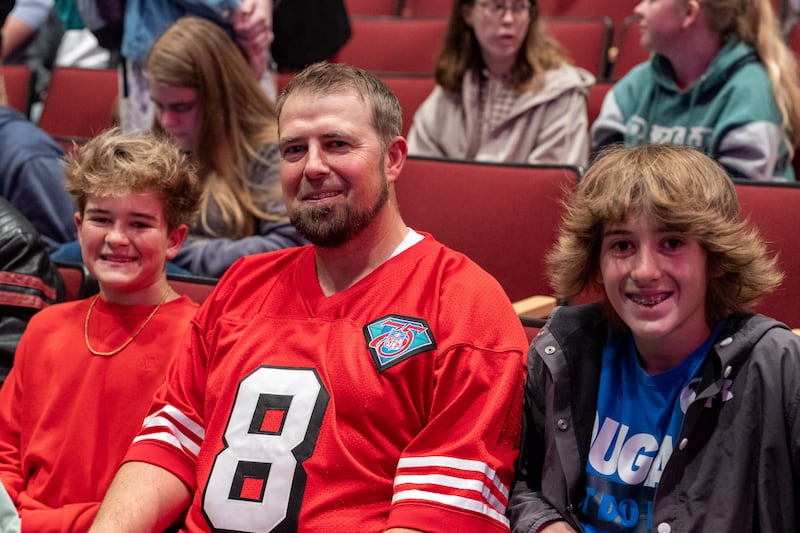
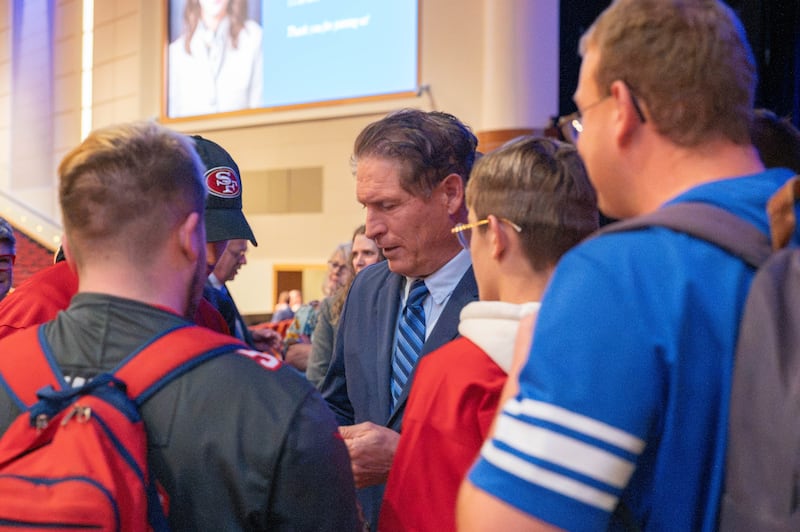
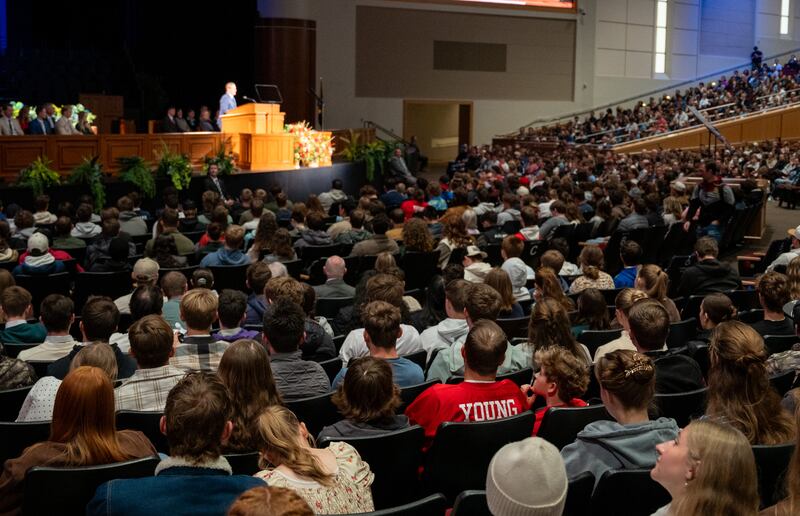
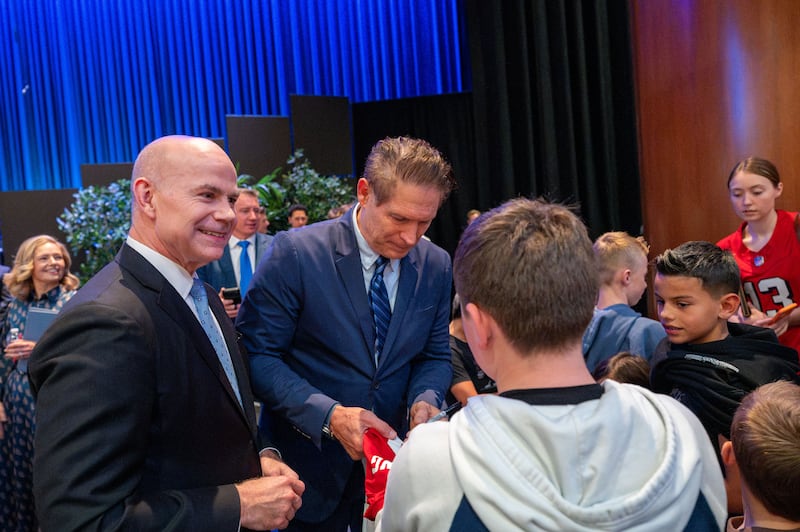
Speaking at BYU–Idaho’s weekly devotional on Tuesday, Nov. 17, in Rexburg, Idaho, Young invited listeners to distinguish caring from trying to control outcomes and to trust in the peace offered by Jesus Christ.
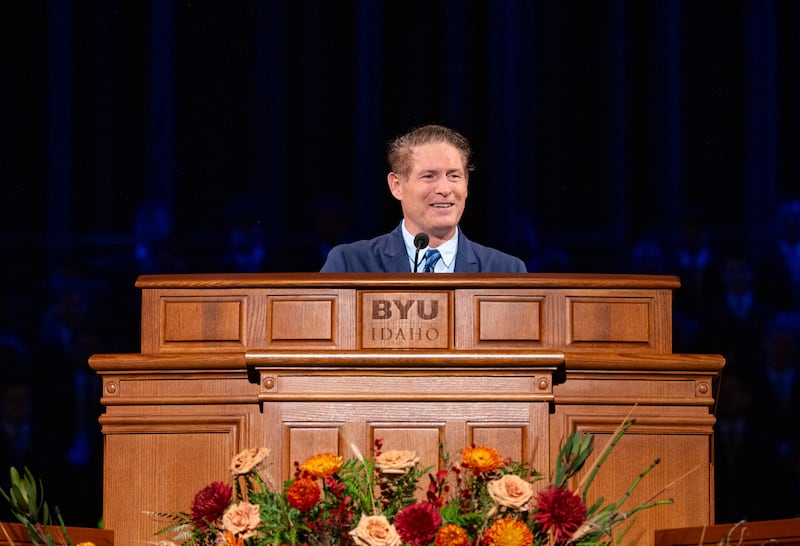
“Can you love someone fiercely without believing your anxiety is what keeps them afloat? Can you face a hard season fully engaged, without the hidden belief that your worry earns God’s help?” Young said.
“That is the shift: from fear to trust, and trust is where love leads.”
Fear-based thinking
Young described experiencing separation anxiety as a child, when home represented safety and being away brought fear.
As he grew older, circumstances changed, but the underlying pattern remained. His concerns shifted toward success, relationships, faithfulness and his standing with God.
“These were honorable things to care about,” he said. “But I pursued them the way I had pursued safety as a kid: through vigilance, through worry, through the feeling that if I stayed anxious enough, I could make it happen.”
He came to recognize a pattern of fear-based thinking: “If I worry about it hard enough, I can control it.”
“The worry itself becomes the offering, my sleepless sacrifice on the altar of outcomes I cannot control,” he said.
He affirmed that blessings come through obedience to God’s laws, as taught in Doctrine and Covenants 130:20-21. The problem, he explained, is the scorekeeping and the expectation that a person can guarantee an outcome.
“There I was, running my own vending machine, putting in worry instead of obedience,” he said. “Different currency, same transaction.”
Safety in Christ
Young learned that safety from every hardship is an illusion.
“God created an environment for growth, not comfort,” he said. “Safety in Christ is not the same as a storm-free life.”
In Helaman 5:12, the promise of building on the rock of the Redeemer does not eliminate the adversary’s storms. Rather, that foundation keeps those storms from dragging a person down.
“Safety doesn’t mean avoiding all of the hard things. It means experiencing them and still making your way through them, held by the One who walks with us,” Young said. “Growth was the offer. Opposition was the offer. And the Atonement of Jesus Christ, the Savior’s power to transform every bruise and heartache into something purposeful, was the offer.”
Young also began to see the Savior’s repeated invitation to “fear not” differently — not as encouragement to be tougher but as an invitation to relinquish the belief that worry can purchase control.
Quoting the Savior’s promise in John 14:27 — “Peace I leave with you, my peace I give unto you” — Young emphasized that Christ’s peace does not depend on securing a desired outcome.

‘Sacred surrender’
For Young, responding to that invitation requires what he called “sacred surrender.”
“Sacred surrender is the choice to release the illusion of control and trust Jesus Christ to carry what I cannot,” he said.
That surrender does not replace agency, responsibility or effort. Young said he continues to work, pray and serve — but seeks to do so from trust rather than fear.

Drawing on Alma 7:11-12, Young said that the Savior’s experience of mortal pains and afflictions enables Him to succor His people.
“You are surrendering into the hands of Someone who has already felt every fear you carry,” Young said.
He encouraged students to approach covenants not as a ledger but as sacred promises within a relationship with God and Jesus Christ.
‘Perfect love’
Young acknowledged students’ concerns about struggling friends, future families, careers and how their lives will unfold.
He invited them to connect to “a power that fear could never access: the Savior’s Atonement” and “a God who has promised that all things can work together for your good” (Romans 8:28).
Young concluded by pairing John’s teaching that “perfect love casteth out fear” with Mormon’s testimony that “perfect love casteth out all fear” (1 John 4:18; Moroni 8:16).
“You do not need a perfect understanding,” he said. “You just need to be willing to name the fear, see the transaction hiding inside it and hand it to the Savior.”