



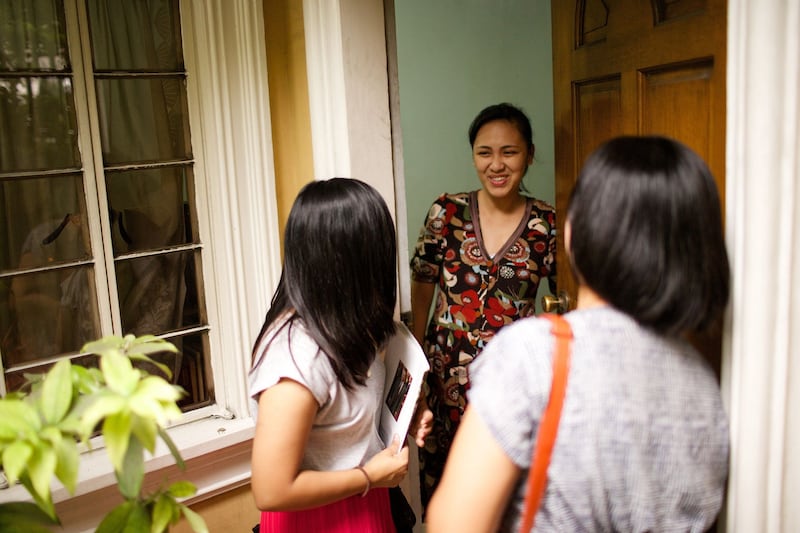

A new resource can help local leaders of The Church of Jesus Christ of Latter-day Saints support members in becoming more self-reliant.
It’s called “In the Lord’s Way, Caring for Members Who Have Temporal or Emotional Needs.” Relief Society General President Camille N. Johnson introduced it in a video on the Relief Society Worldwide social media accounts.
This new tool is “a fabulous new resource that opens with a question and then gives an answer,” she said.
Some of those questions are:
- “What can I learn from how Jesus ministered to those with temporal needs?”
- “When I meet with someone who is in need, what should I do or say?”
- “How do I balance providing relief and building self-reliance?”
- “What types of Church assistance can be provided?”
- “When I meet with someone who is experiencing emotional challenges, what should I do or say?”
- “How can I help members prepare for or prevent temporal challenges?”
President Johnson said, “As you click on these links, there will be experiential opportunities for you. You can study them on your own, or perhaps you’ll decide to study them as a Relief Society presidency or even in ward council.”
This is all part of one of the experiences supported by Relief Society — helping members become self-reliant.
Sister Hannah Miller, a member of the Relief Society general advisory council, said when someone is called as a Relief Society leader, they don’t suddenly know how to perfectly meet the needs of all the sisters in their Relief Society.
“Maybe you’re worried about saying the wrong thing, or you don’t know when to involve the bishop, ward council or ministering sisters. Maybe you’re even wondering when it’s helpful to include some professional resources to help meet some of these needs,” she said.
“In the Lord’s Way, Caring for Members Who Have Temporal or Emotional Needs” and other self-reliance resources can be found in the Gospel Library on ChurchofJesusChrist.org or the Gospel Library app by going to the Adults section then clicking on Women then clicking on “Experiences Supported by Relief Society” and scrolling down to “Self-Reliance.” Those resources are also found in Gospel Library by going to the Caring for Those in Need section and clicking on “Resources for Leaders.”
“Throughout this page, you’ll find answers to many questions that may be on your mind, find resources available to you and, most importantly, learn about the pattern the Lord set as He taught us how to care for one another,” Sister Miller said.
Why help with self-reliance?
Catherine Jensen, who teaches self-reliance in her ward, said Relief Society helps with self-reliance courses because it is a lot like ministering.
“We are there to help each other — we’re there to be there for each other during the tough times, the good times and when we celebrate. And that’s what ministering is. No one is better than anyone else. We’re just helping each other,” she said in a video on the Relief Society Worldwide accounts.
When a woman has greater self-reliance, the blessings don’t just stay with her, they bless her family and community, explained another Relief Society Worldwide post. “Self-reliance doesn’t mean we have no need for others. Self-reliance gives us greater opportunities to build up societies in which we can all help each other.”
Section 22 of the Church’s General Handbook explains more about providing for temporal needs and building self-reliance. It says that with help from the Lord, members build self-reliance in the following ways:
- Develop spiritual, physical and emotional strength.
- Gain education and employment.
- Improve temporal preparedness.
Section 22.3 outlines the pattern for building self-reliance and ministering to those in need. This section also points back to the resource “In the Lord’s Way: Caring for Members Who Have Temporal or Emotional Needs” for examples of how to apply this pattern.
Emotional resilience and self-reliance
Meanwhile, challenges that test emotional well-being and resilience are common, explained another Relief Society Worldwide post. The post continued by saying as Relief Society leaders prayerfully seek ways to support the sisters in their wards or branches who are dealing with emotional burdens, they can consider helping them gain access to the Church’s self-reliance resources, such as the Self-Reliance Plan and the course “Finding Strength in the Lord: Emotional Resilience.”
In that post, Becca Ekberg talked about taking the emotional resilience course in her YSA ward and how it helped her identify triggers and find a plan for handling her stresses. “It is so amazing and it is so beneficial for anyone’s life. It definitely brought me closer to Christ because I was able to reach to Him for help,” she said.
