



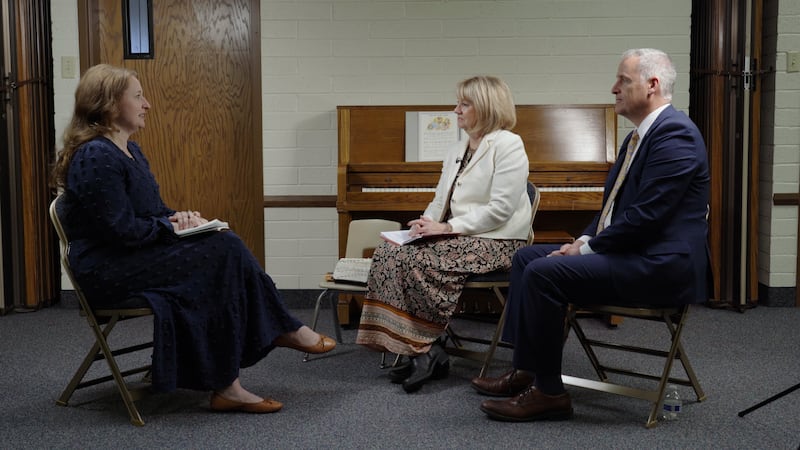


President Dallin H. Oaks of The Church of Jesus Christ of Latter-day Saints has taught, “The singing of hymns is one of the best ways to learn the doctrine of the restored gospel.” As new songs are added to “Hymns for Home and Church,” including music written for Primary children, that teaching and testifying power is evident for people of all ages.
In this episode of the Church News podcast, Sister Kathleen F. Kelly of the Primary general advisory council and Ryan Eggett, a music manager in the Church’s Priesthood and Family Department, join Church News reporter Mary Richards.
Together, they talk about the power of sacred music to teach the gospel of Jesus Christ as well as strengthen and fortify testimony.
Listen to this episode of the Church News podcast on Apple Podcasts, Amazon, Spotify, bookshelf PLUS, YouTube or wherever you get podcasts.
Transcript:
Mary Richards: President Dallin H. Oaks, President of The Church of Jesus Christ of Latter-day Saints, has taught that “the singing of hymns is one of the best ways to learn the doctrine of the restored gospel.” Sister Kathleen F. Kelly of the Primary general advisory council and Ryan Eggett, a music manager in the Church’s Priesthood and Family Department, join me, Mary Richards, on this episode of the Church News podcast to talk about the power of sacred music to teach the gospel of Jesus Christ.
Sister Kelly and Brother Eggett, thank you so much for both being here today. And we’re in a Primary room. You visit Primaries all over. Tell me about some of those experiences being in Primary with our youngest learners.
0:50
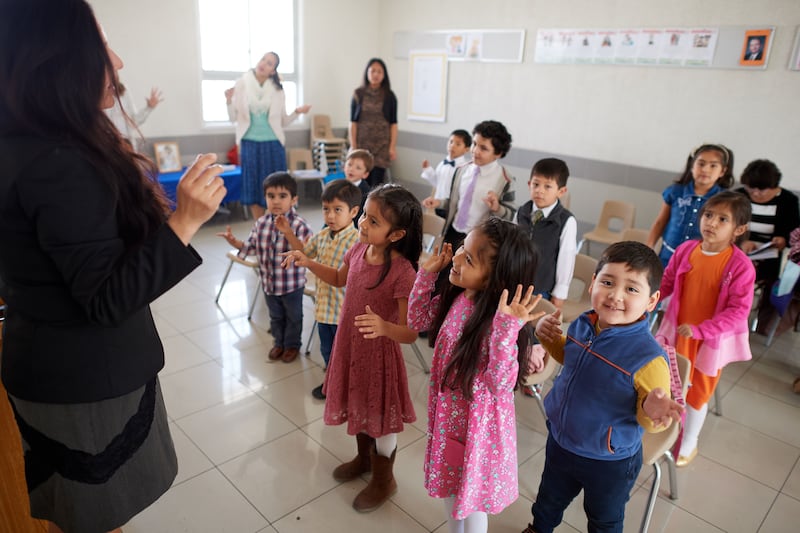
Sister Kathleen F. Kelly: One of my blessings on the council is to get to visit Primaries. And it is so wonderful to go and to watch the children come in and to hear the prelude music. I remember as a tiny child getting off the bus when it was on Wednesday, going up the hill and into Primary and hearing that organ playing, “Rev’rently, quietly, lovingly we think of thee.” We want the children to hear music that is familiar to them, that can remind them of the Savior, that they can see happy faces, Primary leaders welcoming them and having children feel good about being in Primary through joy. We want it to be a Primary of joy, that they can feel comfortable and see the Savior in everything that they do. That is the focus, is the Savior, Jesus Christ.
1:45
Mary Richards: Ryan, with all your experience with music and everything you’ve done and the choirs you’ve led, what do you feel when you are in Primary singing music with children?
Ryan Eggett: You know, to use the phrase “This is where the magic happens,” I think we’ve heard that before, but we’ve talked a lot lately about the Church is a home-centered, Church-supported organization. And for most, I think for most individuals that grow up in the Church, this is the first time that they actually feel the Church supporting them, is when they’re in Primary. You come in, and it’s the first time you understand the doctrine — not that when you’re 4 or 5 you don’t understand sacrament meaning, but that’s a little bit more difficult.
But here in this room, this is the first time for most children, and they’ll remember this, like you said, they’ll remember this throughout their lives. This is the first time that the Church comes in and really supports and edifies and strengthens what they’ve learned at home. And music is that special moment where it’s so clear and so concise that they can say, “I can tell you what I sang 50 years ago.” I can tell you what I sang 50 years ago.
2:47
Mary Richards: Yes. Let’s talk about that, that power of Primary music to stay with us, to build our testimonies, and then as we grow. So, it’s not just for children; of course it is, but for adults, too. We hearken back to those songs that we sang when we were young, and they come back to us because they’re in our hearts and our souls, really, I guess, would you say it that way?
Sister Kathleen F. Kelly: I think they’re very deep, and that sacred music invites the Spirit into the room. So, one of my favorite new hymns is — new sacred hymns is — “Holy Places.” And that beautiful hymn talks about that home can be a sacred place, that my heart can be a sacred place, the temple; but also a Primary room. When we invite the Savior through music into this room, that turns it into, I believe, a sacred place.
3:42
Mary Richards: Yes. Primary singing time on Sunday. For somebody who’s just received this new calling, they might be feeling a little intimidated. I was asked to sub in our ward for Primary music singing time, and I thought, “Oh no, I don’t know what to do.” But there’s help. There are resources.
Should we talk through some of those ways that people can teach Primary music and teach in singing time in a room like this one?
Sister Kathleen F. Kelly: Yes, and I think that humility that comes with receiving the calling makes us teachable.
Ryan Eggett: Humility is born of terror a little bit sometimes. You receive a calling like that, and you think, “Can I do this?” And that’s what’s so great to have a calling, because you get ordained — or you get set apart — and you receive that blessing, and you go, “This is strength coming from the Lord to be able to do this.” Sorry, I didn’t mean to interrupt you right there.
4:29
Sister Kathleen F. Kelly: No, that’s perfect. And President [Thomas S.] Monson taught us that he who the Lord calls, He prepares. He qualifies us to do this work. So I think the humility that comes with feeling a little bit inadequate, any calling I’ve ever received, I’ve felt a little overwhelmed, and it brings me right to my knees, where I can be taught by our Heavenly Father how to do this work.
But we do have wonderful resources, and the scriptures are a great resource. We have Gospel Library, and we have our “Come, Follow Me” manual, which at the back of the manual, there are some wonderful helps. And if you turn to the Appendix C, it has all this instruction for singing time. It says, “Sacred music is a powerful tool to help children learn about Heavenly Father’s plan of happiness and the foundational truths of the gospel of Jesus Christ. As children sing about gospel principles, the Holy Ghost will testify of their truthfulness. [And] the words and music will stay in the children’s minds and hearts throughout their lives,” just like we were talking about.
But it helps you not only with the sacrament meeting presentation but also songs that they can sing every month that reinforce the principles that are being taught in “Come, Follow Me.” And then also some techniques or methods that you can use, such as reading-related scriptures. We love it when the children bring their scriptures to church and that they are used. Every song has scriptures. And I was in a Primary just last Sunday, and the Primary music leader just pulled out the scriptures and naturally read the verses and had the children come up and read.
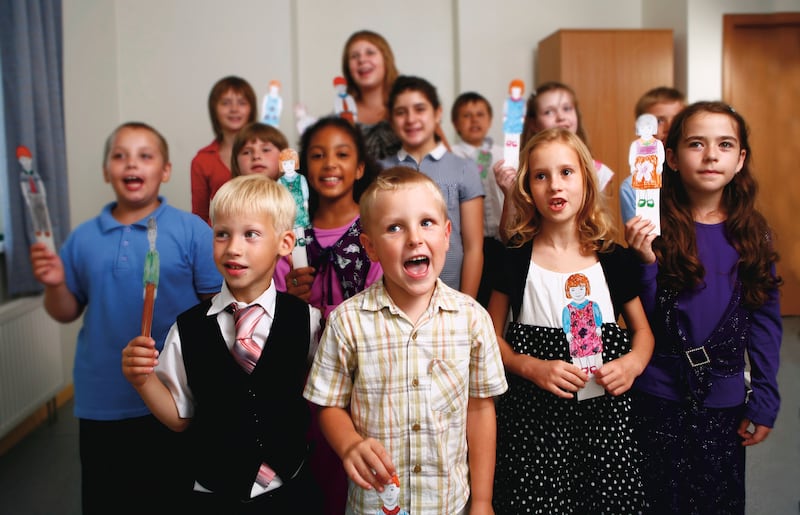
It was so powerful that also inviting them to share personal experiences, asking questions, simple hand actions, object lessons, pictures; and then testifying. So as you’re teaching these songs that have gospel principles, and then you stop and you say, “I know this is true because this happened” or you share your personal experiences with the children, and then they have experiences too that they can share so that it’s just a wonderful time to share your experiences.
So we have this, we also have the Friend magazine, we have a lot of resources online, in the handbook. We have our Section 12 in the handbook. We have — let me just take you there to Section 12, and 12.3.4 talks about the calling of being a Primary music leader.
7:43
Ryan Eggett: And we have the song, which is so great. I taught seminary for 27 years, and one of the things that we would, as we’re thinking of all the other things that will help us teach the scriptures, we would always say, “We’ll start with the scripture.” There’s your greatest strength. And I think the song is our greatest strength, to say, “We’ve got the music, and we’ve got the inspired lyrics here.”
And when you start with that and then you bring the other things in to support that, I think — I think we’ve both, we’ve probably all, had the experience where you watch a lot of work being done and then you finally get to the song at the end. And I would say the song is the strength. Come in with the strength, which is the doctrine, the tune, those things that the children are really going to remember, and let all of these other resources strengthen and buoy up that song.
8:31
Mary Richards: Yeah. We have some beautiful songs. We’re getting — and like you mentioned, “Holy Places,” there are some other really beautiful ones coming in the new hymnbook, “Hymns for Home and Church.”
So, these things that we’re talking about using Primary music can also be something we’re doing in our home. There are ways that parents can use these songs, like you said, and have that be such a beautiful part of a home worship, too.
8:56
Ryan Eggett: And I think it’s such a substantial piece of the whole puzzle. Maybe even it’s the centerpiece of this entire puzzle, in terms of saying, “How does sacred music bless individuals, families and congregations?” But if you read the current First Presidency preface in the current hymnbook, it is so brilliant. And I’ve often taught from that. And I see parents kind of light up and think, “I should be using this a little bit more.” There’s at least 20 promises listed, for those who use sacred music, from the First Presidency. And when you go through those, some of them are like: “It will invite the Spirit.” How many times as parents have we all said, “Oh, if I just could have the Spirit in my home.” And right here is a promise from the Prophet saying, “If you use sacred music, that will invite the Spirit into your home.”
One of my favorites especially, since I’ve worked so much with youth, is: “It will help you resist temptation.” Moms, we have two boys who are just coming up through the rising generation ranks right now. And we’ve often talked about the power of sacred music to help those two boys resist temptation, and what that has meant to us and the power. Because sometimes you say, “Oh, let’s read a scripture,” but you read a scripture, and then you can talk about it.
But then there’s this moment. One of the beautiful things about music is you say, “Let’s learn this song,” and repetition is the mother of learning. And so when you learn a song, you’re going to sing it multiple times. And you can sing it again and not have your son say, “Are we quoting that scripture — how come you’re quoting that scripture to me 10 times today, Dad?” But that song, it’s so beautiful with music because people want to sing it again.
You learn music, and you go home from Primary, and you hear them singing it all the time. And you think, “Wow, if repetition is the mother of learning, then learning Primary music is probably the best thing you can do to learn the doctrine, the restored doctrine of Jesus Christ.”
10:59
Mary Richards: Yeah. And music stays with you.
Sister Kathleen F. Kelly: It stays with them. And I, as a former mission leader, one of my favorite zone conferences is we took the whiteboard, and we had every missionary say what their favorite Primary song was. And then, “What did you learn from that song?” And it was really exciting to see all these beautiful songs come onto the board, and they remember them. And missionaries, they struggle a little at times.
So, in the song “A Child’s Prayer,” we have beautiful instruction throughout our lives to know that: “Pray, he is there; Speak, he is list’ning. You are his child; His love now surrounds you.” These are important words that have strengthened missionaries to know, “Yes, I learned this as a child, and now I really need to know what I should do.”
And missionaries get answers all the time from their songs. When I go to Primaries, I see future missionaries. Those little children are future missionaries, and they are learning gospel truths that will stay with them throughout their mission, and their life.
12:15
Ryan Eggett: And when you couple that statement, “Pray, he is there; Speak, he is list’ning. You are his child; His love surrounds you,” you take that clear statement, and then you put it with a tune. And all of a sudden, the magic happens. You put it with a tune, and now I can say that 20 times to myself, and that will probably happen to me after we’re done here. I will hear that going through my mind — “Pray, he is there; Speak, he is list’ning.” And that is the beauty of taking simple, clear doctrine and putting it to a powerful tune, is that it opens up the opportunity for this to go from the mind into the heart.
Sister Kathleen F. Kelly: And it is just a prayer. “Heavenly Father, are You really there? We need to know that You are there.” And it’s going to stay with them forever.
13:05
Mary Richards: That beautiful combination of the doctrine and those words with a tune.
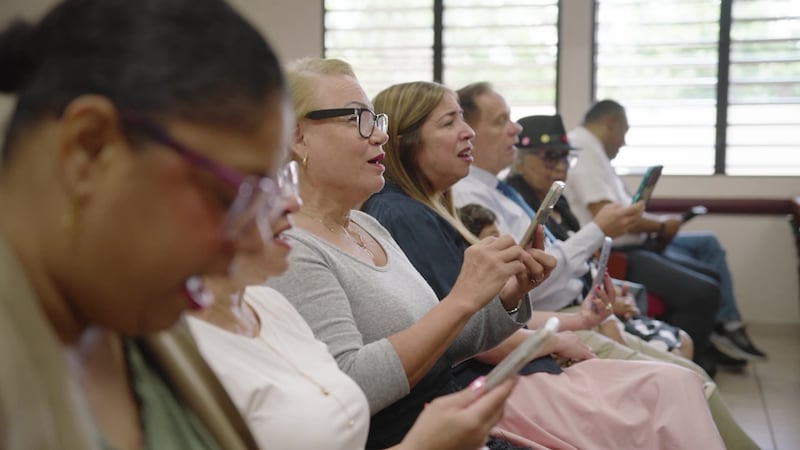
There’s probably music theory to this that you could teach me, Ryan, that I don’t know. But I just had this thought pop into my brain that maybe people shouldn’t be too afraid. They think, “Oh, I’m not musical. I don’t really sing the hymns in sacrament meeting. I just kind of listen. But there’s a power in singing, right? And like you just said, in listening to get it into our minds and hearts. Because of that, I want to call it magic, but the beauty of a tune and what it’s teaching in addition to the words.
So, people, don’t be afraid to sing, maybe, is my message, right?
13:44
Sister Kathleen F. Kelly: Right, it is your voice. God gives us all voices. This is a gift from God. And some Primary music leaders say, “Oh, I don’t sing. I can’t do this job.” But it is not about the voice. It is about the gospel doctrine that is being taught that will stay with them.
Mary Richards: I love how you said earlier how grateful you are for that fact that they are set apart. Trust in that power that comes from Heavenly Father for that calling, because it will come to you. And children don’t care. At least, I don’t think they do. My children don’t care that I’m not a perfect singer. I love to sing.
14:21
Ryan Eggett: Well, it gives them license to sing too, right? If every instructor was a perfect singer and somebody that belonged on Broadway, I think you would find that the children would be less likely to sing, because they would think, “I don’t sound like that.” And so sometimes having somebody that is a regular person up there.
Isn’t it interesting that shortly after the Lord restores His Church in 1830, He gives Emma that revelation in Doctrine and Covenants 25? And I’d love to talk more about this, but you get verse 11, where He talks about including music in the Church, and then that famous statement. And I think we can’t underestimate that He says, “For my soul delighteth in the song of the heart” (verse 12). And He doesn’t say, “My soul delighteth in the song of the voice.”
Sister Kathleen F. Kelly: Or the perfect pitch.
Ryan Eggett: Yes. He doesn’t say that. He says, “If you’re singing with your heart, that’s where I find the joy.”
15:12
Sister Kathleen F. Kelly: And I think when you are set apart, you are blessed with learning to love each child. The blessing of a spiritual gift to love these children is so much more important than being able to sing perfectly, understanding rhythm and dynamics and all the amazing music theory that comes along.
But children, really, our faces are such a powerful teaching tool. If we’re smiling, if we’re looking at them, if we are loving them and asking them to share. When children share their experiences and they raise their hands and they stand as a witness, that is really beautiful, and they will remember sharing that.
16:01
Mary Richards: So, not just Primary music leaders we’re talking to here, but Primary presidencies and teachers and parents, if they’re subbing there that day, get up and do the actions and learn the words and sing with the children. It’s so joyful. I’m in my ward Primary presidency, so that’s why I’m super grateful for this chance to talk to both of you.
Ryan Eggett: How fun. I didn’t know that. That’s wonderful.
16:20
Mary Richards: It’s been a wonderful calling. And my daughter is in Primary with me, and we go home and we tell her older brothers what we learned that day and what we sang, and then they start singing that song too. “Oh, I remember learning that song.”
Or there’s a new song that we’re learning. We’re learning “Build an Ark” right now on Sunday, which is so powerfully teaching us lessons from the Old Testament. So, this can pair hand in hand with our “Come, Follow Me” study as well, music that we’re singing in Primary. But also I hope that those watching will think about that for their own lives, the songs in sacrament meeting too, that can pair with your “Come, Follow Me” study.
It’s all, it really is, it’s not separate, is it, Ryan, these things?
17:00
Ryan Eggett: No, and if you look right now in the “Come, Follow Me” manual — and we will add more of this in future manuals, I can tell you right now — but every lesson or every reference material also has included music now. And so we’re working with that team to say, “Which of these songs really works well with this week?”
And one of the beauties, like you said, you may not be able to follow your children around reading the manual or reading the scriptures, but as they come down in the morning or in the evening or whenever you’re studying as a family or even individually, how easy is it to just hit play and have that music playing? And the entire time that the music is playing — and I hope we understand this — the entire time the music is playing, the gospel is being taught in your home. I think we underestimate the value of that, to say, “How would you like to have the gospel being taught in your home all day long?” It would be pretty easy.
Get some spiritual, religious gospel music playing, and we have lots of different ways you can hear it: “Songs of Devotion,” the Tabernacle Choir, the standard recordings. Anytime that’s playing in your home, the Lord is teaching us that the gospel is being taught in your home, which means you’re going to have an increase of the Spirit in your home. Your children are going to be more fortified against temptation. There’s going to be unity among your family members. Your heart’s going to be touched.
I’m telling you, when I have taught this — it’s funny; I’ve had parents reach back out to me and say, “We’re now playing music all the time. It’s changed the feeling of our home to have the gospel continuously being taught through music.” And it’s such a — I don’t know, it’s such a noninvasive way to have that taught in your home all the time.
18:39
Sister Kathleen F. Kelly: I love that. I love that. Those playlists are wonderful. And I’ve been a Primary music leader several times throughout my life. And to be able to stand up in front of these beautiful children and lead them in songs where you are talking about gospel truths, and you feel the Spirit, you leave there feeling the Spirit strongly, and then you can ask them and say: “I feel the Spirit. What do you feel when you sing this song?” And then a follow-up to that is, “Why do you think that Heavenly Father gave you those beautiful feelings?” Because you are learning truth. Those feelings are coming from our Heavenly Father.
So it is such a beautiful place to serve in the Church. And Primary music leaders don’t ever want to give up their calling. They love it so much.
19:33
Ryan Eggett: I have just seen that this week on social media posts. Somebody posted, “I was released after five years,” all these cry emojis after it. But what a beautiful triangle that makes when you have the doctrine, the music and the Spirit. And all of those coming together in one experience, it’s very unique, the opportunity. I’ve often thought, “If this was so great, then why didn’t the Savior do this?” And if you look at the scriptures, He did.
And of all the books of scripture, He quotes Psalms, which was the songbook of His day. He quotes Psalms more than any other book, even Isaiah, He quotes it. And you think, “Well, what about His personal life?” At His birth, there was singing. In Job, we learn at the foundation of the world, there was singing. They will come to Zion in the last days with singing. Just before He walks into the Garden of Gethsemane — we’ve just had a conversation about this recently.
20:26
Sister Kathleen F. Kelly: I would love to know what that song was that they sang. Because I’m sure He chose His favorite that would strengthen Him. But it’s a beautiful image of Him.
Ryan Eggett: Walking into the garden to, yeah, to do the hardest thing that would ever be done, the greatest battle that would ever be won, He chose to sing a hymn to strengthen Himself and then goes into the garden. I don’t know if everyone even understands that on the cross, when He says, “My God, my God, why hast Thou forsaken me?” that’s a direct quote from Psalm 22, verse 1. And then when He says, “I commend my spirit, Father, into Thy hands, I commit my spirit,” that’s also a direct quote from a psalm (see Psalm 31:5).
So, the start of His Atonement, He sings. At the end of His suffering, He sings. I think that teaches us that how is He gaining strength for this most difficult thing that would ever happen in the history of humanity was music. And He used it to teach, He used it to strengthen Himself when tempted or weak or in the middle of a trial. And if it’s good enough for the Savior, this is a great way to raise children, then, if that’s what He uses in His life.
21:38
Sister Kathleen F. Kelly: The song “Gethsemane” is so loved by the children now, and adults. I’m so grateful that it will be in our new hymnbook next year, that we will have “Gethsemane” right there. And I’ve talked to so many adults who get so much strength from that. After a Primary, I was talking with some children about that song, and a little boy said, “It just blows my mind. It just blows my mind.” And I thought, “That is exactly right.” It is hard for us to comprehend, but that song puts into beautiful words that amazing event.
22:22
Mary Richards: And I will say it is teaching those not of our faith as well. Because last June, I had the opportunity to be in Chile with Elder Gary E. Stevenson of the Quorum of the Twelve Apostles for a ministry assignment. And we went to see the 100th anniversary celebration of the gospel in South America. And a choir sang “Gethsemane.”
And there was a man sitting beside me who had been invited to come who was with, I think, a government or legal entity in Chile, and “Please come to our celebration and learn more about our Church.” And he was very touched by the song. He turns to me, and he says, “What is this? What is this?” And it was just this beautiful moment. And I thought of the power of music to teach anybody, really, about Jesus Christ.
And I loved how you said in the beginning of our conversation about how important it is for a Primary room to have a picture of Jesus Christ, because don’t we want our children to be knowing, “This is the purpose of everything we’re doing here”?

23:21
Sister Kathleen F. Kelly: And a picture of Jesus with the children. I love in the Friend magazine for next month, there’s a beautiful picture by Michael Malm which is — I love this picture because you have a child leading a family to the Savior, and she’s pointing, “Look and see.” She wants her family.
It’s wonderful how children now are doing so much in the Church. Children can play prelude. They can, with the help of their presidency, they can conduct the meeting. They can be the Primary music leader, with the help of the Primary music leader. We see them in sacrament meeting. We know that any baptized member can pray or give a talk, and that includes children.
So, the ability that children have to invite and to lead and to carry out is really wonderful. They do a lot of children’s devotionals now in stakes throughout the world, where the children plan it, and they give all the talks, they take the microphone around. They help in every way. They are playing the music. Our children are really not afraid. They have courage and faith to do these amazing acts of service and leadership.
Mary Richards: They are a part of The Church of Jesus Christ of Latter-day Saints.
Sister Kathleen F. Kelly: They are. And that’s why when we get that new hymnbook next year, we’ll have the children’s songs with the adult songs right next to each other. And so a child’s job is not just to sit in sacrament meeting and fold their arms and be quiet for an hour; that they’re participating. And we know that when we participate, we feel the Spirit. And when we are speaking or excited about the fact that this book now has my songs in it too.
25:28
Mary Richards: Yes, I love that. They’re side by side, and you don’t have to think, “Oh, we’ll only sing this one in Primary” or “We’ll only sing this one in sacrament meeting.” All of it, at home and at church, can be used.
You’re pretty excited, aren’t you, Ryan?
25:39
Ryan Eggett: Yeah, that is such a wonderful — to have those all together in a single book. So, when I was initially called to work on the hymnbook — or to serve on the hymnbook committee — I was called specifically onto the Children’s Songbook committee at the time. And then once it was all combined, I thought, “This is the right direction.” Of course, it was the right direction, but we could sense it was the right direction in terms of it’s about unifying. The hymns are about unifying. The experience is about unifying.
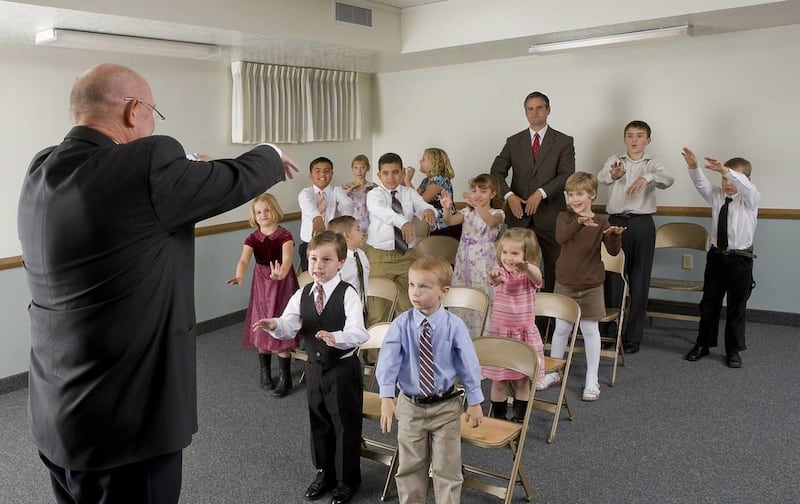
And when everybody — and we’ve all had the experience, I think, already, even in our short experience here of these new hymns. You’ll see the children playing on the benches or whatever, having their little buffet or playing with their cars or whatever it is. And all of a sudden, one of these Primary songs will come on, and they stand up and turn around, and they’re like, “I’m ready for this, because this is my part.”
26:29
Sister Kathleen F. Kelly: “This is about me,” yes. “Jesus loves me. Gethsemane, Jesus loves me.” And they get very involved and excited. And I think as members, we get excited when we see a Primary child giving a prayer or singing from the pulpit, giving a talk. It’s so refreshing. They’re just full of the Spirit. And we can learn so much from them.
26:52
Ryan Eggett: Isn’t it interesting? I love all these things that Kathy is sharing, because they just make me go, “I’m excited about this,” because I have 10 grandkids, soon to be 11.
Sister Kathleen F. Kelly: Congratulations.
Ryan Eggett: Thank you. I have six children that are growing and grown. And just thinking about, “This is what I want for my kids.” And sometimes as parents — and maybe this is just my family because I’ve worked for the Church my whole life here — but sometimes it’s a little difficult to turn to your child and say, “I want to teach you the gospel. I want to talk to you about Joseph Smith. Sit down here, and let’s talk Joseph Smith,” or “Let’s talk the Restoration” or “Let’s even talk about the Savior and His Atonement.”
Sometimes the moment is difficult to find. But we keep hearing from our Church leadership about sharing the gospel to others, which I think includes our own family, that it should be in normal and natural ways. What’s more normal and natural than having music?
27:48
Sister Kathleen F. Kelly: Even on the ride to school, you just put on your playlist, and you’re listening to these beautiful songs that teach gospel doctrine. And they — other children can come into the car and hear how beautiful they are. I’ve heard some people say, “Well, what if they take out some of my favorite songs out of the new hymnbook?” And you can still use your old hymnbook at home. There’s no rules that said, “You cannot have any more of that.” No, they’re still loved by all of us, and we’re grateful for these new songs.
I find myself having favorites. “Close as a Quiet Prayer” is one that really has resonated with my heart, that moment by moment, by night or by day, our Heavenly Father is not far away. And that is a beautiful message to all of us to know that we are never alone. So I like that one.
28:50
Ryan Eggett: So, one of my jobs currently, in my current position with the Church, is to oversee all the recordings that are coming out. And just to — I could tell you story after story, even doing the auditions for those. We had “Gethsemane,” of course, is a favorite among so many people. But we had a young teenage girl, maybe 15 or 16, come in, and we’d had lots of people audition, lots of youth audition, children audition, from 4 years old and up.
And so, I was in the booth with this individual in this room, and then behind the glass, there was her mom, and we had five other people listening to the auditions. And she came in, and I said, “I just want you to sing ‘Gethsemane.’” And I think she was 15 at the time. And the music started, and she started to sing. And it was not an audition; it was this 15-year-old bearing their testimony. And it was — I can’t tell you how powerful it was.
By the time she was done, I’m thinking, “Wow, I just had a privilege for two minutes to hear this individual bear their testimony. And I looked behind her in the booth, and just everyone was — they couldn’t even see her face — and everyone was in tears, and it was nice to see at that moment, “You are going to sing on the hymnbook, and you’re going to sing this song. You’re going to be the individual that’s going to sing this song for us.” Because it comes out, it’s not singing; it’s “Here’s my chance to bear my testimony.”
30:19
Sister Kathleen F. Kelly: And you asked about the resources for home. And there is a beautiful resource called “About the Hymns.” And at the end of each song of our new hymns, it says, “You can click here and learn about this hymn.” And the stories are so remarkable. Why did the composer, the lyricist, choose to do this? Because there was a little experience. And then also there are scriptures. There are questions, there are inspired questions that you can ask while you’re teaching the song.
Ryan Eggett: Ways to teach your family, activities for families.
Sister Kathleen F. Kelly: Yeah. A lot of things that you can do at home with them. And I think that is a really great resource for families to have, “About the Hymns”
31:07
Mary Richards: Yes. We’ve been writing about some of them as well in the Church News. And it’s been such a pleasure to meet these composers and authors and say, “What prompted this?” And there’s some beautiful stories. Sometimes they say, “The lyrics just came to me.” And other times it’s a bit of a work through and a process. And so there’s really no one way. And that’s been interesting to learn.
31:32
Sister Kathleen F. Kelly: Yeah, it’s a beautiful personal devotional to have in the morning or at evening to read through and listen to the song and become more familiar with it. I think we’re at 60 songs right now.
Ryan Eggett: Coming into 60 now, yes.
Sister Kathleen F. Kelly: Yes, and so, we have a lot of new music to learn and to know the background of the hymn, read the scriptures, think about those questions. It makes it more meaningful. Sometimes in the morning, I notice when I wake up, I actually have a hymn or a Primary song in my mind. And sometimes it’s the answer to the prayer that I have been seeking. So it really blesses our lives in so many ways.
32:14
Mary Richards: I want to talk more about this, this idea of how Heavenly Father speaks to us, and in some ways He’s speaking to us through music, maybe. When a song comes to your mind, it’s something that you need to be reminded of or to remember.
I’ve heard some of our leaders say — for example, our Primary General President Susan H. Porter has said — how important it is to teach children how to know and how to recognize when they’re feeling the Spirit.
And so, what are some ways you can teach us and those listening to know how ourselves — but then also our children, our teenagers, our youth, our young adults — to know and recognize, “Oh, that’s the Spirit. That’s what I’m —
32:55
Sister Kathleen F. Kelly: Yeah, I was in a Primary, and a little Sunbeam at the end of Primary music time was so excited about this song. And the joy was just coming out her ears, and she was just so excited. She could not contain herself in the chair. And we knew that she was feeling the Spirit. But as a Primary music leader, you feel the Spirit, and then you can say, “I am feeling the Spirit. How do you feel when you sing this song? What do you feel?”
And that can be a wonderful way to start a conversation about how to feel the Spirit, because they do feel the Spirit. I heard a little boy singing, “This little light of mine, I’m gonna let it shine.” And he just was beaming. I mean, you could see the Light of Christ in his eyes. And to watch that just made me feel the Spirit.
33:53
Ryan Eggett: Not only is that great doctrine, but it’s a great way to teach it as well. I think too often when we’re feeling something, we assume everybody is feeling the same thing the same way. And it’s easy; we’ve seen this, we’re teaching the missionary force the same thing — not to tell people what they’re feeling and say, “This is what it is,” but to express how I’m feeling and maybe the different feelings I’m feeling and different feelings I’ve felt when I felt the Spirit.
So, just the way you’ve explained that, Kathy, is really fantastic teaching, to be able to say, “I’m feeling the Spirit. It feels like for me right now,” and then we can offer that same opportunity to the children to say, “Is anybody else feeling that same thing?” Or “What are you feeling right now?” And then as they tell us what their feelings are, then it’s easy for us to say, “Those feelings come from Heavenly Father through His Spirit.” And I love that. I hope everybody who listens to this that’s a Primary music leader will say, “That’s a great way to teach that I just learned from Sister Kelly,” yeah.
34:58
Sister Kathleen F. Kelly: Well, and I hope that children feel comfort and healing. Some of our children need healing. Things are hard. They come to church seeking for answers, and they feel the Spirit when they’re singing, and it comforts and heals their hearts and blesses them. Those are feelings that they will remember throughout their life, that “I was sitting in Primary.”
I’ll share a personal experience that happened to me when I needed comfort and I was serving on my mission. We went to Dresden, Germany, for a mission conference with other mission presidents. And my mother — well, my grandmother — was from Germany. I didn’t meet her, but my mother had passed away before I served my mission, and she always wanted to go to Germany, but we never did it. And I was rushed, we were rushing from the airport. My luggage had been lost. I was a little frazzled, thinking that for three days I was probably going to wear the same clothes. But I remember we sat down, and they started the meeting, and the song was “The Lord Is My Shepherd.” Well, my mother always sang in her beautiful alto voice. And “The Lord Is My Shepherd,” the melody is in the alto. So I knew, I knew her voice, and I knew this song.
And I’m sitting by my husband, and on the other side, in my ear, my mother is singing, “The Lord Is My Shepherd.” And I said to my husband, “Can you hear my mother singing?” And he said, “No.” But it was a special little miracle to me to know that my mother was with me now in Germany and supporting me on my mission. It was very powerful. And she sang all three verses. And it was pretty amazing. So, a little mission miracle there through music.
37:00
Mary Richards: That music came to you when you needed it. I’m thinking of the same thing when that’s happened to me in my life, and how grateful I was, and how grateful you must have been for that. Thank you for sharing that with us.
This is really just such a beautiful example of what we’ve been talking about, about the power of music, children’s songs, Primary music, sacred music, to comfort, to heal, to testify, to teach.
I think it leads perfectly to: Our last question on the Church News podcast is always “What do you know now?” And I’d love to hear from both of you, and please bear your testimony, if you would like, if it feels appropriate, to tell our listeners what you know now about the purpose and power of sacred music in teaching about the gospel of Jesus Christ. And maybe, Ryan, if you would start, and then we’ll end with Sister Kelly.
37:58
Ryan Eggett: Sure. I absolutely love Doctrine and Covenants 25:11-12. And I think about it every day, even if I don’t read it every day, especially in my current job. But when you get to verse 11 — we often just jump right to verse 12, where the Lord says, “My soul delighteth in the song of the heart.” But if you go back to verse 11, He says to Emma Smith, “It shall be given thee, also, to make a selection of sacred hymns, as it shall be given thee, which is pleasing unto me, to be had in my church.” And we don’t have a lot of statements like this, where the Savior says, “In my Church, I want this particular thing.”
And when you look at His life of how much He used music, He clearly was a music minister. He used music in His ministry. He used it in His personal life to strengthen Him. He’s continuing to use it in the Father’s plan. And when He says, “And in my Church, I want there to be music.” And then we get, now we get, the beautiful statement where He says, “For my soul delighteth in the song of the heart; yea, the song of the righteous is a prayer unto me, and it shall be answered with a blessing upon their heads.”
And when I think of that whole scripture experience, I go, “That’s what I’m still learning every day.” As I read the research, as I watch children, from personal experience to research, I’m seeing the Lord blessing these individuals, and me, as we continue to sing the song of the heart. And I think: What better way to start with newborn babies than to say, “We’re going to raise you on the song of the heart so it becomes this normal and natural way for you to learn the gospel of Christ”?
39:41
Sister Kathleen F. Kelly: I love that. I think as a mother, that new baby, we sing “I Am a Child of God.” That’s their first little hymn that is sung to them. And those words really do stay with them throughout their life.
My experience with — my husband passed from dementia a few years ago. And he had aphasia. He did not speak. But when he went to church, he sang the hymns, and it was such a testimony to me that those words stay with you till the end of your life. Even when you lose your ability to speak, they’re still with you.
I love this scripture that says — it’s from 3 Nephi 11, verse 15 — and the Savior has come to the Nephites. And it says, “And it came to pass that the multitude went forth, and thrust their hands into his side, and did feel the prints of the nails in his hands and in his feet; and this they did do, going forth one by one until they had all gone forth, and did see with their eyes and did feel with their hands, and did know of a surety and did bear record, that it was he, of whom it was written by the prophets, that should come.”
And so, we know that children learn through their senses. They saw, they heard, they knew, they felt in their hearts. Isn’t that what music does? We hear it, we sing it through our mouths, we see the words, those words are written on our hearts. So I’m so grateful for Primary music and sacred music. It’s just been such a blessing to me throughout my entire life. And really, my testimony started in Primary. And I say this in the name of Jesus Christ, amen.
41:52
Mary Richards: Thank you for listening to the Church News podcast. I’m Church News reporter Mary Richards. I hope you learned something today about The Church of Jesus Christ of Latter-day Saints and had your faith in the Savior increase by looking through the Church News window as a living record of the Restoration. Please subscribe, rate and review this podcast so it can be accessible to more people. And if you enjoyed the messages we shared today, please share the podcast with others. Thanks to our guests; to my producer, KellieAnn Halvorsen; and to others who make this podcast possible. Join us every week for a new episode. Find us on your favorite podcasting channels or with other news and updates about the Church on TheChurchNews.com or on the Church News app.
