





For three years, The Church of Jesus Christ of Latter-day Saints has worked with global humanitarian and nongovernmental organizations as part of its Caring for Women and Children Initiative Consortium.
The first week of August of this year, leaders from seven of those organizations met in Salt Lake City to review learnings from the past year’s work and to evaluate what can be done next year to continue to bless families and communities around the world.
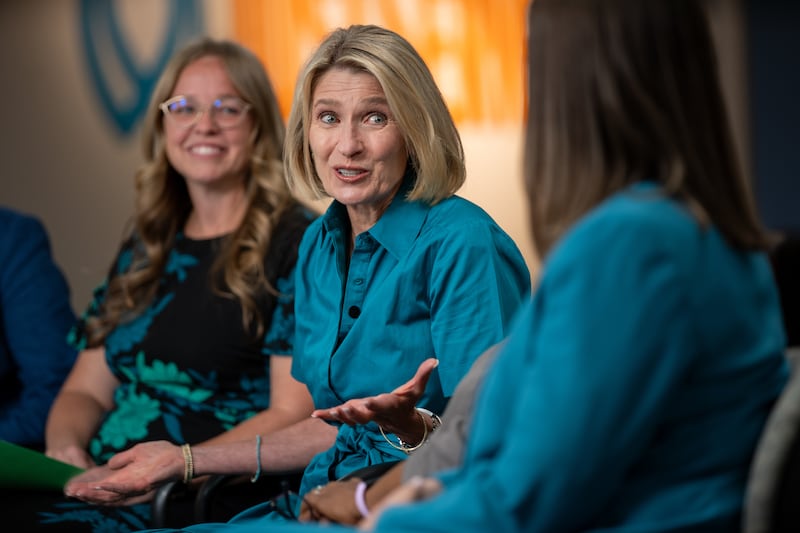
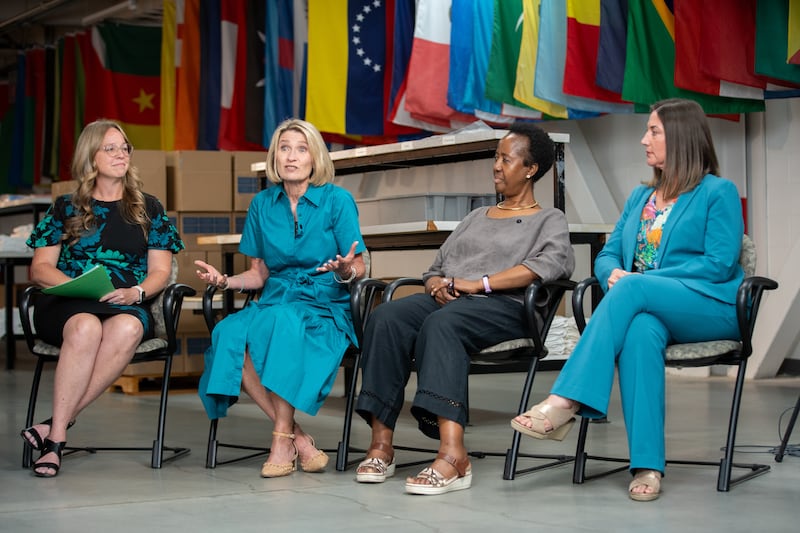
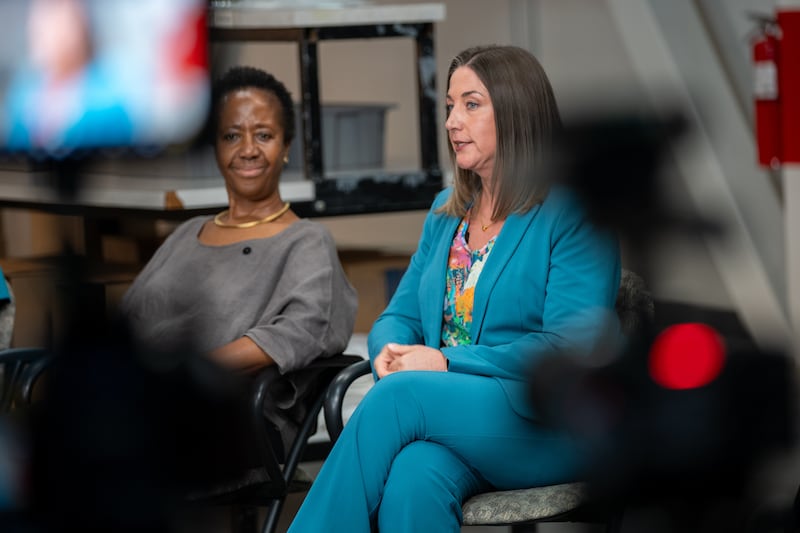
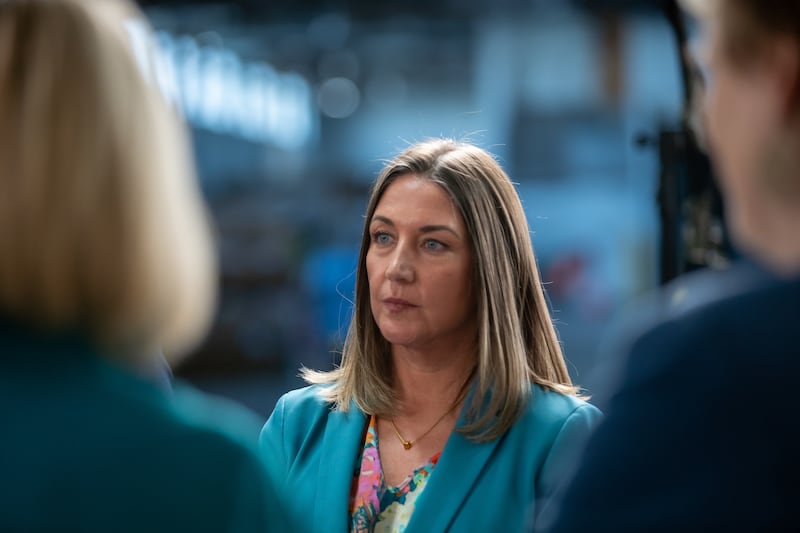
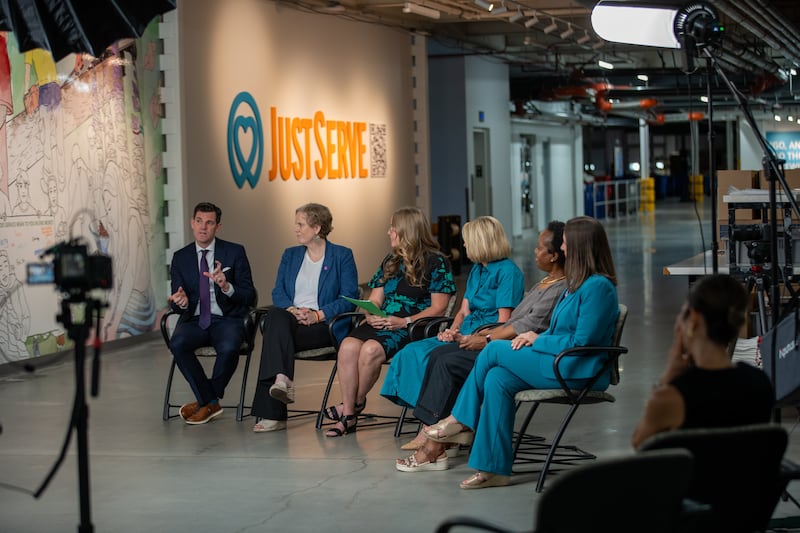
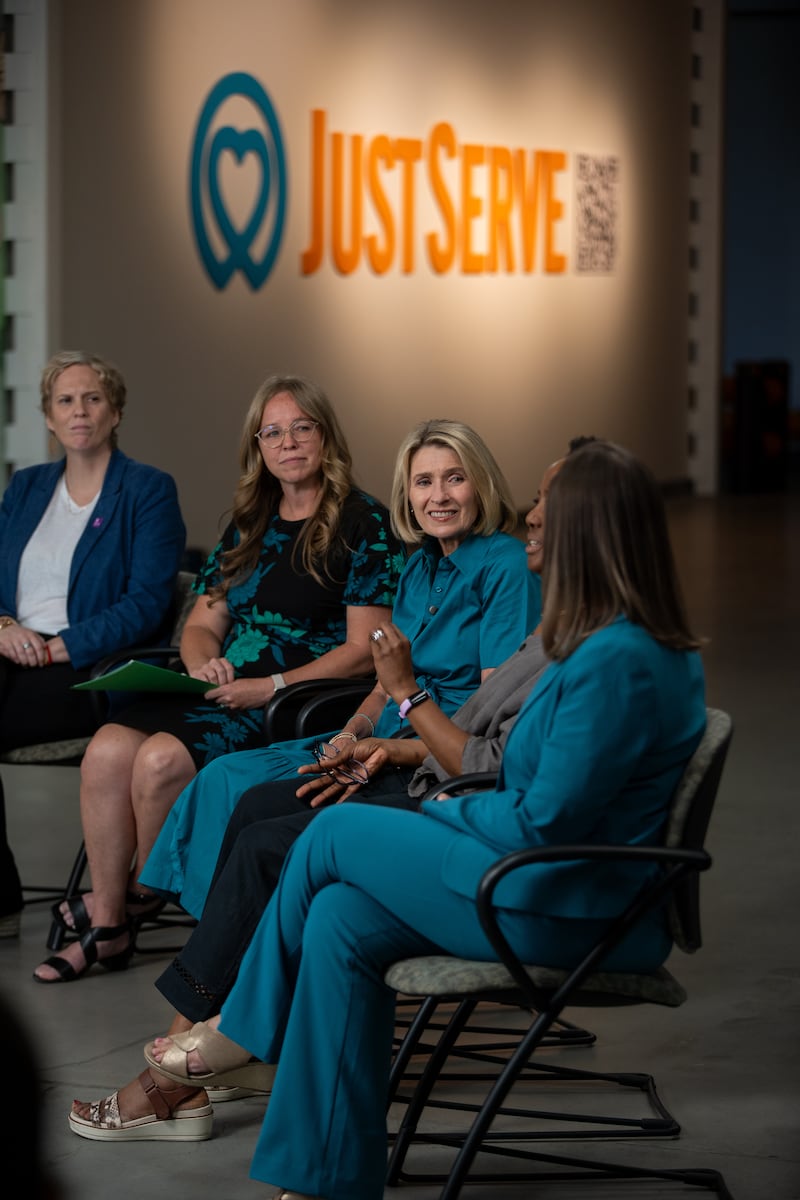
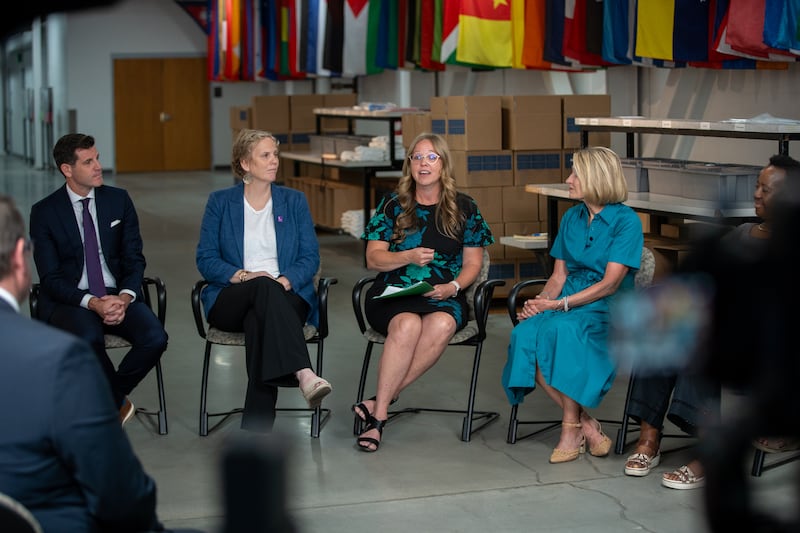
Relief Society General President Camille N. Johnson sat down with some of those leaders at the Church’s newly opened Humanitarian Center on Thursday, Aug. 6, to talk about how the group has worked together and the outcomes they have seen in the lives of those they have served.
On this episode of the Church News podcast, President Johnson and others speak with Church News editor Jon Ryan Jensen and share examples of the successes seen three years into this initiative.
“[The Church’s] members are committed to lifting and caring for all of God’s children,” President Johnson said. “And we’re happy to have the opportunity to collaborate together to make miracles happen in the lives of women and children.”
Listen to this episode of the Church News podcast on Apple Podcasts, Amazon, Spotify, bookshelf PLUS, YouTube or wherever you get podcasts.
Transcript:
Jon Ryan Jensen: I’m Jon Ryan Jensen, editor of the Church News. Welcome to this episode of the Church News podcast.
We’re recording today from the Humanitarian Center of The Church of Jesus Christ of Latter-day Saints. This 250,000-square-foot facility is aimed at helping women, children and individuals from all parts of the world to gain necessary skills and other things that they need to help them at different stages of their lives.
In 2023, The Church of Jesus Christ of Latter-day Saints launched a unique initiative with the goal of helping women and children around the world through a consortium of organizations working together. By definition, a “consortium” is a group that pools resources and skills to achieve a common goal.
Those working together in what is now called the Caring for Women and Children Initiative are working across four areas of focus to create the greatest impact for women, children and their families. These four areas are child nutrition, maternal and newborn care, immunizations and education.
We’re joined today to talk with representatives of four organizations working with the Church over the last three years. I’ll introduce them and their organizations.
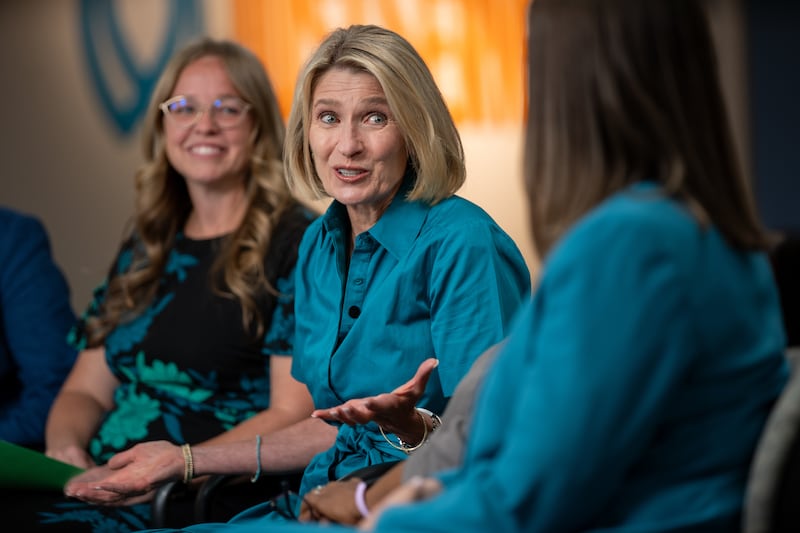
First off, Relief Society General President Camille N. Johnson. Thank you, President Johnson, for being with us today. And along with her from the Church is Elissa Gifford, who is the director of Humanitarian Services here at the Church. Elissa, thanks for coming with us today.
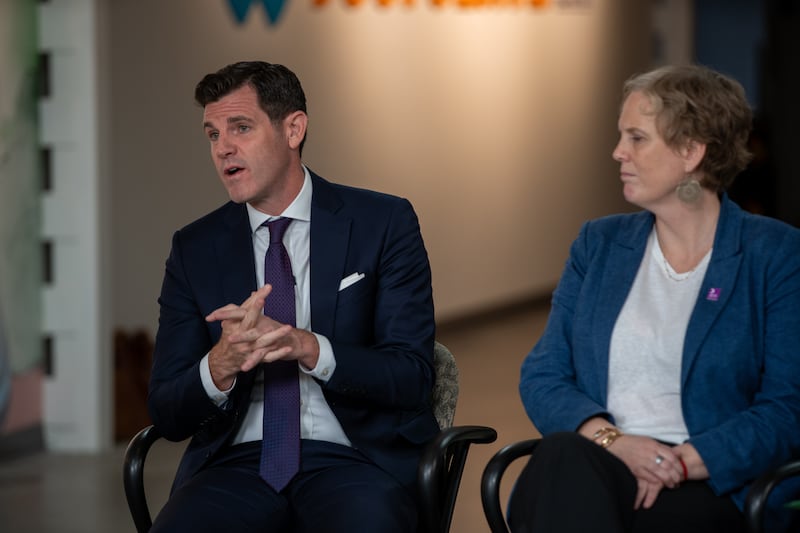
And then to their left, Reed Peterson is the new chief executive officer from iDE. Sarah Bouchie is the president and chief executive officer of Helen Keller Intl. Thank you, Sarah, for being here.
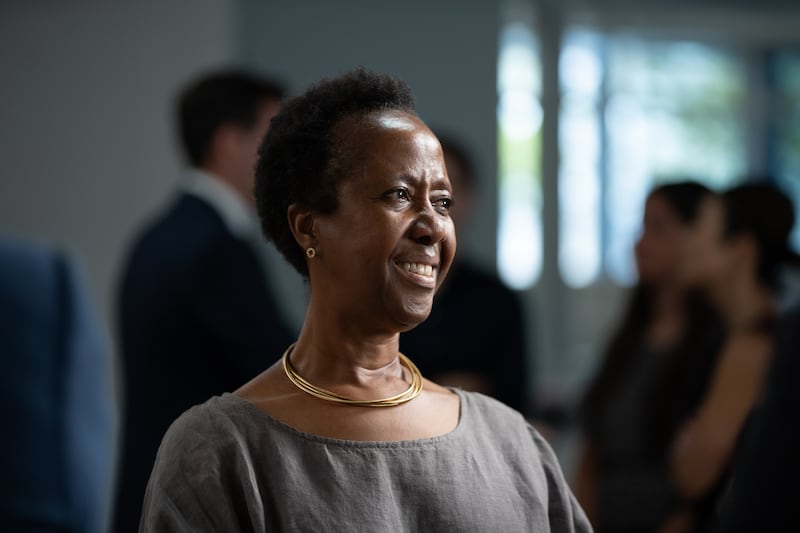
Dr. Winifride Mwebesa is the senior managing director of global health for Save the Children. Winnie, thank you for being here. And Amy Ellis is the deputy director of global health for Catholic Relief Services. Amy, thank you for being here as well.
1:49
Thank you all for being with us today. We’re really excited to have a chance to have a conversation with you and hear what your experiences have been like with this initiative and with working together with each other.
President Johnson, if I could start with you and Elissa, why has the Church placed such an importance on improving the lives of women and children through humanitarian efforts like these?
2:11
President Camille N. Johnson: Well, we know that when we bless a child, we have invested in the future. Providing a child with good nutrition and that mother with prenatal care, we bring a healthy baby into the world with an opportunity for education and advancement. And so we focused on women and children with the hope and expectation that we’ll bless whole families, communities and lift nations.
2:36
Elissa Gifford: In addition, women and children really are often some of the most vulnerable members of a community. But they’re also some of the greatest catalysts for change in those communities. And so by providing this assistance that President Johnson has just described, a woman is able to bless her family, to bless her community and really to help her family to increase their self-reliance and be able to just serve within their communities.
3:05
Jon Ryan Jensen: And I love that idea. And so then the question comes up of: Why did you choose to do a consortium model and work together with so many other organizations?
3:13
Elissa Gifford: We had this, three years ago, we had this idea. We had resources, and we knew that we wanted to focus on women and children. And so we looked at the organizations that we had partnered with, that we’d collaborated with, in the past and invited them to come together.
We could have gone with the same approach that we’ve taken in the past of choosing an organization, providing funding to them, asking them to go and do a specific thing. But this vision that we had was greater than one organization. And it was going to require us to bring together multiple organizations, experts in their field, who could really help us to think through what could be done.
And so we asked them to come together and let us know what they could accomplish together by working together, that they would be able to accomplish more than if they were working individually. And so because it’s more than just a one-organization answer and response, we knew that this was going to require help of many of our friends.
4:21
Jon Ryan Jensen: Building off of that, then, I would really love to hear about some of the opportunities and experiences that you each have had.
Sarah, can I start with you? What — you’ve participated in a consortium in the past — what have you learned about the power of working together among other organizations?
4:36
Sarah Bouchie: It’s such a great question, and it goes back to what Elissa is saying. The problem is huge, right? The vision of the Church was much bigger than what any single organization could accomplish on its own.
At Helen Keller, we like to quote Helen Keller a lot. She was a deaf-blind woman who overcame a lot in her life in order to make a change for what people thought about people with disabilities. And she said, “Alone we can do so little, and together we can do so much.” And we really try to live that at Helen Keller.
We have certain things we do really well. There are certain things we need people to help us with. A car doesn’t get built by one person. A house isn’t built by one person. You need all kinds of expertise to be able to make that happen. And the same thing is true when you’re trying to make lives better for women and children.
5:27
Jon Ryan Jensen: Can you think of an example of how you’ve seen that work as you’ve been doing this?
Sarah Bouchie: Well, a perfect example is the work that we do at Helen Keller, we really try to look at and support how women and families have access to nutrition. But we can’t do that unless they also have access to micronutrients — so, it’s a complicated word just to say the vitamins that they need. We aren’t the best necessarily at bringing vitamins to a community, but we partner with Vitamin Angels in order to make that happen.
Likewise, once a family has the vitamins that they need and we’ve given the education that they need, they need to be able to sustain that by themselves. So, ensuring that they have opportunities to grow nutritious food and earn the income to make that happen, we do that by partnering with iDE, which has been a wonderful opportunity that we have to work together. It’s just a great example of we each do different things, but when we come together, it’s a much more powerful impact that supports better self-reliance, but really just better outcomes for kids and families.
6:36
Jon Ryan Jensen: I love to hear those examples. Amy, I want to come over to you and ask you a similar question. What opportunities have you seen open up to you and your organization’s purpose as you’ve partnered with other organizations?
6:49
Amy Ellis: Well, I think, building on what Sarah said, organizations are a lot like people. We all have different personalities, we all have different strengths, we all have different ways of doing things, and we can achieve a lot more together than we would independently.
So, in our partnership in Ghana, we have partnered with The Hunger Project. And together, they bring strengths, we have brought our experience supporting the Ghana Health Service to build maternal-child health services in their health facilities. The Hunger Project has brought their expertise in inclusive, disability-inclusive programming, and we’ve adopted a lot of their approaches and vice versa in theirs.
So, in addition to creating a lot more coverage and being able to reach more people — since they focus on the south of Ghana, we focus more on the north — we’ve been able to sort of bring the strengths of both of our organizations and increase and improve the outcomes that we’re achieving more together than we would have independently.
7:41
Jon Ryan Jensen: I love this. I met most of you last year, and one of the things that I first noted was the lack of competition among you. Everybody is so excited for what each other are doing.
And Elissa, I’ll come back to you. What is it about all of this that you think are the accomplishments that give you the most encouragement as you see all of this happen?
8:04
Elissa Gifford: I think starting off with what you mentioned, the lack of competition, we brought these individuals together with a feeling that these are the individuals who could work together. It’s not easy to ask organizations who are used to working independently to take a new approach and instead to work this kind of collaborative — they’re working together in the field regularly, but to work at this level in this tight of a collaboration is different.
And so, people who truly were willing to do this kind of work, who were willing to help us to identify best practices, who were willing to help us to identify what’s going well and what’s not going well. Look, we’re interested in solving or addressing the issues, right? And so we don’t want to invest money in things that are not working well, in interventions that aren’t going to get the outcomes that we’re looking for.
And so we’re really looking for organizations who are also equally invested in reaching these outcomes and are willing to talk about what’s not going well and get to where we need to be to apply the interventions that are going to be most beneficial to lift women and children and to lift communities and to help governments provide the services that their communities are in dire need of.
9:34
Jon Ryan Jensen: So, speaking about all of those, President Johnson, I know you’ve had a chance to travel to some of the locations where these have been actually put into practice.
What have you seen making a difference in the lives of these women and children?
9:46
President Camille N. Johnson: Well, it is a beautiful collaboration between these humanitarian organizations and the Church, but also local governments and local communities. One of the three of us can’t do this together, but the three working together can.
And by my observation, the locations we’ve chosen in which to work are places where local governments have a desire to see their people increase in capacity and opportunity. And so, when you reach out to local government and provide them with opportunities, help them see, have a vision for how their nation will thrive as their people have good nutrition and economic opportunity, they buy in as well. And the locations we’re working are places we’ve chosen deliberately where there’s intention on the part of the government to see their people improved.
So I think that’s made a difference, and it really does take the three: the NGO, the Church, lots of good people working on the ground and then those governments willing to participate and communicate with us about needs.
10:54
Jon Ryan Jensen: Dr. Mwebesa, you and I spoke last year, and I was so excited to know you were coming back because I could still hear in my head, after the conversation that we had last year, you kept saying to me, “It makes a huge difference.” And you said it with such a big smile. You were so happy at what was happening.
I’m wondering if you have a story that you could share about the impact that this has all had in those you serve.
11:18
Dr. Winifride Mwebesa: Thank you. And if I wanted, if I was able to tell a story, I would use the story of Bwendo. Bwendo is a mother who we have been able to help in Zambia. So, Zambia is one of the two countries where Save the Children works. And Mongu District, she, Bwendo, showed up after having spent several hours in labor, and she arrived into Mongu District Hospital, which is a district hospital that serves the needs of a catchment area of about 40 health centers.
She’d been in prolonged labor for many hours. And when the health worker, the health team, assessed her, they realized she needed an emergency C-section, cesarean section. So, the surgery went well, but the baby that she delivered struggled to breathe. And in most of the settings where we work, that would be the end of the story.
But because of the investment that has happened through this partnership, the — first of all, the operating theater was functional. It had been recently rehabilitated. There was a NICU, a special newborn care unit that had been equipped with equipment and supplies. The providers had been trained, so they knew what to do in case the baby was struggling to breathe.
And all of this went into motion. And they quickly were able to help that baby, resuscitate the baby and provide the care they needed. And both Bwendo and her baby were able to go back home, and they’re healthy today.
But that’s just one story. Through our programs, we’ve been able to do much more than just help Bwendo. Because of this investment, we’ve been able to transform and equip facilities that are able to do similar work, train healthcare providers. And women like Bwendo are now able to go back home to their families, their babies are able to survive that first life, and communities around them have renewed confidence in the services that their health services are providing.
13:26
Jon Ryan Jensen: When you see something like that happen, what lesson do you bring back to the group about how, then, that can help the rest of you do the work you do better or in a more collaborative way?
Dr. Winifride Mwebesa: It’s really about how we engage. So, early on, President Johnson talked about how we’re working with local governments. It’s making sure that the local governments are in the lead, that they’re helping us identify where those gaps are greatest.
So, the hospital we’re talking about was supposed to be a referral hospital for all these catchment areas, but before they received the refurbishment and equipment and supplies, they were so constrained with what they could do that they had to refer those families further up, which means there’s a cost not only to the family and the community, but there’s also a cost to the health system in general because you’re losing lives that could be saved otherwise.
And so it’s really working with our local governments all the way down at the district level to better identify what those needs are and making sure that as we are putting interventions in place, we’re also making sure that we’re thinking about how they’ll fit in the system, how they will — they’re not only filling a need, but how they will be able to carry them on even after our support has ceased to exist.
14:50
Jon Ryan Jensen: I love hearing those stories and how those single examples can help form greater partnerships. President Johnson?
President Camille N. Johnson: I was just going to say there’s sustainable outcomes when you’re cooperating with local government, even down to the division level. And these wonderful and brave professionals have people, boots on the ground, who are there developing those relationships and identifying needs so that we can satisfy them in a sustainable way.
15:19
Elissa Gifford: When we were talking earlier about why these organizations, because these organizations have proven their ability to create community-centered programs that are locally led and demonstrated that they can teach the interventions and help people have the tools so that when they leave, the interventions live on, that the work continues. And that sustainability. That’s when we know that we’ve been successful, is when the interventions continue once we’ve stepped away.
15:57
President Camille N. Johnson: Can I add something to that? Why women and children? Because when you provide education and information to women, they share it. So they become part of that ongoing effort. They’re educated about neonatal care, about nutrition for their children and their families. They share it with their neighbors and their friends, and so the community rises. So the boots on the ground include those women and families who are willing to share the information that they learn.
16:30
Jon Ryan Jensen: So, we’ve talked a little bit about health, community, family. And none of this can be talked about without talking about economic impact as well.
Reed, why is economic resilience such an important part of improving the outcomes of these women and children?
16:45
Reed Peterson: Yeah, great question. I think that’s because if you look at aid without some type of a long-term, sustainable, market-based solution or a foundational aspect to drive that home, I think often fails. And so we like to build into these programs a little bit more focus on the entrepreneurial element of it. And so, our perspective is powering entrepreneurs to end poverty. And so we look at these market-based solutions to drive the impact long-term.
What we found — I think Sister Johnson talked about this — in our studies, about 90% of the income that these women make goes to three things, and you can guess what they are because it’s the same thing that your mom probably would do for you. But it’s your children’s healthcare, it’s your children’s education, and it’s your family’s nutrition. I mean, it literally is Community Building 101. And so as we look at that, that’s how we found to help drive people out of poverty, is kind of a combination of those things.
17:42
Jon Ryan Jensen: So, what examples are you seeing of families or communities growing when they have these increased economic opportunities?
Reed Peterson: Oh, I love it. Well, I just got back yesterday from 30 days in Africa. I was in Ghana and just recently met a lady, one of the early entrepreneurs from TLTN, Transforming Lives Through Nutrition program with Helen Keller and Vitamin Angels and the Church. And a lady named Ramatu was one of the early kind of adopters of this micronutrients that we were talking about.
Between the age of 0 and 3, 0 and 4, is a pretty critical time to get the right nutrients to the mothers, the right nutrients to the kids. They figured out how to basically drive a little bit more impact into these micronutrients. And we provided this opportunity for this lady, Ramatu, to come up with a business on it.
And she sells this little Vitalac product to the other women in the village, and then she gets the corn from them, she gets the different products and pulls it together, and she’s got her own little factory, and she’s hired local people to engage in that. And slowly she’s moving up that value chain. She’s finding other opportunities to build and grow that little business.
And once we get to a certain point, now she’s got this thriving business out there just right outside Yendi in Ghana, and she’s doing phenomenally well. So we love to see that progress. We love to see that growth. And then we move on to the next and build the next community and build the next. But that’s a long-term, sustainable solution that will last years longer than we ever will be there.
19:17
Jon Ryan Jensen: One of the big numbers that is a part of this — because it’s not just one or two examples — 52 million women and children have been affected by the work that you all have done.
President Johnson, you said that every one of those numbers represents an individual. What hope do you come away with as you think about single individuals as part of that 52 million?
19:40
President Camille N. Johnson: Well, Sarah mentioned that this challenge is immense, but we go at it the way the Savior did, by ministering to the one, identifying the one and addressing the needs of the one. And so, of course, we feel happy that 52 million women and children, their needs had been addressed. And there’s 52 million more, and there’s a “one” in each one of our neighborhoods.
We are looking at this challenge on a global scale and identifying the most vulnerable in places of high need. And in every community in which we live, there are women who can’t read, and there are children who are malnourished.
So, my invitation is for people who are listening to look for the one closest to them and address the needs of that one woman or child. That’s how we’ll tackle this really immense challenge. It’s an opportunity, actually. What I know for sure is that universally women hope for the same things. Everywhere I’ve traveled, women hope for healthy babies, they hope that their family’s free of disease, they hope for economic opportunities so that they can provide education for their children. That universal hope, I think, is what drives women to share what they know so that others can have renewed hope and our communities can be lifted.
21:12
Jon Ryan Jensen: I love that. From outside of the Church and its sponsorship, I’d love to hear from Sarah, Amy, Dr. Mwebesa: What are the hopes that you have as you participate in this? What are the things that you’re seeing that you hope to reach for next?
21:32
Sarah Bouchie: Well, I mean, so the very eloquent words that President Johnson just gave, it gives people a little spark, right? It gives them something to get excited about. And what I want to see is those sparks continue, and they continue moving because really, as fellow human beings, we have an opportunity to make an impact in our family, in our community and ultimately in our nation and in the world. And if we each live our lives in that way, I really truly do see that we can make some important breakthroughs in the world.
So, I mean, it’s — maybe it’s a little too easy to say. My hope lies in women and children themselves. But I really do think that that’s the solution that we’re betting on, and we’re betting on big. We’re betting on big. The Church has put in a lot of money and time. We have put in as individual organizations a lot of money and time. And it’s with that idea that we can spark so much more and just hope that the people that are listening are inspired to see how they can be a part of that.
22:38
Jon Ryan Jensen: You all came together earlier today and were having some discussions about things that you’ve seen going right and opportunities to improve.
In that process of counseling, is there something else that you learn that you take back to your own organizations to say, “Oh, we talked about it in a certain way,” or is there something about the process that you take back to your organizations as well?
22:59
Amy Ellis: That’s a great question. We had a wonderful discussion today. I think that we all arrived at a lot of commonalities. I think we all as implementers appreciate so much the investment that the Church is making and the way in which you’re convening people, which I think is with so much humility and openness and listening and really inviting us to contribute our perspective and our experience and giving us some liberty to invest and to move and to adapt as we think best.
And I think that there was a lot of exchanging of what’s working well and how we can do that better, and a lot of momentum to continue doing that as we move forward and to continue to collaborate and engage and see the bright spots, see where we’re having a lot of impact.
I think in our consortium, we are so delighted this past year. The first year, I think, was a lot about laying down foundations, about building systems, about rehabilitating things, about training people. And in this past year, we’ve really seen the impact of all that investment. We’ve seen in our consortium an 89% reduction in neonatal deaths, which is huge. That’s a lot of babies that are alive today that wouldn’t have been even a year ago.
And my hope is that will only continue to increase over time. And that will have knock-on effects for generations. So I think there’s a lot of sparks, there’s a lot of hope that we’re going to continue to bring back to our organizations and hopefully share amongst ourselves.
24:26
Jon Ryan Jensen: Winnie, I want to ask you: I know it’s not all sunshine and roses. There are disagreements that happen as well. And for those who are listening, they might see that in their own community, that there are differences that seem insurmountable.
So, how do you maintain optimism when individuals or groups see differences in each other?
24:45
Dr. Winifride Mwebesa: That’s a great question. I think it’s maybe focusing less on the differences but more on what makes us stronger together.
Just reflecting on our consortium, we just — Save the Children has been very focused on the health systems and strengthening health at both the facility and the community level. Now in Zambia, we’ve partnered with CARE and with The Hunger Project. And we’re seeing the benefit of going beyond just strengthening the health components, but also looking at some of the more nutrition-sensitive expertise that CARE can bring, and then some of the ag-related work that The Hunger Project is bringing, so we can have a deeper engagement and deeper impact in the communities where we’re working.
So I think for me, it’s less — it’s, instead of dwelling on what our differences are, it’s actually putting those differences to use because as a group, we are much stronger when we are letting that part be what shines rather than what overshadows what we’re trying to work towards.
Jon Ryan Jensen: That’s beautiful. That’s beautiful.
25:49
Sarah Bouchie: Can I just jump in a little bit? You know, I really appreciate that focus of staying on: “How do we collaborate? What is working? How do we leverage each other’s strengths?” But if we’re honest about this, it’s hard. It’s hard to work across lots of different organizations. I mean, anybody who has a partner, has lived in a family or has been to a classroom understands that you’re going to have different ideas about things.
And what’s important is that you take the time to reflect and decide, “Which way are you going?” And sometimes you say: “We’re going to go in two different ways. We’re going to try it, and then we’ll come back together and do that reflection.”
But there’s a need to keep continuing building the bonds of trust and support and making sure that our differences are smaller than the things that bring us together. And it’s opportunities like what the Church has done in bringing us together as organizations that have worked in these fields for a very long time, often right next to each other, and sometimes in collaboration.
But I think what’s so lovely about the ways that we’ve been talking today is to really try to say: “OK, so how do we get to that problem, and what else could we add to it? What else would make us to get there?” And I really appreciate that opportunity to step back, reflect and make sure we have more in common than we have not, even though we have some things not in common. And that’s part of being human. That’s part of being living, breathing organizations that have perspective in the world.
27:19
Jon Ryan Jensen: Because of what you just said, I want to ask Reed — Reed’s the newest member of the group, with only a few months in iDE, and so probably less time getting familiar with all of what’s happened in the consortium.
What have you seen? What have been your first impressions gathering together with these groups?
27:36
Reed Peterson: I mean, these ladies are absolutely incredible. I just have to say what a privilege to learn from them, first of all. I think the second thing is I come from the private sector, so this is all a little bit new for me as well. But understanding and seeing how we can apply some of the background and what we do in the private sector with what’s happening in the national development space — which has kind of been a little bit thrown asunder, I would say. It’s been a bit of a challenge. But I think trying to bring those things together, I think, has been really good.
What I love is I love that even though there’s differences of opinions and different ways of doing things, everybody knows what they’re good at, and everybody also focuses on how we can harness the positive from the different perspectives. I think it’s the diversity of thought and opinion and perspectives that brings out the best in the consortium, I think, at least what I’ve seen.
28:29
Jon Ryan Jensen: As we were here in the Humanitarian Center earlier this afternoon, each of you had your first chance to tour this facility. And Reed, I know at the end there was a video that was shown that showed some of the disaster-relief process that the Church goes through, and you had a personal attachment to that.
Would you be willing to share just a little bit of your thoughts having seen that and maybe how that plays into the overall mentality of helping women, children and families?
28:58
Reed Peterson: Sure. That was really cool for me, actually, seeing that for the first time. It’s something that I love doing with my kids when we lived in Georgia. Every year, it sounds terrible, we’d almost hope for some type of a hurricane or natural disaster because then we get to go out and do this work. And it was such a great way to volunteer and to go engage and have the Mormon Helping Hands yellow shirts on.
But what was really cool is watching and seeing that, everywhere from Vidalia to Augusta, all the work that’s done, the volunteer work that’s done, to engage and to support. It’s a privilege to be a part of that. It’s a privilege to be able to volunteer and to engage in that way. But it shows the breadth of the way that the Church gets involved and helps.
29:38
Jon Ryan Jensen: Carrying on that topic, do the rest of you see that same thing happen with each of your organizations, where it takes someone seeing a need, they’re not quite sure how to get started until there’s an immediate need sitting right in front of them? And what would you say to someone who maybe is waiting for that push to get going in helping somewhere in their community?
30:00
Sarah Bouchie: I’d just say: You have so much to offer. Don’t underestimate what the power of one can do, and just try. The worst thing that can happen is it doesn’t turn out as well as you thought it would. That’s not a harm. Everybody needs practice to get better at things. So continuing to make that try until the thing feels right — and you’ll know when it feels right — I think that’s what we try to do and live in Helen Keller on a regular basis. And I can see that reflected in the consortium partners here as well.
30:34
Jon Ryan Jensen: That’s great. Dr. Mwebesa?
Dr. Winifride Mwebesa: Yeah. At Save the Children, we are humanitarian. I think very often we say we’re the first to arrive and the last to leave. And what’s amazing is that you shouldn’t be afraid, because you’re probably not going to be the only one who shows up.
And that’s really what’s encouraging, is that there are so many others who show up, and you get to contribute to something that’s really big, that’s much bigger. And I’m sure, Reed, that’s what you experienced serving in Georgia with your sons, is that we experience that over and over again. And it’s because this need, the need is so great that each of us has something that’s valuable that we can contribute. And it can be small or big, but it does make a huge difference.
31:19
Reed Peterson: And just one other thing. I think there’s a joy in service, as you get out and just find whatever it is that you can do. All of us have different skills and abilities and ways to connect. And I think using each of our different personalities, each of our different characteristics or skill set to serve in a different way, sometimes that may be the way that resonates with a specific person or specific group. So I think just that spark of just getting out and doing something, it doesn’t really even matter what it is yet. So I just think that’s important.
31:50
Jon Ryan Jensen: That’s great. Elissa, as you hear all of these stories shared, I wonder what your takeaway is as you see the good that’s happening and the sustainable nature of all of this process.
32:04
Elissa Gifford: You know, I’ve been sitting here thinking about a meeting that I got to sit in with President Johnson and Sarah about four or five — I don’t remember — five months ago. Well, I guess it was longer than that. And President Johnson told Sarah and another colleague, Ana, to believe in miracles. She challenged them to believe in miracles, and that is something that has stuck with me.
And I have looked for the miracles in the work that has been done. And the miracles that I see are as simple as the individuals that are working at the local level for each of these organizations that are implementing the work, for the way that they’re implementing the work, for the vastness that we’re able to touch so many lives, for the continual efforts, for the children, the children whose lives are saved because of these midwives or community health workers who’ve now been trained to provide the service that is needed for these women, these women who are mothers who don’t know, who are gaining the new knowledge that they need to help their families thrive.
Those are the miracles that I see, and so I’m so grateful for that invitation to look for the miracles and to believe in those miracles. And I think we will continue to see miracles as we continue to work towards solutions in this ever-changing environment. I can’t even imagine — five years ago I wouldn’t have imagined that this is the environment that we would be working in now. It’s very different, and we’re looking to the future, trying to anticipate, “What is the next five years going to look like?” And it’s hard to envision what that will look like, but there are miracles that are yet to come, and I believe that that will happen, and I look forward to seeing those miracles.
34:09
President Camille N. Johnson: I remember that day distinctly. And the first miracle was that Sarah from Helen Keller Intl and Ana Céspedes from Vitamin Angels called and said, or sent me an email, “We’re traveling together, and we’d like to come and say hello.” And I thought, “Well, has the Church scheduled a meeting that I don’t know about that they’re coming to Salt Lake City?” There was the first miracle. They’re working together in collaborative ways and traveling together because they’re not just professional colleagues, but they’re genuine friends.
So, we sat around the round table in my office, and Elissa was there, and they asked, “What can we expect moving forward?” And I said, “We can expect miracles.” And I know that’s true because we’re engaged in work that matters to our Heavenly Father.
He knows all of His children. I’m sure of that. And He’s aware of each individual all around the world. He wants to bless the lives of His children, and so He will draw upon every resource and put good people together who have the same motive, and that is to lift and bless women and children, families and communities.
He’s instilled in all of these good people love. I know that’s what motivates you ultimately. It’s our love of God and our love of His children that brings us together. And so I know we can expect miracles because we’re doing His work.
35:40
Jon Ryan Jensen: Amy and Winnie, the two of you were not part of that story, but as you heard it, are there things that you hear in that that you can look back at and say, “Yeah, we’ve seen the miraculous, we’ve seen the inexplicable happen as we’ve been engaged in this”?
35:55
Amy Ellis: As you were speaking, I was thinking about the many times that I’ve been to see our projects on the ground, and I am always so awestruck by the commitment that people bring. People in very rural and impoverished places who show up, they do incredible work, they are volunteering their time. That’s a miracle to me, is what the people will contribute and what they can accomplish with so little.
I know stepping back, we’re talking about a lot of money, but when it trickles down to communities, it ends up being a relatively small amount, but what they do with it is so impactful and so impressive. And I think just the ability to achieve as much as we’ve achieved and what the people on the ground — not really us. I mean, I’m in an office. I don’t do that much actual work on the ground.
But, you know, the community health workers, the project staff, the volunteer mothers, the midwives, they’re the ones that make miracles happen. And every day, the work that they do is so impressive. And I’m so grateful to be a part of that in any small way because it’s such important, impactful work and has such incredible ripple effects.
37:00
Dr. Winifride Mwebesa: So, I get to see those miracles through the lens of some of the groups that we’re invited to. So, in our — we’ve been invited to and added to WhatsApp groups. These days, those groups allow a lot of people to stay connected. And in Zambia, they’ve created, after some of the trainings that they received around how to help mothers survive delivery and babies survive, small babies, better survive, they started, they created a WhatsApp group where they share what they’re learning.
So we get to witness. They send us pictures of their mentorship sessions where they’re communicating and teaching each other and challenging each other and to try and acquire, see how they can better learn these skills, because not everyone gets to go to every training. But then they go back, and then they share some of that learning with those who are not able to so that they can provide better services. And we get to see that and witness it.
And then we also see the numbers, where they get to celebrate the lives that are being saved because they have better skills. So just being connected to that gives me a lot of encouragement because we know that this is something that we can do more of because you’re actually starting to see them being their own agents of change within their facilities and helping to bring their peers along, but with a goal of saving more lives.
38:24
Jon Ryan Jensen: Well, I have to say that as a journalist, it is a pleasure to watch organizations with different purposes and goals work together. And today, again, even with the larger group, so great to see all of you trying to understand each other, work together with each other to make the world a better place, which, again, is what everybody wants.
President Johnson, we have a tradition here at the Church News podcast where we like to give our guests the last word, and I would like to give that to you today as we close this episode of the Church News podcast.
Having been through the growth of this consortium and its efforts over the last three years, what is it that you know now?
39:02
President Camille N. Johnson: I’m optimistic for the future. Working with these wonderful, professional people who are my friends, I am confident that they will commit their resources, their time, their talents and their energy to lifting and building women and children.
I’m so grateful to be part of a Church, The Church of Jesus Christ of Latter-day Saints, which is committed — its members are committed — to lifting and caring for all of God’s children. And we’re happy to have the opportunity to collaborate together to make miracles happen in the lives of women and children.
I know that’s what our Father in Heaven wants for His children — opportunities for education, opportunities for good nutrition, for sound emotional and physical health and economic opportunities. And because I know that it is His work in which we’re engaged, we can expect those miracles.
