Dedication of the Ephraim Utah Temple
In a city named after the lineage of Ephraim, the work of gathering scattered Israel takes place in the house of the Lord. The city name harks back to Ephraim, the son of Joseph in the Old Testament, and the tribe of Ephraim. Those of this lineage have the primary responsibility and privilege of gathering scattered Israel in the latter days. Elder Ronald A. Rasband — who dedicated the Ephraim Utah Temple on Oct. 11, 2026 — said temple work is all about the gathering of Israel on both sides of the veil. “This divine reunion requires temple ordinances and covenants worthy of the Ephraim ancestry,” he said.
Elder Rasband, of the Quorum of the Twelve Apostles, was accompanied by Elder K. Brett Nattress, General Authority Seventy and an assistant executive director of the Temple Department; Elder Thierry K. Mutombo, General Authority Seventy and an assistant executive director of the Temple Department; Elder Thabo Lebethoa, General Authority Seventy and member of the Utah Area presidency; and Bishop L. Todd Budge, first counselor in the Presiding Bishopric. Each leader’s wife was also in attendance.
The first Latter-day Saints entered the greater Sanpete Valley, where Ephraim is located, in the fall of 1849. That same year, missionaries in Denmark taught and baptized Elder Rasband’s great-great-grandparents, who faithfully left their prosperous family farm in 1850 for “the promise of temple ordinances” and settled in Ephraim. His great-grandfather worked on the building of the Manti Utah Temple, just 7 miles south of Ephraim.
Elder Rasband also said many students at nearby Snow College will have the opportunity to be a part of the gathering of Israel as they serve missions and serve in the temple. “I do not know how it could be any more important,” he said in an interview in advance of the dedication. “We gather Israel on both sides of the veil. We gather them on the other side through the work we do in the temple. And we gather them on this side of the veil by missionary work. And that’s what role they are going to have, let alone getting married, having children, having families.”
Val and Linda Hill served as chairs of the temple open house committee, and before the temple doors ever opened they watched over the temple site as special project missionaries. Each week during the safety meeting for construction workers on site, the Hills would share a spiritual thought and prayer. Val Hill said as construction on the temple wrapped up, one worker approached him and told him how he would miss hearing the Hills’ testimonies and prayers. The man is a member of the Church who hadn’t been participating in it, but he told Val Hill he thought he should probably return. “Being able to build faith in Jesus Christ in someone who perhaps set that aside as a priority in their life has become a very heartwarming thing to me,” Val Hill said.
Don Olson, from the Ephraim 4th Ward in the Ephraim Utah Stake, had great-grandparents who settled in the valley after joining the Church in Denmark. Now, he said it’s unbelievable to him to have two temples so close. “We’ve lived in the shadows of the Manti temple all our lives and have been so blessed to have it there,” he said. “Our valley is very blessed to have two temples so close together.”
Mount Pleasant Utah Stake President Benjamin Robinson said he thinks the Lord has blessed them with these two temples because of the desire members have to be in the temple. “And I hope that our desire to be in the temple will increase exponentially having both temples here, and a real desire to fill both of the temples to capacity and keep them busy,” he said.
Katelyn Perry, who attended Snow College at the time of dedication, said she was looking forward to the opportunity to step away from school to feel peace within the temple. “It is my favorite place to be,” she said. “To be calm and to just get away from the world and know that God is there.”
The Church’s Ephraim Institute of Religion sits on the other side of campus. Larren LaFevre, the Ephraim Institute director at the time of the temple’s dedication, said a lot of the students are living away from home for the first time in their lives and experiencing homesickness. “And having a temple so close will help alleviate that,” he said. “Now they have someplace where they can go and they can feel that heavenly connection to help bridge some of that homesickness they experience.”
The best attended class at the institute in the two years leading up to the dedication is called “Connecting With Christ Through the Temple.” LaFevre said he knows that’s because students want to understand and be prepared for the covenants and ordinances of the temple. And he said he hopes they will take advantage of having a temple within walking distance. “We have a place where we can get away from the stresses of life,” he said. “A place where we can go and feel Heavenly Father’s love and the Savior’s grace and be uplifted and strengthened.”
Dedicatory prayer excerpt: “This temple stands in honor and remembrance of the great faith, sacrifice, determination and courage of pioneers, many from Scandinavia, who settled this Sanpete Valley. Their descendants have held fast to their dedication to Thee and Thy gospel and diligently served in the Manti temple and in leadership in the Church bringing honor and majesty to Thy name.”
Read the dedicatory prayer of the Ephraim Utah Temple here.
Timeline of the Ephraim Utah Temple
The Ephraim temple was announced May 1, 2021, by Church President Russell M. Nelson. The groundbreaking and site dedication for this house of the Lord were held on Aug. 27, 2022, and presided over by President Nelson.
After a public open house from Sept. 2 to Sept. 19, 2026, the Ephraim Utah Temple was dedicated Oct. 11, 2026, by Elder Ronald A. Rasband of the Quorum of the Twelve Apostles.
Architecture and Design of the Ephraim Utah Temple
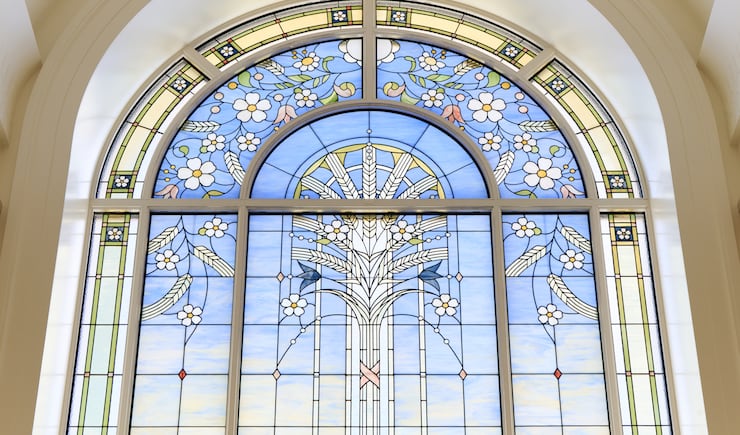
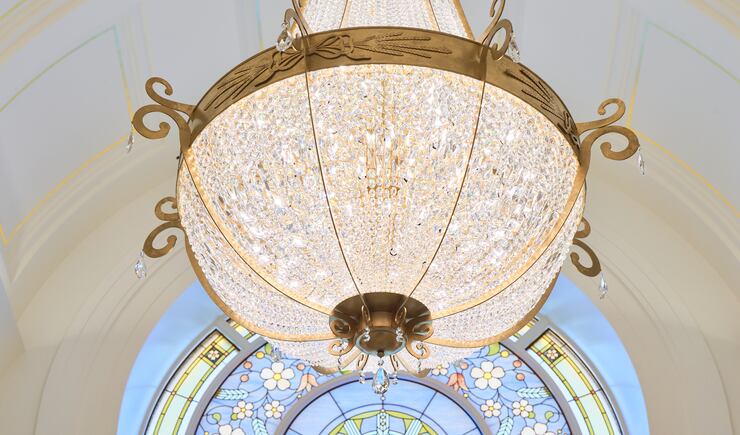
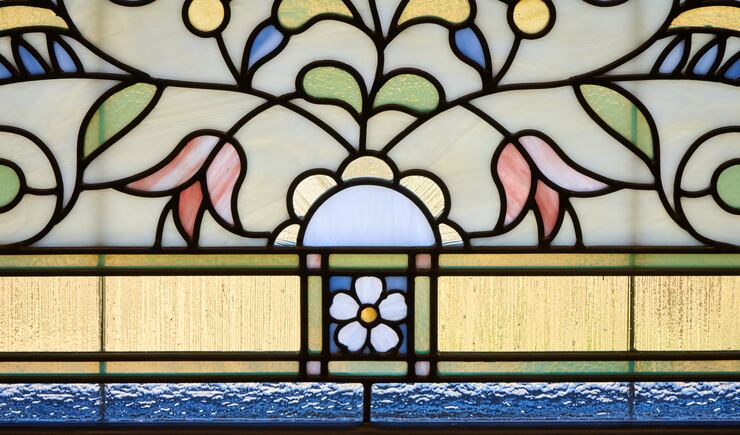
The Ephraim temple’s design motifs honor the heritage of the valley, which was settled in the mid-1800s largely by Scandinavian pioneers. The forget-me-not and oxeye daisy, for example, are flowers long cherished in Scandinavia and integrated into the design of the Ephraim temple. Wheat motifs are also prevalent through the building, a nod to the historic Ephraim Relief Society Granary.
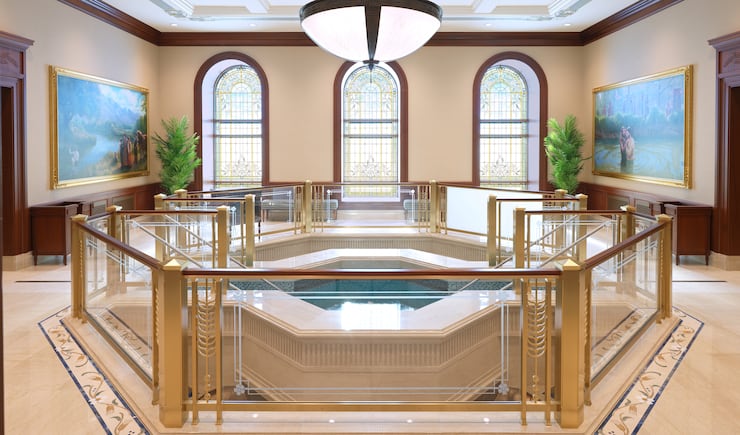
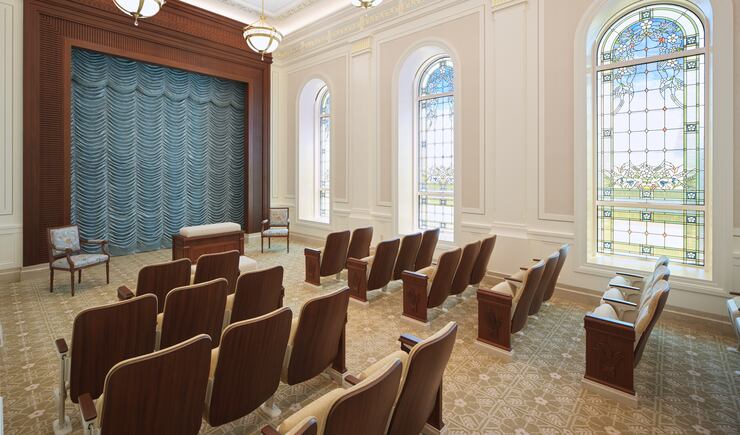
A 41,680-square-foot structure standing on a 9.2-acre site, the Ephraim temple was built with a structural steel frame on a reinforced concrete foundation. Art-glass windows feature shades of white, orange, yellow, green, blue and pink.
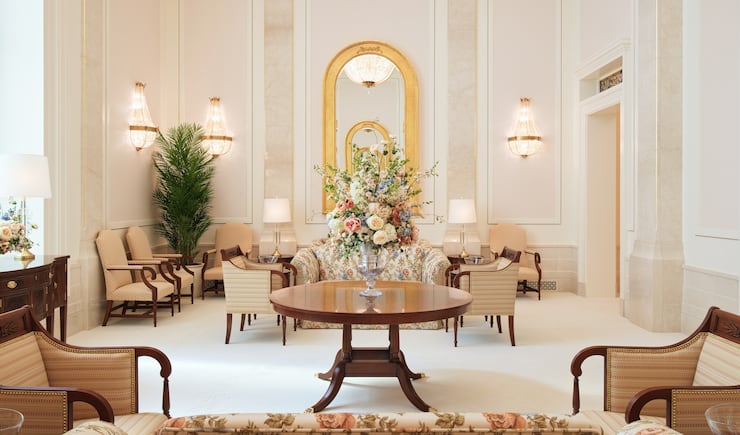
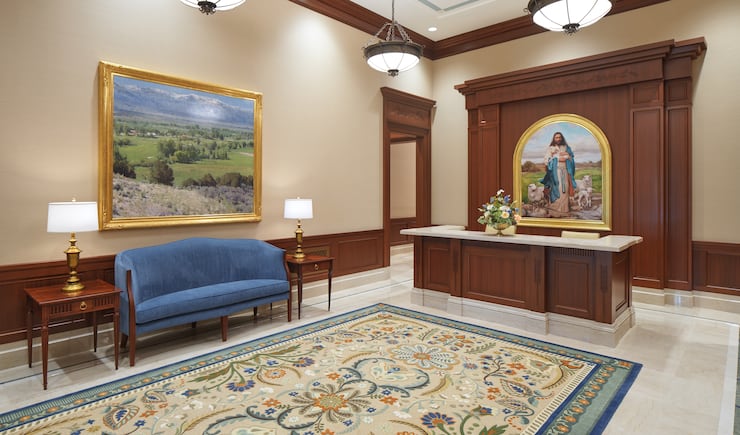
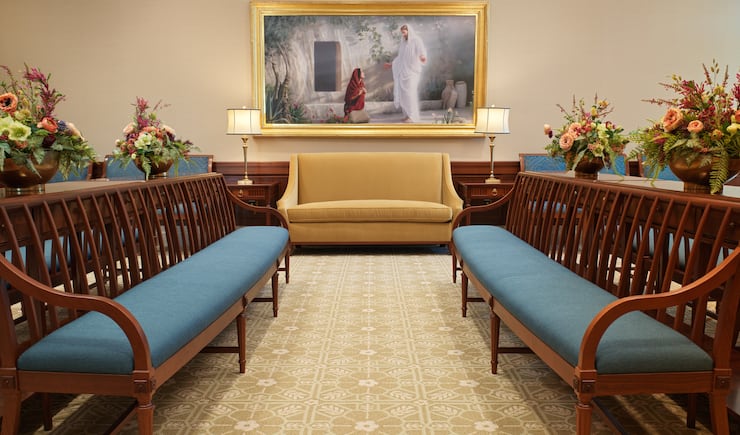
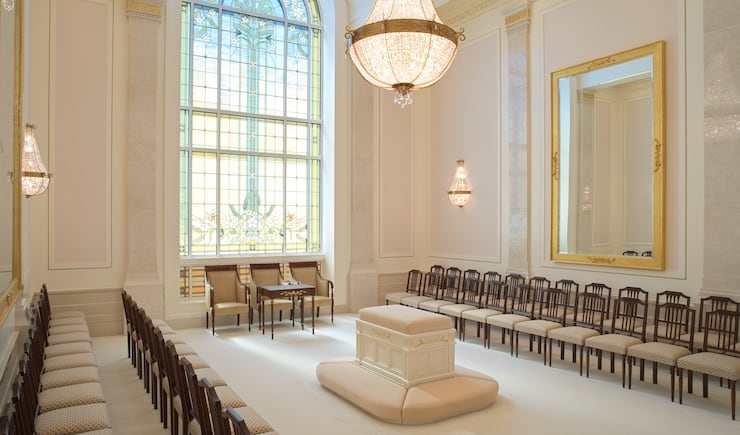
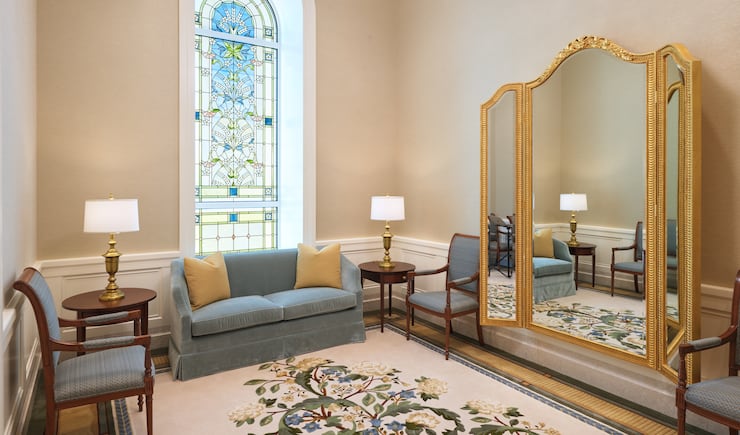
The stone of the temple, mainly Botticino Classico and BS Beige, add warm tones of beige, cream and gold, with green, blue and gold accents. Custom broadloom carpet brings a gold-beige tone, with Scandinavian-style area rugs featuring predominant blues, greens and golds.
Interior Photos of the Ephraim Utah Temple