



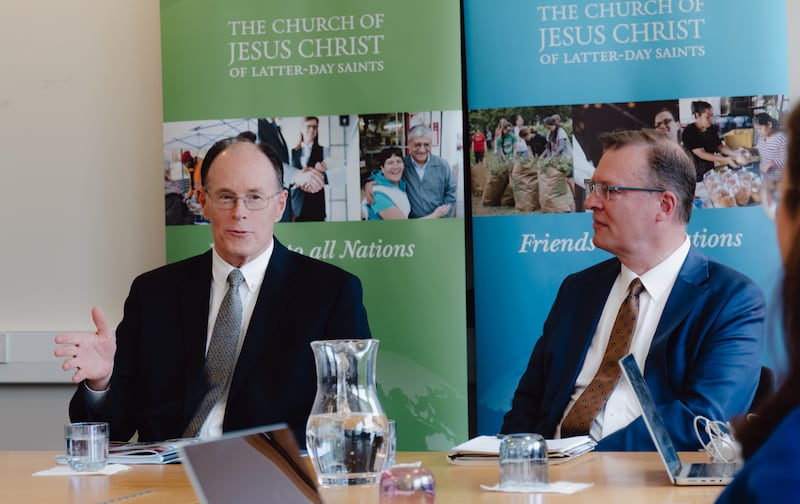

In two roundtable discussions with the leaders of several global humanitarian organizations, Presiding Bishop W. Christopher Waddell of The Church of Jesus Christ of Latter-day Saints reflected on the Church’s commitment to caring for those in need as an expression of discipleship.
“In our belief, Jesus Christ is hope,” he said.
Following Jesus Christ’s teaching to “love thy neighbor as thyself” (Matthew 22:39), The Church of Jesus Christ of Latter-day Saints expended $1.58 billion in 196 countries and territories in efforts to care for those in need in 2025.
In Europe in 2025, the Church’s humanitarian efforts included donating two state-of-the-art digital mammography machines to two of Montenegro’s largest healthcare facilities, working to launch a national emergency preparedness campaign in Bosnia and Herzegovina, and collaborating with The Felix Project to distribute millions of meals in London, England.
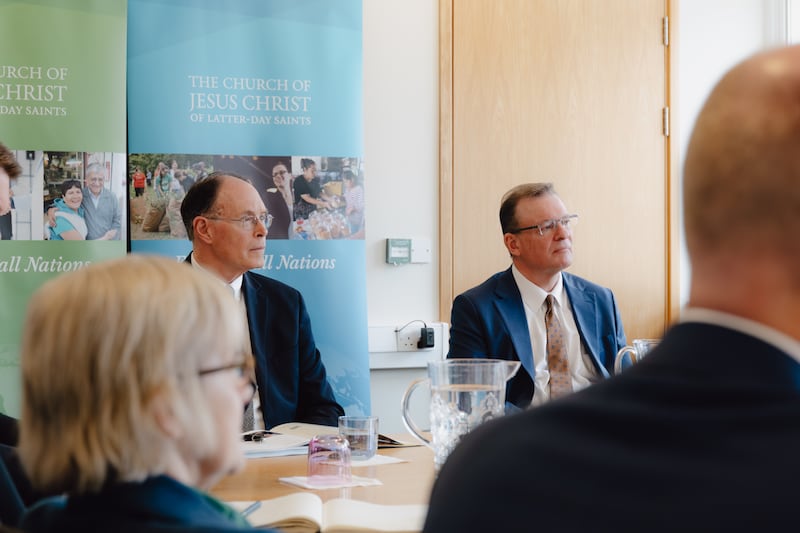
The roundtable discussions were held to highlight the Church’s Caring for Those in Need 2025 report and were in London on Monday, March 23, and in Brussels, Belgium, on Tuesday, March 24.
In London, Bishop Waddell was joined by Sophie Britt of Save the Children International, Euan Crawshaw of ShelterBox and Tala Hassoun of CARE USA, according to a news release on the Church’s United Kingdom Newsroom website.
The Church has collaborated with these organizations in efforts to care for those in need and relieve suffering around the world.
“As we work together, we are able to reach many more people in need than we ever could reach on our own,” Bishop Waddell said.

Hassoun of CARE USA echoed that sentiment and said no organization can respond to those in need alone.
“Partnership is at the core of how we operate — working with local organizations, governments and communities to ensure we can respond effectively and at scale,” Hassoun said.
Crawshaw of ShelterBox said the number of major crises has grown significantly over recent decades, increasing the urgency for coordinated responses.
“There are now multiple crises happening at once, each with significant impact. That makes collaboration more important than ever,” he said.
Along with discussing the challenges of caring for those in need around the world, Bishop Waddell also paid tribute to each charity’s commitment and expertise.

Many of the charity leaders also thanked the Church for the support that makes their missions easier.
“Our relationship with the Church has always been about problem-solving together,” Hassoun said.
Bishop Waddell also reflected on the example of Jesus Christ and the importance of serving one person at a time.
“Despite all the challenges in the world, we see good things taking place,” he said. “We see good people stepping up to make a difference, and that can give us all cause to hope.”
Brussels, Belgium
In a separate roundtable in Brussels the following day, Bishop Waddell also said the leaders of different humanitarian organizations have reason to hope.
“I hope what they walk away from is that they have hope — that we realize that we come from so many different backgrounds, but it’s the unique talents and abilities that we bring to the table, each of us individually. When you combine it all, some remarkable things can take place,” he said.

Participants included Dr. Dániel Solymári, ambassador-at-large of Hungary’s Hungary Helps Program; Mamar Merzouk, Director of the Office to the European Union for the U.N. World Food Programme; and Jean-Yves Terlinden, international cooperation and humanitarian director of Caritas Europa, according to a news release on the Church’s Europe Newsroom .
Elder Rubén V. Alliaud, General Authority Seventy and president of the Church’s Europe Central Area, also joined the discussion.
“Caring for those in need is one of the divinely appointed responsibilities that we have as a Church. It is one of the reasons why we have the Church,” he said.
