


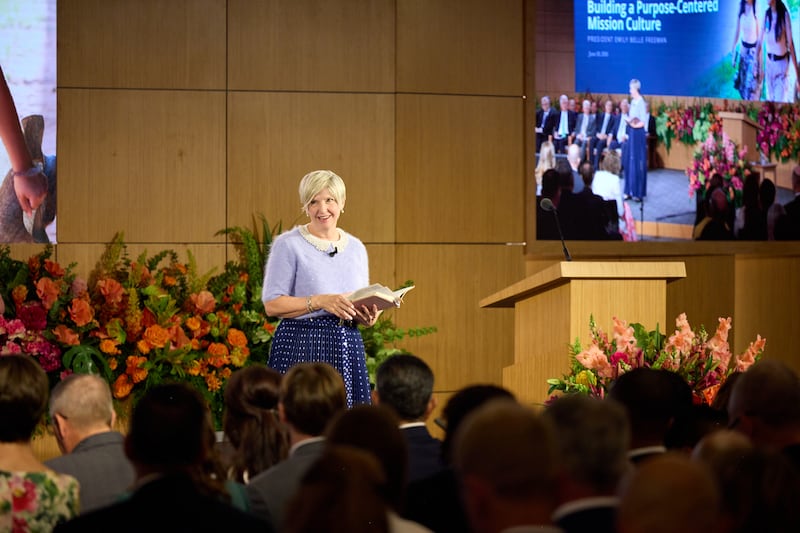

PROVO, Utah — Within the span of 25 verses in Mosiah 18, the prophet Alma changed the culture of his people from describing the Waters of Mormon as a place “infested with beasts” to a place “so beautiful to those who there came to the knowledge of their Redeemer,” said Young Women General President Emily Belle Freeman.
President Freeman, also a member of the Missionary Executive Council, taught how the change came about as she spoke to new mission leaders at the 2026 Seminar for New Mission Leaders on Saturday, June 20, at the Provo Missionary Training Center in Provo, Utah.
She said there is “a pattern that led to this change of perspective” and shared three characteristics with mission leaders describing the culture Alma created.
Hearts knit together in unity
President Freeman depicted missionary leadership councils as places “where the Spirit is poured out and unity is developed.”
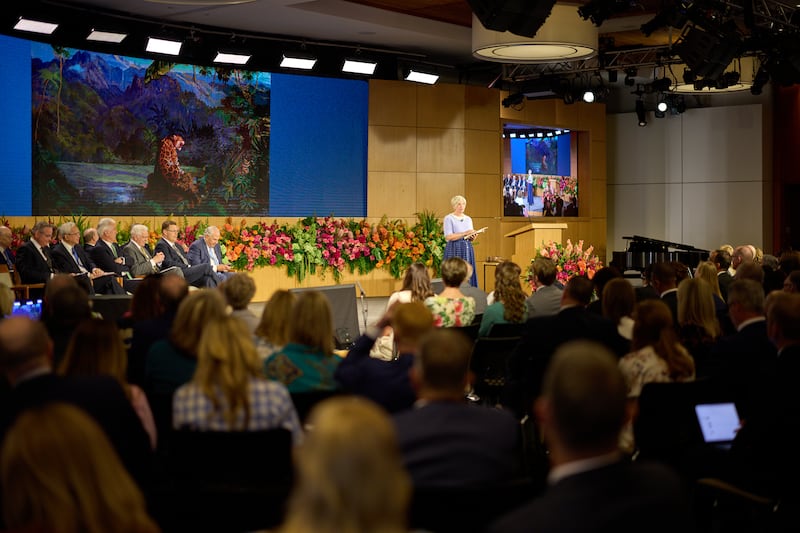
“Have you taken time to counsel together about what the culture of your missionary leadership councils will look like?” she asked the new mission leaders.
A mission leadership council culture can create the “holiness of heart” and the “hearts knit together” culture that Alma describes in Mosiah 18, verses 12 and 21, she taught. Describing a scene of assistants to the president and sister missionaries each teaching at a missionary council, President Freeman advised: “Let this be the culture of your missionary leadership councils.”
“Blessings will come from this,” she continued. “Testimonies will be strengthened as our elders and sisters serve and teach with unity.”
Teach with power and authority from God
Mosiah 18 also holds record of Alma preaching nothing “save it were repentance and faith on the Lord,” in verse 20, President Freeman said.
She said teaching with power and authority from God includes utilizing the scriptures, quoting the late President Jeffrey R. Holland, who counseled: “Make a love for the word of God absolutely central to your mission culture.
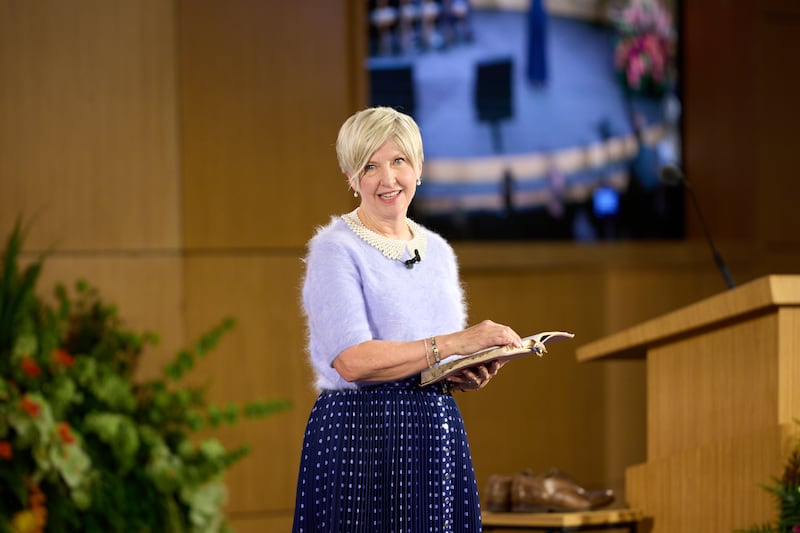
“When you teach your missionaries — and that is all the time — teach them from the scriptures,” she quoted. “Let them see where you get your strength and inspiration.”
President Freeman explained how in her family, opening the scriptures within five minutes of starting to teach is common practice. “Blessings come as we teach from the word of God: The Spirit will come in greater abundance, your own testimony will deepen, the faith of the learners will increase, and hearts will change,” she promised.
She left new mission leaders with an invitation: “Decide now to make your mission a ‘doctrine of Christ’ mission.”
‘Give what you have’
Mosiah 18:27 holds the third characteristic to changing a people’s culture: “impart of your substance,” President Freeman said.
“That begins with you,” she taught. “Every little bit counts. Look for the needs and the wants. Then, just give what you have.”
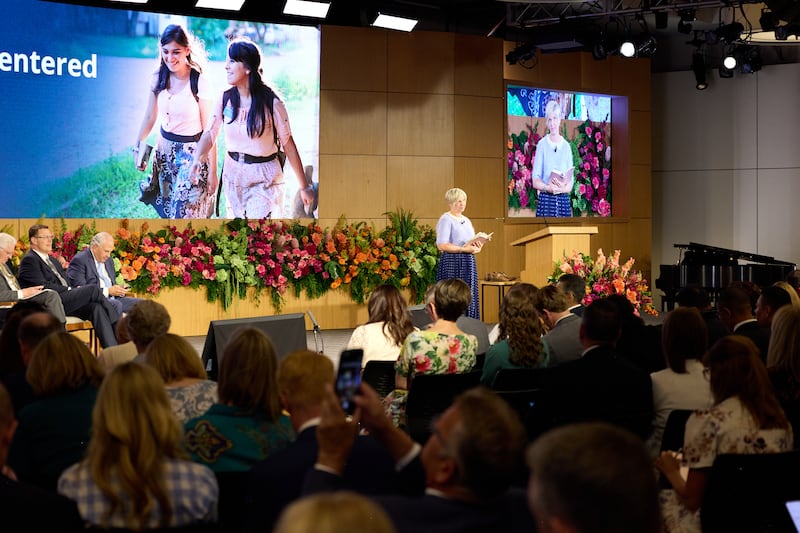
The Young Women general president then shared the story of her son-in-law, Trenton Smith, who was called to serve a mission in Bulgaria but served in New Mexico for the first 13 months due to the COVID-19 pandemic. The young missionary’s president, who had served for only two months at the time, sat down in an exit interview as then-Elder Smith prepared to depart for Bulgaria.
The mission president looked down at the missionary’s shoes, battered and worn after a year of devout service.
“I don’t want to send a missionary of mine to a new mission without everything you need to succeed. What’s your shoe size?” the president asked.
After hearing Elder Smith’s response, the mission president bent over and began unlacing his new, hardly worn shoes and gave them to the young man.
“Trenton doesn’t have one picture with that mission president. But he still owns his shoes,” President Freeman said. “And sometimes, he still wears them in memory of a mission president who gave what he had.”

In her concluding remarks, President Freeman left new mission leaders with what she hoped they will create in their respective mission fields:
- A mission “where hearts are knit together in unity as you establish an MLC culture centered on the missionary purpose and the doctrine of Jesus Christ.”
- A mission “where missionaries teach with the power and authority of God as you make teaching the doctrine of Christ a model for your mission.”
- A mission “where you give what you have to help your missionaries gain a renewed vision of their purpose and who they can become.”
She left new mission leaders with a promise that as they adopt those teachings, “miracles will happen. How beautiful will your mission be ‘to the eyes of them who there came to the knowledge of their Redeemer’ (Mosiah 18:30).”
