




On July 5, over 6 million members of The Church of Jesus Christ of Latter-day Saints throughout the United States were invited to kneel in prayer and set aside food for a cause that has defined their faith since the Church’s 1830 organization: religious freedom.
The First Presidency urged members in the United States to participate in a fast to express gratitude for religious liberty and ask that it be strengthened throughout the world — echoing a conviction as old as the restored gospel.
Though current anti-Christian pressures may feel modern, leaders of the Church have been no stranger to defending religious freedom.
A declaration of belief
Jackson County, Missouri, 1833 — members of the Church were violently ripped from their homesteads amid “anti-Mormon” propaganda and laws in the state.
Two years later, elders at a general assembly of the Church raised their hands unanimously in approval of a new “declaration of belief” attached as an addendum to a new book of revelation.
It is known today as Doctrine and Covenants 134.
The section laid out what the Latter-day Saints believed about their God-given rights to freedom of religion and members’ sacred duty to defend it. It was a direct response to the oppressive laws made against the Church.
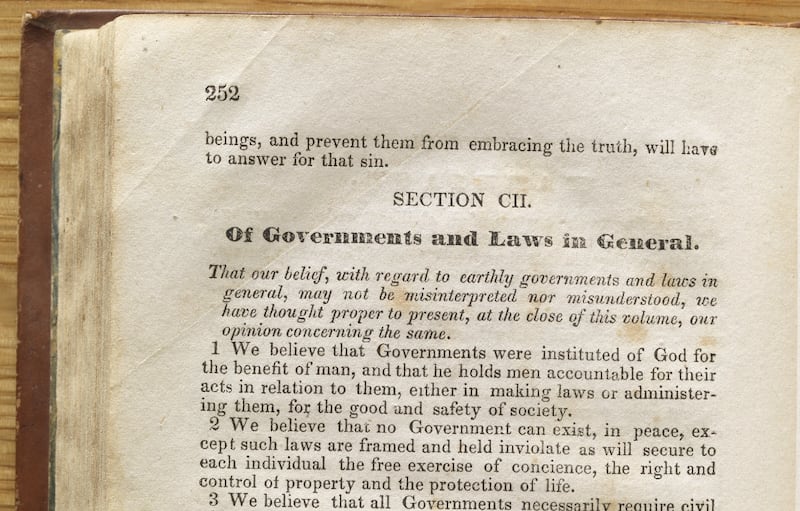
Gathered in Kirtland, Ohio, Aug. 17, 1835, members of the general assembly listened to what would become the Church’s founding religious-freedom text. “We believe that no government can exist in peace, except such laws are framed and held inviolate as will secure to each individual the free exercise of conscience, the right and control of property, and the protection of life,” verse 2 reads.
In verse 4, it continues: “We do not believe that human law has a right to interfere in prescribing rules of worship to bind the consciences of men, nor dictate forms for public or private devotion.”
In moments of strife
Since its publication, Doctrine and Covenants 134 has been of use to Church leaders as political tensions ebb and flow.
President David O. McKay, then second counselor in the First Presidency, quoted it in 1942, amid the Second World War, encouraging young men to fight for religious freedom. He quoted it again in 1952 as Church President, at the height of the Cold War, preaching that governments were instituted of God for the benefit of man.
In his remarks, he said: “America was a nation of people who had faith in their political and economic systems because they had faith in God and had built those systems around the teachings of God.”
Church President Ezra Taft Benson quoted section 134 in celebration of the 200th anniversary of the signing of the Declaration of Independence in 1987: “I testify that the God of heaven sent some of His choicest spirits to lay the foundation of this government, and He has now sent other choice spirits to help preserve it,” he said in that message.
In the October 2002 general conference, then-Elder Russell M. Nelson of the Quorum of the Twelve Apostles quoted the section while encouraging Latter-day Saints to resolve conflicts amid times of war and contention in his message titled “Blessed Are the Peacemakers.”
A core doctrinal belief
The section, once made as a defense against unjust state laws, has become a pillar of belief in the Church — to the extent that Joseph Smith included its fundamental teaching in a letter to John Wentworth in 1842:
“We claim the privilege of worshipping Almighty God according to the dictates of our own conscience, and allow all men the same privilege, let them worship how, where, or what they may.” Members now refer to this quote as the 11th article of faith — something memorized by even the youngest of Primary children.
This statement is one of 13 articles that summarizes the core beliefs of members of the Church.
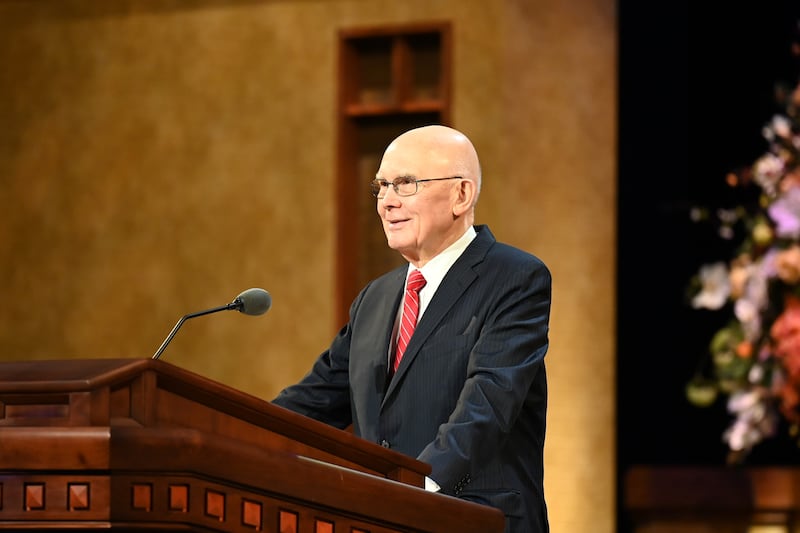
Church President Dallin H. Oaks, as first counselor in the First Presidency in the April 2021 general conference, made use of this article of faith in his message “Defending Our Divinely Inspired Constitution.”
“What else are faithful Latter-day Saints to do?” he said. “We must pray for the Lord to guide and bless all nations and their leaders. This is part of our article of faith.”
On July 5 of this year, Latter-day Saints throughout the United States fasted and prayed for the same cause early Church leaders stood for in the 1835 general assembly — a cause Church leaders since have been fighting for over nearly 200 years: free exercise of religion.
