





With the 250th anniversary of the United States this year, leaders of The Church of Jesus Christ of Latter-day Saints have invited members to learn more about moral agency and how the U.S. Constitution and the Declaration of Independence support religious liberty.
These founding documents helped enable the Restoration of the Church, which now spreads throughout the world.
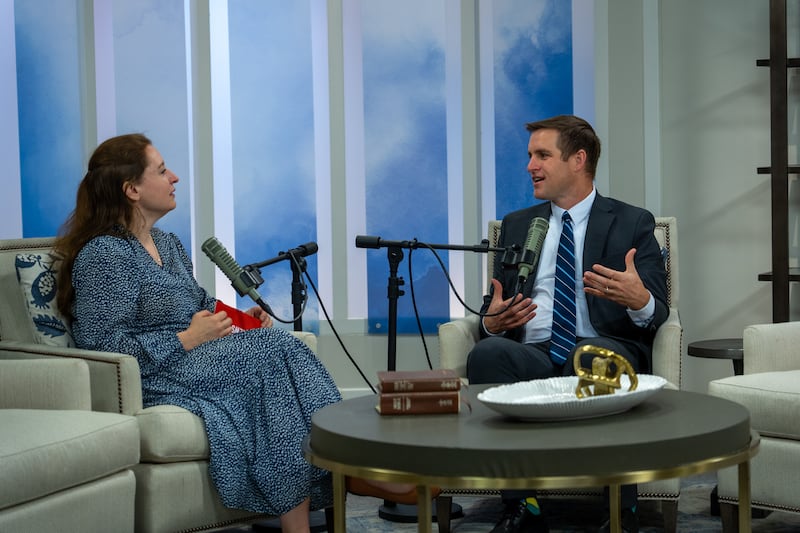
Historian Spencer W. McBride with the Church History Department joins Church News reporter Mary Richards to talk about the American Revolution, religious freedom and God’s hand in history.
Listen to this episode of the Church News podcast on Apple Podcasts, Amazon, Spotify, bookshelf PLUS, YouTube or wherever you get podcasts.
Transcript:
Spencer W. McBride: At no point should we rest on our laurels in the United States, thinking that we’ve figured out religious freedom. There’s still work to be done. I think there’s work to be done in those places where people are actually persecuted and their lives are threatened because of their beliefs, if they are different than the mainstream or what the government dictates. It’s scary. And I think that Heavenly Father’s Church restored on the earth should be leading the way in helping establish and protect religious freedom. And we see that, right? We see that with our Church leaders today. It’s why they talk about it so much. It’s because that agency, that right to choose, is essential. Faith has to be chosen. It can’t be forced on you. It can’t be coerced. For it to be living, redeeming faith, it has to be chosen.
0:50
Mary Richards: This is Mary Richards, reporter at the Church News. Welcome to the Church News podcast. Today, we are taking you on a journey of connection as we discuss news and events of The Church of Jesus Christ of Latter-day Saints.
This year, America celebrates its 250th anniversary. Its founding came with many freedoms that Church leaders have said enabled the Restoration of Jesus Christ’s Church on earth again, The Church of Jesus Christ of Latter-day Saints.
Joining me on this episode of the Church News podcast is Church historian Spencer McBride. Welcome to the Church News podcast.
Spencer W. McBride: Oh, I’m happy to be here.
1:28
Mary Richards: Thanks for being here and for sharing your expertise with us about how these two histories intersect, our Church history and America’s history. This is something you’ve studied extensively.
Spencer W. McBride: Yeah, absolutely. As a doctoral student, I studied religion in the American Revolution and the early republic. I joked that I wanted to stay away from anything controversial, so I chose religion and politics.
1:51
Mary Richards: Perfect. How they intersect and how they’re such a part of this country. When you think of America’s 250th anniversary, what do you think of?
Spencer W. McBride: One, it’s amazing that we’ve come 250 years. But also, in the history of the world, 250 years isn’t actually that long for a country. So it feels very old to us, but some of these events actually aren’t that far removed from us today. So I actually think that’s a good thing because I think it helps us relate to and connect to this founding moment, perhaps more than if it was thousands and thousands of years ago.
2:30
Mary Richards: True. I think sometimes I squish the past all into the past.
Spencer W. McBride: Yeah.
Mary Richards: But when we break it down and look at the dates and sequences and things that happen first, let’s talk about some of those moments where we have — the American Revolution was not that far removed from the First Vision, when you look at the timeline. Let’s talk through that timeline.
2:49
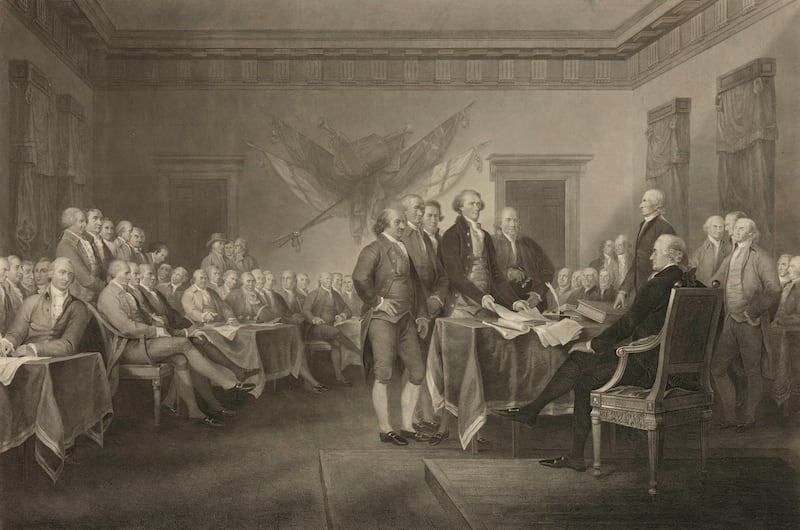
Spencer W. McBride: Sure. I think one of the things that happens as we celebrate the American Revolution, the Declaration of Independence, the Constitution is we talk about all the good that it did for religion in America, and it did. And sometimes we conflate that into thinking that the Revolution was a war of religion. But when you look at the Declaration of Independence, all of the reasons listed for why the war was fought, religion and religious freedom is not there. It was not a war fought for religious freedom.
But American independence relied on religious rhetoric and religious ideas to be successful. And it had this really positive effect on American religion. So, for example, on the eve of the American Revolution, there were several colonies that had religious freedom to some extent, and there were some that didn’t. They had religious toleration, where you could be a member of a church that wasn’t the official state church, and you wouldn’t be criminally prosecuted for that, but you would not be allowed to vote, you would not be allowed to hold public office, and you would have to pay tax dollars that help support a church that you were not a member of. So it was religious toleration, not religious freedom.
And as the Revolution starts in full swing, there are some people who are hesitant to support the Revolution, in part because they’re part of the religious minority. They’re part of the persecuted Protestant dissenters, is what they were called — Baptists, Methodists, sometimes Presbyterians. And there was this sense that if they supported the Revolution, would things get better, or would things get worse? And there was kind of a guarantee in some states, such as Virginia, that if they supported the Revolution, religious freedom would be coming soon.
And so you see that. And in the immediate aftermath of the American Revolution, you get all these state constitutions, and increasingly they allow for religious freedom, meaning that you don’t just have toleration to join a church, but if you join a church other than a state-sponsored church, You have all the rights and privileges that any other citizen has. And so you see this rise of religious freedom in the wake of the Revolution, and that increases religious choice. And we see that the effect is ultimately a rise in church membership. You give more Americans a choice of where they go to church, of how they worship, of what they choose to believe, and the number of people who actually participate in religion increases.
5:36
Mary Richards: And then this sets up, then, the Bill of Rights, where, do you think today we don’t quite understand what — you understand — many people understand what they were going with when they wrote the freedom of religion in the Constitution? But it was coming from this background of now this ability to choose.
5:54
Spencer W. McBride: Yeah, that’s absolutely right. This idea that the federal government would make no laws concerning religion, they would not mandate that you go to church. You had the right to worship or not worship according to the dictates of your own conscience.
I mean, this is the idea. Religious freedom protects the right to worship as you want to worship, but also choosing not to worship is protected by religious freedom. The right to believe, the right not to believe. And you get this in the Bill of Rights, although some of the states still maintained religious establishments. You don’t get full religious freedom in Connecticut until 1813, and in Massachusetts until 1833.
So we sometimes have this narrative that the American Revolution happened and, ta-da, like magic, religious freedom everywhere — where the reality is you see religious freedom spreading rapidly, but it takes time. But yes, you absolutely see this kind of protection of choice, protection of the dictates of our own conscience.
6:59
Mary Richards: Which is exactly what our Church President Dallin H. Oaks has talked about, the fact that this is God’s plan — moral agency, really, for His children. We can choose.
7:12
Spencer W. McBride: Absolutely. And I liked that in the recent fifth-Sunday lesson with President Christofferson and Elder Cook, they talked about the significance of agency, not only in God’s plan for the happiness and eternal life of His children, but also in the pursuit of happiness, we get to make choices as individuals. And that has to be a choice. Faith has to be something we choose, not something coerced, not something forced upon us.
7:40
Mary Richards: Well, and then in the middle of all of this, as this is happening in our nation, we have Joseph Smith, who’s in the middle of this religious revival.
Spencer W. McBride: Yeah.
Mary Richards: And what he’s thinking, “What do I do?” Not just, “What church do I join?” but the status of his soul.
7:55
Spencer W. McBride: Yeah. So, if you’ll allow me, there’s this fun fact that I think gets missed in this that’s so significant to this, and it’s called the Proclamation Line of 1763. And maybe some of our listeners understand this, but maybe this is new to some.
And essentially one of the things that made the colonists so frustrated and contributed to the Revolution was that the British Parliament drew a line essentially along the Appalachian Mountains and the Catskills and Adirondacks in New York and said, “You can’t settle west of here.” And with the Revolution, that line is dissolved. And all of a sudden you have Americans flooding into the Ohio River Valley, into Western New York, people like the Smith family.
And there’s this great concern of the people in the places that these migrants left: “Are they going to lose their religion? Are they going to lose their faith?” It’s kind of like when we go off, leave home, go to college or move out for the first time: “We’re independent adults. What are we going to do?” And you have these families moving west. Are they going to keep their faith? And so they send missionaries, and missionaries go into Western New York by the hundreds, and they’re preaching, and they’re having these revival meetings.
And so it’s in this postrevolution setting that you get not only the freedom of choice, but you have more people than ever reconsidering: “What do I actually believe? How do I seek salvation?” And Joseph Smith is very much a part of this.
And so this is kind of what I mean when I say the Revolution was not about religion, but it had a profound effect on religion. It changed the American religious landscape in a way that Joseph Smith would ask these questions. And Joseph’s not the first to ask these questions. “How can I be saved? How can I be forgiven for my sins?” These are age-old questions. But even the question connected to those, “Which church is true?” this isn’t new either.
George Washington, for example, believed that going to church was important, but he always left church early because he didn’t — in the Church of England, turned the Episcopal Church, they did the sacrament, or the Lord’s Supper, at the end of services. And he had questions of whether this was a ritual or ordinance that was dated back to Christ and if anyone in the church actually had the authority to administer it. So he had questions about authority. He had questions about primitive Christianity or the church of the New Testament. And Thomas Jefferson had questions about how the Bible had been translated over time: Had it been mistranslated, intentionally or unintentionally?
So all these questions that Joseph Smith had, they weren’t new, but the context in which he asked them had changed, and they had changed because of the American Revolution. So I know that’s kind of long-winded, but I hope it helps kind of connect those dots.
11:03
Mary Richards: Yes. The context of all of this is so fascinating, that not only do we have this new nation where we are having these freedoms set up so that the Church could be restored, but we have a person in place, the right Prophet prepared for that time.
11:19
Spencer W. McBride: Yeah, because imagine asking the question, “Which church is true?” but there’s a state-sponsored church, and it’s “Go to that church or face consequences.” Or imagine asking that question and there’s not a lot of churches to actually choose from. The question of “Which church is true?” in context of “How can I be saved?” is a very different question in 1820 than it would have been in 1770.
11:44
Mary Richards: Yeah. And again, my brain tries to squish the timeline together, but it is — we have the First Vision, but then it takes time to then — the Restoration, it unfolds. It takes time.
What are some key dates or people or facts we should think about when we’re thinking about our U.S. history and our Church history in those early years?
12:04
Spencer W. McBride: Yeah. So I think this idea that at the time of the Revolution, this kind of Christian worldview was dominant in the United States, but church attendance, church membership, was actually relatively low. And so we’re thinking 1770s, 1780s. You get the Declaration of Independence in 1776. You get the U.S. Constitution in 1789. And in the 1790s, really, you get these Protestant dissenting groups, the Baptists, the Methodists, the Presbyterians, who were once kind of on the margins, they begin to become mainstream, and you see religious interest rise. You see religious or church membership increase. So that’s the 1790s, that’s the 1800s, 1810s.
That brings you to Joseph Smith. So it’s a couple, it’s about three decades, but so much happens in those three decades. And it really is, I think we can see with the benefit of hindsight, Heavenly Father setting the stage for the Restoration of the gospel.

Because I think it’s easy to look for the big moments, and we say, “Where’s God’s hand in this?” And we want to see the big, miraculous moments on the battlefield or in the halls of the Constitutional Convention, when they’re debating the Constitution. And I personally believe that God’s hand was present in those moments.
But sometimes as a historian and as a Latter-day Saint, it’s fun to take a further step back and say: “Where’s God’s hand in changing the culture of the country? Where’s God’s hand in changing the way society is organized and structured?” Because He can do just as miraculous things in those gradual, small changes as He can in those big, magnificent moments.
13:52
Mary Richards: Wow. That’s true for our own lives, isn’t it?
Spencer W. McBride: That’s right.
Mary Richards: Yes.
Spencer W. McBride: I mean, because we can look at our own lives and say, “How has God changed — where’s His hand in changing — the context of my life, of putting me in the places I need to be to get the answers to my questions?” And we see that too. And it’s just as miraculous as divine intervention on a battlefield or in a hall of government.
14:15
Mary Richards: Oh, I love that, especially because I think about wanting a timeline and dates on that timeline of, “And then this happened, and then this happened.” But His hand was throughout the whole thing.
Spencer W. McBride: Absolutely.
14:27
Mary Richards: Yeah. Yeah. As Joseph Smith then moves forward and he’s in place and the Restoration begins, then how is the country going along as our Church starts to grow and be established?
Spencer W. McBride: And this is one of the tricky things, because the United States is growing, it’s expanding in population, it’s expanding in territories. And when you have that type of rapid growth, keeping order is tough. And we can celebrate the great expansion of religious freedom in early America, and we should. But we would be kidding ourselves if we thought that they had gotten to universal religious freedom, because we know the story of the Latter-day Saints. They face mobs, they face persecution.
And what happens in Missouri in 1833 when they’re expelled from Jackson County is terrible and runs completely counter to the principles of religious freedom. And so it’s in that setting, though, in 1833 that Joseph Smith invokes the Constitution. And in a revelation that Joseph Smith dictates, we get the voice of God telling us that God was in the — had a hand in inspiring the men who established the government of the United States (see Doctrine and Covenants 101:76–80).
And it’s this beautiful and important moment, but it’s also a reminder that universal freedom doesn’t come easily and that religious freedom kind of exists in degrees, and we need to be working to expand it and be vigilant to prevent it from being contracted and taken away.
And so, yeah, Joseph Smith is appealing to the Constitution as the Saints seek redress, again when they get expelled from Missouri altogether. He goes to the White House, he goes to Congress, and they invoke the religious freedom of the Constitution as a way of saying: “We should be protected. We should not be victims of mobs and mob violence with no reparations, no redress, no help.”
And so it’s this idea of, yes, the religious freedom that came from the American Revolution set the stage for the Restoration, but the work for universal religious freedom is never over. It needs to be expanded. And once it’s achieved, it has to be protected.
16:47
Mary Richards: Yes. Yes, I feel like we’ve heard President Oaks talk about that multiple times, and other Church leaders around the world that we cannot take it for granted, that it can be taken away. And look at our history, which, like you said, is not that long ago, where we had Latter-day Saints killed, persecuted, driven from their homes.
During all of this, too, it still is so interesting that Joseph Smith had such a love of country and a belief in it. He ran for president, and you’ve written about that, too.
17:17
Spencer W. McBride: Yeah, that’s right. Yeah, it was a long-shot campaign. It was very unlikely that he was going to win, but he ran because he saw that there were problems that needed to be addressed. And one of the issues that he saw is that — and we know this — prior to the American Civil War, the Bill of Rights did not apply to the individual states, meaning the Bill of Rights protected the people from infringement of their rights by the federal government.
But if a state government infringed upon those rights, the federal government had limited powers to address it. And Joseph Smith’s saying: “There’s something wrong there, guys. We’ve got to make a change.” And ultimately he was unsuccessful. But in the wake of the Civil War, with the passage of the 14th Amendment, which ended slavery, one of the mechanisms for enforcing the end of slavery was that the federal government could enforce the Bill of Rights on the individual states, which is exactly what Joseph Smith was campaigning for, just kind of in a different setting.
One of the episodes I think that was this key moment in Joseph Smith’s understanding of religious freedom is when he’s on the East Coast of the United States and he visits outside of Boston in Charleston, the ruins of an Ursuline convent that had been burned down by a mob. And it’s in this setting as he’s pondering what’s happening to the Saints in Missouri, as he’s thinking about religious freedom, that he begins to fully grasp that to really work for religious freedom, you can’t just be talking about your religious freedom.
It’s really easy to think, “Once I have religious freedom, religious freedom exists.” But this idea that you have to be as vigilant and as earnest in promoting the religious freedom of everyone, including those who believe and worship very differently than you. Only then can we have religious freedom. And Joseph Smith said as much. He said he was as willing to die for a Presbyterian or a Catholic or a Jewish person as he was to die for a Latter-day Saint.
And I think that’s a legacy that’s really important to remember from Joseph Smith, is as we continue the work for religious freedom, it can’t just be our religious freedom. It has to be for everybody, the right to worship according to the dictates of your own conscience.
19:41
Mary Richards: It’s in our Articles of Faith. Yes, it has to be something we believe. And I see our Apostles and our Prophet speaking about that around the world too, that it’s not just for us. This is something for everyone, our neighbor, anybody to have, because it goes back to that God-given moral agency that you can choose.
20:01
Spencer W. McBride: Yeah. And one of my favorite stories, too, is when Joseph Smith is mayor of Nauvoo, president of the Church, and you have a Catholic priest who needs to cross the river, cross the Mississippi River, into Iowa to administer last rites to one of his dying parishioners. He does not have money for the ferries to cross the river, and it’s urgent. He needs to get over there. And he comes to Joseph Smith and explains the situation.
Now, Joseph Smith believes his truth claims about The Church of Jesus Christ of Latter-day Saints. He believes it’s the true and living Church on the earth. And here’s a clergyman of another faith saying, “I need to go administer last rites to a parishioner,” and Joseph pays the ferry fee and provides him a horse or a wagon or some kind of conveyance to get him there.
So to Joseph, it’s not just that we allow people to worship according to their own conscience, but we sometimes facilitate it, facilitate safe and practical ways for them to do it.
21:07
Mary Richards: Yes. I see that today. Our meetinghouses are used by other folks of other faiths who might need them in times of emergency or just for a meeting, or there are many interfaith moments that happen around the world with our Latter-day Saints and their friends and neighbors.
21:23
Spencer W. McBride: Yeah, absolutely. I mean, for example, our meetinghouses being used as safe places for our Muslim brothers and sisters to pray. We hear those stories. That’s very much in line with Joseph Smith’s thinking on this, this idea that it does not hurt our faith, it does not hurt our belief, to facilitate the worship of others.
21:45
Mary Richards: And then as the Restoration continues and the Saints move west, then we have Brigham Young leading the Church, and also all the things that he’s going through at the same time as our U.S. history is going through its different steps and things like that too.
22:00
Spencer W. McBride: Yeah, and the Church has a really kind of complicated relationship with the United States. And so it makes America250 kind of a fascinating story, right? Yes, the Revolution brought about greater religious freedom, but it didn’t figure out all the complexities of religious pluralism. And the Latter-day Saints’ story kind of encapsulates that.
Joseph Smith believed that the United States was founded with divine inspiration, but it was never patriotism for the sake of patriotism. It was never the United States for the sake of the United States. It was what the founding of the United States brought about in God’s bigger plan for the redemption of humankind, for the happiness eternally of all women and men. And he never lost sight of that. So if it meant that at some point the Saints would have to leave the United States altogether, they would. And that doesn’t mean that the founding wasn’t inspired. It just meant there were greater purposes, there were greater plans ahead.
And so, of course, when the Latter-day Saints, after Joseph’s martyrdom, do move west to the Great Basin to what today is Salt Lake City, they are leaving the United States. They actually feel that the country has failed them. Now, by the time they get here, the Mexican-American War has made it so this is American territory again. And it means that Brigham Young and Church leaders are going to have to continue to engage with government officials. And sometimes that goes really well. Sometimes that goes terribly wrong.
And it’s decades of tension between Church leaders and the government. But ultimately, by the time that Utah gains statehood and we get into the early 1900s, there’s still issues, but it’s much calmer, it’s much more manageable. And then by the time you get into the 1950s, 1960s, you see Latter-day Saints becoming more mainstream American than they had ever been before.
24:06
Mary Richards: Yes. I also think, too, around the same time, maybe there might still be people who think, “Well, that’s an American church.” But even Joseph Smith from the beginning was sending missionaries around the world. Missionaries left to go to England and the Pacific and to Africa and all these places throughout all those decades. And it is a worldwide Church now. So, yes, we’re talking about America’s anniversary because of this context, but it’s a worldwide Church too.

24:32
Spencer W. McBride: Absolutely. So it’s one of those things where as we think about this, how can we celebrate the role of the American founding, this year of America250? How can we celebrate the significant role of that founding moment to the events that led to the Restoration? But still have the broad global view that this isn’t simply an American story, it’s not simply an American church, but it’s something that happened in the United States of America so that God could bless His children wherever they lived.
25:06
Mary Richards: Yeah. Those freedoms, too, we see started to expand globally after the American Revolution and the Constitution, other countries starting to adopt religious freedom in their own way.
Spencer W. McBride: Absolutely. And it’s an effort that continues, right? At no point should we rest on our laurels in the United States, thinking that we’ve figured out religious freedom in every aspect. There’s still work to be done. But we’re in a pretty good place relative to so many other countries.
And I think there’s work to be done in those places where people are actually persecuted and their lives are threatened because of their beliefs, if they are different than the mainstream or what the government dictates. It’s scary. And I think that Heavenly Father’s Church restored on the earth should be leading the way in helping establish and protect religious freedom.
And we see that. We see that with our Church leaders today. It’s why they talk about it so much. It’s because that agency, that right to choose, is essential. Faith has to be chosen. It can’t be forced on you. It can’t be coerced. For it to be living, redeeming faith, it has to be chosen.
26:23
Mary Richards: And we have a role in protecting and supporting it too. I think we’ll look at all the amazing things our Church leaders are doing, the Church — capital C — is leading on this. But our members can also, I can stand up for the rights of my neighbor. Or I can support their freedom to choose.
And, too, I think about how our invitation from our Prophet to have a special fast on July 5. I think this will be airing after that happens, but I was so struck by that invitation, not just to fast in gratitude but also that these freedoms can be strengthened, protected, supported and, like you said, kept, because if we don’t actively work on that, they could be taken away.
27:02
Spencer W. McBride: Yeah. In fact, President Oaks, in one of his talks about government and laws and God, said that “popular sovereignty” — essentially what we have in our democratic society — can also be phrased as “popular responsibility.”
In some ways, it can be in terms of what’s required of us as citizens is more than what would have been required of us as subjects of a king. As citizens, it’s required — we are responsible for being informed, for understanding and for standing up for what’s right. Because if the power is coming from the people, then we have the responsibility as well. And so I like that, that President Oaks has stated that popular sovereignty means popular responsibility as well.
27:53
Mary Richards: He has talked a lot about our responsibility. And as covenant members of the Church, we also have covenant responsibilities, too.
Spencer W. McBride: Yeah, absolutely.
Mary Richards: And I’ve been thinking too that there’s a power in fasting, and this is historical as well.
28:08
Spencer W. McBride: Yeah. In fact, it makes me think of during the American Revolution — again, the war wasn’t a war of religion, but the Continental Congress in 1775 and then again every year during the war declared a continental day of fasting and prayer, where they asked American colonists in 1775, and then American citizens in 1776 and on, on a certain day of the year, they were asked to fast and pray for an entire day; to go to their place of worship, whatever denomination they belonged to; and to hear a sermon from their clergyman about the importance of freedom, about the importance of liberty and the stakes of the American Revolution.
And it’s this moment where I think some of our founders were really interested in making sure that we were appealing to God in pursuing these liberties, pursuing these freedoms. And they did it then. And I think it’s fitting, then, that our Church leaders have asked us to fast and pray in gratitude for the rights we have, but also to know how best to protect them moving forward. It’s a very fitting way to honor the 250th anniversary of the American founding.
29:21
Mary Richards: That’s beautiful. That’s such a neat thing. I did not know about our history. I love that. Thank you.
Thank you so much for your time on the podcast today and sharing your expertise with us, all your knowledge of history of our Church and our country. And our last question, we always give our guests the last word, and we ask them: What do they know now?
And so, Spencer, what do you know now after your studies of history of The Church of Jesus Christ of Latter-day Saints in America’s history? What do you know now about God’s hand in all of it?
29:52
Spencer W. McBride: Yeah, we see the way that God works in the big moments. We see the way that He works in the subtle changes of our lives. He’s there. We just need to look for it and recognize it. And then we need to do our part to build upon the situations He puts us in.
We are blessed as Americans. As many problems as our country has, we have a high degree of religious freedom. What are we going to do with it? How are we going to preserve it? How are we going to expand it? How are we going to help others experience the same?
