





As a missionary in Peru, I saw people’s love for God strengthen as they learned how to pray. It came full circle the day a devout Catholic unknowingly taught me to pray more sincerely.
After my companion and I knocked on a stranger’s door in 2018, an elderly, nearly deaf man answered the door and graciously let us in to talk about the gospel of Jesus Christ. We learned of his Catholic background and love for God, and we shared our own beliefs, in a pleasant exchange.
“Can we leave with a word of prayer?” we asked to close the visit. “Who would you like to offer —” The man eagerly volunteered to say the prayer.
His legs trembled as he leaned on his cane and dropped to his knees to worship the Lord. We joined him on the floor, closed our eyes and waited for him to speak. A reverent pause filled the room.
“Our Father which art in heaven, hallowed be Thy name,” he finally spoke. I had heard Catholic members speak the Lord’s Prayer before, but there was a fervor and devotion in his voice unlike anything I had ever heard.
“Thy kingdom come. Thy will be done on earth, as it is in heaven.” I was astounded by the sincerity, authority and reverence in his voice. It wasn’t fake emotion, and it wasn’t just for show.
He truly pleaded for his daily bread and truly intended to forgive his debtors. This brother was not simply repeating a well-formulated prayer; he truly meant every word.
The willingness to pray, the quavering in his voice, the tears on his face, the disregard of his no-doubt-aching knees — he knew to whom he was praying, and it showed.

What I saw that afternoon in Peru was a devout follower of Christ willing to “look unto [Him] in every thought” (Doctrine and Covenants 6:36). Despite our difference in beliefs, I saw a fellow disciple recognizing his dependence on his God and ever ready to follow His Son to salvation. This believer of another faith showed me what it means to revere the Father in sacred prayer.
In April 2025 general conference, Elder Ulisses Soares of the Quorum of the Twelve Apostles taught that reverence transforms discipleship. Reverence is the foundation upon which spirituality is built, he said, creating a deeper communion with God.
“Each of us can transform our discipleship into a higher pattern of spirituality by making the virtue of reverence a sacred part of our spiritual character,” Elder Soares said.
He noted that before Moses communed with the Lord on Mount Horeb, “God called unto him out of the midst of the [burning] bush, and said, Moses, ... put off thy shoes from off thy feet, for the place whereon thou standest is holy ground” (Exodus 3:4-5).
Can we treat our prayers as a similar communication on holy ground?
Just as Moses took off his shoes in the Lord’s presence, are there ways we can show our reverence in prayerful communion with Heavenly Father?
Can we make our meal prayers more genuine? Can we take a pause before prayer to ponder the Savior’s role in our life? Can we put our phone on silent before folding our arms so we don’t get distracted?
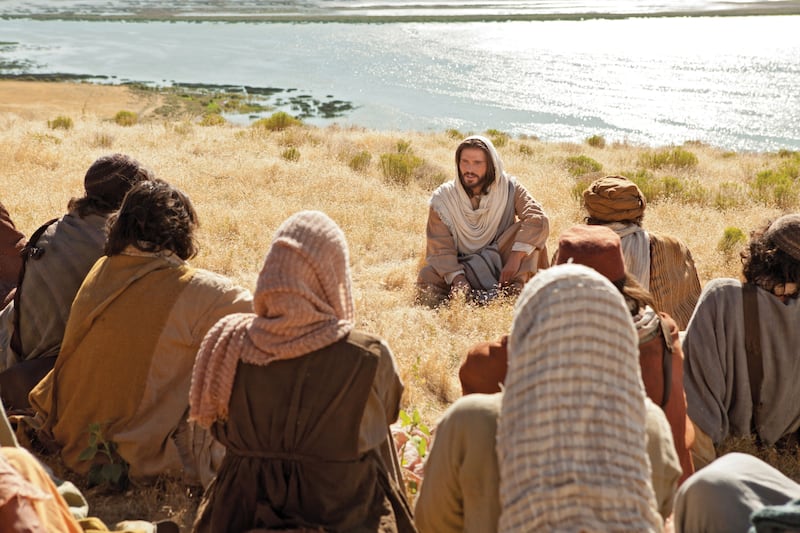
The Savior directed in Matthew 6:7 to “use not vain repetitions.” This doesn’t mean never saying the same thing twice in a prayer, though, otherwise it would render the sacrament a vain repetition.
So, what gives the sacrament prayers power each time they’re spoken? It’s the nervous priest pouring his heart into the words. It’s the new parents grasping the promise of having the Spirit to be with them. It’s the penitent earnestly recommitting to remember the Savior another week.
I learned a great deal about fervent, genuine prayer on my mission. Now when I pray, I try to show my Heavenly Father our conversation means everything to me. Before a morning prayer, for instance, I’ll make my bed to pray in a more ordered, calm, sacred atmosphere.
Will God ignore my prayer if my bed isn’t made? Of course not. But I believe He does see and appreciate these little acts we do to have a more meaningful prayer experience. God is everything to us, so we should make Him everything in prayer by giving our undivided attention.
I learned that from the Peruvian Catholic who seemed to stop time with his worship, when all that mattered was that conversation between himself and the divine.
That dialogue meant everything to him. And now it means the world to me, too.
— Joel Randall is a reporter for the Church News.
