



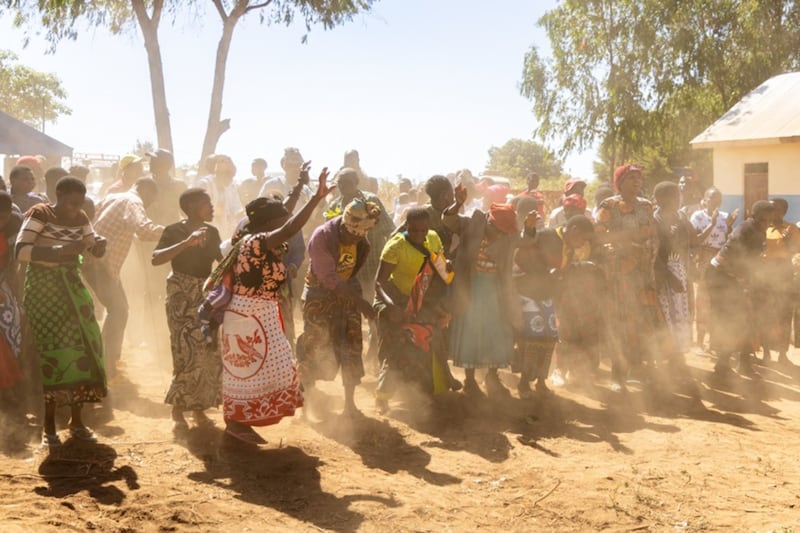

Guided by the Savior’s commandment to “love your neighbor as yourself,” Elder Paul B. Pieper, General Authority Seventy and first counselor in the Africa Central Area presidency, visited Tanzania on Aug. 24–27, to observe how collaborations between The Church of Jesus Christ of Latter-day Saints and UNICEF are strengthening early childhood education and frontline health services, reported the Church’s Africa Newsroom.

Traveling with his wife, Sister Lisa Pieper, and joined by Phillip Moatlhodi, area Welfare and Self-Reliance manager, and Denis Mukasa, regional humanitarian manager, Elder Pieper met government leaders, UNICEF officials and community members in the Songwe Region. Moatlhodi and Mukasa then continued the visit by traveling to the islands of the Zanzibar archipelago. Neither Songwe nor Zanzibar currently have Latter-day Saint meetinghouses.
The visit highlighted the Church’s global initiative to improve the well-being of women and children. The projects reviewed in Tanzania connect learning, health, nutrition and child protection — efforts designed to help children thrive and families become more self-reliant.

“We’re here representing the Church, but really we’re bringing the love of millions of people because the donations that are made are made by millions of people who care about their neighbors,” Elder Pieper said. “That’s the teaching Christ gave us — love your neighbor as yourself.”
Songwe: Early learning within reach
At the Songwe regional office on Aug. 26, Elder and Sister Pieper were welcomed by Frank George Haule Hawassi, administrative secretary of the province, along with community leaders and UNICEF representatives. In remarks to the delegation, Dr. Hawassi thanked UNICEF and the Church for a collaboration he described as both practical and deeply meaningful to families.

“On behalf of the government of Tanzania, Regional Commissioner Hon. Jabiri Omary Makame and the people of Songwe Region, I extend heartfelt thanks to UNICEF and The Church of Jesus Christ of Latter-Day Saints, UNICEF’s largest partner,” he said. “Your contributions are unforgettable to God, to every child whose life you’ve touched, to our region and to the nation. Let us continue to strengthen this partnership as we build a healthier, better educated, and more prosperous Songwe for today, for tomorrow, and for generations to come.”
From there, the group visited the Isewe Satellite Center — one of 58 satellite centers in Songwe that together serve 6,810 children ages 3 to 8. The centers bring school closer to home; without Isewe, many children would have to walk nearly four miles to the nearest school.

Elder and Sister Pieper observed classroom sessions, reviewed a newly rehabilitated classroom and met with a satellite management committee to discuss integrated services, renovation progress and teacher mentorship.

The visit also included Village Health and Nutrition Day, a community-driven outreach that brings essential services directly to families. Community health workers demonstrated growth monitoring for children, birth registration and preventive care designed to reduce risks before they become emergencies.

Zanzibar: Strengthening frontline care through mentorship and skills labs
On Aug. 27, Moatlhodi and Mukasa continued the visit by traveling to the archipelago of Zanzibar — about 25 miles off the coast of Tanzania — with UNICEF leaders Laxmi Bhawani Majji, chief of the UNICEF Zanzibar Office; Wendy Erasmus, chief of health; and Maryam Hemed, a UNICEF health specialist.

At Mwera Health Center — a primary care facility — they observed a mentorship session where trained mentors coach frontline providers in clinical practice, leadership and facility management.

The delegation then visited the Zanzibar Skill Lab at Lumumba Regional Hospital, established with support from the Church. Using medical mannequins and other equipment, the lab provides hands-on training and anchors the rollout of Zanzibar’s new Continuing Professional Development framework for health professionals.

‘You have come and seen’
The day concluded with a visit to the ministry of health, where Church leaders met with Minister Nassor Ahmed Mazrui. He expressed appreciation for the Church’s collaborative, needs-driven approach.
“We are excited that you have come to work with us in areas where we have gaps. You have not come up with your own imagined problems, but you have come and seen. You have come and seen what the problem is, and your intervention is on the right track,” the minister said.

