
This week’s “Come, Follow Me” study guide covers the Articles of Faith and Official Declarations 1 and 2, which includes revelation that ended the practice of plural marriage.
Following are a few quotes from past and present leaders of The Church of Jesus Christ of Latter-day Saints, as well as from official Church resources, about this and other revelations.
The Articles of Faith
“Stated succinctly, a gospel principle is a doctrinally based guideline for the righteous exercise of moral agency. Principles derive from broader gospel truths and provide direction and standards as we press forward on the covenant path.
“For example, the first three Articles of Faith identify fundamental aspects of the doctrine of the restored gospel of Jesus Christ: the nature of the Godhead in the first article of faith, the effects of the Fall of Adam and Eve in the second article of faith, and the blessings made possible through the Atonement of Jesus Christ in the third article of faith. And the fourth article of faith sets forth the first principles — the guidelines of exercising faith in Jesus Christ and repenting — and the first priesthood ordinances that enable the Atonement of Jesus Christ to be efficacious in our lives.”
— Elder David A. Bednar of the Quorum of the Twelve Apostles, April 2021 general conference, “The Principles of My Gospel”
“We also need to know the roots of our religion. The Church of Jesus Christ of Latter-day Saints, though officially organized in 1830, has been restored from roots that also go way back. Truths from previous dispensations have now been gathered, amplified and clarified. For us as parents and teachers, we have an excellent teaching resource in the Articles of Faith. Written by the Prophet Joseph Smith, this document refers to many doctrines that undergird our religion. It mentions the Godhead, moral agency, the Fall of Adam and the Atonement of Jesus Christ. It spells out the foundational principles and ordinances of faith, repentance, baptism and the laying on of hands for the gift of the Holy Ghost. It addresses matters of priesthood authority and organization. It notes as sacred scripture the Holy Bible, the Book of Mormon and an open canon of continuing revelation from God. And it proclaims the actuality of the gathering of Israel. What a treasure-house of truth is this precious document as we teach of our religious roots.”
— The late President Russell M. Nelson, then a member of the Quorum of the Twelve Apostles, April 2004 general conference, “Roots and Branches”
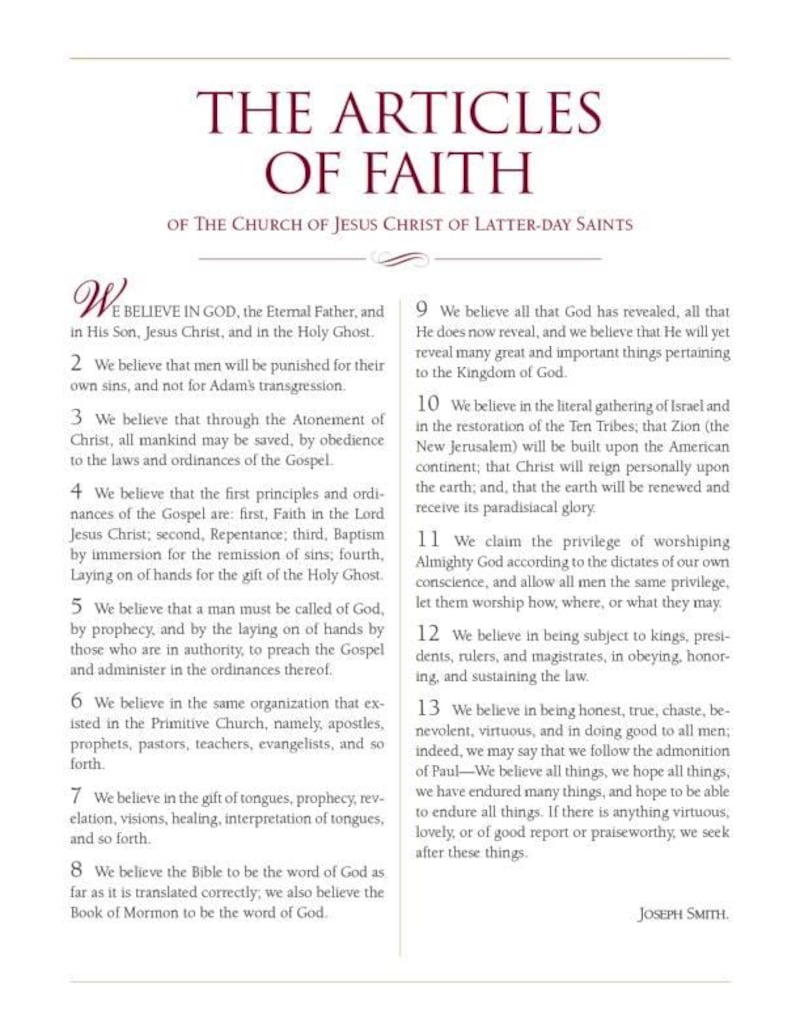
“The Articles of Faith were not the work of a team of scholars but were authored by a single, inspired man who declared comprehensively and concisely the essential doctrines of the gospel of Jesus Christ. They contain direct and simple statements of the principles of our religion, and they constitute strong evidence of the divine inspiration that rested upon the Prophet Joseph Smith.
“I encourage each of you to study the Articles of Faith and the doctrines they teach. … If you will use them as a guide to direct your studies of the Savior’s doctrine, you will find yourselves prepared to declare your witness of the restored, true Church of the Lord. You will be able to declare with conviction, ‘We believe these things.’”
— The late Elder L. Tom Perry, then a member of the Quorum of the Twelve Apostles, April 1998 general conference, “The Articles of Faith”
“A key document of the restoration of the gospel is a letter the Prophet Joseph Smith wrote in reply to a request of John Wentworth, editor of a Chicago newspaper. In the Wentworth letter, the Prophet wrote a ‘sketch of the rise, progress, persecution and faith of the Latter-day Saints’ (‘History of the Church,’ 4:535). It apparently was the first published account of principal events that occurred in the 36-year period after the Prophet’s birth. The last part of the letter, the Articles of Faith, is a concise statement of fundamental beliefs of the Church. The fact that one heaven-inspired person rather than a council of scholars produced this remarkable document is another evidence of Joseph Smith’s divine calling.”
— The late Elder Joseph B. Wirthlin, then a member of the Quorum of the Twelve Apostles, April 1992 general conference, “Seeking the Good”
“On March 1, 1842, Joseph Smith, at the request of Mr. John Wentworth, editor of a Chicago newspaper, composed 13 brief statements known as the Articles of Faith, which summarize some of the basic doctrines of the Church. As the concluding statement, the Prophet wrote this inspired code of conduct:
“‘We believe in being honest, true, chaste, benevolent, virtuous, and in doing good to all men; indeed, we may say that we follow the admonition of Paul — We believe all things, we hope all things, we have endured many things, and hope to be able to endure all things. If there is anything virtuous, lovely, or of good report or praiseworthy, we seek after these things’ (Articles of Faith 1:13).
“What an inspiring description of good people, God-fearing people, people committed to deal justly with mankind. These would be the type of people who could raise up a nation and help it survive, and the kind of people to comprehend the true gospel of Jesus Christ with the needed faith to proclaim it to the inhabitants of the earth.”
— The late Elder David B. Haight, then a member of the Quorum of the Twelve Apostles, October 1987 general conference, “Ethics and Honesty”
Official Declaration 1
“After revealing the law and covenant of eternal marriage between one man and one woman, the Lord taught Joseph Smith that a man can in righteousness marry more than one wife within the covenant of eternal marriage when authorized or commanded by the Lord through His duly ordained prophet (who holds the relevant priesthood keys). The authorization and command to practice plural marriage, given by the Lord to Abraham and other prophets of antiquity, was likewise given to the Prophet Joseph Smith: ‘I gave unto thee, my servant Joseph, an appointment, and restore all things’ (Doctrine and Covenants 132:40).
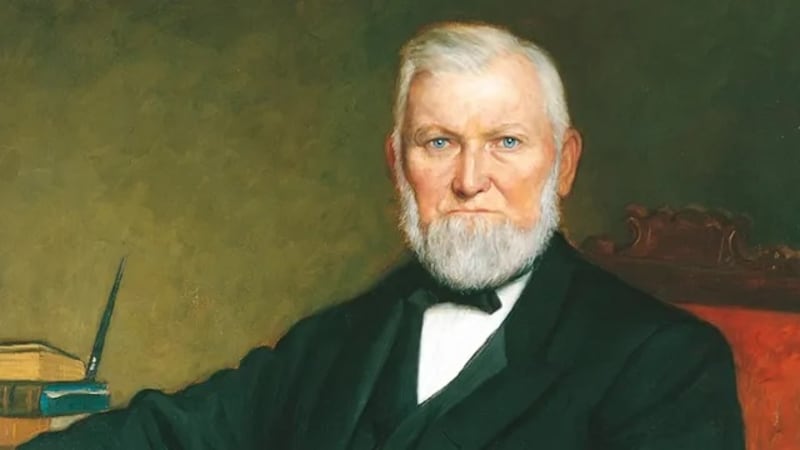
“Years later, the Lord rescinded His authorization and command for Church members to enter the practice of plural marriage (in other words, be sealed to more than one living spouse) when President Wilford Woodruff (1807–98) issued the Manifesto of 1890 (see Official Declaration 1). This led to the end of the practice of plural marriage, meaning no member of the Church could be married or sealed to more than one living spouse. Notably, the Manifesto does not preclude any worthy man who has been sealed to a wife now deceased from being sealed to another, living spouse. The foregoing is consistent with the revealed doctrine that monogamy is the Lord’s standard for marriage unless He declares and authorizes otherwise through His duly appointed representative, meaning the President and prophet of the Church.”
— Elder Marcus B. Nash, General Authority Seventy, in the December 2015 Liahona article “The New and Everlasting Covenant”
“On Oct. 6 [of 1890], George Q. Cannon arrived at the tabernacle for the third day of the Church’s fall general conference. Soon after the meeting began, he stood and introduced Orson Whitney, bishop of the Salt Lake City 18th Ward, who had been asked to read the Manifesto to the thousands of Saints in attendance.
“While George listened to the statement, he was unsure what he would say if Wilford called on him to speak. Earlier, Wilford had suggested that George might speak, but George had no desire to be the first to address the Saints on the Manifesto. In all his years of public speaking, he had never been asked to do something so difficult. …
“When Orson finished reading the Manifesto, Lorenzo Snow presented it to the Saints for their sustaining vote. Hands went up throughout the auditorium — some decisively, some more reluctantly. Other hands did not go up at all. There did not appear to be any direct opposition, though many Saints’ eyes were wet with tears.
“Wilford then turned to George and invited him to speak. George approached the pulpit with a prayer in his heart, but his mind was blank. As he started to speak, however, his fear left him, and words and ideas came freely. He opened the scriptures to Doctrine and Covenants 124:49, the passage Wilford had alluded to when George first heard him explain the Church’s new position on plural marriage. …
“After reading the passage aloud, George told the congregation that the Saints had done all in their power to obey God’s commandment. Now the Lord had given them new direction through His prophet. ‘When God makes known His mind and will,’ he said, ‘I hope that I and all Latter-day Saints will bow in submission to it.’
“Knowing some Saints doubted the divine origins of the Manifesto and questioned why the prophet had not issued it sooner to avoid the suffering and persecution of recent years, he counseled them to seek a testimony of the Manifesto for themselves.
“‘Go to your secret chambers,’ he urged them. ‘Ask God and plead with Him, in the name of Jesus, to give you a testimony as He has given it to us, and I promise you that you will not come away empty nor dissatisfied.’
“After George finished speaking, Wilford approached the pulpit. ‘The Lord is preparing a people to receive His kingdom and His Church, and to build up His work,’ he said. ‘That, brethren and sisters, is our labor.’
“‘The Lord will never permit me or any other man who stands as President of this Church to lead you astray,’ he continued, reassuring any Saints who questioned the divine origin of the Manifesto. ‘It is not in the programme. It is not in the mind of God. If I were to attempt that, the Lord would remove me out of my place.’
“Wilford then blessed the Saints and returned to his seat on the stand.”
— “Saints, Volume 2: No Unhallowed Hand,” chapter 40, pages 607-609
Official Declaration 2
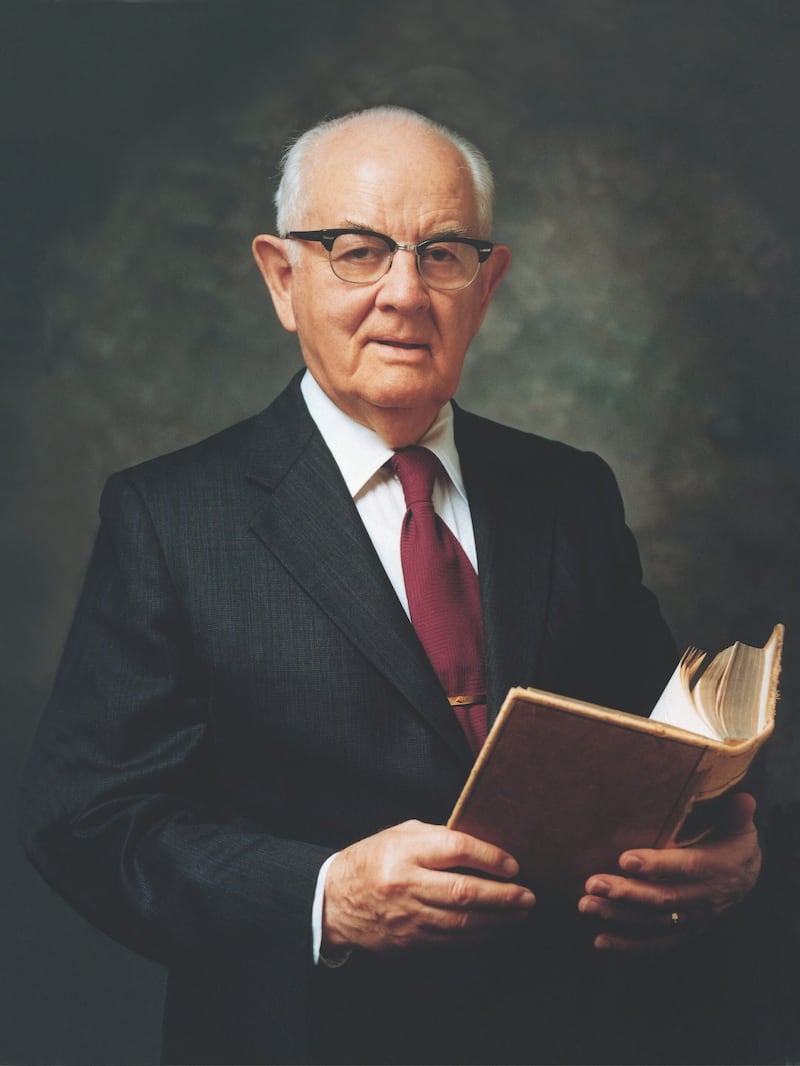
“We are incredibly grateful for the revelation to President Spencer W. Kimball extending priesthood and temple blessings to all worthy male members of the Church in June 1978 (see Official Declaration 2).
“I have served with many of the Twelve who were present and participated when that precious revelation was received. Each of them, in personal conversations, confirmed the powerful and uniting spiritual guidance President Kimball and they had experienced. Many said it was the most powerful revelation they had received before or after that time.”
— Elder Quentin L. Cook of the Quorum of the Twelve Apostles, April 2020 general conference, “The Blessing of Continuing Revelation to Prophets and Personal Revelation to Guide Our Lives”
“In the early months of 1978, President Spencer W. Kimball was so concerned about the Church’s priesthood and temple restriction that he often struggled to sleep. The public outcry against the restriction had largely quieted, but he continued to think about the countless worthy Saints and other good people it affected. …
“On March 9, he spoke with his counselors and the Quorum of the Twelve Apostles about race and the priesthood. The meeting lasted a long time. They reviewed statements by Church Presidents David O. McKay and Harold B. Lee indicating that the priesthood restriction would someday end. But the apostles unanimously agreed that the practice would not change until the Lord revealed His will to the prophet.
“Before the meeting ended, President Kimball urged the apostles to fast and pray about the issue. And over the next several weeks, he invited them to study the subject and write down their thoughts. He assigned Elders Howard W. Hunter and Boyd K. Packer to compile a history of the priesthood restriction and document everything that had been said about the issue in meetings of the First Presidency and the Twelve. The previous year, he had also asked Elder Bruce R. McConkie to review the scriptural basis for the practice.
“President Kimball, meanwhile, continued to pray about the restriction. While concerns still beset him, they became less and less important. He felt a growing spiritual impression, deep and abiding, to move forward. When Elder McConkie submitted a report on his findings, he concluded that no scriptures barred the Church from lifting the restriction.
“On Tuesday, May 30, President Kimball shared with his counselors a rough draft of a statement extending the priesthood to all worthy men, regardless of their race.
“Two days later, June 1, the First Presidency had their monthly meeting with all general authorities. They had come to the meeting fasting, as usual, and at its conclusion, the presidency dismissed everyone but the apostles. …
“He asked everyone to share their thoughts, and for the next two hours, the apostles spoke in turn. A feeling of unity and peace rested over them.
“‘Do you mind if I lead you in prayer?’ President Kimball asked.
“He knelt at a temple altar, surrounded by the apostles. Humbly and fervently, he asked the Father to cleanse them from sin so they could receive the Lord’s word. He prayed to know how to expand the work of the Church and spread the gospel throughout the world. He asked the Lord to manifest His mind and will on extending the priesthood to all worthy men in the Church.
“After the prophet finished his prayer, the Holy Spirit flooded the room, touching the hearts of everyone in the circle. The Spirit spoke to their souls, binding them together in total harmony. All doubt fled.
“President Kimball sprang from his knees. His fragile heart was pounding. He wrapped his arms around Elder David B. Haight, the junior apostle, and embraced the others one by one. The apostles had tears in their eyes. Some wept openly.
“They had received their answer from the Lord.”
— “Saints, Volume 4: Sounded in Every Ear,” chapter 18, pages 304-306