
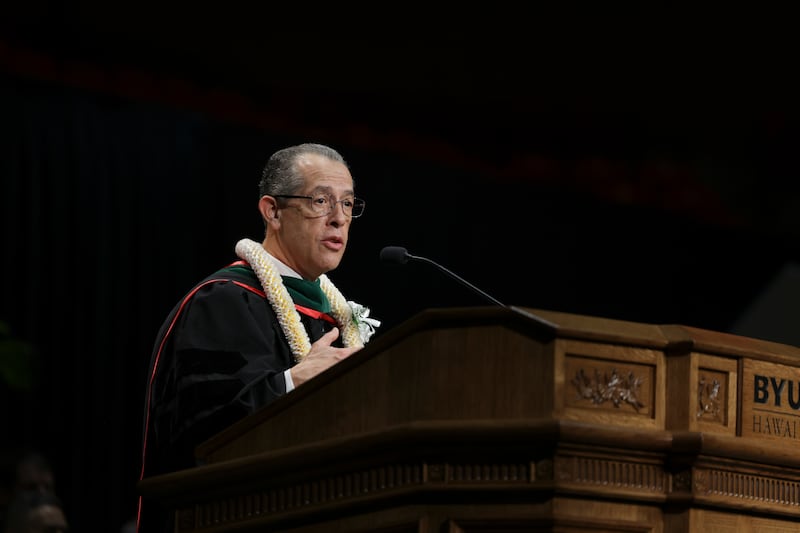
As Brigham Young University–Hawaii graduates prepare for the next step on their life journeys, Elder Hugo E. Martínez, a General Authority Seventy, invited them to continue on the path of lifelong learners and disciples of Jesus Christ.
“I invite you to follow our Savior, Jesus Christ, and His restored gospel throughout your mortal lives and in the eternities. Walk with Him along your path of discipleship,” Elder Martínez encouraged.
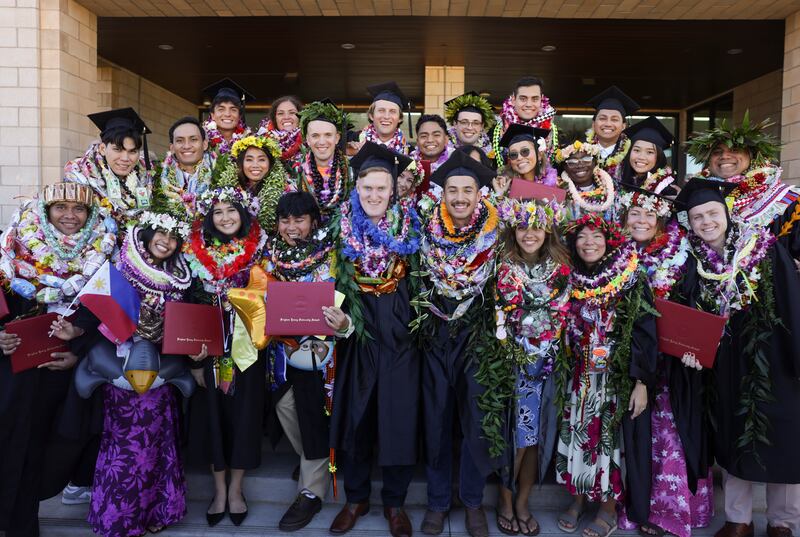
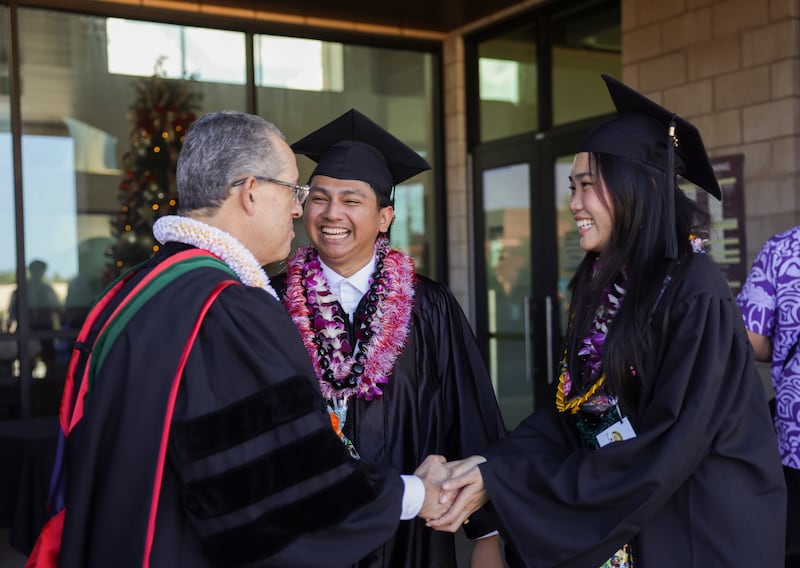
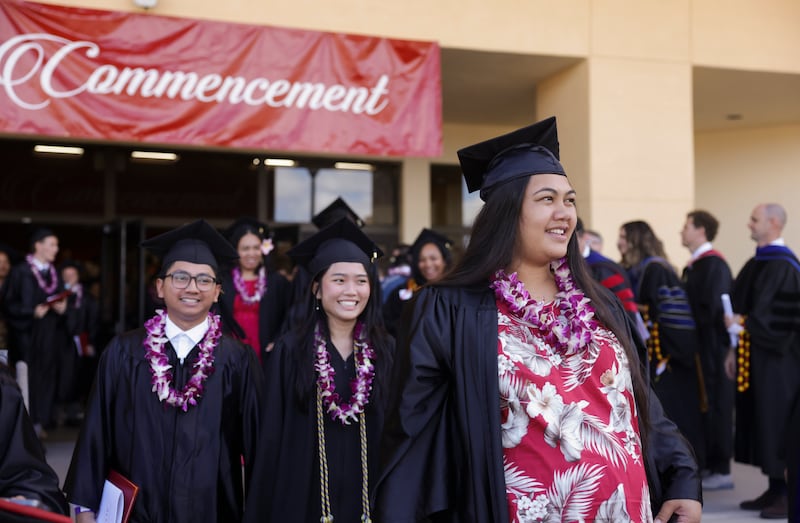
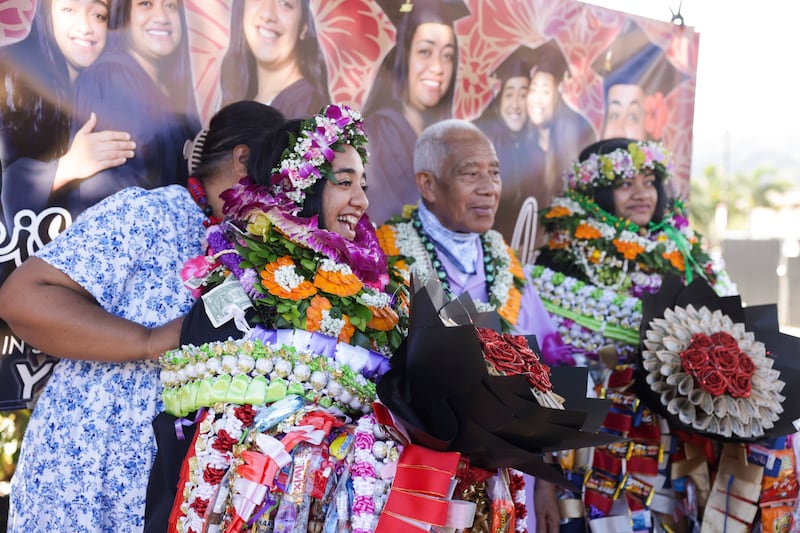
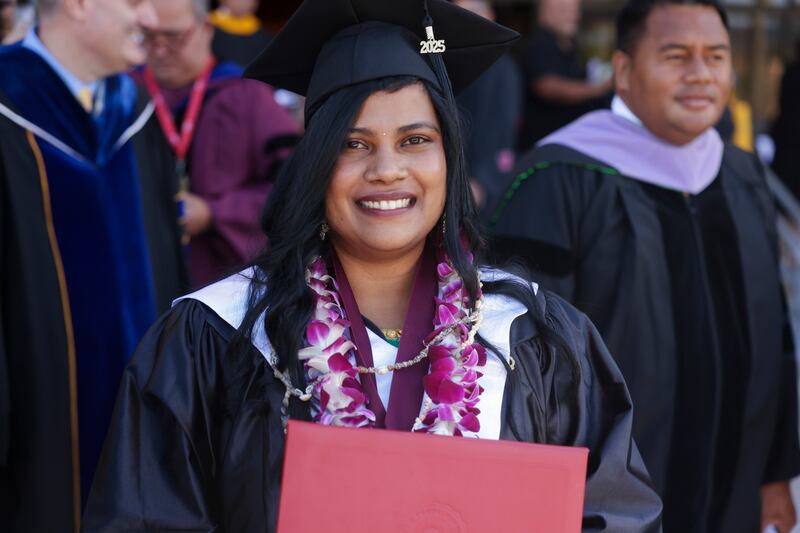
More than 200 graduates and their families were recognized during the commencement ceremony held in the Cannon Activities Center in Laie, Hawaii, on Friday morning, Dec. 12.
Elder Martínez testified to graduates of the joy available to those striving to walk the path of discipleship. “This is the Church of joy. This is the path of joy.”
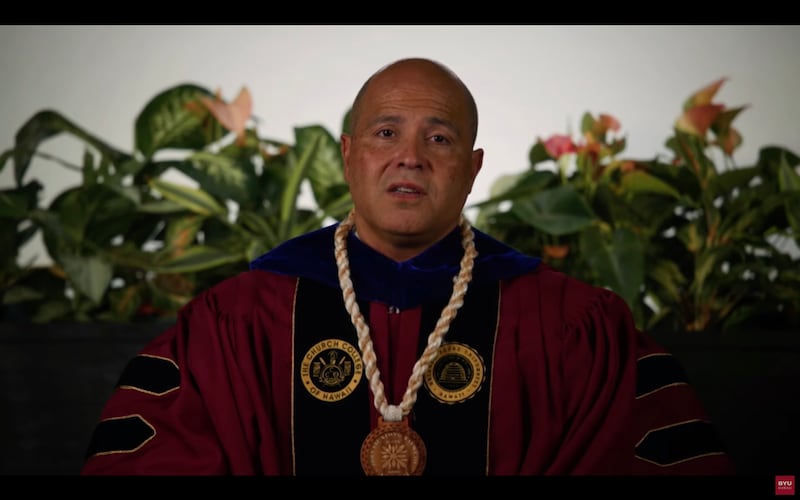
BYU–Hawaii President John S.K. Kauwe III, who is undergoing cancer treatments, did not attend Friday’s festivities but recorded a message that was played for graduates.
The Church Educational System is one of the great miracles of the restored gospel of Jesus Christ, said President Kauwe.
Of the hundreds of thousands of students within CES, BYU–Hawaii represents only a small percentage. However, “while it is small, it requires significant investment from the Church. This investment is in you,” President Kauwe told graduates. “It is a manifestation of what God, His leaders and the members of the Church feel about your divine potential to be disciples of Jesus Christ. It is a testament to their confidence that you will live and lead across Oceania and the Asian Rim in righteous ways that bless those around you.”
BYU–Hawaii Academic Vice President Isaiah Walker, who conducted Friday’s ceremony, noted that this semester’s graduates represent 31 countries, with 60% coming from outside the United States.
“As you prepare to leave the relative comforts of BYU–Hawaii, we hope you can look back at your time here with fondness and, most importantly, you can see how the hand of the Lord has guided and directed your path forward,” said Walker.
The path of discipleship
All are spirit sons or daughters of a Heavenly Father with the potential to be like Him, Elder Martínez said. “The fulfillment of our divine potential depends in part on our growth as disciples of Jesus Christ.”
Individuals must follow Christ’s doctrine as taught in the scriptures and teachings of prophets, receive sacred priesthood ordinances and keep the associated covenants, Elder Martínez said. “That is discipleship of Jesus Christ. It is a path of true joy.”
Jesus Christ’s Atonement is at the core of Heavenly Father’s plan and is the biggest expression of Their love. First John 4:19 and 21 teaches: “We love him, because he first loved us. … And this commandment have we from him, That he who loveth God love his brother also.”
Elder Martínez added, “There is joy in loving and being loved by God and neighbors.”
Disciples of Christ act in accordance with His teachings and their covenants with Him. Elder Martínez read from “Preach My Gospel,” which teaches that those who develop charity will come to feel a sincere concern for the eternal welfare and happiness of other people.
Said Elder Martínez: “Brothers and sisters, these are also evidences of discipleship of Jesus Christ. We feel joy as we are sincerely concerned about the happiness of other people.”
Another source of joy of the path of discipleship is repentance. In Mosiah 4:3, King Benjamin’s people were blessed as they repented and received a remission of their sins: “The Spirit of the Lord came upon them, and they were filled with joy, … and having peace of conscience, because of the exceeding faith which they had in Jesus Christ.”
Elder Martínez also testified of the joy that comes on the path of discipleship from prophets — both from their words in scripture as well as living prophets today.
“I testify that there has been an uninterrupted chain of living prophets from the Prophet Joseph Smith to this day with President Dallin H. Oaks,” he said.
Prophetic vision
President Kauwe noted in his remarks that BYU–Hawaii is often referred to as the capstone experience for students in the Pacific and Asian rim. A capstone, he explained, is a final stone that completes a structure and symbolizes completion, maturity and readiness.
“Here at BYU–Hawaii, we consider the capstone to include your spiritual growth, your intellectual development, your consecrated purpose, your physical and emotional resilience and your leadership capacity," said President Kauwe. “As we gather for your graduation, I ask you to reflect on how you have grown and matured in each of these areas. I also ask you to feel confident in your future.”

In representing the CES board of trustees, R. Kelly Haws, assistant to the commissioner of Church education, shared counsel given by each member of the new First Presidency — President Dallin H. Oaks and his counselors, President Henry B. Eyring and President D. Todd Christofferson — at BYU–Hawaii.
“If we will leave this university with deep faith in the Savior, Jesus Christ, and in His chosen prophet and apostles, we will find that sometimes their counsel will be different from what we had anticipated. Sometimes their direction will come with challenging invitations that require humility and sacrifice and faith to adopt. And always, always, their counsel will prepare us ‘to be lifelong disciples of Jesus Christ and leaders in our families, communities, chosen fields, and in building the kingdom of God,’” said Haws, quoting the mission of BYU–Hawaii.
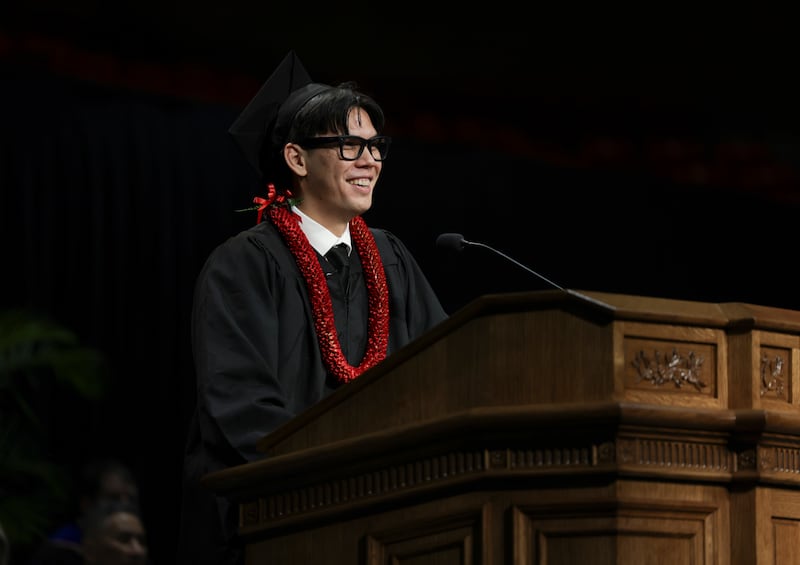
Manuarii Tefan, a graduate from Tahiti, also spoke during Friday’s ceremony.