





In the “wilderness” of technological shifts and artificial intelligence, RootsTech 2026 participants were encouraged to follow clear guidelines for navigating its use.
The session titled “Guidelines for the Responsible Use of Artificial Intelligence in Genealogy in 2026,” on March 5, featured a panel of speakers from the Coalition for Responsible AI in Genealogy.
Lynn Broderick led the panel discussion, which is available on RootsTech.org. Broderick is a writer and researcher who focuses on family, community and social history and conducts research at the FamilySearch Library and university archives across the United States.
Broderick centered the discussion on five principles that guide responsible AI use: accuracy, disclosure, privacy, education and compliance.

“AI is truly a wilderness, not the Wild West,” said Broderick. “And we really do not know which direction we are going. So as we educate and consider these principles, we can maximize its benefits and minimize the risks.”
Accuracy
AI can generate false, biased or fabricated information. The panel emphasized verifying AI-generated information with other historical records and credible sources when conducting genealogical research.
James Tanner, chairman of the board of directors of the Family History Guide Association, said AI can reflect the Dunning-Kruger effect — a cognitive bias in which individuals with limited knowledge overestimate their understanding.
Tanner said that once AI runs out of verifiable information, “it just simply starts trying to please people by telling them what it thinks they want to know.”
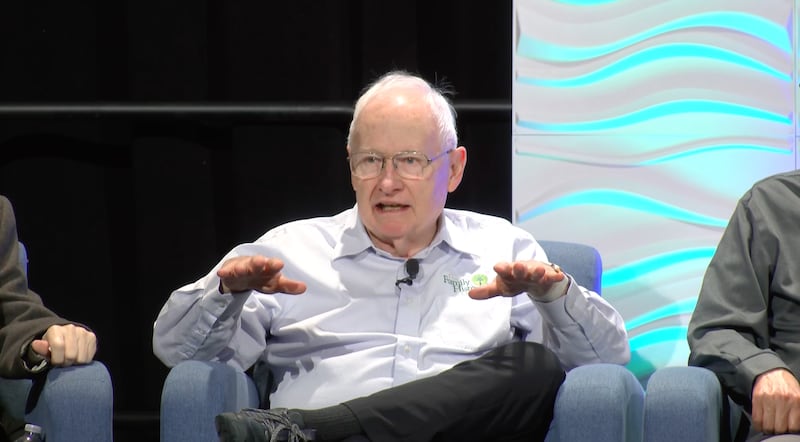
The panel members suggested two ways to improve accuracy: learning how to properly prompt AI and applying personal judgment.
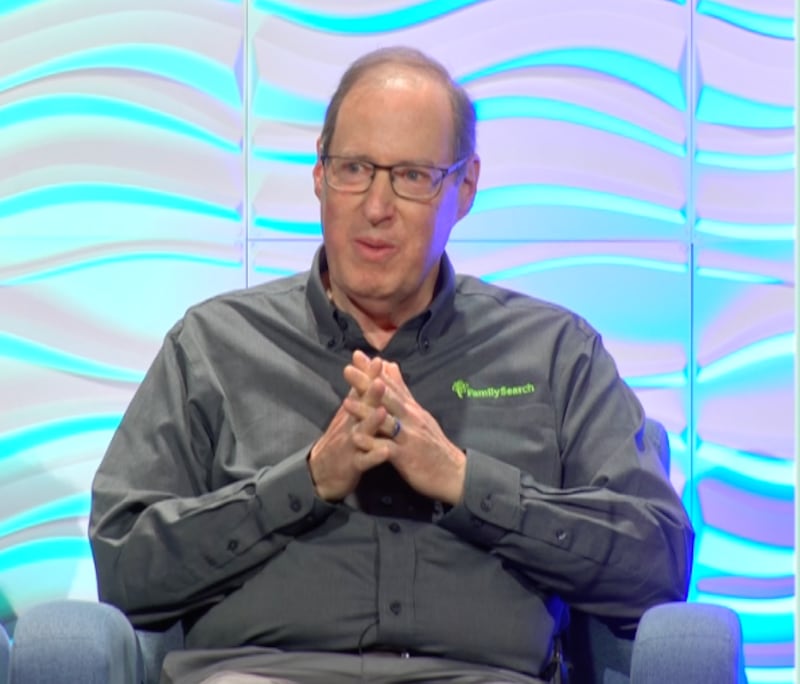
“You need to learn how to use the prompts and how to ask questions,” said David Ouimette, FamilySearch’s content strategy lead for Asia-Pacific. “That is the most important thing that will help you increase your accuracy.”
Ultimately, Tanner emphasized the need for human decision-making and agency.
“Make decisions based on your judgment, not on what AI is feeding you,” he said.
Disclosure
The principle of disclosure highlights the importance of transparency when using AI in research.
“Disclosure is all about trust,” said Ouimette. “When I think about disclosure, I think about transparency. Let’s just be completely open about what we are doing.”
Ouimette said acknowledging the use of AI helps others evaluate research that has been done and conclusions while maintaining credibility.
Privacy
Advances in technology allow information to be quickly stored in databases and servers, sometimes for unknown periods of time.
The privacy guideline encourages users to safeguard private information when using AI tools, as data exposure could lead to unintended public conversations.
Steve Little, AI program director for the National Genealogical Society, said users should ask two questions before uploading information into AI systems: how long the vendor stores the data and how it will be used.
“You have to educate yourself on the vendor you are using,” Little said. “If you are a new user, you don’t know the answer to those questions.”
Little referred to this concept as the “Water Cooler Rule.” Similar to workplace etiquette discouraging confidential conversations in public spaces, the rule warns against entering sensitive information into AI tools when storage and visibility are uncertain.
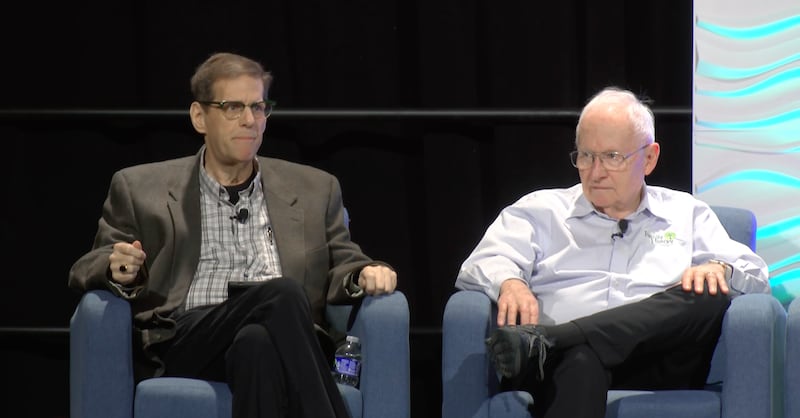
Katherine Borges, co-founder and director of the International Society of Genetic Genealogy, said genealogists should be especially cautious when uploading DNA data.
“AI is the new shiny toy, and we don’t want to upload match lists and the data of living people because once you do that, there’s no way to call it back,” she said.
Education
The panel members also emphasized the importance of educating the genealogy community about AI’s opportunities and risks.
“We want you to be curious,” said Broderick. “One of the things that is most important is to maintain your curiosity, but also with restraint.”
Broderick said AI tools can help people learn and understand how to use the technology effectively.
“As you become more educated, then you can help educate others and use it wisely,” she said.
Broderick suggested learning through university courses, social media resources or academic studies.
“Things are changing so fast,” she said. “You can take a class today, and it will be different tomorrow.”
Borges added that although there is a lot to learn about AI, the effort will benefit genealogists in the long run.
“There is a lot to do in education, but there is a great payoff for it,” she said.

Compliance
The compliance guideline encourages members to follow contracts, terms of service, intellectual property laws and data privacy regulations when using or creating AI.
The principle also prompts users to consider who they are accountable to when using these tools.
“You need to comply with the organization’s rules and the law, but it’s still a wilderness,” Borges said.
As AI technology continues to evolve, staying informed and exercising caution will be crucial in ensuring that the integrity of genealogical research is maintained, the panel members concluded.
Tanner said: “In all cases we do not give up our agency in the way that we are dealing with AI. ... We want AI to be the servant and we want to be the principal.”
