




Editor’s note: This is the second in a three-part series on the “Living Record: A Church News Documentary Series” on BYUtv called “Voices for Faith.” Part 1 examines threats of defending religious freedom through personal stories and discussion with scholars. Part 2 explores approaches to religious freedom through personal stories and discussion with scholars. Part 3 highlights the power of working together toward religious freedom through faith stories.
In June 2023, Kori Porter was one of the featured speakers at the 10th Religious Freedom Annual Review at the BYU Conference Center in Provo, Utah.
The founder and CEO of Peacemakers Coalition and a former campus minister for 13 years, Porter contrasted her own trials and personal faith journey in a country with religious freedom to those of a young African woman who does not.
“Religious freedom is not just something that we talk about,” she said on that occasion. “It’s not just academic, it’s not just political entrapment, but it is a right, a fundamental right, that all humans should be able to hold on to.”
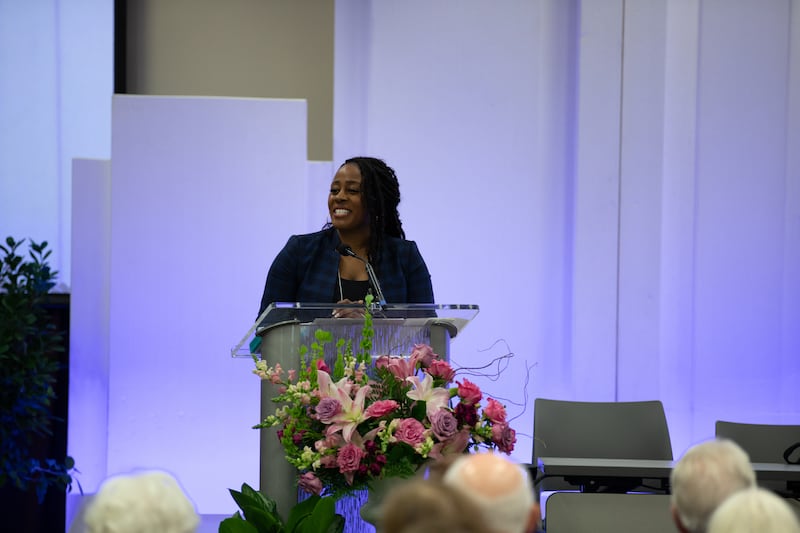
It would have been hard for attendees to believe that the confident, self-assured woman they saw had once struggled with drug use and been expelled from high school before a spiritual awakening set her on a path of advocacy and service to others.
Porter’s story is one of several featured in Part 2 of the “Voices for Faith” Church News documentary series on BYUtv. Their stories highlight various approaches to finding solutions for the preservation of religious freedom. The second episode in the series aired in April 2026.
Shaping minds and souls
Growing up in Oxford, Mississippi, Porter showed promise as a track and field athlete, competing in the 100- and 200-meter sprints as well as the shot put and discus events.
“I was really good,” she said. “I made it to state several times. I was just always in trouble.”
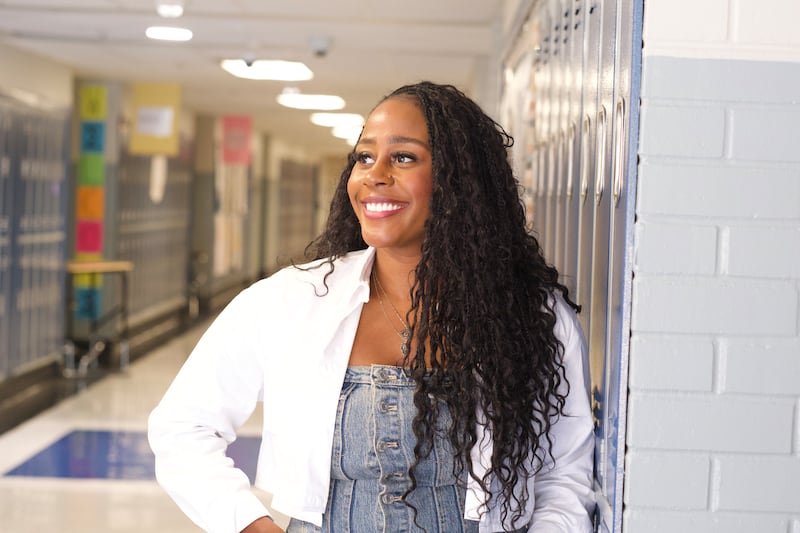
Spending time with the wrong crowd led Porter to make poor choices, resulting in bad grades and drug use. She was expelled from school, and her mother sent Porter to live with her biological father in Cleveland, Ohio.
Porter’s behavior did not improve. One night after a fight with her father, she found herself standing barefoot in a snowstorm with only her cellphone.
“I was past rock bottom,” she said.
In that difficult moment, Porter recalled sitting in church as a little girl with her Christian grandmother, who would raise her hand and call for Jesus. The memory prompted her to pray to God for help.
“I think this experience was God’s grace to me, because the only way I knew how to reach out and get any help was remembering my grandmother,” she said. “So that’s what I did — cold, crying and calling on God.”
For the first time, Porter felt true peace.
“Nothing had changed in my environment, but something had changed inwardly,” she said. “The Lord started to show Himself in a way that I had never experienced before.”
Porter completed her high school education. Her body recovered from drug use, and she began to think clearly. She took advantage of a “second chance” program and enrolled at the University of Mississippi, where she met new friends and found new purpose.
“Everything completely changed,” she said. “I wanted to be for that God who would do that good thing for me.”
As a college student, Porter was surprised to discover that in some parts of the world, it was illegal to proselytize or share one’s faith. This realization helped her understand and appreciate how fortunate she was to hear the gospel openly expressed.

“I started to see people of different faiths come together to minister and try to promote religious freedom,” she said. “I felt like the Lord was moving me to form Peacemakers Coalition.”
The Peacemakers Coalition is an international organization dedicated to advocating for the religious freedom rights of individuals from all faiths.
“It’s really important that universities and places of higher education allow students to not just shape their minds but also their souls,” Porter said. “Ole Miss was a space that liberty was given so freely. That’s not the case for a lot of campuses. I believe that religious freedom is so important in my life and my own story. Without it, I wouldn’t have been able to be formed into the person I am.”
Thoughts on religious freedom
Faith leaders and scholars agree that having mutual respect for other faiths is foundational to all other freedoms and essential for a united and harmonious society.
“I think people are seeing that a multiplicity of faiths is really a benefit. In fact, it shouldn’t be political, but it should be understood and be part of our culture and part of our doctrine,” said Elder Quentin L. Cook of the Quorum of the Twelve Apostles of The Church of Jesus Christ of Latter-day Saints.
Rabbi Diana Gerson, who serves as an associate executive vice president with the New York Board of Rabbis, said: “When you walk with God, you’re not alone. I think that is really what we have to do, is to create that space for people to follow their path. Sharing our faiths and what we believe in should enhance our public discourse.”
Robert P. George, McCormick professor of jurisprudence and director of the James Madison program in American Ideals and Institutions at Princeton University, said: “Among the great things about the United States is that historically, people of different faiths have been able to live together in peace, and not only in peace, but with mutual respect.”
Said Rev. Amos C. Brown, pastor emeritus of Third Baptist Church of San Francisco, California: “Respect means making sure that you see in every human being worth, dignity and potentiality.”
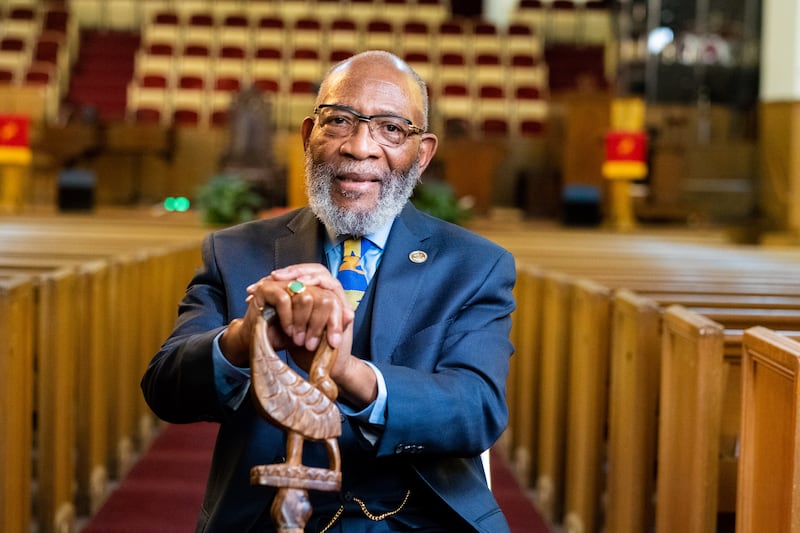
Added G. Marcus Cole, Joseph A. Matson dean and professor of law at the University of Notre Dame: “People talk about freedom of speech or freedom of the press; who cares what you have to say if you don’t believe what you have to say? Freedom of belief is the foundational freedom upon which all other freedoms rest. We don’t have that, we have nothing.”
‘I am a Sikh’
In the Sikh faith, maintaining a long beard and uncut hair are sacred symbols representing a commitment to the Sikh way of life.
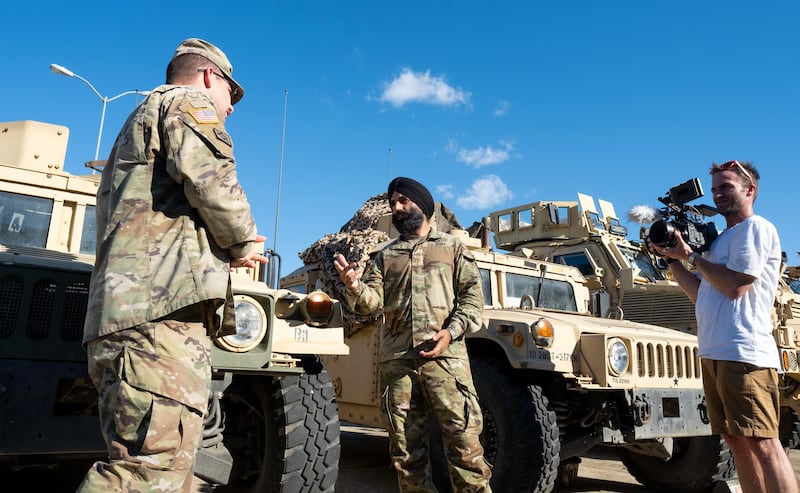
When Simratpal “Simmer” Singh entered the United States Military Academy at West Point, New York, in 2006, he was forced to cut his hair and shave his beard.
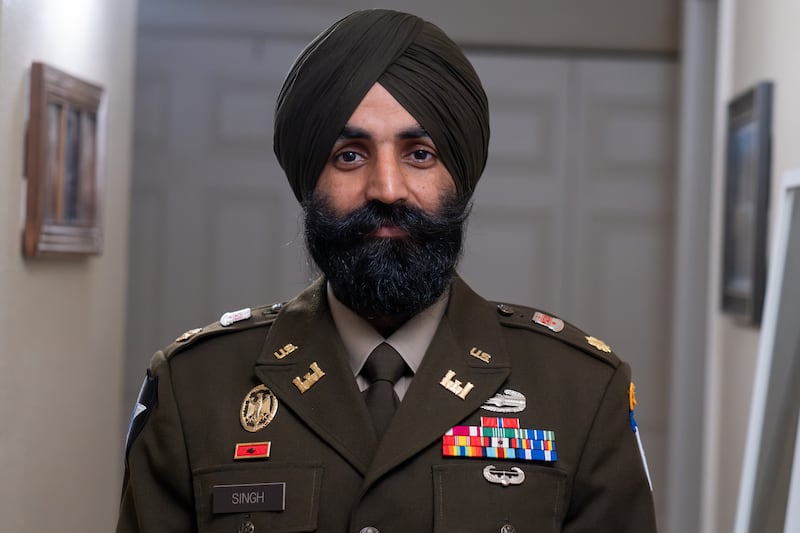
Singh was devastated and recalls questioning whether he was still a member of the Sikh faith.
“I remember hair would fall, and I’d be like, ‘I can’t believe that’s my hair, and I can’t believe that I’m betraying and violating all my beliefs and values,’” he said. “It’s just a regular haircut, but it’s essentially me saying the Sikh values that I had believed in for 18 years weren’t valid.”
Singh began collaborating with the Becket Fund and successfully secured landmark religious freedom rights for Sikhs, enabling them to serve while wearing turbans and maintaining their beards and uncut hair. Receiving a permanent accommodation felt “unreal,” he said.
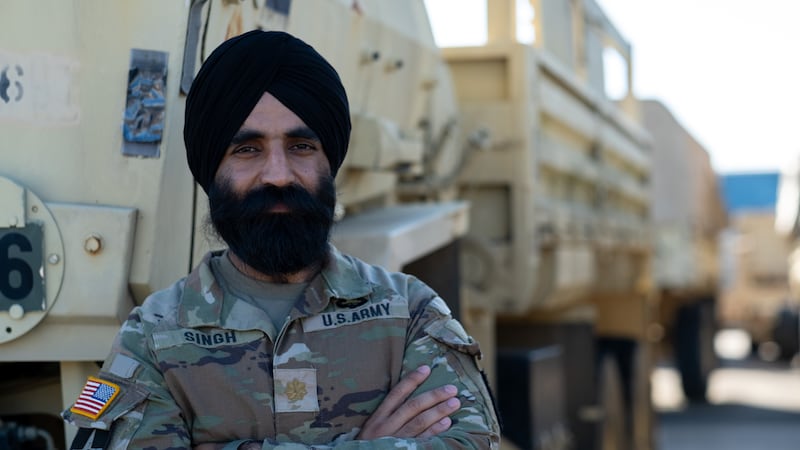
“Religious freedom means that every individual has the opportunity to practice their faith as they see fit, as long as they’re not preventing anyone else from their liberties. ... Religious freedom means that people are going to draw inspiration and be better individuals, be better members of society,” said Singh, who was promoted to the rank of lieutenant colonel in 2025.
“Being able to outwardly express with my articles, my values, my faith and tell the world that I am a Sikh has helped me connect with people on a more genuine level. This is me. I’m a Sikh, and this is who I am.”
Building something bigger
Asma T. Uddin loves her Muslim faith but decided to stop wearing a headscarf because it created a significant burden and fear in public.
“That sort of fear about Islam and Muslims has led, unfortunately, to many concerted efforts to limit the rights that Muslims have to religious freedom,” she said.
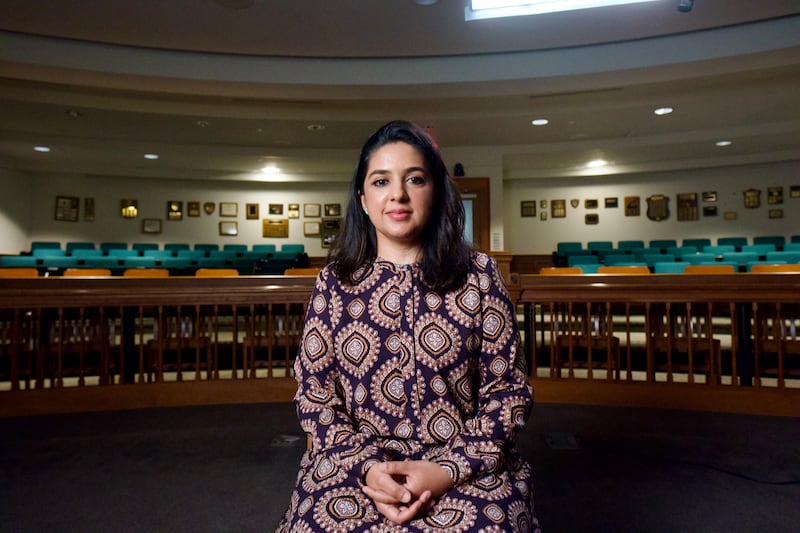
Uddin’s experiences as a Muslim have been very different from her parents’. They didn’t have to deal with life after the events of Sept. 11, 2001 — she did.
“Moving from a relatively obscure religious community to being in the limelight was something that I have grappled with and has been sort of the center of my experience advocating for religious liberty,” she said.
Uddin is an author, lawyer and assistant professor of law at Michigan State University. In Part 2 of the series, she is also a visiting assistant professor of law at the Columbus School of Law at the Catholic University of America in Washington, D.C., which appeals to her interest and work at the intersection of Muslim-Christian relations.
Uddin recounted a 2010 case where the Islamic Center of Murfreesboro in Tennessee encountered significant opposition and anti-Muslim sentiment upon applying for a land use permit. Although the center opened in 2012, it faced ongoing legal challenges until 2014 when the U.S. Supreme Court declined to hear the case.
“Religious liberty for some is religious liberty for none. The idea is that if you’re selective about who you extend these rights to, then ultimately you destroy the rights for everyone,” she said.

Her career with religious freedom started at the Becket Fund for Religious Liberty, a nonprofit, public interest law firm in Washington, D.C., that defends religious freedom for all faiths.
“But I think in order to actually protect it in a sincere, substantive and meaningful way, you have to actually deeply understand the types of religious beliefs and the motivations behind those beliefs, because at the end of the day, we’re built for something bigger.”
‘Love and respect for others’
At the University of Notre Dame Law School, Cole says students learn what it means to be a lawyer “with and for others.” The law school welcomes students from all cultures and backgrounds, including Orthodox Jews, Muslims and atheists, all of whom have an appreciation for the university’s Catholic mission.
“True religious freedom is about love and respect for others,” he said. “That’s why I started a religious liberty legal clinic.”
The Lindsay and Matt Moroun Religious Liberty Clinic gives students the opportunity to learn the profession of the lawyer by representing real clients in real cases that pertain to their religious freedoms, said John Meiser, the clinic’s director.

“Without that freedom to believe, the freedom to act, the freedom to exercise your religious beliefs, it really deprives you of the ability to be who you are as a human being,” said Meredith Holland Kessler, a staff attorney with the clinic.
Cole said one of its highest-profile cases involved the clinic representing Native Americans whose sacred lands were threatened by copper mining interests. A student legal team that included Catholics, atheists, Muslims and Latter-day Saints worked together to defend the rights of Native Americans to worship on their sacred lands.
“God bless America,” he said. “That is exactly what we want, and that’s exactly who we are.”
2 previous ‘Living Record’ series
“Voices for Faith” is the third three-part series produced by “Living Record: A Church News Documentary Series” for BYUtv.
Earlier this year, the first series, “Harvest of Faith,” featured a look at the Church’s welfare farms, food processing and distribution facilities and AgReserves, an investment auxiliary of the Church.
It was followed by another series called “People of Faith,” featuring the stories of Latter-day Saint pioneers in Brazil, Hawaii and the Philippines.
