



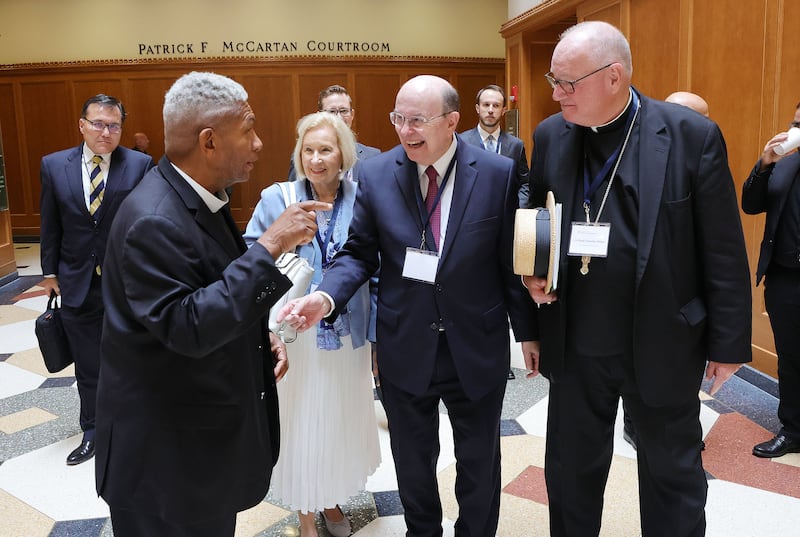

Editor’s note: This is the third in a three-part series on the “Living Record: A Church News Documentary Series” on BYUtv called “Voices for Faith.” Part 1 examines threats of defending religious freedom through personal stories and discussion with scholars. Part 2 explores approaches to religious freedom through personal stories and discussion with scholars. Part 3 highlights the power of working together toward religious freedom through faith stories.
In recent years, many leaders of The Church of Jesus Christ of Latter-day Saints have actively raised awareness around and advocated for religious freedom, striving to enhance understanding and unity to preserve this fundamental right.
President Dallin H. Oaks acknowledged these efforts in his April 2022 general conference address.
“We honor individual agency,” said President Oaks, then serving as first counselor in the First Presidency. “Most are aware of this Church’s great efforts to promote religious freedom. These efforts are in furtherance of our Heavenly Father’s plan. We seek to help all of His children — not just our own members — enjoy the precious freedom to choose."
One senior Church leader who has been assigned to help work on issues surrounding religious freedom is Elder Quentin L. Cook of the Quorum of the Twelve Apostles. Less than a month before President Oaks’ remarks in that April 2022 general conference, Elder Cook was a featured speaker at an event held in New York City’s historic Riverside Church.
On that occasion, Elder Cook asked a diverse group of New York and New Jersey religious, government and opinion leaders to protect faith.
“My plea this evening is that all religions work together to defend faith and religious freedom in a manner that protects people of diverse faith as well as those of no faith,” he said. “Catholics, evangelicals, other Christians, Jews, Muslims, Latter-day Saints and other faiths must be part of a coalition of faiths that succor, act as a sanctuary and promulgate religious freedom across the world.”
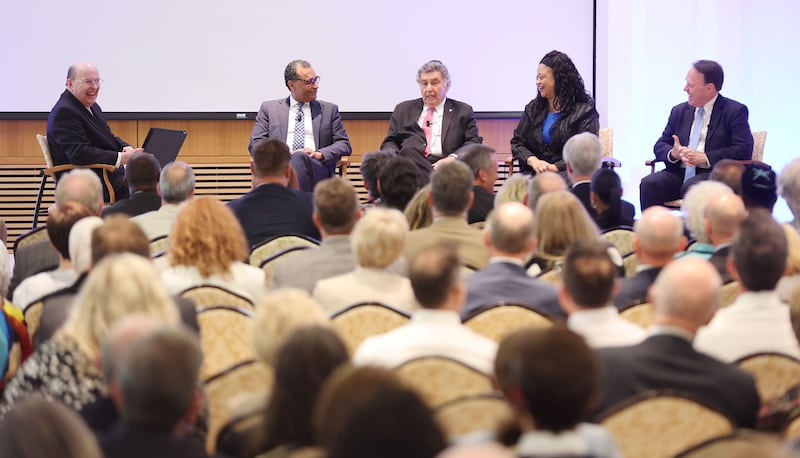
The senior Church leader isn’t afraid to let others know he is committed to helping individuals understand who Heavenly Father and Jesus Christ are and how to live better lives. However, Elder Cook ensures that his efforts never deprecate or harm others’ religious views in any way.
“It is not political. It is about faith. It is about what you believe. When we have some of those same faith feelings, we resonate with it in a marvelous way,” he said. “We need to be generous. We need to have an outreach. Religious freedom has real implications. It goes to the most sacred inner feelings of accountability to God and how you are going to live your life.”
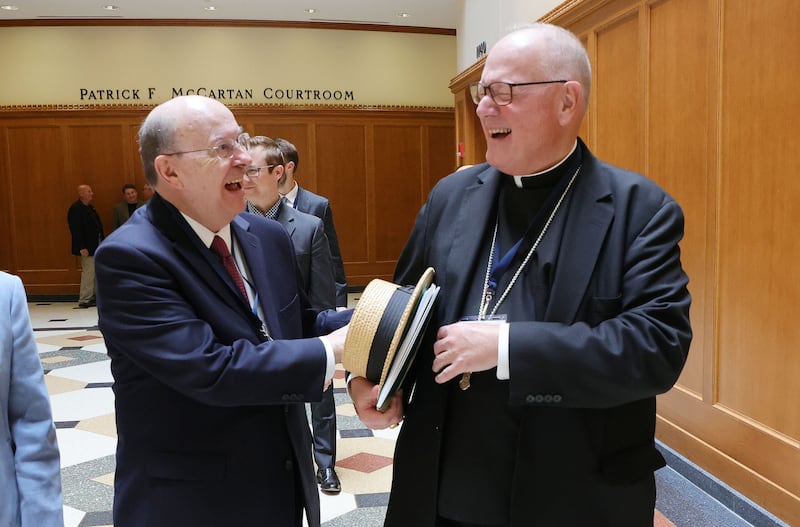
Elder Cook joined other faith leaders and scholars in sharing insights on religious freedom in Part 3 of the “Voices for Faith” Church News documentary series on BYUtv, which presents a hopeful perspective on the strength that unity brings to preserving religious freedom. This third episode aired in April 2026.
“Religious freedom is about allowing everybody to have that relationship with God and their faith that their own personal agency responds to, that touches their hearts,” Elder Cook said. “We have to touch hearts. We are better if we link arms to affect religious freedom in a serious way across the whole country.”
A place at the table
While Elder David L. Buckner was serving as an Area Seventy in New York City, one of his first assignments was to participate as a member of The Commission of Religious Leaders, an independent organization of faith leaders in New York City also referred to as “CORL.”
Together, this group of nearly 20 religious leaders collaborate on common issues affecting the city and counsel with government officials to support religious freedom and public policy.
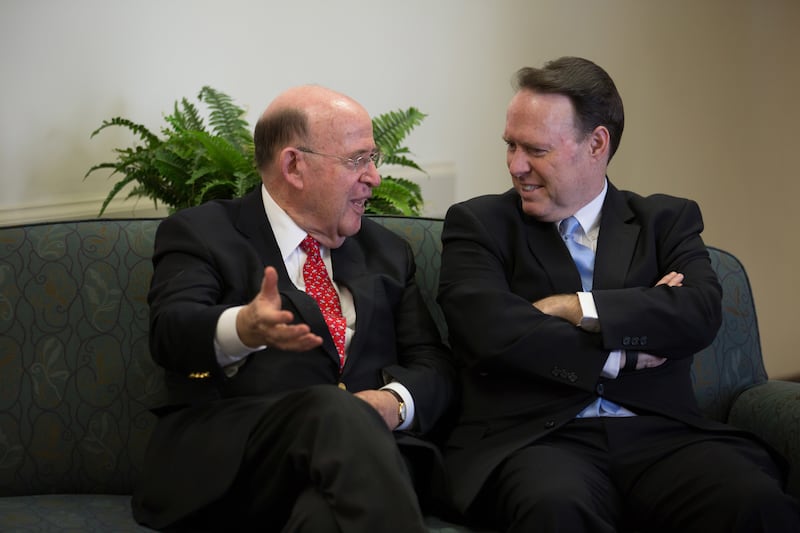
One of the leaders, Rabbi Joseph Potasnik, New York Board of Rabbis executive vice president, said the commission was smaller when he joined — “One Jew, one Catholic, one Protestant.”
“It dawned on me, as it should have, we got a lot more groups out there that need to be represented at the table,” Rabbi Potasnik said. “There’s always room for one more at the table. ... I certainly felt we have to bring The Church of Jesus Christ of Latter-day Saints and Elder Buckner to the table.”
After the Commission of Religious Leaders offered Elder Buckner a seat on the council, he saw the Church’s part in interfaith collaboration in the city grow. He came to know leaders such as Rabbi Potasnik; Cardinal Timothy Dolan, former archbishop of New York; the Rev. A.R. Bernard, founder and senior pastor of the Christian Cultural Center; and many other important members of New York’s interfaith community. These faith leaders became like family to Elder Buckner, who was called as a General Authority Seventy in 2024.
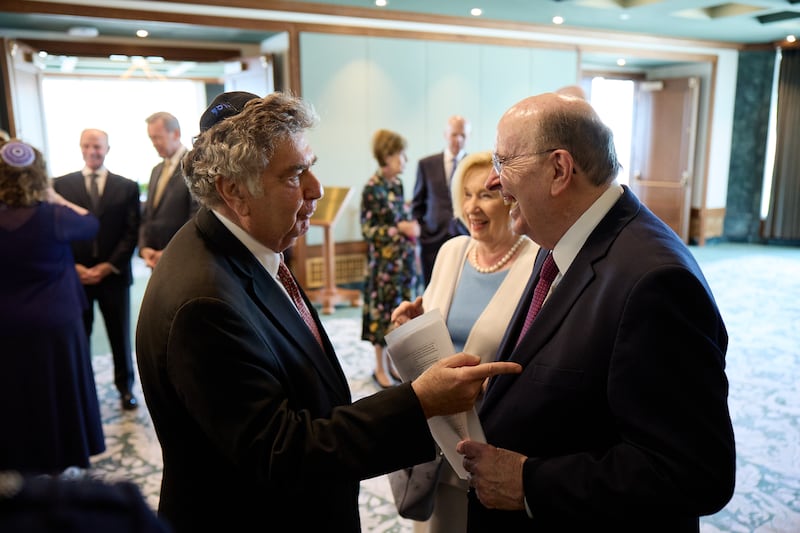
Elder Cook participated in several organizations as the sole Latter-day Saint before his call to full-time Church service — an experience that has deepened his appreciation for how the Commission of Religious Leaders encourages diverse perspectives. This approach goes beyond government solutions, incorporating religious and humanitarian viewpoints.
“We found that working together we can accomplish a lot more in terms of religious freedom,” Elder Cook said.
In their meetings, Elder Buckner says, the doors close and the room becomes “incredibly collaborative.” There are no discussions about congregations, budgets or resources. Various leaders — including the mayor, police commissioner, fire chief, education leader or city council speaker — present their challenges and seek insights and advice from the religious community, fostering a cooperative and supportive environment.
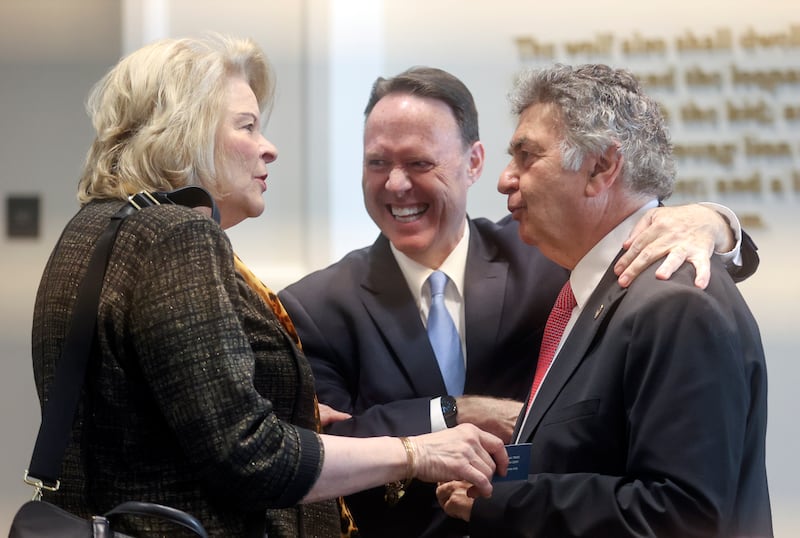
“In the world today, relationships are everything,” Elder Buckner said. “The Commission of Religious Leaders unites us in individual faith in a way that creates magnificent trust and loyalty one to another, but it’s still one by one. I don’t think that’s a government thing, that’s a personal thing.”
Elder Buckner expressed gratitude for the blessing “to be in a place where just for a season, I got to do something pretty cool.”
“Religious freedom is my ability to not only take what is at my core and exercise it and live it, but to live it in a way in which others can benefit from it,” he said.
Added Rabbi Potasnik: “There is always room for one more at the table. We are all children of God. It’s important we see each other as equal partners.”

‘We need our souls to shine’
The Rev. Marian Edmonds-Allen is the executive director of Parity, a nonprofit dedicated to healing divides and advancing the dignity of people.
“Just because we don’t agree on a point of theology doesn’t mean we can’t work together to solve problems. Religious freedom is the key to that.”
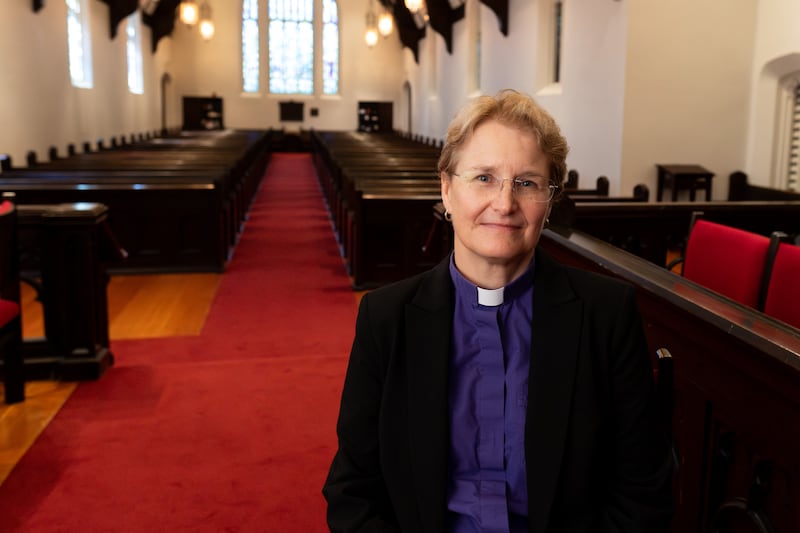
She has spent many years doing outreach work and serving people experiencing homelessness. In the episode, she and other volunteers assemble care kits to distribute to those in need throughout the Salt Lake City area.
“Religious freedom is for each one of us, especially the people that society casts away,” she said. “All of us as human beings, whether we have a particular religious belief, those fall under the umbrella of religious freedom.”
A defining moment in her career came when the Rev. Edmonds-Allen found herself in an argument with a state legislator about youth experiencing homelessness in Utah. The state legislator didn’t believe there were youth on the streets, so the Rev. Edmonds-Allen extended an invitation to visit the center. The next week a legislative aide, Laura Warburton, did come, and after more arguing, met a homeless 12-year-old without a coat.
The following week, Warburton arranged for a large truck to deliver hundreds of coats to the center.
“It’s our religious freedom that allows things like that to happen,” the Rev. Edmonds-Allen said. “I didn’t need to become a different faith. Laura didn’t need to become my faith. What mattered was that my faith told me to care about these young people, and so did Laura’s faith.”
She continued: “This is how my bridge-building work started. I realized that what I was trying to do by myself as a very angry person wasn’t helping anyone. I needed partners. I needed people very different from me, especially people of faith.”
The Rev. Edmonds-Allen believes that God has called her “to show up” and share her experiences as a person of faith, and how lives can be better through religious freedom.
“We need to have the courage to show up in our integrity of what we believe. Religious freedom allows us to do that,” she said. “We need our souls to shine for the world to flourish.”
‘We must work together’
The Rev. Amos C. Brown was 14 years old in the summer of 1955 when Emmett Till — also 14 — was abducted and murdered in Mississippi. Seeing the “horrifying” image of Till’s head in a magazine left the Rev. Brown “very much shaken.”
The Rev. Brown said he ran to the nearby home of Medgar Wiley Evers, a civil rights activist and the first field secretary of the National Association for the Advancement of Colored People in Mississippi, and told Evers how upset he was about Till’s murder.
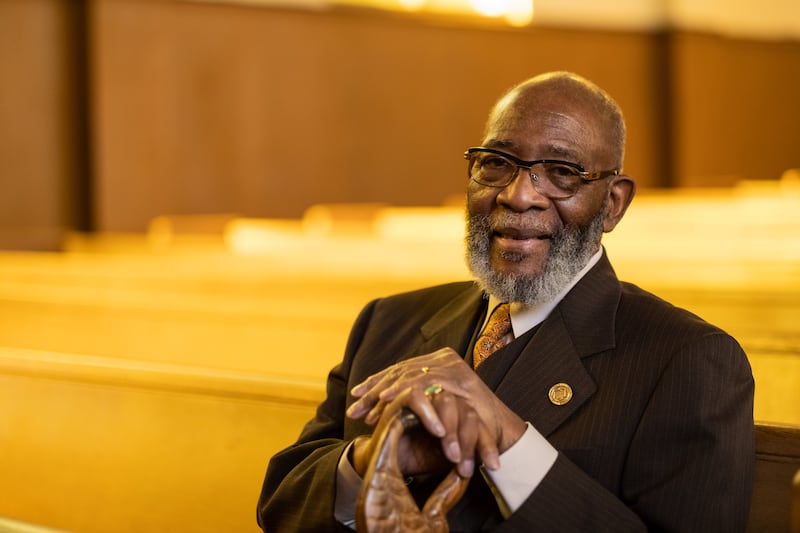
Said the Rev. Brown: “Evers, in a very quiet way, said, ‘Well, Amos, you’re angry, you’re upset, you’re hurt, but let’s be smart. Why don’t you organize the youth council of the NAACP so that you and your young friends will learn how to fight this evil of race and injustice in a smart and strategic way.’”
The Rev. Brown did just that.
Today the Rev. Brown is pastor emeritus of Third Baptist Church of San Francisco, California. He also serves as president of the San Francisco branch of the National Association for the Advancement of Colored People.
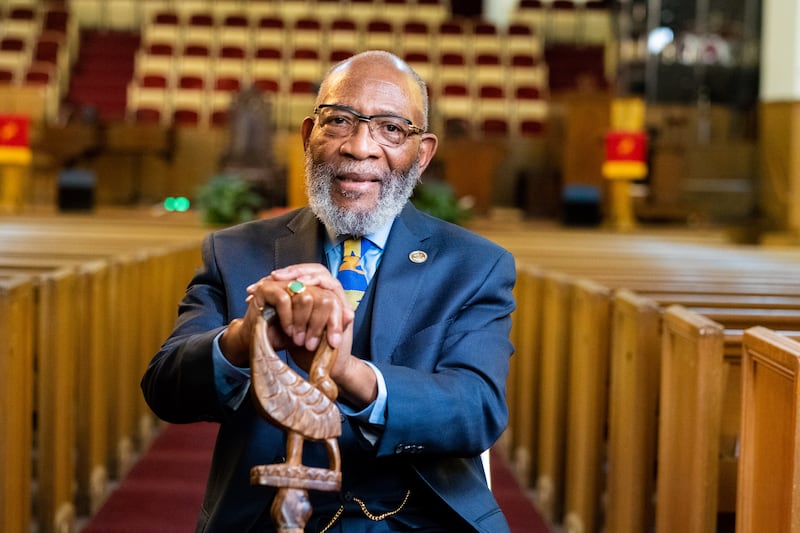
For the Rev. Brown, religion should embody love, justice, mercy, forgiveness, beauty and creativity, while unifying and helping people.
“It is important for us to work together, because there’s wisdom in the African proverb that says, ‘If you want to go fast, go alone; but if you want to go far, go together,’” he said. “If we want to go far on this issue of religious freedom, we must work together, or else we will lose for good.”
2 previous ‘Living Record’ series
“Voices for Faith” is the third three-part series produced by “Living Record: A Church News Documentary Series” for BYUtv.
Late last year, the first series, “Harvest of Faith,” featured a look at the Church’s welfare farms, food processing and distribution facilities, and AgReserves, an investment auxiliary of the Church.
It was followed by another series called “People of Faith,” featuring the stories of Latter-day Saint pioneers in Brazil, Hawaii and the Philippines.
