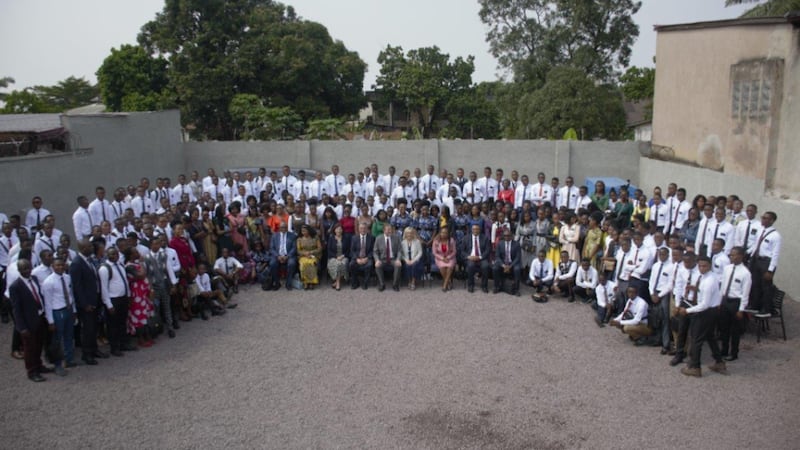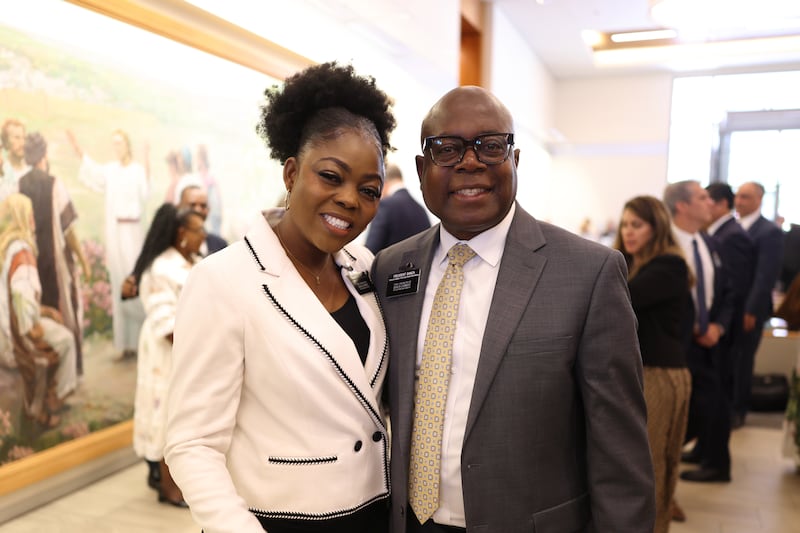

President Junior Banza, president of the Democratic Republic of the Congo Kinshasa North Mission, and his wife and mission leader companion, Sister Annie Banza, have been busy nonstop since arriving at the mission home in late June for their assignment.
“We haven’t sat down ever since, but we love it,” President Banza said.
The Banzas have returned to Kinshasa, the capital of the Democratic Republic of the Congo, to serve as mission leaders in the country where their families are pioneers of The Church of Jesus Christ of Latter-day Saints. Forty years ago as a young man, President Banza was the first person baptized in the borders of the Central Africa nation. Sister Banza was baptized about six months later.
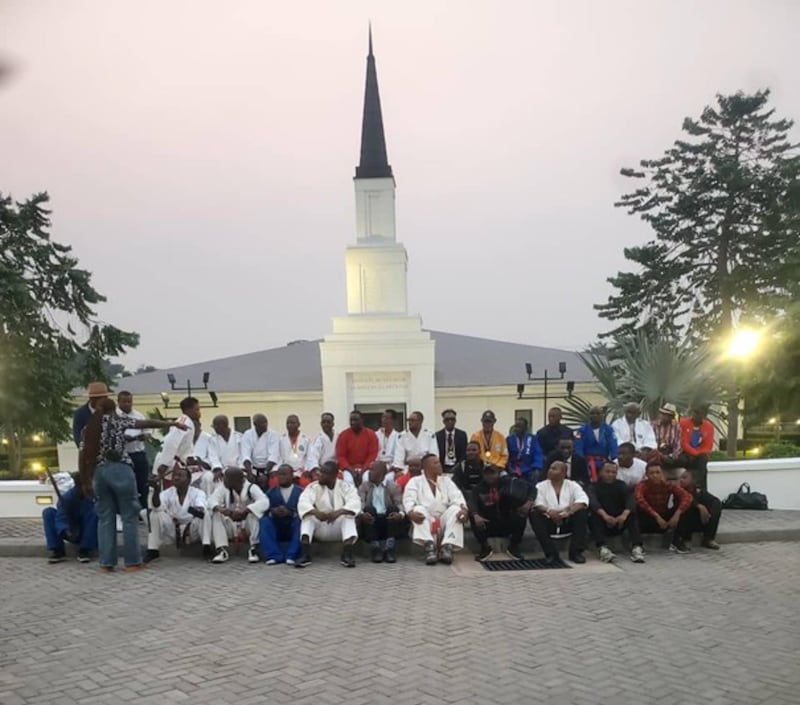
The Church began in the country with three members in 1986. Now there are around 160,000 members, seven missions, a missionary training center, a dedicated temple and three more houses of the Lord under construction or in planning.
“In my view, this is the biggest miracle of our time,” President Banza said, becoming emotional. “The Lord has given me a front-row seat to His biggest miracle.”

Last floor, last door
President Banza’s parents grew up active members of a different faith, and their church offered his father a scholarship to attend university in Switzerland. Mucioko and Régine Banza and their two young sons moved to Geneva, where events fell into place for them to find the restored gospel of Jesus Christ.
For example, every day the bus would pass by a building that said “The Church of Jesus Christ of Latter-day Saints.” Then, a friend and fellow student told the Banzas about meeting the Church’s missionaries on a vacation in Spain.
Meanwhile, two missionaries in Geneva, Switzerland — Elder Dixon Call and Elder Todd Clement — had been assigned to the area where the Banzas lived. And something happened similar to the story described in the October 2016 general conference talk “Fourth Floor, Last Door,” by President Dieter F. Uchtdorf, now acting president of the Quorum of the Twelve Apostles.
These two missionaries had been to all the buildings but felt the need to go back to one particular building and try again, President Banza said.
“They came to our building and started from the bottom up. We were on the sixth floor. They get to the sixth floor, the last door, they knock,” he said. “My dad opens the door. Here stand two missionaries. ‘Who are you?’ ‘We are representatives of The Church of Jesus Christ of Latter-day Saints.’ It was no coincidence. He knew he had to listen.”
Mucioko and Régine Banza were baptized in Geneva within two months, on Oct. 2, 1979. But then the scholarship was quickly canceled. With no way to continue school, the Banzas and their young sons returned that month to Kinshasa.
3 members needed
Back in Kinshasa, President Banza’s parents connected with Latter-day Saint families who worked at the American Embassy and met Nkitabungi Mbuyi, who had joined the Church in Belgium before returning home to Kinshasa.
They wrote to Church headquarters asking for help establishing the Church in the country, which was then known as Zaire. Finally, in 1986, the pieces fell into place to allow the Church to be recognized by the government.
The law at that time was that before any religious denomination would be accepted, they had to have at least three Congolese members of that church who would sign the decree before the country’s president would allow the church to be established.
“And just look at what the Lord had done. There were three of them, exactly the number needed,” President Banza said — his parents and Mbuyi.

The official document was signed on April 12, 1986, and the first missionary couple assigned to Zaire, Elder R. Bay Hutchings and Sister Jean Hutchings, began teaching the two Banza sons and others.
On Sunday, June 1, 1986, President Banza, then 14 years old, was the first person to be baptized in the country. His younger brother followed him by five minutes.
“I was baptized in a swimming pool, not too far from where I am right now,” President Banza said in a video call with the Church News from the mission office. From the baptism, they drove to Mbuyi’s home, where they had been meeting on Sundays under the carport, and were confirmed members of the Church.
Friends get married
Sister Annie Banza’s family joined the Church in January 1987, after being invited by a friend of a friend that President Banza’s father had invited. So President and Sister Banza grew up with their families knowing each other and often being in the same congregation, district or stake as the Church grew and units split.
President Banza served a full-time mission in what was then known as the South Africa Mission. After he came home, Sister Banza became one of the first sister missionaries to serve in the Democratic Republic of the Congo — she and two other sister missionaries were in a trio together serving in Kinshasa.
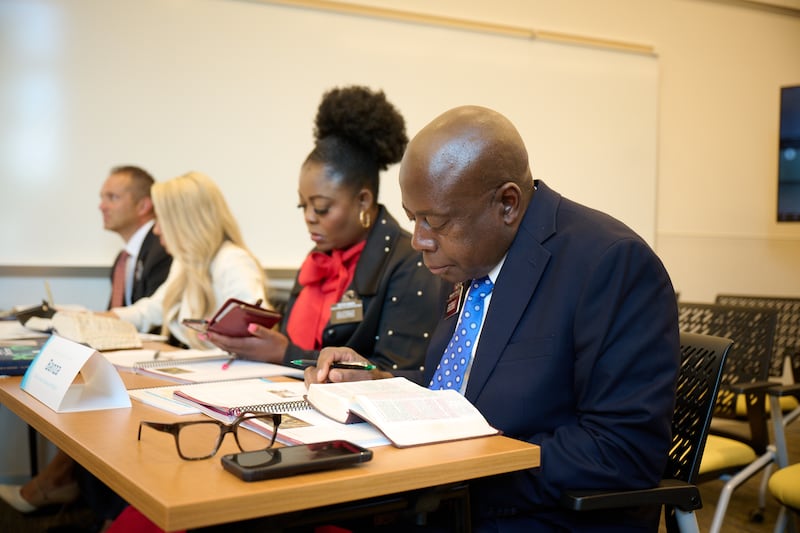
As friends, President and Sister Banza wrote letters while she was serving her mission. They had each been dating each other’s best friend.
“She told me in the correspondence that things didn’t work out. And I’m like, ‘Things didn’t work out here either,’” President Banza said. “And I remember one day I’m reading her letter [and realized] she was right here in front of me. So I wrote and I said, ‘How about you and I, we get married?’”
He had to wait about 10 days for her to write back. “That was the craziest proposal,” he said. But she agreed, and the marriage took place three months after she returned from her mission.
‘They love the Lord’
About 26 years ago, the Banzas moved to the United States, where they have raised their three children. When they were called as mission leaders, they were ready to serve anywhere in the world.
“When the assignment was made for Congo, we were very happy with coming home and being with our family and being with our friends and people we know,” President Banza said.

The country’s high growth in the Church has been exciting to see, he said, but it also comes with challenges. Many are joining the Church at around 19 or 20 years old, going on missions, then returning and becoming leaders in new branches and new wards.
“The leadership is so new, they don’t have the experience,” he said. “But they love the Lord. They are happy people. They love the Lord, and they love the Church.”
Young adults congregate at Church buildings to be with each other, and marriages are happening among these groups of friends.
Most of the missionaries in his mission right now come from the center of the country. Many are first-generation members of the Church and the only members in their families. They are very faithful and are joining the Church and going on missions in great numbers, he said.
“It is just amazing to be with them and see their faith and witness how they love the Lord.”