



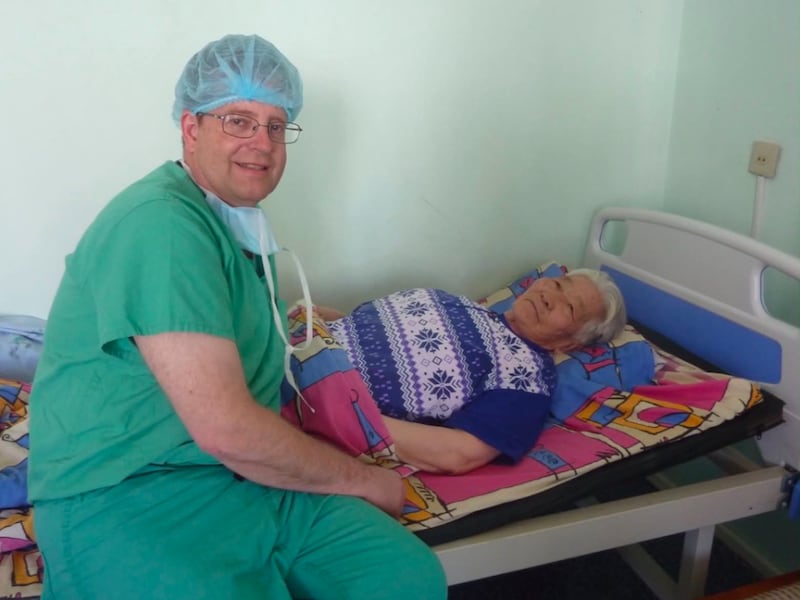

Before graduating from Harvard medical school, before becoming a board-certified surgeon and before working with medical professionals in Mongolia for 20 years, Dr. Raymond Price was a missionary in Thailand.
In the hot, muddy, humid areas of the country, young Elder Price witnessed — perhaps for the first time — severe poverty and barriers to healthcare.
In one memory, he and his missionary companion helped carry an injured woman to a hospital after others refused to assist her. Hospital workers then asked the young missionaries, “Why would you help a stranger?"
“That moment changed the direction of my life,” Price told the East Asia Church Newsroom. From that moment, he felt inspired to pursue medicine and public health.
From open wounds to minimally invasive care
Dr. Raymond Price, now a professor of global surgery at the University of Utah and visiting professor at the Mongolian National University of Medical Sciences, first visited Mongolia in 2005.
Chuck Swanson of the foundation invited Price to come to Mongolia, saying the medical professionals in the country didn’t know how to work the equipment being donated.At that time, the Dr. WC Swanson Family Foundation, located in Ogden, Utah, was donating equipment to 39 different hospitals throughout the country.
That year, 98% of the laparoscopic cholecystectomies — removal of the gallbladder — were open procedures, requiring large incisions, extended hospital stays and lengthy recoveries.
Walking inside the Soviet-era concrete buildings, Price saw scalpels, retractors, clamps and gauze laid out on white surgical tables — the tools of open surgery. Throughout the country, severe injuries from accidents and trauma were a leading cause of death for adults, yet open surgeries were not the most effective method. Surgeons lacked equipment and training, which would allow for the alternative: minimally invasive surgeries.
While there, Dr. Orgoi Sergelen, the chief of surgery at the First Central Hospital of Mongolia, asked Price to speak about minimally invasive surgery in the country.
“She gave me a PowerPoint talk about why they needed to expand minimally invasive surgery in Mongolia,” Price wrote in an email to the Church News, which included reasons such as many incidents of gallbladder disease, high percentages of women, and 49% of the population being nomadic then.
“I initially thought this was not a good idea given the lack of equipment, funds, education,” he wrote. Research articles were recently published suggesting that only basic skills should be taught in developing countries.
“But Dr. Sergelen seemed to have a vision for her country,” Price continued. “We began to work together to develop the program that changed Mongolia.”
Price’s goal while in Mongolia was to educate medical professionals on how to perform laparoscopic surgeries — ones that could cut hospital stays in half, drastically improve recovery rates and decrease the risk of infection. Price organized training opportunities throughout the country, including public education campaigns, television appearances and call-in programs.
“The message was clear,” Dr. Price recalled during his 2005 visit. “Mongolian surgeons wanted change and wanted to build the capacity themselves.”
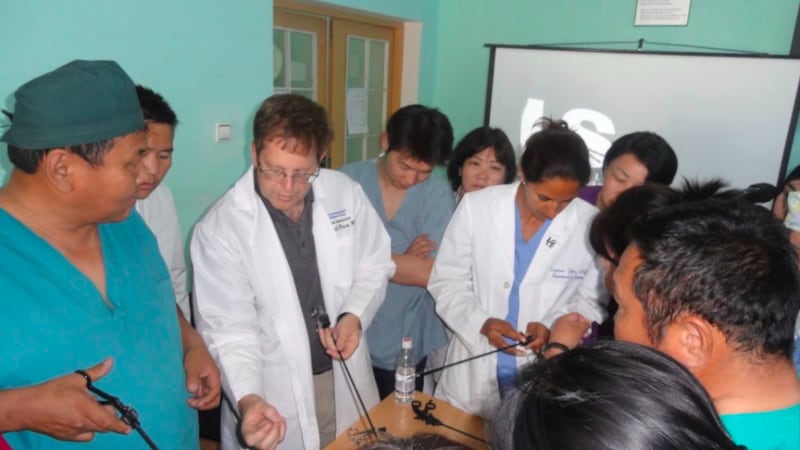
The program adopted a “train-the-trainer” model, aimed at empowering local surgeons to become educators themselves — creating sustainable change that would continue long after international visitors returned home.
Price was also instrumental in implementing the Advanced Trauma Life Support program, a training course. Supported in part by The Church of Jesus Christ of Latter-day Saints, the program teaches healthcare workers how to manage severely injured patients step-by-step.
October 2025 marked a milestone for the program, when a Mongolian educator became fully certified to teach the course locally. Today, over half of the population of Mongolia are serviced by doctors trained in the Advanced Trauma Life Support Course.
From surgeon to diplomat
Price and other surgeons are currently doing a countrywide breast and cervical cancer survey trying to identify cost-effective ways to expand services to women in Mongolia.
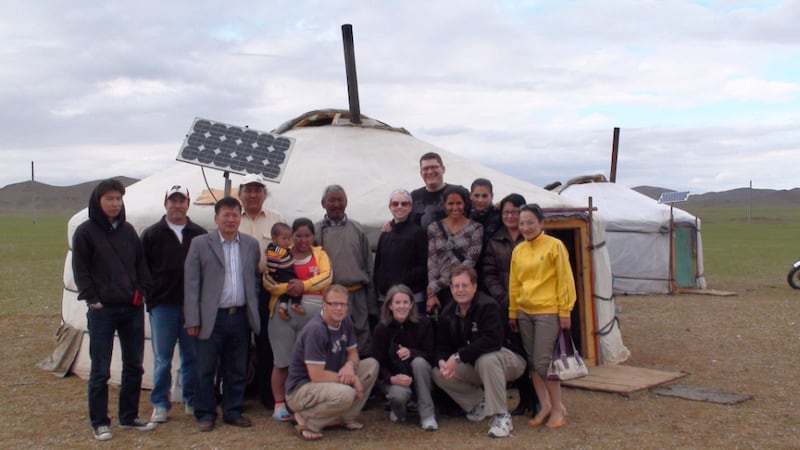
Speaking at a scientific conference last year, Price said: “For me, the greatest accomplishment has been building friendships and partnerships that created sustainable change.
“When people work together with a shared purpose, opportunities continue to grow.”
Most recently, on May 18, 2026, Price was appointed Honorary Consul of Mongolia in the State of Utah, where he resides.
As Honorary Consul, Price will continue to support cultural, educational, health care and economic connections between Mongolia and Utah, further strengthening a relationship he has spent nearly twenty years helping to build.
The real success, Price said, “belongs to the Mongolian physicians and educators who continue this work every day.”
Editor’s note: This article was updated on June 17, 2026, with additional information from Raymond Price.
