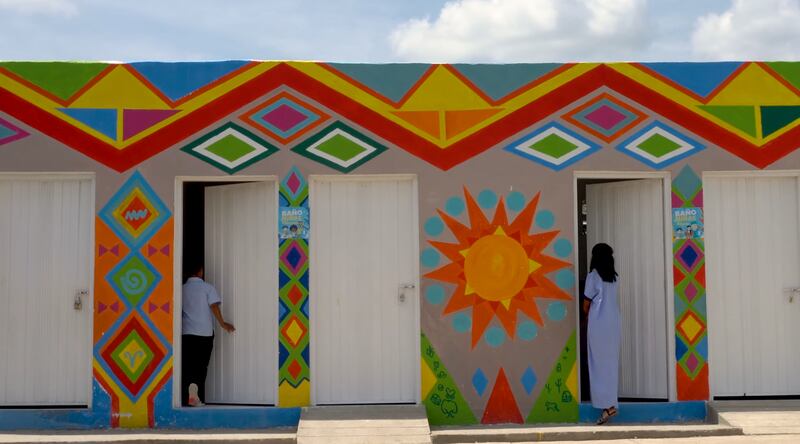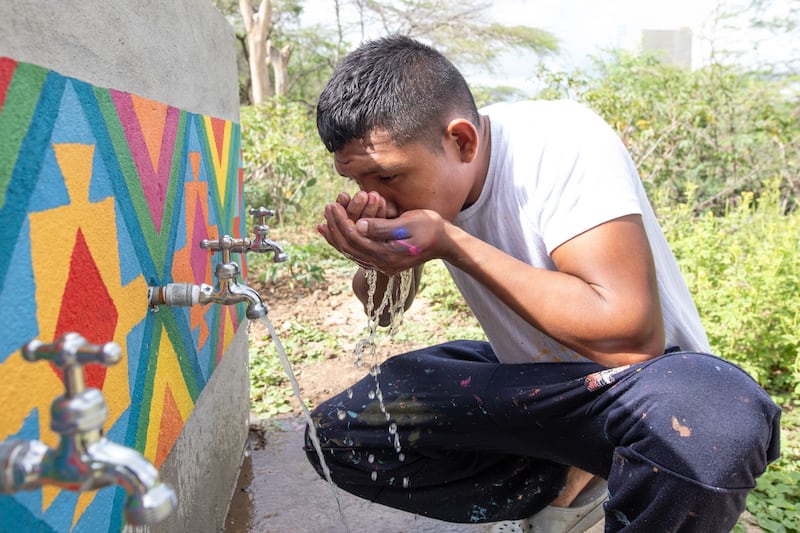

For children of the Wayúu indigenous community in Colombia, water infrastructure is as foreign a concept as any. Many children walk for hours in the scorching heat to fetch unclean water in one of the country’s harshest terrains.
When asked to illustrate a toilet, some Wayúu children drew a cactus, having never seen a toilet before.
The Wayúu is one of the largest indigenous groups in the country — with approximately 400,000 people. They are found at the northernmost tip of South America on the La Guajira peninsula, amid arid deserts and hot, dry landscapes.
In 2021, WaterAid Colombia began constructing water infrastructure for the Wayúu community.
WaterAid, a non-profit organization collaborating with The Church of Jesus Christ of Latter-day Saints since 2016, has been bringing clear water to groups around the world for over 40 years.
Buildings that feel like home
When WaterAid began its work within the Wayúu, an issue became clear: Water infrastructure was so foreign that many children were reluctant to start using it, fearing the cold, concrete structures and deep holes.
Following discussions with Wayúu leadership, WaterAid volunteers decided to paint sacred art, called Kanas, on the buildings: Traditional colors, symbols and ancestral art aimed to help the community feel comfortable in the new structures.
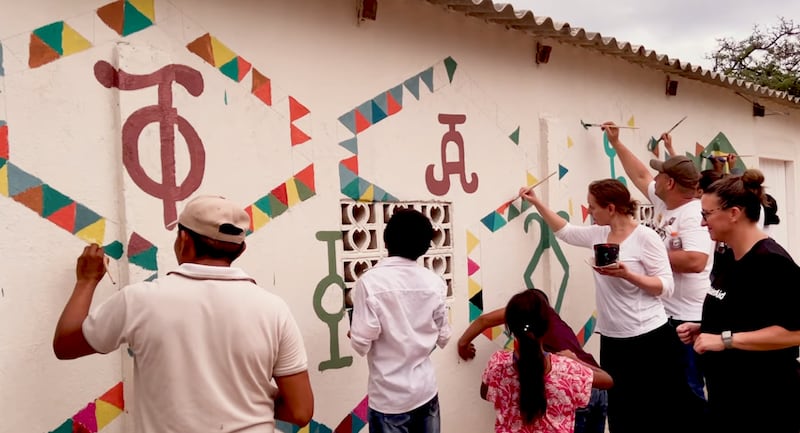
Keiber Epinayu, a Wayúu member, was one of many invited to participate in a painting workshop in 2021. By the end of the community projects, he was one of the main local voices directing painters.
“During the workshop, Epinayu demonstrated exceptional artistic talent,” WaterAid wrote in an email to the Church News. “From that moment on, our team invited him to contribute to the murals painted on water and sanitation facilities across different communities where the organization has worked.”
Helping Wayúu children use toilets, sinks and faucets requires more than just the construction of infrastructure — the sacred art closed the gap.
Epinayu and sacred art
“Small actions, like painting, creates a peace,” Epinayu said. Suddenly, a small action like painting isn’t a small action anymore: “It is key to place sacred art on water infrastructure, because water points are sacred sites.”
Epinayu led a painting workshop for approximately 20 Wayúu youth. During these sessions, he taught participants basic painting techniques, including sketching and brushwork, while also explaining the cultural meaning of the colors and symbols used in Wayúu art.
“Red is blood, blue represents water and the sky,” he said. “Green represents nature and Mother Earth. Fuchsia represents women.”
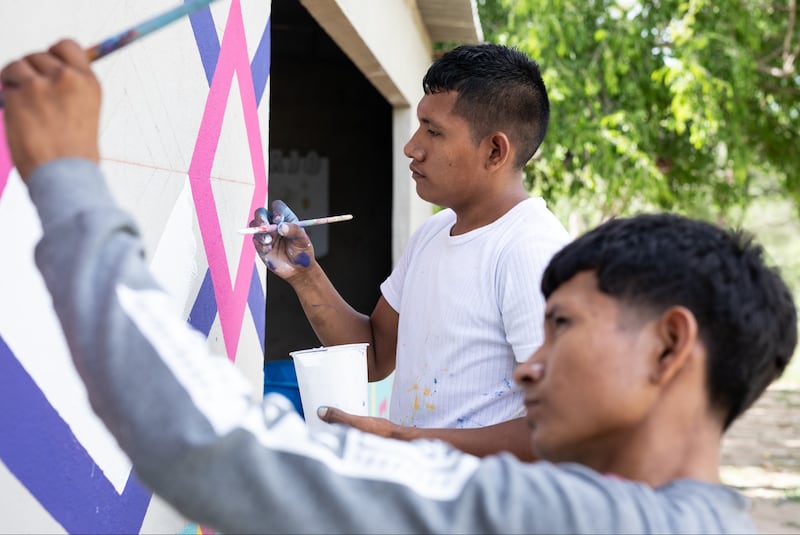
Today, WaterAid Colombia incorporates sacred art paintings in all its infrastructure, from toilets to faucets.
“Having art that belongs to our culture creates a link with our ancestry, with what is truly ours, with our mythology,” said Epinayu. “Simply looking at water infrastructure becomes a connection to the past and a window to the future.”
The paintings have given the Wayúu people a sense of ownership and pride, as many youth contributed to the murals.
“It’s an art that by only looking at it, it brings one to the past. It’s a window to the past,” Epinayu said. “Any Wayúu who sees art in the water structures says, ‘This is mine, this is Kanas.’ People no longer see water infrastructure as something lonely or alien but as a space to share and create opportunities that shape their future.”