





This week’s “Come, Follow Me” study guide covers Proverbs 1-4, 15-16, 22, 31; and Ecclesiastes 1-3 and 11-12, which includes the admonition to “trust in the Lord with all thine heart” (Proverbs 3:5).
Following are a few quotes from past and present leaders and scholars of The Church of Jesus Christ of Latter-day Saints about these chapters of scripture.
Proverbs 1
“As the scriptures certify, godly fear ‘is the beginning of knowledge’ (Proverbs 1:7). ... Please note that godly fear is linked inextricably to an understanding of the Final Judgment and our individual accountability for our desires, thoughts, words and acts. The fear of the Lord is not a reluctant apprehension about coming into His presence to be judged. I do not believe we will be afraid of Him at all. Rather, it is the prospect in His presence of facing things as they really are about ourselves and having ‘a perfect knowledge’ (2 Nephi 9:14) of all our rationalizations, pretenses and self-deceptions. Ultimately, we will be left without excuse.”
— Elder David A. Bednar of the Quorum of the Twelve Apostles, April 2015 general conference, “Therefore They Hushed Their Fears”
Proverbs 2
“We add to our intelligence knowledge, with facts, and we add experience, if we learn from it. And then we develop into a stage that Solomon calls wisdom.
“Wisdom plus the gifts of the Spirit give us spirituality and an understanding in our hearts, which cause us to act in a righteous manner and follow the commandments of the Lord. It is the difference between knowing and doing.
“It is for this reason you have come to this institution — to learn how to take this intelligence, knowledge and experience to gain wisdom and learn understanding in your hearts in order to help you keep the commandments.
“King Solomon said it in this manner:
“‘For the Lord giveth wisdom: out of his mouth cometh knowledge and understanding’ (Proverbs 2:6).”
— The late Elder Robert D. Hales, then the presiding bishop, during his August 1993 Brigham Young University devotional, “Gifts of the Spirit”
Proverbs 3
“The book of Proverbs wisely counsels, ‘Withhold not good from them to whom it is due, when it is in the power of thine hand to do it’ (Proverbs 3:27).
“We will never regret being too kind. In God’s eyes, kindness is synonymous with greatness. Part of being kind is being forgiving and nonjudgmental.”
— Elder Gary B. Sabin, then a General Authority Seventy, October 2023 general conference, “Hallmarks of Happiness”

“In Proverbs 3:5-6, we read this counsel:
“‘Trust in the Lord with all thine heart; and lean not unto thine own understanding.
“‘In all thy ways acknowledge him, and he shall direct thy paths.’
“This scripture comes with two admonitions, a warning and a glorious promise. The two admonitions: ‘Trust in the Lord with all thine heart’ and ‘in all thy ways acknowledge him.’ The warning: ‘Lean not unto thine own understanding.’ And the glorious promise: ‘He shall direct thy paths.’
“Let’s first discuss the warning. The visual image gives us much to ponder. The warning comes in the words ‘lean not’ — ‘lean not unto thine own understanding.’ In English the word ‘lean’ has a connotation of physically listing or moving to one side. When we physically lean toward one side or another, we move off center, we are out of balance and we tip. When we spiritually lean to our own understanding, we lean away from our Savior. If we lean, we are not centered; we are not balanced; we are not focused on Christ. …
“We must each ask: How do I keep centered and lean not unto my own understanding? How do I recognize and follow the Savior’s voice when the voices of the world are so compelling? How do I cultivate trust in the Savior? …
“Sisters, each of us can trust in the Lord and lean not. We can center our lives on the Savior by coming to know Him, and He will direct our paths.”
— Sister Bonnie H. Cordon, then the second counselor in the Primary general presidency, April 2017 general conference, “Trust in the Lord and Lean Not”
Proverbs 4
“We read in Proverbs the admonition, ‘Ponder the path of thy feet’ (Proverbs 4:26). As we do, we will have the faith, even the desire, to walk the path which Jesus walked. We will have no doubt that we are on a path which our Father would have us follow. The Savior’s example provides a framework for everything that we do, and His words provide an unfailing guide. His path will take us safely home.”
— The late President Thomas S. Monson, then the President of the Church, October 2014 general conference, “Ponder the Path of Thy Feet”
Proverbs 15
“The writer of Proverbs counsels, ‘A soft answer turneth away wrath: but grievous words stir up anger’ (Proverbs 15:1). A ‘soft answer’ consists of a reasoned response — disciplined words from a humble heart. It does not mean we never speak directly or that we compromise doctrinal truth. Words that may be firm in information can be soft in spirit.”
— Elder W. Craig Zwick, then a General Authority Seventy, April 2014 general conference, “What Are You Thinking?”
Proverbs 16
“A proverb in the Old Testament states: ‘He that is slow to anger is better than the mighty; and he that ruleth his spirit than he that taketh a city’ (Proverbs 16:32).
“It is when we become angry that we get into trouble. ... So many of us make a great fuss of matters of small consequence. We are so easily offended. Happy is the man who can brush aside the offending remarks of another and go on his way.”
— The late President Gordon B. Hinckley, then the President of the Church, October 2007 general conference, “Slow to Anger”
Proverbs 22
“Teaching in the home is becoming increasingly important in today’s world, where the influence of the adversary is so widespread and he is attacking, attempting to erode and destroy the very foundation of our society, even the family. Parents must resolve that teaching in the home is a most sacred and important responsibility. While other institutions, such as church and school, can assist parents to ‘train up a child in the way he [or she] should go’ (Proverbs 22:6), ultimately this responsibility rests with parents. According to the great plan of happiness, it is parents who are entrusted with the care and development of our Heavenly Father’s children.”
— The late Elder L. Tom Perry, then a member of the Quorum of the Twelve Apostles, April 2010 general conference, “Mothers Teaching Children in the Home”
Proverbs 31

“The scriptural passages in Proverbs 31 are well known for their listing of the admirable qualities of the virtuous woman, whose ‘price is far above rubies’ (verse 10), but in verse 11 we discover a remarkable description of marriage. It reads: ‘The heart of her husband doth safely trust in her.’ This memorable line discloses, first, that the husband has entrusted his heart to his wife, and second, that she safeguards it. They seem to understand an important truth, that every man and woman who covenant to establish a family must create a safe place for their love.”
— The late Sister Barbara B. Smith, then the Relief Society general president, October 1981 general conference, “A Safe Place for Marriages and Families”
Ecclesiastes 1
“The ancient King Solomon was one of the most outwardly successful human beings in history. He seemed to have everything — money, power, adoration, honor. But after decades of self-indulgence and luxury, how did King Solomon sum up his life?
“‘All is vanity,’ he said (Ecclesiastes 1:1-2).
“This man, who had it all, ended up disillusioned, pessimistic and unhappy, despite everything he had going for him.
“There is a word in German, ‘Weltschmerz.’ Loosely defined, it means a sadness that comes from brooding about how the world is inferior to how we think it ought to be. Perhaps there is a little ‘Weltschmerz’ in all of us.
“When silent sorrows creep into the corners of our lives. When sadness saturates our days and casts deep shadows over our nights. When tragedy and injustice enter the world around us, including in the lives of those we love. When we journey through our own personal and lonely path of misfortune, and pain darkens our stillness and breaches our tranquility — we might be tempted to agree with Solomon that life is vain and devoid of meaning.
“The good news is there is hope. There is a solution to the emptiness, vanity and ‘Weltschmerz’ of life. There is a solution to even the deepest hopelessness and discouragement you might feel. This hope is found in the transformative power of the gospel of Jesus Christ and in the Savior’s redemptive power to heal us of our soul-sickness.”
— President Dieter F. Uchtdorf, then a member of the Quorum of the Twelve Apostles, October 2018 general conference, “Believe, Love, Do”
Ecclesiastes 2
“Proper perspective is the key to pursuing and spending money to worthy ends. If we view money primarily as a means of experiencing the self-indulgent pleasures associated with consuming goods and services, we likely will save little, borrow excessively, and, in the end, find ourselves dependent on others for financial security. If we believe that having money is the proper measure of success and self-worth, we likely will pursue it obsessively, hoard it anxiously and, in the end, curse it mournfully. In neither case will our financial endeavors yield any appreciable contribution to our spiritual growth.
“Consider in that regard King Solomon’s reflections on his quest for personal fulfillment through pursuing pleasure and constructing grand monuments to himself and his reign: ‘Therefore I hated life; because the work that is wrought under the sun is grievous unto me: for all is vanity and vexation of spirit’ (Ecclesiastes 2:17). King Solomon’s undisciplined spending of the royal treasure brought him momentary pleasure and lasting emptiness and pain. Following the lament previously quoted, he declared: ‘For God giveth to a man that is good in his sight wisdom, and knowledge, and joy’ (Ecclesiastes 2:26).”
— Stanley D. Neeleman, then a professor at the J. Reuben Clark Law School, during his June 2002 Brigham Young University devotional, “Bridling Mammon: Harnessing the Power of Money in the Service of Virtue”
Ecclesiastes 3
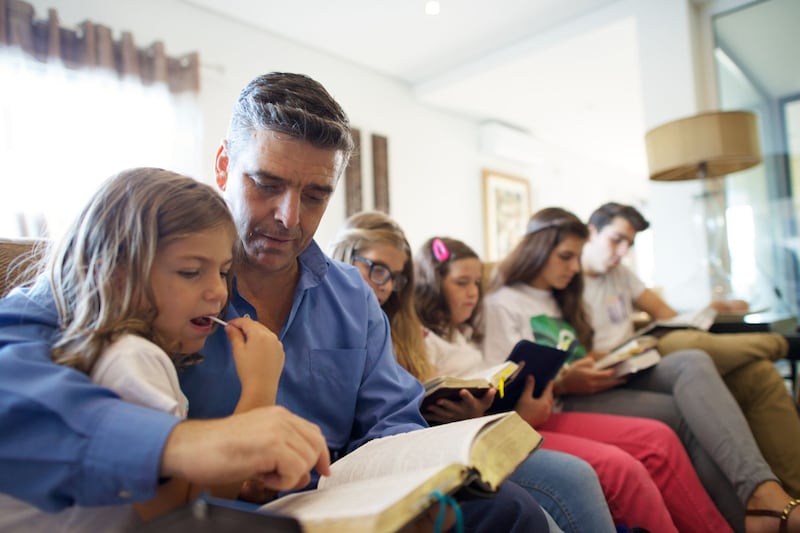
“Our house is to be a house of order. ‘To every thing there is a season, and a time to every purpose under the heaven’ (Ecclesiastes 3:1), advised Ecclesiastes, the Preacher. Such is true in our lives. Let us provide time for family, time for work, time for study, time for service, time for recreation, time for self — but above all, time for Christ. Then our house will be a house of order.”
— The late President Thomas S. Monson, then a member of the Quorum of the Twelve Apostles, April 1984 general conference, “Building Your Eternal Home”
Ecclesiastes 11
“I am a living testament that if you give to this place, it will give back to you ten-, twenty- and a hundredfold. Ecclesiastes 11:1 teaches: ‘Cast thy bread upon the waters: for thou shalt find it after many days.’ In other words, serve, participate and pitch in. Cast your bread in abundance on this campus — and not just at the duck pond.”
— Hal R. Boyd, chief of staff to the president of Brigham Young University, in his May 2025 BYU devotional, “A Bonfire of Faith”
Ecclesiastes 12
“As summarized in Ecclesiastes:
“‘Fear God, and keep his commandments: for this is the whole duty of man.
“‘For God shall bring every work into judgment, with every secret thing, whether it be good, or whether it be evil’ (Ecclesiastes 12:13-14).
“My beloved brothers and sisters, godly fear dispels mortal fears. It even subdues the haunting concern that we never can be good enough spiritually and never will measure up to the Lord’s requirements and expectations. In truth, we cannot be good enough or measure up relying solely upon our own capacity and performance. Our works and desires alone do not and cannot save us. ‘After all we can do’ (2 Nephi 25:23), we are made whole only through the mercy and grace available through the Savior’s infinite and eternal atoning sacrifice.”
— Elder David A. Bednar of the Quorum of the Twelve Apostles, April 2015 general conference, “Therefore They Hushed Their Fears”
