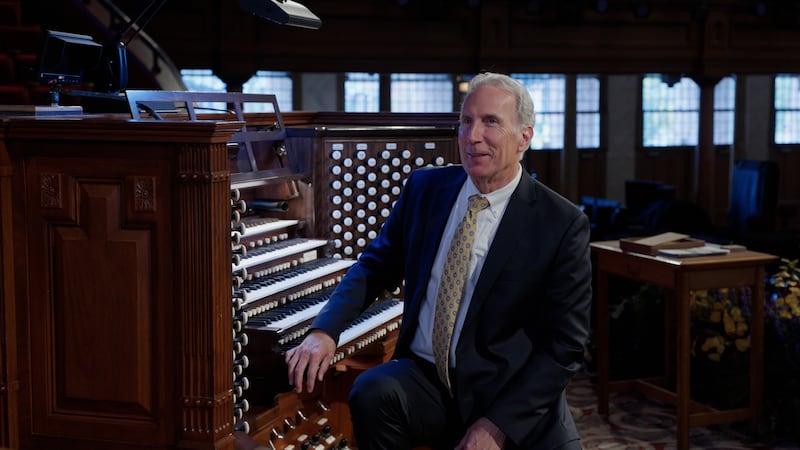
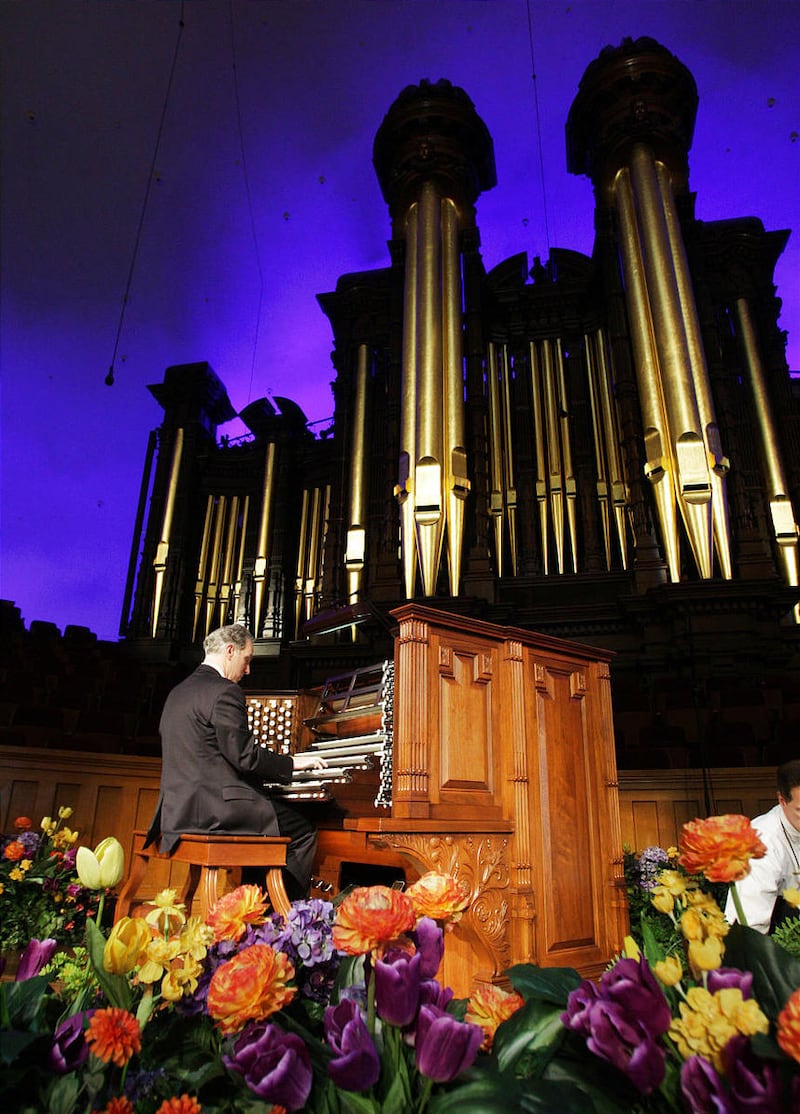
When Richard Elliott performs during the daily organ recitals on the Salt Lake Tabernacle organ, the Latter-day Saint pioneer-era hymn “Come, Come, Ye Saints” (“Hymns,” No. 30) is frequently part of the repertoire. He uses a set of pipes in the east end or back of the Tabernacle that are from 1867.
“When I play those pipes, I just imagine that the pioneers are singing their song ‘Come, Come, Ye Saints’ to all of us in the room, and it’s a magical thing. So those of us that work here really sense that their spirit lives on in the construction of the building and the organ,” said Elliott, who is the principal organist for The Tabernacle Choir and Orchestra at Temple Square, in a Church News podcast episode.
Elliott, who joined the organ staff 35 years ago in 1991, noted how “music really is an act of faith.”
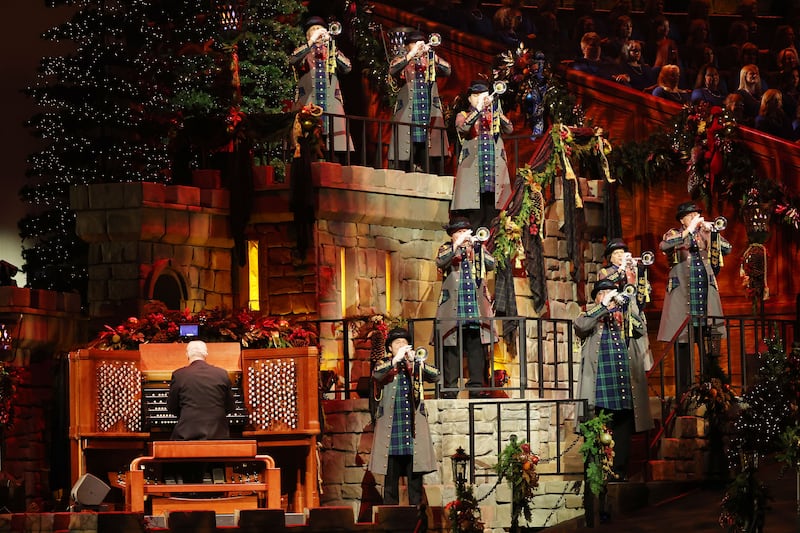
“When you sit down at the bench for general conference, to play for a conference session or at the choir Christmas concerts, it’s very easy to start doubting yourself and saying, ‘Do I really know how to do this?’ But then if you exercise faith and pray and make the Savior the focus, then you feel the reassurance of the Holy Ghost telling you, ‘You can do this,’ and things work out,” he said.
Foundation of faith, service
Elliott grew up in Baltimore, Maryland; his family was active in the Lutheran church, and he had a strong foundation in the Bible and of service.
“My great-grandfather was a minister, a Methodist minister, so there was already that tradition in the family of service, especially believing that if you believe in the Savior, you also believe in following His example and His teachings and doing what you can to improve the lives of others around you.”
Elliott studied at the Peabody Institute at Johns Hopkins University in Baltimore and earned a bachelor’s degree from the Curtis Institute of Music in Philadelphia, Pennsylvania.
He was introduced to The Church of Jesus Christ of Latter-day Saints while in Philadelphia as a young adult by another student.
Elliott joined the Church when he was 23 years old — he was baptized the same week he graduated with his bachelor’s degree.
“One of the teachings of the Church that spoke to me the most right from the very start, when I began investigating the Church, was about the plan of salvation,” he said.
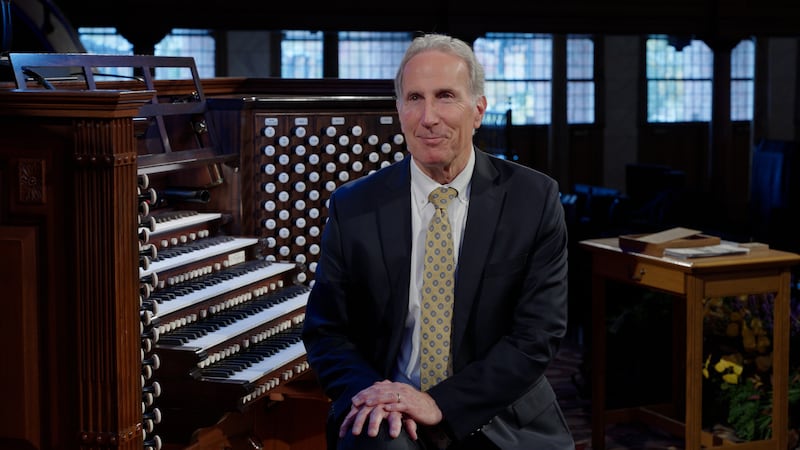
Missionary to Tabernacle organist
With his family’s tradition of service, Elliott had a strong desire to serve a mission.
“My mission was just a wonderful experience from start to finish, and it was the hardest thing, also, the most difficult thing that I’ve ever done,” he said of serving in the Argentina Rosario Mission from 1981 to 1983.
He said he tried to follow the example of Jesus serving one-on-one. “He was always looking for the one, the person who needed what He had to give, and was always looking for opportunities to minister.”
In August 2025, he went back to Argentina with The Tabernacle Choir and Orchestra at Temple Square during the “Songs of Hope” tour stop to help celebrate the centennial of the Church in South America.
“The concerts were wonderful,” he said, adding, “the things that stood out the most to me were the interactions one-on-one with people I had known during my mission or people who had joined the Church since then or people who were responding to the occasion and the significance of that.”

He met his wife after serving his mission when they were both at Eastman School of Music in Rochester, New York. They were married in the Washington D.C. Temple. They’ve performed in the Assembly Hall together — him on the organ, her on the piano — including a few duets.
He was pursuing a doctorate, and she was working on a master’s degree at Eastman School of Music in Rochester in 1988 when he heard about an opening at Brigham Young University for an organ faculty position. His wife was also hired in piano. The couple packed up and moved to Utah.
Two years later, he got a call about organist Robert Cundick retiring, and Elliott was asked if he wanted to be considered for the position. After the Elliotts prayed and fasted about it, he decided to audition and also had an interview with President Gordon B. Hinckley, then a counselor in the First Presidency. He was selected and started in May 1991.

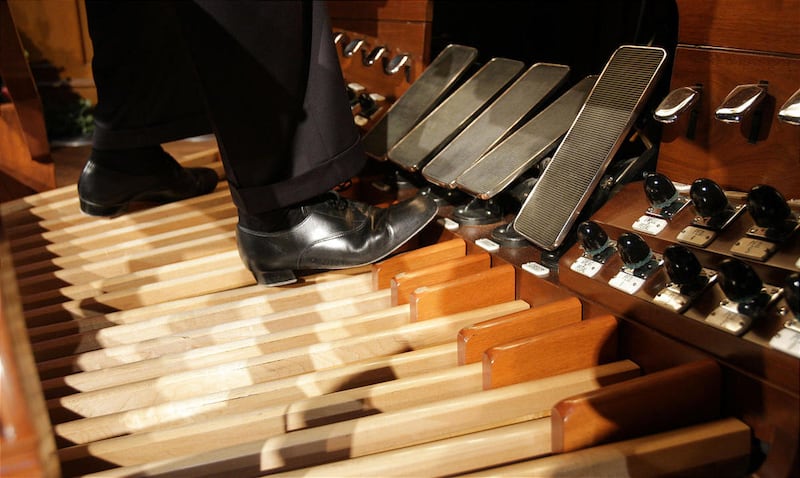
The organists at Temple Square perform at most of the 30-minute daily organ recitals, which are at noon Monday through Saturday and 2 p.m. on Sundays — a tradition that goes back to 1911. (See thetabernaclechoir.org/daily-organ-recitals for information.) The organists also perform and rehearse with The Tabernacle Choir and Orchestra at Temple Square during the weekly “Music & the Spoken Word” broadcasts and concerts throughout the year, including for the Chorale at Temple Square, for the Bells at Temple Square and at the Christmas concerts. They also provide the accompaniment during general conference.
Elliott said that as a kid, he noticed the impact of music on people, including his own home, and how it “had a way of making people feel better and making them want to be better people.”
While he was curious about how different instruments like the piano and organ worked, he wanted to know how to make sounds that would make himself and others happy.
“My lifelong desire is to use that power in a positive way.”
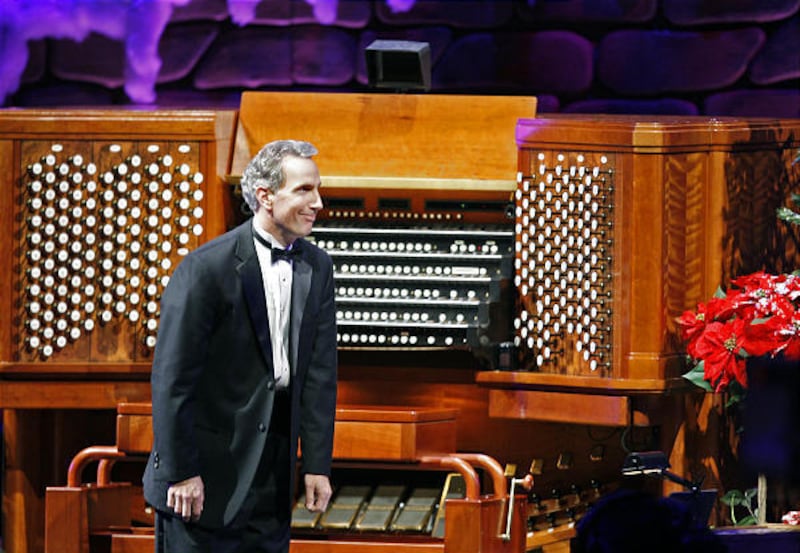
Gospel parallels to music
Elliott sees parallels in music to the gospel. Every musician — or other performer — will make a mistake or have things that don’t go according to plan.
“The most important thing is just to be able to learn what you can learn from that experience and then move on. And with the gospel, of course, we have the Atonement, we have the Savior’s teachings and example to help us to pick ourselves up and dust ourselves off and keep going,” Elliott said.
Also, there is daily effort in practicing and learning music — like there’s daily effort in living the gospel.
“And there are no coincidences, for me, in the gospel, that our Heavenly Father has a plan for each of us and that, if we are in tune with the Spirit, we can see His hand in every aspect, really, of our lives.”