




Millions of individuals visit Temple Square in Salt Lake City each year. Many are members of The Church of Jesus Christ of Latter-day Saints. Many others come from around the world to see the 10-acre site of the Salt Lake Temple and other parts of the site that is headquarters to the global Church.
The Salt Lake Temple has been undergoing significant renovations since 2019 and is scheduled to host an open house and dedication in 2027. As the grounds around the temple have been refreshed, new sculptures that represent aspects of the gospel of Jesus Christ, the life of Jesus Christ and the Restoration of Jesus Christ’s Church have been placed around the grounds.
Two of those sculptures came from the dedicated work of sculptor Michael Hall.
“It’s humbling,” Hall said. “How do you depict God? How do you depict God in a way that will help people to feel the Spirit?”
Hall joins Church News editor Jon Ryan Jensen to discuss the testimony-refining process of creating sculptures of the Savior’s mortal life and of Joseph Smith’s First Vision.
Listen to this episode of the Church News podcast on Apple Podcasts, Amazon, Spotify, bookshelf PLUS, YouTube or wherever you get podcasts.
Transcript:
Michael Hall: It was a very, very scary position for me to be in early on when they asked me to do this piece, because it’s humbling. How do you depict God? How do you depict God in a way that will help people to feel the Spirit and not look at the piece and be critical?
0:22
Jon Ryan Jensen: I’m Ryan Jensen, editor of the Church News. Welcome to the Church News podcast.
Today, we are excited to be coming to you from the studio in Provo, Utah, of artist Michael Hall. He has created some artwork that you may be familiar with, even if you don’t know his name. If you’ve had a chance to visit the renovated Temple Square in Salt Lake City, Utah, you’ve likely seen some of his pieces.
And today, we’re excited to talk with him about the process of creating those pieces of art and the spiritual experiences that he had during that process.
Michael, thanks for being with us today.
Michael Hall: Thank you.
0:55
Jon Ryan Jensen: I am fascinated by the work that you have done and would love to hear more about that experience. But I think that it would be really helpful for those who are watching and listening today to hear a little bit about your background and how you got involved in creating works of art that focus on Deity and perhaps exemplifying parts of your testimony.
Can you share how you got into this?
1:20
Michael Hall: Yeah. So, I’ve been interested in art ever since I was a young child, and my mom nurtured and encouraged me. I loved drawing comic books and superheroes when I was a little kid. And then when I was about 10 years old, my mom took me to the studio of my great-uncle Avard Fairbanks up in Salt Lake City. And I walked in, and Avard handed me a chisel and a hammer and took me over to a marble sculpture that he was working on and said, “Why don’t you try carving a little bit?” And that was a very exciting experience for me as a 10-year-old boy.
1:59
Jon Ryan Jensen: Yeah. Did that frighten your mom? I just need to know if he handed over that and your mom said, “What’s going on?”
Michael Hall: Oh, yeah. Yeah, I distinctly remember several times my great-uncle saying, “He’s fine. He’s not going to ruin everything. Everything is completely fine.” And that was very encouraging to me.
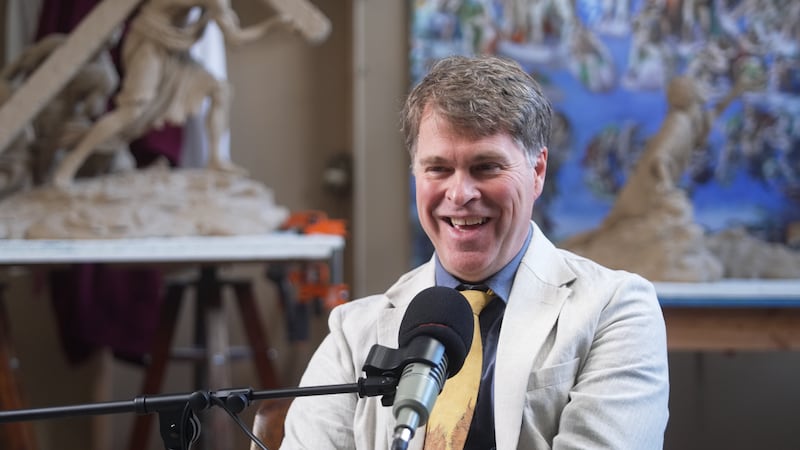
And then throughout my teenage years, I was pretty much doing my own thing artistically. I always loved the human figure. I loved works by Michelangelo. My bedroom was in my parents’ basement, and it was an unfinished basement with concrete walls. And I would paint copies of Michelangelo’s paintings on my bedroom walls. I would try and figure out how Michelangelo did that sort of work.
And I was also painting comic book characters like Spider-Man and Batman, along with these masterworks by Michelangelo. It was a very interesting bedroom.
2:49
Jon Ryan Jensen: A little bit of a contrast between the two.
Michael Hall: Yeah. And then when I made the decision to go on a mission, I served a mission in St. Petersburg, Russia, and I was very influenced by the artworks at the Russian Museum and the Hermitage Museum in Russia. And it was at that point that I knew what I wanted to do with my life.
I’ve always been a very spiritually minded person. I’ve always wanted to know if God existed and what my relationship to Him would look like if He did exist. And I loved how different artists depicted God and Jesus Christ in their artwork. And so I wanted to make a connection with Heavenly Father and with Jesus Christ through my artwork, if I could. And I knew early on that this was going to be difficult.
When I came home from my mission, I met a lovely young woman named Amanda Hansen, and we got married. And I went back to Russia and studied there a little bit more. And then when I came home, I was sidetracked a little bit. I was trying to provide for a family. I started a business with my younger brother and started to become very successful financially.
And throughout this time, I kept having this prompting that I needed to be focusing on my artwork. And that was a difficult decision for me to step away from that. I was getting ready to build a very large home in Herriman, and my mom came to me one day, and she said: “I had a dream last night. I don’t want to discourage you from building this house, but,” she said, “I have a feeling that if you go ahead and build this house and continue with what you’re doing, you’re not going to be able to do what you were meant to do.”
So, I talked to my wife, and she agreed that we should listen to that prompting from my mom. And we made the decision to step away from that business. I handed the business over to my younger brother and went from starting to make quite a bit of money to making no money, focusing on sculpture, focusing — well, at first, focusing on drawing and painting.
And through that experience of studying, drawing and painting, I came into contact with an artist named Patrick Devonas, a famous Swiss artist. And while I was studying with him, he helped me to understand that I was a sculptor who liked to paint. And he advised me to focus on sculpture permanently, full time. And so I decided to follow his counsel, and here we are. I’ve been working at this for 20 years now.
5:55
Jon Ryan Jensen: So, for that part of you that had been doing the comic book art and copying some of the Renaissance greats in your basement to being told, “No, you need to be sculpting.”
Was that hard for you to imagine? Did you have some pushback on that of: “Well, no, this is the thing I’ve done most of my life. That’s what I’d rather do”?
6:14
Michael Hall: Yeah, I don’t think it was hard for me. I think it was a little confusing. But luckily, my mentor, Patrick Devonas, he helped me to understand that drawing was the foundation of sculpture, painting, drawing, even photography, when it came to visual design, that drawing was the foundation for everything.
And so, through his guidance and mentorship, I was able to make that transition pretty easily. He had me do an anatomy study called an écorché, where you sculpt a skeleton, and then you sculpt in all of the muscles. I did that, and then he came to me, he said, “I’m even more convinced now that this is what you need to be doing.”
And I remember him saying, “If you continue pursuing a career as a painter,” he said, “you’ll be a mediocre painter. But if you pursue sculpture, you might do something that is very meaningful and that actually touches someone in a very profound way.” So I listened to him, and I still respect and love him. He’s a great friend, and I still consider him a mentor.
And I’m eternally grateful for being able to have the influence of the Holy Ghost because all of these people, whether they were my mom or a mentor like Patrick, when they spoke these truths to me that Heavenly Father wanted me to understand, I was able to get spiritual confirmation immediately. And I credit serving my mission for being able to learn how to feel and recognize the Spirit in my life. So I just feel grateful that I’ve been able to act on those promptings that I’ve had.
8:00
Jon Ryan Jensen: I love that you come back to that with your mission, because, as you mentioned, you didn’t serve a mission immediately when you were eligible to by age. That was an intentional decision after feeling, having an experience with the Book of Mormon. But then you had multiple experiences on your mission where you felt like the Lord was guiding you toward this career, including the abilities of some of your missionary companions.
So, can you share maybe what those feelings were like as you were serving in Russia and how you felt the Lord guiding you for the work you were doing there and what it would turn into when you returned home?
8:40
Michael Hall: Yeah. So, I had the opportunity on my mission as a missionary to do service in the Hermitage Museum and visited the Russian Museum quite a lot. But as missionaries, we would sit at a table in the Hermitage Museum for four or five hours and talk to potential patrons, wealthy patrons, from other countries, from Europe and other countries, and we would encourage them to donate to the museum.
And this gave us, as missionaries, access to go to the museum whenever we wanted to. And that was the first time that I ever saw a sculpture by Michelangelo. There was a sculpture called the Crouching Boy, and it was in the Hermitage Museum, and I was fascinated. I saw this little marble sculpture, and it had a profound effect on me.
Later on on my mission, I had a companion who I love, Elder Tom Makota, and he was an artist like me, only a much better artist than I was. But I loved serving with him because on P-day, he would come to me and say, “Hey, Elder Hall, I think we should go out and sketch public art. Let’s find a statue and sit down and draw together.” And it was wonderful.
And so, serving in the Hermitage Museum, spending time with Elder Makota drawing, I started to feel like this is what Heavenly Father wanted me to do with my life. Before my mission, I thought about becoming a moviemaker. I loved making movies before my mission. I loved telling stories through that medium. But serving on my mission, as I mentioned, going into the museum, serving with Elder Makota, I started to understand this is what Heavenly Father wanted me to do. He wanted me to use my talents in the visual arts to help further the gospel.
And it had mentioned certain things in my patriarchal blessing that helped me to understand that this is what Heavenly Father wanted me to do. So I’ve tried to go back to that throughout the time since I received the blessing over and over, to be reminded that that’s why I’m here. I have certain gifts that I’m supposed to try and develop. And there are certain things that I need to share.
11:03
Jon Ryan Jensen: So, you have then in the last 20 years been honing this craft and this ability. And at some point, you were approached and invited to create a proposal for Temple Square as it was beginning its renovations.
Share with me what that process is like. I can’t even imagine what that kind of — I don’t know if it’s a phone call or an email or what, but I can’t imagine having that kind of opportunity presented.
11:29
Michael Hall: Yeah, so I’m just going to mention a little bit leading up to that. The life of an artist, it can be a very difficult life. And there were plenty of times that I wanted to quit and financial struggles, other struggles. And I would often go to Heavenly Father, and I would talk about these discouragements and struggles that I was going through. And I kept receiving the same impression every time. And that impression was: “If you want to quit, that’s fine; you can quit, and I will find someone else. But if you are willing to continue and make the sacrifice, then you are going to receive blessings for it.”
And so I made the decision to continue, and things didn’t always get easier. Sometimes they got harder. And I remember feeling that over and over: “If you want to quit, you’re able to quit anytime. If not, you will receive blessings, and I hope you’ll continue to do it.” And so I consciously made the decision to continue.
Eventually, the Church contacted me. It was a phone call that I received, and I was asked to submit qualifications. And so, my wife and I work together. She’s the technical side of our relationship. I’m not very good with the technical aspects of working with computers, PowerPoint and those types of things. So she helped me, and then together working off of promptings, we put together a portfolio, and we submitted it. And then I was contacted — I think it was by email — and I was told that I was one of a few artists that had been chosen to be a finalist to create these sculptures.
13:17
Jon Ryan Jensen: And at that point, had they told you what the subject matter was of these sculptures?
Michael Hall: No, no. We started to have meetings, and each artist was assigned two topics — except for one artist who was doing the main sculpture for the temple.
So, the other artists were given two topics, and I received these topics. And I decided at this time that I needed to start attending the temple a lot more regularly than I was, that I needed to start fasting a lot more regularly and spending more time in the scriptures than I was. I’ve always tried to do those things, but I always haven’t been the best at being consistent. So I started to be a lot more consistent.
Well, during that process, I started receiving impressions that I needed to submit a different idea than the ideas that had been assigned to me. And so I did a small, three-dimensional, one-fourth life-size sketch of Christ on the cross. And I remember thinking, “There’s no way that this is going to be approved,” because we don’t have a lot of representations in our Church of Christ being depicted with the cross or on the cross.
And it was submitted to the temple committee, the people working on the Temple Grounds project. And then it went to the presiding bishop and the Presiding Bishopric. And I got word back that Bishop Gérald Caussé, he loved the idea, and he felt like it was an important subject that should be depicted. And he had one suggestion, and that was instead of depicting Christ on the cross, it was to depict Christ carrying the cross.
And so, working with him and the other members of the Presiding Bishopric and the people from the Temple Grounds Committee, I was able to come up with a design that they felt would be an appropriate design. And then it was going to be sent to the Prophet and the First Presidency.
And again, I was certain that there was no way that this was going to happen. But I was also feeling promptings that none of that mattered, that I was doing what Heavenly Father wanted me to do, and regardless of what happened — if it was accepted or not — that wasn’t important. The important thing was that I was doing what I was being asked to do.
Jon Ryan Jensen: That concept of “even if.”
Michael Hall: Even if.
Jon Ryan Jensen: Even if, and I’m still going to keep going.

16:10
Michael Hall: So, I did it. They loved it. They asked for some modifications. And another thing that I had felt early on was that, especially when it came to the Prophet, the First Presidency, the Presiding Bishopric, they were going to be receiving insights that I might not be receiving. Even though I was an artist and they weren’t professional artists, that they would be receiving insights.
And so I made myself very open to all of those insights. And every time they made suggestions, I would feel confirmation that this was what needed to be changed, to make the changes. And every time I did, it made the pieces stronger.
At one point, when I had first done the first design for the Station of the Cross piece, there was some encouragement from President Russell M. Nelson that all of the artists should coordinate with the other artists and bring them into their studios and get advice from the other artists. And so I decided to do that. Everything that the Prophet was going to ask me, I just made the decision I was going to do that.
And so, I invited the other artists into my studio, and they were gracious enough to make time out of their busy schedules to come in and give me suggestions about how I could improve the piece. And I listened to most of those suggestions. They were very valid suggestions, and I’m happy that I had their expertise and access to their expertise, because it made the piece stronger.
17:49
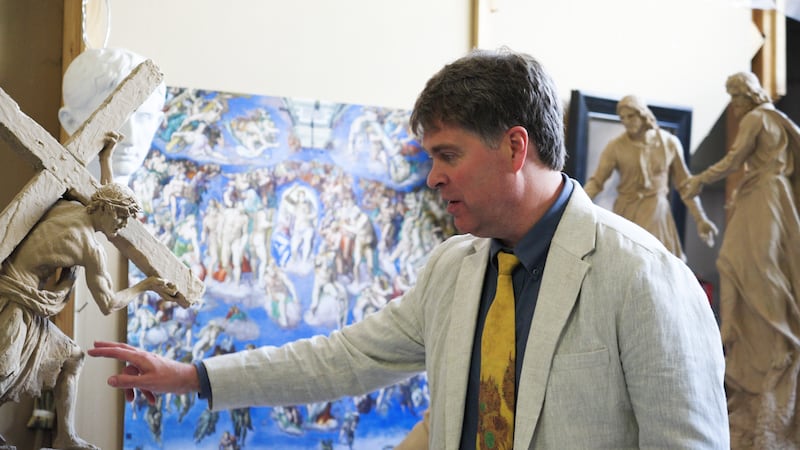
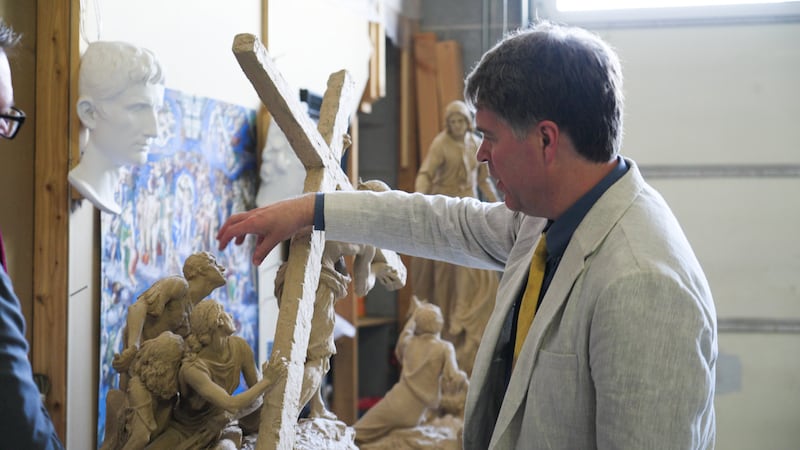
And then I finished the one-third life-size model that you see behind us. And from what I understand, President Russell M. Nelson saw the piece, and he loved it. The other members of the First Presidency loved it. He made the suggestion that the Roman soldier behind the figure of Christ should have a helmet on his head. And I thought about it, and visually, I felt like it would be a distraction. I wanted people to focus on the face of Christ. And those Roman helmets, they’re very interesting. They’re very beautiful, and they can be very distracting.
And so I went to Heavenly Father in prayer, and I said: “What should I do? The Prophet has made this suggestion.” And He said — you know, I received the prompting — that I should explain to him why I felt that might not be the best idea artistically. And so I did that. And from what I understand, he said, “I understand and appreciate that, and I think you’re right, but I still think it’s important to have the helmet depicted on the sculpture.”
And so, working through some of the people on the temple project that I was working through, I was able to make the suggestion of having the helmet at the knees of the Roman soldier. And actually, thinking back, I’m not sure if that was my idea or if that was his idea. It might have been his idea. Now I can’t remember.
But anyway, I was able to change that and create something that he felt was something that needed to be done. And he loved the idea. And he said, “I think this is great.” And there’s some powerful symbolism there too. You have the helmet at the knees of the Roman soldier, representing maybe the Roman state, that he’s taken the state off.
Because when I’ve depicted all of the different characters in this piece, there were very strong motivations behind each character. Each character represents maybe a different belief system. So, the woman directly to the right of the Savior, when you’re looking at the piece, she’s in front. She has her arm raised in front of the cross. This isn’t an official statement, but in my mind, I felt like this woman was Mary Magdalene.
And I was led to a model, particular model, through some pretty miraculous circumstances. Her name is Grace. She’s not a member of our faith. She is an evangelical Christian. But she felt like she needed to be working with me on this project, and I felt like I needed to be working with her. And it was wonderful. We were able to work together and understand each other’s faith traditions a little bit more. But we both had a very deep and powerful relationship with God. And so we were able to connect in that way.
21:12
And she represents the believers. She is, in the sculpture, she’s a Jewish woman. She represents those people that were raised with that faith tradition in their lives. The woman directly behind her is a Roman woman, and she represents the converts. And so, visually, the way that I designed the piece through revelation was that this convert is leaning on the back of the believer.
The Roman soldier at the back, he represents the nonbelievers. Early on when I was creating this piece, I felt like I should not depict violence. This was going to be a tricky thing to do because this is a violent subject matter. But I felt like because of where the piece was going, that I shouldn’t depict violence in any way, that there were going to be sensitive people and small children looking at the sculpture. And so I had to figure out a way to show this traumatic experience without depicting violence. I had thought about showing the Roman soldier in an act of whipping the Savior, holding a whip. So I decided to go a different path.
I decided to depict this Roman soldier right at the minute where he was having a change of heart. So, if you go and see the piece at Temple Square — and you can see it in this small model — he is holding a whip in his hands. But he has a look of peace on his face, an expression of peace, because he’s come to that realization that he might not believe that this is his Savior or that this is God, but that this is an innocent man and that what is happening to him is not right.
So, I felt that it was important to show all of these different belief systems in the piece itself, with the hope that whoever was viewing the piece would be able to connect with one of those figures. And I think most of us at some point in our lives, we’ve experienced this. So hopefully people will be able to connect with one of these figures.
23:32
Jon Ryan Jensen: It seems like a lot of pressure to put on yourself to try and pull all of those things together in one work. And so, as you’re going, are you continuously trying to feel — some of those are little pieces of inspiration that you’re getting, and some of them are the desire as a professional artist.
Did you feel promptings from the Holy Ghost leading you to do one thing or another in that process?
24:01
Michael Hall: Every day. Yeah, at first when I got the contract to do the piece, I was a little bit offended when I read some of the language in there. It seemed kind of archaic because I think — and this isn’t an exact quote — but I think there was something in the contract that said that in signing this contract that I would agree not to use bad language in my studio, that I would agree to do certain things.
And I thought at first, “Well, this is pretty archaic.” And then I decided to humble myself, and I thought: “Well, maybe there’s a reason behind all of this stuff. Maybe this is about helping to ensure that I have the Spirit with me so I can do what I need to do.” And when I rented this space, I dedicated it, and then I’ve made sure that every day that I’m able to have the influence of the Holy Ghost here.
I only listen to music that invites the Spirit. Music’s been a big part of this experience. I listen to the Tabernacle Choir. I listen to other things. It’s mostly listening to the Tabernacle Choir, conference talks, podcasts, good books, different things that don’t drive the Spirit out. But in doing so, I’ve been able to have the Spirit guide me more so than at any other time in my life. In addition, going to the temple, spending time in my scriptures, doing those other things, keeping those covenants that I’ve made, it’s enabled me to have the Spirit. And it’s been an incredible experience.
Every night when I go home, I’ll say my prayers, and I would receive instructions on what I was to do the next day. Everything, my whole day, would be laid out for me. “This is what you need to do. This is what you need to do. Just so you know, your model is not going to be able to come tomorrow. You need to find another model.” And then the next morning I’d get a text, and the model would say, “I’m sick,” but I had already found another model. And so I was able to work continuously, and everything came together. And it’s just been an incredible, just a miraculous experience.
And I’ve been doing this while also experiencing some of the trials of mortality — sickness, personal health issues for me and for family members, the passing of my mother — just normal things that happen with furnaces breaking, water heaters breaking, cars breaking down, different things that you have to deal with. But working with that constant guidance from the Holy Ghost, everything’s been able to go fairly smoothly. Yeah, it’s been wonderful.
26:54
Jon Ryan Jensen: And in your personal life, children going through their teenage years — which for any father, as a father of teenagers, there are always challenges inherent with that and preparing for their own missions as well.
Michael Hall: Yeah.
27:06
Jon Ryan Jensen: You have done two pieces that are on Temple Square. Before we get to the other one, I am really interested to know when you talk about this being a third- or a fourth-life-size, when you get approval on that, what was the feeling that you had? And then, do you have further revisions when it comes to be the full, final size?
27:31
Michael Hall: Yeah. Yeah, with the Station of the Cross piece, once I received approval for the one-third life-size version, the feeling that I felt was elation but shock. Quite frankly, I felt shocked. But then as I look at it in hindsight, I was doing everything that Heavenly Father had asked me to do and working with His servants. I think they could feel that, that His will was being done.
And so, I was excited to move on. I started working on the full-size piece, the life- and a quarter-size piece. And yeah, there were changes that were made working with the people from the temple project and the Presiding Bishopric and taking photos so they could be sent to the First Presidency. If there were concerns, I would address those concerns. Because sometimes you work on something, and it’s one-third life-size, you can’t see an issue. But all of a sudden, when it’s a life- and a quarter-size, maybe something that’s minor all of a sudden looks major. The small problem becomes a major problem.
But again, I just left myself open to those promptings from the Spirit. I tried to be humble. And every time a suggestion was made that I felt was something Heavenly Father wanted to be made, then I made those changes.
There were a few instances where they would have questions, maybe someone from the Presiding Bishopric or someone from this group of individuals that I was working with with the temple project. They would have questions about something, and I would pray about it. I would listen and make the changes, and everything worked out fantastically.
29:24
Jon Ryan Jensen: Before we started recording, you and I were talking, and you said that ultimately the goal that you have is that people can look at one of these pieces, finished pieces of work, and feel the Spirit prompting them in their lives.
But the thing that I didn’t know had happened is that after you finished, that then the finished piece had to be put in storage for a lot longer period than I would have imagined.
Is that a stressful time for you, when you know it’s done and then you just have to wait before people can see it?
29:55
Michael Hall: Yeah, it was stressful. Every time I create a piece, and even more so with these pieces, I feel like I impart some of myself into the piece. And usually, as an artist, I go through some form of withdrawal when I create a piece and it gets taken away. I didn’t experience that as much with these pieces. I really felt like I was being comforted and carried through this process.
But I felt almost like I felt when I sent my son off on a mission. The piece was being crated up and moved into storage, and I knew I was going to be able to see it again, but I did feel a little bit of sadness that I wasn’t going to have it around anymore.
And it was a great reunion the day that I went up to Temple Square and they uncrated it and we were able to put it in place. It was wonderful. It was like seeing an old friend or seeing a child that has returned from a mission. It was beautiful.
30:52
Jon Ryan Jensen: I love that correlation. I want to let you have a chance to talk about the other piece that you created as well and ask: Were you creating them simultaneously, or did you do one and then the other?
31:06
Michael Hall: Yeah, so this was an interesting process. As I had mentioned, I had received two topics in the beginning. Then I made the suggestion or the proposal to have Christ with the cross. And that was something that I did because I had been receiving revelations so strongly that this is what I had to do.
After I made that suggestion and it was approved, then I was told that I would only be doing one piece. And that was a little confusing to me. I felt a little hurt at first, and I thought, “Oh, maybe I did something wrong,” but I was just acting off of the revelation that I was receiving.
And then I decided, “Well, I’m just going to move forward with faith, because if this is what was supposed to happen, then I’ll only do this one piece.” In hindsight, I realize that I had to put quite a bit of myself into this Station of the Cross piece. And if I had been focusing on multiple pieces, I don’t think I would have been able to do what I needed to do.
Jon Ryan Jensen: Man, there’s a lot of lesson to be unpacked right there.
32:19
Michael Hall: Yeah. And again, that was difficult, but I moved forward with faith. I tried to understand. The feelings that I kept getting were: “Be still. Know that I’m with you. Everything is going to work out the way that it needs to. So be trusting, and just do what you are being asked to do.”
So, I worked on that piece, and then I was asked to do the First Vision after that. And I found out that even though that piece came later, it was going to be installed first. And so I finished the Station of the Cross piece. I knew when I was done with it because I came into my studio one day — and it was after the Presiding Bishopric had come down — and I went to start working on it, and I had the impression: “Don’t touch it. You’re done. Don’t touch any part of this piece.”
And that was difficult for me, because I’m very obsessive-compulsive, and I could have spent 15 years working on that piece. And it was very hard to be finished with it, but I knew that it was at a point where Heavenly Father wanted it to be finished. And so again, acting on faith, I stopped working on that and began working on the First Vision. And that was — yeah, both were miraculous pieces.
Do you want me to start talking about the First Vision a little bit?
33:51
Jon Ryan Jensen: Yeah, especially because with the First Vision piece, I think back to your experiences you talked about going on a mission and that you wanted to learn. And I think there’s so much there with Joseph Smith and the way you portrayed him in this particular piece.
So, yeah, what was the process of getting to the First Vision?
34:14
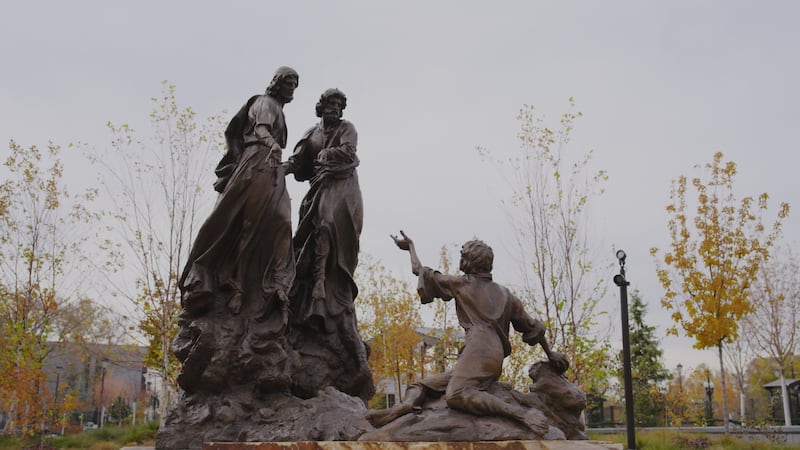
Michael Hall: Yeah, so after I had started working on the Station of the Cross piece — and this actually happened before, so this was probably in about 2019 — I started receiving very strong direct revelations that I was going to be sculpting a piece depicting the First Vision. I didn’t know if that was going to be for the Church, I didn’t know if that was going to be for someone else, but I kept receiving these promptings.
I think it was April of 2020 in general conference when President Russell M. Nelson was talking about commemorating the —
Jon Ryan Jensen: Bicentennial. The bicentennial of the First Vision.
34:55
Michael Hall: Yeah, and he had mentioned that they had possibly thought about creating a sculpture or a way to memorialize the First Vision. And then they decided not to do that. And I thought: “Oh, well, OK. Maybe I was supposed to do something with the Church, but maybe not.” Well, I kept receiving that same thought: “Be still. Know that I’m God. Start designing an idea.” And so I started designing an idea.
And then I was contacted by the Church that fall about the temple project, given the other topics. There was actually another artist that was given the topic for the First Vision, and so I thought: “Well, I’m really confused now because I’m receiving all of these promptings, I’ve actually started designing a piece, and it looks like it might be for somewhere else. I don’t know.”
Well, eventually some different circumstances happened, and I was approached about doing the First Vision sculpture. And I thought: “Well, this is great. I already have this idea.” And so I was able to present an idea to them with just a few little modifications.
And then working with the members of the temple committee and the Presiding Bishopric, we made — and the First Presidency — we made a few adjustments acting off of particularly revelation from President Russell M. Nelson about what the piece should look like and certain aspects that should be in the piece.
36:27
Jon Ryan Jensen: And some of them are matters of interpretation as well. And so, you’re navigating and balancing that.
And I think that people in their regular lives are dealing with the same thing as well. There are things that we know we absolutely have to do. And then there’s that space that Heavenly Father lets us operate in with our agency to say, “Now, how you do this, this is going to be up to you.”
36:49
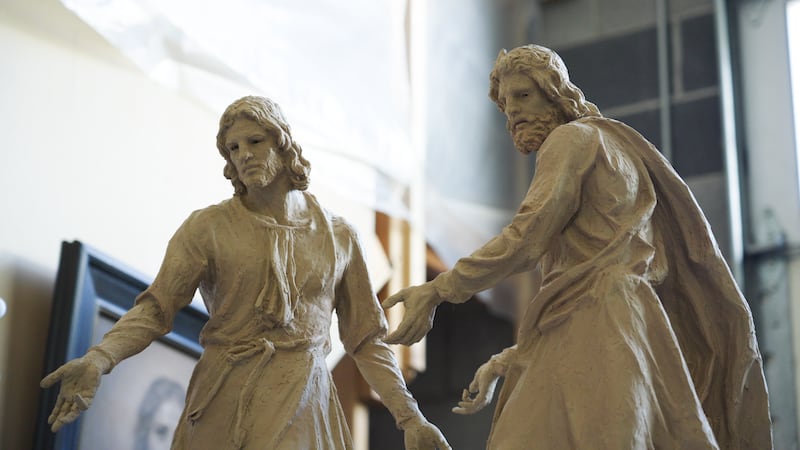
Michael Hall: “Make your best judgment. Come to me with an idea, and I’ll let you know if it needs to be changed.” And I ended up doing that quite a lot, mostly with the figures of the Savior and Heavenly Father. It was a very, very scary position for me to be in early on when they asked me to do this piece, because it’s humbling. How do you depict God? How do you depict God in a way that will help people to feel the Spirit and not look at the piece and be critical constantly?
So, I looked at Michelangelo’s depiction of God from the Sistine Chapel. I felt that was beautiful. I wasn’t seeing a lot of depictions of God that were inspiring me. And so I figured I’d better go right to the source. I worked from classical sculpture. I worked from some Renaissance paintings. I was guided to work with certain models, certain individuals. I would watch movies. I would look at photos. I would bring models in and do studies. And I would make a decision.
And then, going back to what you said a little bit earlier, it was interesting because as I worked on the figures of the Savior and Heavenly Father, I felt like this: “You need to do this specifically. The gesture needs to be like this. The clothing needs to be like this.”
38:19
When I was working on the figure of Joseph, I went to Heavenly Father with those same questions. And the answer was: “It doesn’t matter. This is up to you, because the piece is not about Joseph. So this is something that you need to come up with.” And so I would start to create designs. I thought, “Well, I don’t know what Joseph looked like as a young boy.” And I would go to Heavenly Father in prayer, and the answer I would receive was, “It’s not important.”
And so I had the idea: “Well, my son’s 14 years old. I’m thinking of using him as a model. Is that fine?” And the thought was: “That is perfect. Do what you want to do.” And so I was able to use some of my own artistic license, things that were important to me. And then with the guidance of the Holy Ghost, I was able to come up with something that I felt like Heavenly Father was happy with.
39:16
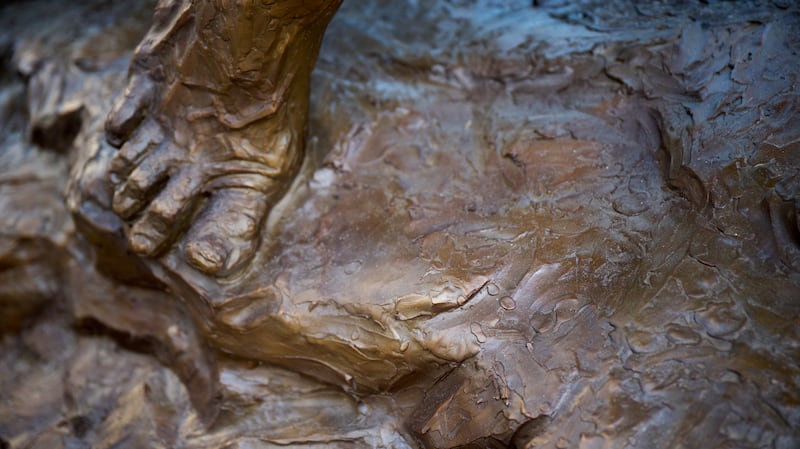
A few things that I could point out on that: I left Joseph barefoot. I felt that he knew the Bible, he knew the stories of Moses, of Moses going up on Mount Sinai and removing his shoes to be reverent, to honor God. That’s what Jehovah wanted him to do. and I thought: “Well, I love that idea.” There’s no doctrinal evidence that he did this, but I thought, “Oh, this would be such a great thing if he did something like this, if he went into the grove and removed his shoes.” And so I used some artistic license to show some symbolism there.
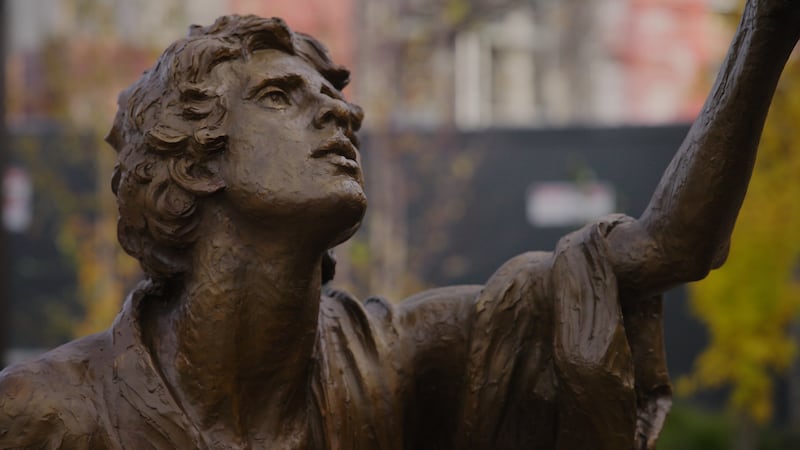
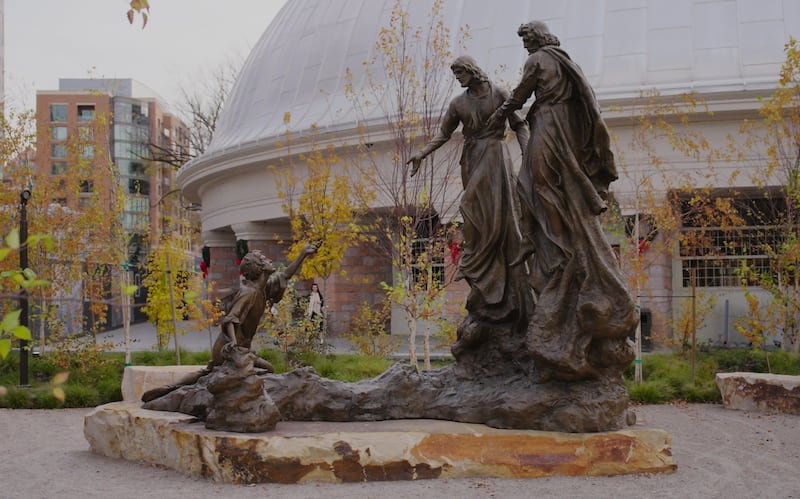
Another thing that I wanted to do was to make sure that there was no fear in his persona in this depiction. So I have him leaning towards the Savior and Heavenly Father, reaching out. Because I’ve seen depictions where it almost looks like he’s scared, he’s blinded, he’s leaning back. And I wanted to show maybe the opposite of that. Because I thought: “If I ever had that experience, I don’t think that fear would be part of the equation at all. You would be experiencing the most joy that you ever could experience.”
And so I wanted to show that. He’s reaching out towards Them. He wants to touch Them. He wants to be with Them. So I wanted to show that. And there’s a little bit of an homage to Michelangelo between Joseph reaching out to the Savior and the Savior reaching out to him. A little bit of an homage to the Sistine Chapel, where God is touching Adam’s finger. That’s something that comes from me. That was artistic license. Michelangelo has always been very important to me throughout my life, and so I wanted to pay homage to that in my own little way.
41:07
Jon Ryan Jensen: And it does tie directly to the command of Heavenly Father to Joseph when he introduces the Savior: “This is my Son, and I need you to listen to Him.” And now that moment is between the two of them, the Savior and Joseph.
41:23
Michael Hall: Yeah, that was another difficult aspect of this piece. When I started designing it, I kept getting this impression that — or a reminder that — this piece was not about Joseph, and it was about Heavenly Father, but that the focal point of this piece was the Savior. And so the impressions that I kept getting were, “You’re going to have to make the Savior the focal point, and that’s going to be difficult.”
And it is difficult when you’re depicting Heavenly Father, how do you make the Savior the focal point? And so I tried to do that with design, with gesture, where I have Heavenly Father elevated slightly, but the Savior is in front. So, Heavenly Father is giving the glory to His Son, putting His Son first and foremost in the piece. So, again, I don’t know if I accomplished it, but that was definitely my goal, was to try and make the Savior the focal point of the piece.
42:24
Jon Ryan Jensen: You and I spoke before we started recording, and I asked you if you had a scripture that you had leaned on. And you pointed back to 1 Nephi 19 and the challenges that the Savior would go through in mortality. And then you come back to the First Vision, and you talk about the tension, the challenge. They’re two different hards, so to speak, two different kinds of difficulty for you as an artist and two different periods of time for Him as the Savior.
How do you, in your mind, reconcile kind of the time and experience between the two sculptures of the Savior?
Michael Hall: That’s a tough question.
43:06
Jon Ryan Jensen: Because it’s two very different periods of time for Him, the two experiences that He had. And I wonder if there are parts of your testimony that were refined by those two distinctly.
Michael Hall: Definitely. Definitely, especially in hindsight. When I was creating the Station of the Cross piece — I had mentioned — we had gone through many difficult years leading up to that piece. And we were experiencing difficulties as I was creating the piece.
But in hindsight — and it’s interesting; I was talking to my wife about this yesterday — I really feel like those things that I went through, that I had to go through those things to be able to understand the pain that Christ went through for each of us physically and mortally, so I could try in some way to impart that into the work. And hopefully people would be able to feel that.
I didn’t fully understand that throughout the process when I was experiencing those things. I remember asking Heavenly Father: “Why is this happening to me? Why is this happening to my family? Because I’m doing everything that You wanted me to do.” And it was happening over the course of many years. And that was very difficult to understand at the time.
In hindsight, though, I really feel like everything I went through was leading up to this piece. Even after that time, I kept feeling impressions that I was not going to be sculpting these pieces the way that I was normally used to working. And that was hard for me too. That was a little irritating because I wanted to do things the way that I knew how or the way that I thought that I knew how. But I would begin doing something, and then I would get the thought or the feeling: “No, no, no, you’re not going to do that. This is what you’re going to do instead.”
And so I tried to have faith and act on those revelations. And again, I don’t fully understand why I did that. And maybe I never will in this lifetime. And maybe it’s not important that I understand. Maybe if I had done things the way that I wanted to, that I wouldn’t have been able to convey the Spirit in a way that maybe these pieces will be able to. I’m not sure.
So, as far as — going back to your question earlier — when I think about the First Vision depicting the Savior in the First Vision, this was a completely different experience because this is depicting the Savior in an exalted state, as God, as the Son of Heavenly Father, the Creator of the world. Yeah, this was a very daunting task.
I felt that the expression on the face, it was very important that I did certain things to make sure that it was a reverent expression, but that it couldn’t be an expression that would simplify or make light of who He was. I guess maybe — I can’t remember who it was that had seen the piece; it might have been someone from the temple project or someone in my family who had seen it, and they wondered why the Savior wasn’t smiling. They said, “Shouldn’t He be depicted smiling?” And I remember feeling early on: “No, that is not what you are supposed to do in this piece. This piece needs to command reverence and concern and the weight of the experience that Joseph was having.”
And so, yeah, it was a very different approach to creating the Station of the Cross piece when it came to depicting the Savior. Different models. I used different models. I used different works of art as inspiration. I was doing different studies. So, again, very miraculous experiences, but very different from the Station of the Cross.

47:27
Jon Ryan Jensen: Michael, thank you for sharing everything that you’ve shared with us today. We have a tradition on the Church News podcast where we like to give our guest the final word. And we like to give you that chance by asking you one final question, and that is: Having been through everything that you’ve been through leading up to today, what is it that you know now?
47:47
Michael Hall: What I know now is that Heavenly Father and Jesus Christ are aware of each one of us, and They are aware of our struggles and our trials, and They want to have a relationship with us personally. And that is up to us.
I, when I was on my mission, I received testimonies that God was real and that Jesus Christ was my Savior. But as far as having a close, personal relationship, that was up to me. And this experience creating these pieces over the past several years has helped me to realize that if I put in more effort to have that relationship, then I can have more of the revelation that I need in my life, more peace in my life, and the joy and happiness of knowing that Heavenly Father and Jesus Christ know me and love me. And what that means to me currently, where I am and where I’m going to be going in my life, I wouldn’t trade that for anything.
So, my advice for anyone listening is that those miracles that I’ve experienced, you are able to access those miracles in your life too. You just need to put forth the effort and put forth more effort than you are right now. And you might know what that looks like in your life. And if not, talk to a trusted friend or someone who has a strong testimony of Heavenly Father and the Savior. They can help you know what that is going to mean for you, whether that’s being more diligent with scripture study or praying more or attending the temple or being forgiving, or a combination of all those things.
But those miracles that I experienced, you are able to access those types of miracles in your life. I know that. And I am so grateful that I’ve had this opportunity. It’s been the best experience of my professional life. I know that God is real. I know that the Savior is real. I’ve had personal witnesses in the last few years that I couldn’t have had any other way. I love Them, and I’m grateful for Them. And I say these things in the name of Jesus Christ, amen.
