





Starting this week, youth of The Church of Jesus Christ of Latter-day Saints will shift from rotating each Sunday between their Young Women or Aaronic Priesthood classes and Sunday School classes to participating in both every week.
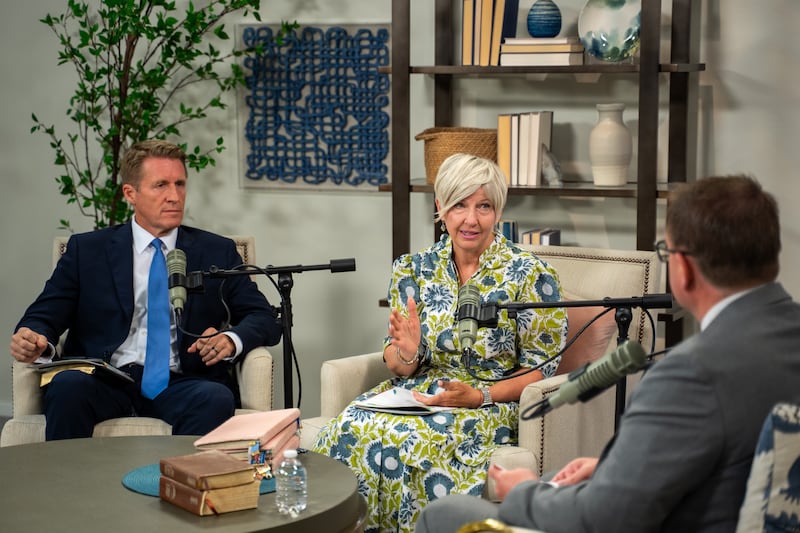
Young Men General President Timothy L. Farnes and Young Women General President Emily Belle Freeman join Church News editor Jon Ryan Jensen for this episode of the Church News podcast to talk about the way youth can develop into stronger disciples of Jesus Christ through these adjustments.
“It’s not just learning, it’s about living and becoming lifelong disciples of Jesus Christ,” President Farnes says in the podcast. Hear how he hopes the Sunday change will also bring about positive changes in the lives of the rising generation.
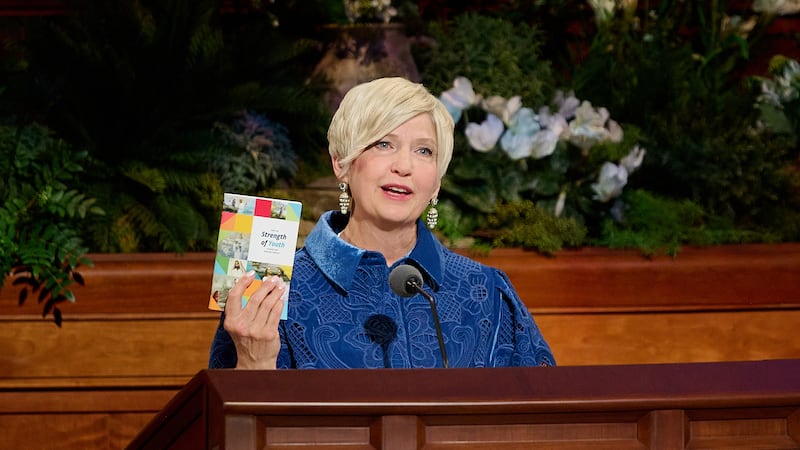
The two speak about the changes to the “For the Strength of Youth” guide and how that guide has changed in a way that matches the needs of youth today.
“We would refer to it as a guide for strength, and it’s a guide for finding strength in Jesus Christ. Because that’s what the youth today need to face everything that they’re up against,” President Freeman says in the podcast. “What we’re looking for now is much higher and holier than a guide of standards.”
Listen to this episode of the Church News podcast on Apple Podcasts, Amazon, Spotify, bookshelf PLUS, YouTube or wherever you get podcasts.
Transcript:
Jon Ryan Jensen: This is Jon Ryan Jensen, editor of the Church News. Welcome to the Church News podcast. Today, we are taking you on a journey of connection as we discuss news and events of The Church of Jesus Christ of Latter-day Saints.
Recently, youth who are members of The Church of Jesus Christ of Latter-day Saints around the world participated in a special fifth-Sunday lesson to help introduce them and explain what’s going to happen with changes coming to the second hour of their Sunday worship meetings. In those meetings, they talked about the new 25-minute Young Women meetings and Aaronic Priesthood quorum meetings.
And on this episode of the Church News podcast, we’ll talk about those changes and adjustments with Young Men General President Timothy L. Farnes and Young Women General President Emily Belle Freeman.
Thank you both for being here with us today on the podcast.
President Emily Belle Freeman: Oh, we’re excited to be here.
President Timothy L. Farnes: Yeah, thanks for having us.
0:47
Jon Ryan Jensen: You know, I think that these adjustments are things that members of the Church are just getting used to and trying to wrap their heads around with. But I want to start from the beginning.
What is it about the “For the Strength of Youth” standard guide, what is it about these lessons, that you really hope that youth will latch onto and get out of?
1:06
President Emily Belle Freeman: I think our greatest hope as we think about the youth of this generation and the great work that is theirs to help the world prepare for the Second Coming of Jesus Christ is to help equip them and empower them with the truths they need to know, not only to live the gospel but also to share the gospel.
We have the greatest missionary force that has ever served in this dispensation serving right now. We just hit 90,000 missionaries around the world. And this curriculum was partly designed to help them be able to live in the world that we live in, but also teach this gospel and have strong testimonies as they talk about Jesus Christ.
1:54
Jon Ryan Jensen: In our preparation for this, we didn’t talk about this, but I think that’s really an interesting comment because “Preach My Gospel” itself has undergone some different iterations to help the missionaries teach. And now this is kind of the pre-“Preach My Gospel” opportunity for youth to prepare to be missionaries.
2:10
President Timothy L. Farnes: I love it as well. It’s not just learning. It’s about living and becoming lifelong disciples of Jesus Christ. You’ll recall the warning from President [Russell M.] Nelson that in a coming day, it will not be possible to survive spiritually without the constant companionship of the Holy Ghost. And then President Oaks just repeated that or emphasized that warning again down at BYU.
That’s what this curriculum does for us. It helps prepare us for lifelong discipleship. It helps us live the gospel of Jesus Christ in a different way. And that’s what I’m so excited about, is the core doctrines that are being taught, the eternal truths, and then acting on those helps us, invites the Spirit to be with us. It gives authorization for the Holy Ghost to live constantly with us. And so I’m excited about what that offers the youth as they embrace this new curriculum and the “For the Strength of Youth” guide.
2:58
Jon Ryan Jensen: President, I think that can be really encouraging for youth and parents who are going into these new classes and this new format and thinking: “I didn’t have this ‘For the Strength of Youth’ guide. I didn’t have these lessons.”
What counsel would you give to those leaders and teachers who are coming into this a little bit, you know, feeling off-balance by the changes?
3:21
President Timothy L. Farnes: Well, it’s the doctrines. It’s the eternal truths that they have had. And maybe they’re being emphasized in a more particular way. It’s the strategies and counterstrategies we need for the day. And so I hope they would lean into it.

In a recent trip to Asia, we had question-and-answer periods. And I was amazed at all the questions asked by the youth and the Primary children around are actually questions that are found in the “For the Strength of Youth” guide, and they have questions and answers.
So, if you’re wondering what your children are thinking or having questions about, lean into the guide, and see what questions they may be having, and that’ll help you teach them more fully these eternal truths. So, embrace what you have before you.
4:03
President Emily Belle Freeman: And I think it’s interesting because we grew up in a time where the “For the Strength of Youth” guide was a guide for standards. And I would say we don’t refer to it that way anymore. We would refer to it as a guide for strength.
And it’s a guide for finding strength in Jesus Christ, because that’s what the youth today need to face everything that they’re up against. And as we talk about those quotes from President Nelson and then repeated again by President Oaks, what we’re looking for now is much higher and holier than a guide of standards.
President Timothy L. Farnes: Yeah, a guide of discipleship.
President Emily Belle Freeman: Yup, a guide of discipleship, a guide for finding strength in Christ.
4:50
Jon Ryan Jensen: I think that’s really good context. And it, “For the Strength of Youth,” is not the only resource available. There are lots of new resources available for the youth, their parents and leaders as well.
What of those options should they be leaning on the most? What should they be bringing with them to church? They need to gather all of that?
5:11
President Emily Belle Freeman: So, that’s so good. In the very first introduction of this new curriculum, a lot of people heard us saying this will be the curriculum for the youth program, and that is almost right. So I would love to just clarify that a little bit.
This will be the curriculum for fast Sundays. But for the second, third and last Sundays, you’ll actually need the curriculum that is found in the youth magazine, and we’ll talk a little bit about what that looks like digitally. So, every month this magazine will come, and it will come three weeks before the first of the month, hopefully. That’s what we’re shooting for.

And the last eight pages of every youth magazine will include the curriculum for the month. The curriculum is different than what the Church has ever done before for the youth, because it’s not as much a lesson as it is a discussion guide. That’s how youth are interacting right now. They want to sit down, they want to ask a question, and they want to discuss, “What does that actually look like in my life right now?”
And so each of these outlines is built around a discussion, not necessarily built around a lesson. And they’re all question-based discussions that we’ll be having every week. And each of these will point back to this, but you’ll need the second-, third- and last-Sunday lesson material here in order to have a full curriculum.
Let me say this, too, and you might want to give input. We have a lot of people asking questions about this magazine that we’re hoping will come to church with the youth every single week. And a lot of parents are saying, “What if I have more than one child in my home?”
Jon Ryan Jensen: That’s my case. I’ve got three.
7:02
President Emily Belle Freeman: OK. And we only get one magazine delivered. And so what are some of the ideas or solutions if that is true for you?
And a couple ideas if they want a tangible magazine, you could ask your ministering brothers or sisters, if they don’t have youth in their home, if they would order one for you and deliver it every month to one of your youth. This is also provided as a PDF digitally that you can print off for your other youth.
I was thinking the other day, I think I would have loved to have printed each of these off and put them in a binder where they could write on them and be keeping them. And so at the end of the year, they have — they can look back and see, “What did I learn, and what did I do?” But also there’s a digital resource.
7:53
President Timothy L. Farnes: The digital is remarkable as well, and they’ve done a great job having all the elements there, not only to study but the lesson plan and outline for all four weeks. And they can write notes and accept invitations, and that can keep track of those invitations for the young man or young woman. So there’s a lot of resources online available for them as well.
We just got back from Japan, and everyone preferred the online version in Japan. And so that’s what they’re leaning into. But I think the most important thing they bring is a desire to learn, to be a lifelong disciple. And with that desire, other elements will come along with it. You’ve got the magazine, the FSY guide, your scriptures, a heart ready to learn. It’s digitally. I think we’re covering all the bases as far as what resources they have available to them. Just come ready to learn what it means to live as a lifelong disciple of Jesus Christ.
8:42
Jon Ryan Jensen: I love the ability to keep those notes in the digital version, because if you’re going to be studying this for six years as a youth, next year when you come back to a similar lesson, you can remind yourself of what you felt a year ago. And those little spiritual promptings that you have recorded are great reminders.
President Timothy L. Farnes: It’ll give you prompts as well, as to what your invitation you accepted and “Are you remembering it?” And so it’s got a lot of resources online that are available to you.
9:07
Jon Ryan Jensen: And the printing version, you’re not printing the whole magazine. You’d only need to have the last eight pages.
President Emily Belle Freeman: That’s right, yup. You can just print those last eight pages. And so for youth who don’t have a phone yet, they’re not old enough to have a phone that they would bring to church, then that PDF or this magazine coming with them will be a great resource.
9:26
Jon Ryan Jensen: So, with lots of resources, we have dramatically cut the amount of time that we’re going to be using all of them in the class itself. And so we have parents and teachers who are saying, “How are we going to do all of this that’s being asked of us in 25 minutes?” Is there a magic-bullet answer for that question?
9:46
President Emily Belle Freeman: So, we’re actually excited for the 25 minutes. As we traveled around and visited youth classes, we noticed that usually the first several minutes — and by “several,” I mean 20 — were used talking about highs and lows. And as we counseled with President Oaks, he said we need to get into the doctrine sooner. He just felt really strongly about how we would get the youth into the doctrine sooner.
And we have a tradition in our family, and it is if you’re ever teaching a lesson or speaking in church, we have a standing invitation to invite people to open their scriptures within five minutes of starting the lesson. And each of these discussion outlines is built for that to work really well, that you can invite your class within five minutes to have opened up their scriptures to search for something in the lesson that will help.
And I think you will be surprised, if you are doing that, that within five minutes you are into the meat of the gospel of Jesus Christ, and you have invited the Holy Ghost to be part of that conversation.
And over time, I think we will realize that relationships will deepen in our classes and in our quorums, and testimonies will strengthen, because what becomes the priority of those 25 minutes is Jesus Christ and His gospel and His words. And I think we’re going to see lives change because of that.
11:28
President Timothy L. Farnes: Yeah, rather than maybe worrying about “What am I going to teach in that 25 minutes?” maybe it’s “How am I going to inspire, lift, encourage and help them have a greater aspiration to live like a lifelong disciple of Jesus Christ?” So maybe look at the classroom as the seven days of the week, and that time, 25 minutes, you’re coming together to learn how they lived the gospel of Jesus Christ during the week.
So it may require a little bit of preparation and helping them know what to study beforehand, or maybe an invitation on how to live during the week based on that monthly topic or theme. And then you come back and discuss it. So more about living the gospel in that seven days. How are you going to inspire them to live the gospel of Jesus Christ? That creates conversion in their lives.
12:15
Jon Ryan Jensen: I love that. And it’s a good question. And all of this, there is kind of the underlying question as well of: Who is doing that teaching and that inviting?
President Timothy L. Farnes: I love that question. I think too often we have turned it over completely to the young man or young woman. And I think there needs to be that — on a mission, you have a senior companion and a junior companion. In that companionship, the senior companion always assures that the doctrine is being taught and invitations are being extended.
And the same role applies to the adult leader in this relationship, where you want to come with experience and with wisdom and the ability to guide and direct the lesson so that the themes, the core doctrine, the eternal truths are being taught, invitations are being extended and accepted, and testimonies being born.
And then bring that young man or young woman in to testify, to teach where appropriate, and prepare them as a mentor during the week to be prepared to share a scripture or share an example or share a story, but they should never completely turn it over until they’re completely ready to assume that higher role or responsibility.
So the adult leader should really take an active role in making sure it’s done right, it’s taught right and that the testimony is born to create that vision and understanding and the ability for them to live during the week as a disciple of Jesus Christ.
13:39
President Emily Belle Freeman: I think it’s important that we look at how do we help someone grow into what it looks like to be a teacher and to be a discussion leader.
I had the opportunity in July to teach two of my grandkids how to ride a bike. Going through that process reminded me that there’s a lot of running alongside that takes place, and more than maybe we remember. And I think that is true for these lessons. It’s really important as we are preparing these young men and young women for missions and also for leadership in the Church that we take this time to do that training, to do that running beside and helping them.
And so, we don’t anticipate that our youngest classes would be handed an entire 25 minutes. We anticipate adult leaders modeling and mentoring what that looks like, particularly in those younger ages. A lot more of mentoring, especially adult mentoring and teaching, as we help the youth learn, “How do I lead a really good discussion, and what would that look like?”

14:57
President Timothy L. Farnes: Yeah, if the mentor’s role or the adviser’s role is more helping them live the gospel of Jesus Christ for six or seven days a week, and they’re coming together as Elder [David A.] Bednar said in the video, that we’re supposed to own our own learning and then come on Sunday prepared to talk about what we’ve learned during the week or how we’ve lived during the week.
Maybe it should be a whole class participation, where the mentor adviser is making sure that the youth are considering those questions during the week, not just one but all. And then they all participate in that engagement, and engagement invites the Holy Ghost.
And so, look at how you can create that environment of participation, of engagement, within your quorum or class for all to be involved on a Sunday to share what they’ve learned or lived during the week, rather than just one person having that awesome experience of teaching and participating.
15:57
Jon Ryan Jensen: And that means there need to be those daily habits and actions that they’re participating in as well.
President Farnes, in the video that you referenced, you talk about that. You talk about the daily habits of discipleship that the youth need to be developing.
How does class help bring about a culmination of those daily habits?
16:17
President Timothy L. Farnes: Yeah, the classes and quorums. The youth today want to participate. They want to be involved in the cause of Christ and be lifelong disciples. And so when they engage in His work and participate in His gospel, they want to share that. And so imagine a class or quorum when they’re coming ready to share how they’ve lived the gospel.
There’s a — in Alma 31, it talks about the Zoramites, who had fallen away a little bit from the church. And their, if you remember, their main issue was that they worshipped just one day a week, and then they came back the next week not having remembered their God during the week to worship again. To some degree, we fall into that at times.
Well, the Savior gave the perfect pattern in 3 Nephi 17, I think it’s verse 3, when He said, “Go to your homes, ponder on the things, then pray about these things, and then prepare your mind and heart to come back again and share.” And so, as we go to our homes, let’s consider what it means to ponder, to pray about, to prepare or engage or act in the doctrine or the eternal truths that we’re learning, the invitations we’re accepting. And then come back ready to share.
And then it becomes a lively discussion of, “This is how we’re living.” And that’s exciting to be involved in a cause like that. Sure, it’s about learning, but it’s not just about learning. It’s about living as lifelong disciples of Jesus Christ. If we’re not living, we’re not having the full experience of what it means to be a disciple. And so that requires daily engagement, like the Savior taught, less like the Zoramites and more like the Savior taught in 3 Nephi 17.
17:51
Jon Ryan Jensen: President, that reminds me of recently, my own daughter started a new season of soccer. And over the summer, there was not a lot of practice. The teams were not getting together. And in their very first few days of practice, the coach said, “I can tell which ones of you were practicing every day at home, running every day at home,” because when it comes down to the moment where you have to do the thing, you can tell if the habits have been built up. And similarly, I hear what you’re saying. They’re not showing up on Sunday empty and waiting to be filled, but full and ready to share of what they have.
18:21
President Timothy L. Farnes: Yeah. If we’re not able to survive spiritually without the constant guiding, comforting companionship of the Holy Ghost, then we’re going to have a hard time at life.
Elder [Richard G.] Scott gave a promise a long time ago about engagement. When we engage, when we participate, when we act, we invite or authorize the Spirit to be with us. And so that daily engagement is important to survive daily. And lifelong discipleship begins with daily discipleship. That’s what it’s all about.
18:55
Jon Ryan Jensen: President Freeman, you in the video talked as well about how this daily engagement, how this weekly engagement, is going to help the youth be prepared to serve as missionaries, which we mentioned already.
What is the role of these classes over six years in helping prepare a valiant missionary force?
19:16
President Emily Belle Freeman: So, as we think about these youth and as they are preparing to go on missions, we want them to enter into the MTCs and enter into those situations ready to teach, equipped and empowered to be able to teach the gospel of Jesus Christ. And for those who don’t serve missions, they will go into situations where they are leading in Relief Societies or in other ways.
And, again, we want them to leave this program equipped and empowered as lifelong disciples of Jesus Christ to be able to do that and do it well. And as you look through this guide, there have been several things that are different now. We’ve gone from five chapters to 12 on purpose. There are things we want the youth to learn that they weren’t learning previously. And it is principles and doctrine that will help them know who they are and whose they are, and then prepare them to go out and share that with the world.
If you look at the table of contents now in this FSY guide, you’ll notice it’s very different than what it looked like before. And if you take time to look at it in order of how it goes, you realize that every single chapter builds on the chapter before.
And so it starts out teaching them, “God has a plan for you,” and then: “He wants to communicate with you. He knows you, and He’s going to speak to you.” And then: He’s going to tell you His great work for you, and you’re going to be able to understand that. And Jesus Christ will help you in that great work.
And if you walk in God’s light, if you invite the Spirit to be your friend, it will increase your spiritual capacity. You’ll be able to love God and love your neighbor. And that will lead you into understanding ordinances and covenants. First, the Aaronic Priesthood ordinance and covenants of baptism and the sacrament, and second, the Melchizedek Priesthood ordinances and the covenants that we make in the temple.
And as all of that happens, you’ll begin to realize that you are blessed by priesthood keys and authority, and then you’ll enter into that higher relationship and commitment with God of understanding not only that your body is sacred but also the truths that will set you free. And all of that together is going to help you find joy in Jesus Christ.
And as we look at that, those 12 things tied together, we realize that these youth are going to leave this program after six years, and they will have become something. I also love, as we think about our missionaries, that every March, we will be focusing on what it looks like to live as a missionary, being ready always to share the gospel of Jesus Christ. And that whole entire month, every single year, will be focused on the great work that is ours as we help build the kingdom of God.
22:36
Jon Ryan Jensen: The weekly breakdown of these lessons is intentional as well. So, you talked about the 12 lessons, or the 12 chapters, but now every single week, there is a specific reason that certain things are being studied. And there are some nuances here as well, recognizing that we have some different schedules that happen.
Do you want to talk a little bit about that as well?
22:57
President Emily Belle Freeman: Yeah. So, it’s fun as you look at these, and you’ll see when you get in here that we have labeled these lessons “fast Sunday,” “second and third Sunday” and “last Sunday.” And maybe you’re wondering why we didn’t just say first, second, third, fourth Sunday. Why are we having this fast Sunday and last Sunday differentiation? And that actually becomes really important.
Because of the four lessons, we hope that the fast-Sunday and the last-Sunday lessons are never missed. Depending on what’s happening in a year, we don’t always have four lessons in a month. If it’s Easter, if it’s Christmas, stake conference, general conference, then there’s only three Sundays available that month.
And so what we hope is that on every fast Sunday — which, we always have 12 fast Sundays; it might be at the end of a month, it might be in the middle of a month, it might be the first Sunday of the month, but no matter what, you’re going to have that. And you will always teach out of this on fast Sunday, and you will always accept an invitation on that fast Sunday.
Do you want to talk about that for just a minute before I go into second, third and last Sundays? But just that idea of accepting that invitation?
24:12
President Timothy L. Farnes: Yeah, I think it’s a powerful opportunity to look at the topic every month — so the eternal truths being taught, the doctrine being taught — and then tie it together with that invitation. So we’re learning once again what it means to act, to live the gospel of Jesus Christ. So every fast Sunday, they’ll have the opportunity to accept an invitation and then work on something during the month.
I’d maybe tell those advisers to maybe look at the last Sunday and look at the “become statement” and how that become statement might apply throughout the month or might help them look at their teaching or invitations or the way they inspire to lead up to and build up to that become statement at the end.
And maybe it’d be OK to recite that become statement at the fast-Sunday lesson and the second and third and even the last, so it becomes a little more powerful. There’ll be one for all 12 of the months, all 12 of the doctrines, and it always starts with “I am a beloved son or daughter of God, and He has a work for me to do.” And then it leans into the doctrine of the month.
And so it helps them go a little deeper on a theme that’s important for them to remember who they are and whose they are. And maybe it’d be all right for them to recite that at the beginning of every lesson to kind of bring the Spirit in and recognize the Savior and the work He has for them to do here on earth. Those become statements are powerful that happen in the last Sunday of the month, and there’ll be one of those for all 12 of the months.
25:39
Jon Ryan Jensen: And it does help with that unity right at the very beginning, to come right together and say, “This is the thing that we’re going to talk about today.”
President Timothy L. Farnes: And it’s a shorter statement. It’ll help them understand who they’re to be as a father, a husband, a wife and a mother, and as a missionary, as a disciple of Jesus Christ. I think it’ll be more meaningful to them as they, every week, potentially, recite, “I am a son or daughter of God, and He has a work for me to do” and then understand more fully what that is and then live that during the month.
26:05
President Emily Belle Freeman: Yep, and how it ties to that FSY chapter. And the girls will start out, “I am a beloved daughter of heavenly parents with a divine nature and eternal destiny,” and then they’ll go into what that becoming statement is. And those statements are found right at the very top of the fourth-Sunday lessons, or the last-Sunday lessons. And that’s why the last Sunday is the other lesson you will never miss. So you always do the fast-Sunday lesson, and you always do the last-Sunday lesson no matter what.
Now, the second- and third-Sunday lessons, you can accordion as you need to. So either you could combine questions from both, if that’s what you want to do, or your presidency and your adviser over that presidency can pray and think about, “Which of these two lessons does our class need the most?” And then you’ll choose that second- or third-Sunday lesson.
But fast Sunday, no matter where it falls in the month, will always be the FSY guide. And the last Sunday, which could be the third Sunday or could be the fourth Sunday, would be this becoming statement and what we learn from that. Fifth Sundays are always the bishop’s Sunday. So He chooses what happens on those Sundays. That does not come from this.
Jon Ryan Jensen: But that means that there’s always a gospel principle story arc each month. You have a definitive beginning, a definitive end, and that middle portion is where there’s a little bit of wiggle room.
President Emily Belle Freeman: That’s right.
President Timothy L. Farnes: That’s right.
27:37
Jon Ryan Jensen: OK. Well, I’m looking forward to starting this out and seeing exactly how this works. And it’s going to be a growth period for everybody involved — teachers, leaders and the parents.
President Emily Belle Freeman: It is. And I might add one thing that has been interesting to people as we’ve taught. When I first came into this calling, people wondered about this new guide. They weren’t sure if it was going to work the way the old guide did, and they a little bit missed the standards. People would say to us all the time: “We actually don’t know how to use this. We don’t know what we’re supposed to do with this.” And as we prayed about that and thought about that as presidencies, we realized this is a principle-based guide. And in order to understand —
Jon Ryan Jensen: It’s not a rule book. We used to see it as a rule book. It’s not a rule book.
28:20
President Emily Belle Freeman: Yeah, it’s not a rule book. It’s a principle-based guide now. And in order to understand how to use a principle-based guide, you actually need to understand the doctrine behind the principles.
And so, what the second and third Sundays give us is the doctrine behind each of the principles in these chapters. So, a great example is in October, we’ll be studying “Your Body Is Sacred.” This is a chapter that a lot of parents ask us about. They feel like: “We don’t understand how we’re supposed to use this chapter now. The other standards guide was maybe easier for us.” And as we thought about that, we were like: “Oh, it’s because what you really need to understand for ‘Your Body Is Sacred’ is actually the law of chastity and the Word of Wisdom. And if you understand both of those things well, then the principles in this guide are going to be able to help you.”
And so every month in the second- and third-Sunday lessons, you are going to find doctrine that will strengthen these principles. And as the youth come to know and understand the doctrine, this guide is going to become everything they need to live as a youth in the latter days.
29:46
Jon Ryan Jensen: That’s powerful. There’s a lot of power that comes in that learning and then having that as a guide that supports the doctrines you already understand.
I’m struck by what you both said as you talked about the beginning of that last-Sunday lesson and reinforcing the divine nature of each individual when they say that, what that means is they’re repeating that to themselves. I think it’s also fair to say that as youth, there might be some of them who are questioning: “Do I really come from a loving Heavenly Father? Do I really have a personal Savior?”
What would you say to them to help them know that this is going to help answer those questions?
30:27
President Timothy L. Farnes: Yeah, give it a chance. Those are the right questions to be asking, and they have every right to feel the witness of the Spirit that they are sons and daughters of God and He has a purpose for them here on earth.
And so as they lean into reading this and understanding it and in the scriptures and daily prayer and turning to their Father in Heaven in prayer, they will feel a witness of that Spirit that they are His sons and His daughters. And I leave that witness with them and that promise that they will have that witness from the Spirit. So, continue forward, and seek Him daily, and you’ll feel that witness. I promise you that.
31:05
President Emily Belle Freeman: I think one thing that they’ll notice is different and that I think will help with that is in those last-Sunday lessons, after they learn those becoming statements and they say those and it becomes part of who they are, we’re going to invite them to turn into pages of scripture.
And the young men are going to go into pages of scripture, and they are going to see scripture heroes, these champions who lived these values and lived them well, and what they can learn from them. And for the young women of the Church, they will turn into pages of scripture. And they will see women who were difference-makers, who were decision-makers, who were out living the gospel in powerful and important ways.
And they will see: “What does it look like to find my identity in Jesus Christ? And what does that look like in my home? And what does that look like in my community?” And these youth will be patterning their lives after men and women in the scriptures who were powerful witnesses of Jesus Christ and this gospel.
32:22
President Timothy L. Farnes: It’s important to recognize that those scripture heroes turn us to the Savior. They’re exemplifying what it means to be a disciple of Jesus Christ.
My grandson once went around the room and asked what our favorite scriptures or heroes were in the Book of Mormon. We all responded with the common Alma and Ammon and Moroni and Nephi. And then we turned to him, and at 6 years old, we said, “What’s your favorite story in the scriptures and your hero?” And he thought for a minute, and he said, “Mine is the story of Jesus Christ.”
And so hopefully on every page, we’ll find that story of Jesus Christ. He is our strength. And whether it’s a story of one of these scripture heroes or something else, we’ll recognize who and whose we are and who gives us that strength, and that is Jesus Christ. And we continually lean on Him and rely on Him in all things, in all ways.
33:12
Jon Ryan Jensen: Well, President Farnes and President Freeman, I think this has been a really good conversation with very useful information for everyone as we begin to make these changes.
As the two of you know, we have a tradition on the Church News podcast of giving our guests the last word. And I would love to do that again with you today. President Farnes, I’d like to start with you, and then President Freeman, if you’ll conclude for us today.
But this question is the same: What is it that you know now, having gone through this process and had this discussion?
33:40
President Timothy L. Farnes: Well, I’m grateful for this opportunity to speak to the youth of the world. They are so amazing, incredible in every way, and they’ve been saved for these latter days with purpose and reason. And I pray that they’ll be able to live up to that privilege and blessing and opportunity that’s theirs as sons and daughters of God. They’ll recognize more fully by leaning into these doctrines, these eternal truths. And accepting invitations to act as a disciple of Jesus Christ every single day, they’ll feel His love in a more abundant way and recognize the confidence they should have in who they are and recognize the purpose they have in this life.
And I pray that they’ll feel His warm embrace every single day and know of their goodness and His love and confidence in them, and that they’ll know of our confidence in them as well and they are incredible, and pray that they would know and feel that. And I express my love to them as well. But more importantly, they’ll feel God’s love in this curriculum and meeting weekly, but in leaning into what it means to be a disciple of Jesus Christ.
I’m grateful for this opportunity once again. I’m grateful for the Lord’s hand in this work and in His preparing the youth for these last days, and also in preparing this curriculum and other things. But I pray that they’ll bring their desire to learn, their desire to live more fully as a disciple of Jesus Christ, however small that may be at this point, and just exercise even a particle of faith, just begin to live as a disciple of Jesus Christ.
I pray that they’ll know more fully who they are and whose they are as they turn daily to their Father in Heaven, who loves them perfectly and who provided a Savior, a perfect Savior, to help them and strengthen them and give them capacity beyond their own on a daily basis, and then will fully rely on Him who is their strength, even Jesus Christ.
And I witness of Him and testify that Jesus is the Christ. He lives, and His greatest desire is to walk with you every day. And He’s there for you in all ways and in all things. And I testify of that in the name of Jesus Christ, amen.
35:53
President Emily Belle Freeman: That’s an interesting question at the end of three years. I actually haven’t taken the time to think about it in that way until just right now. And I don’t know how many people will know that this has been three years in the making. And as I look back over what it took to get us here and what it took to get us here, and I think of that question, “What do I know now?” I know that the Lord is aware of His youth. I know He trusts them.
I know that He has spent time inspiring and helping His leaders to know how to equip and empower the youth of this generation. I know that our greatest work as leaders right now of this generation of youth is to prepare them for the Second Coming of Jesus Christ. And what we have here are the things that are needed now to prepare these youth for what is ahead for them. And I look back over the past three years, and I see His hand, and I see how we were led and how we were lifted for this moment in time to prepare for what will be ahead.
And what begins on Sept. 6 will be a remarkable time of growth for the youth. That is what I see. It will be a time where these youth have the opportunity to choose to become lifelong disciples of Jesus Christ, and then to choose to learn and to live, as you have talked about, in a way that they never have before, and to bring their friends with them.
This will be a remarkable time. And these youth have been saved for this moment in time. And I look at this, and what I think to myself is, “We believe in who you are, and we believe in who you will become.” And there is a great work ahead for all of us. And I am so excited to see where this leads. And I leave that witness in the name of Jesus Christ, amen.
Jon Ryan Jensen: Amen.
