



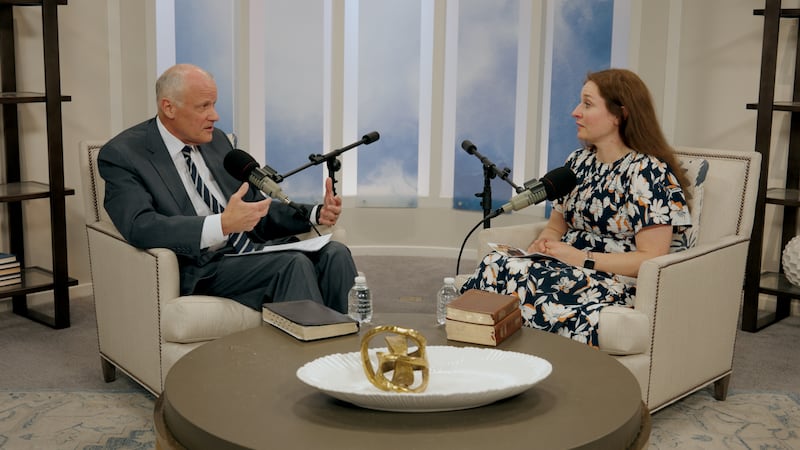


Starting in September, members of The Church of Jesus Christ of Latter-day Saints will again participate in three meetings on Sundays. After sacrament meeting, the second-hour will include two 25-minute blocks to ensure both Sunday School and then Relief Society, elders quorum and youth classes.
These updates are meant to support members as they learn, worship and serve — both at home and at church, as they try to become more devout and lifelong disciples of Jesus Christ.
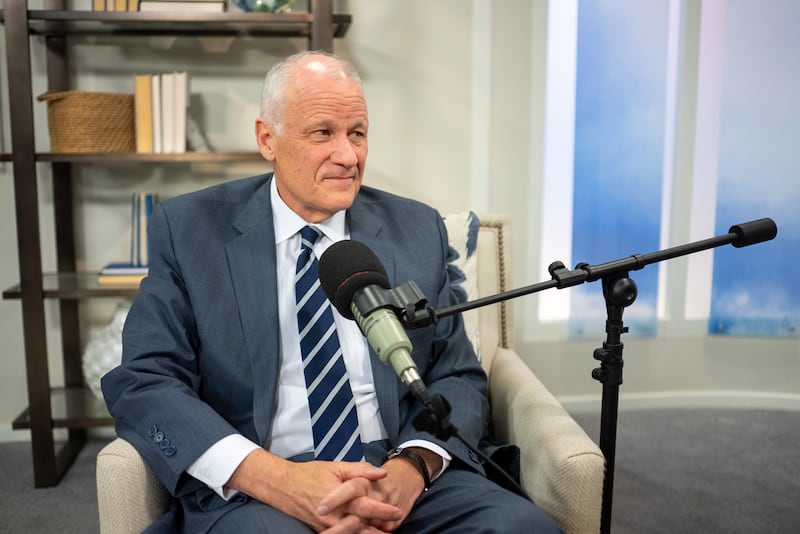
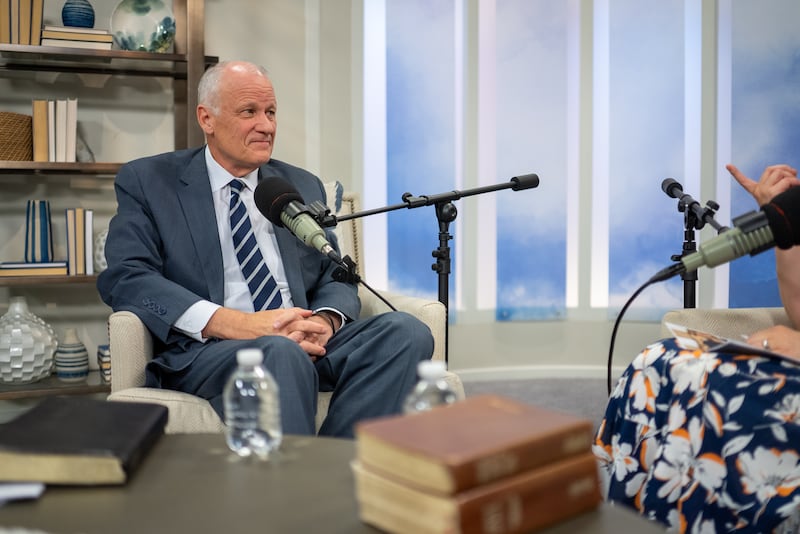
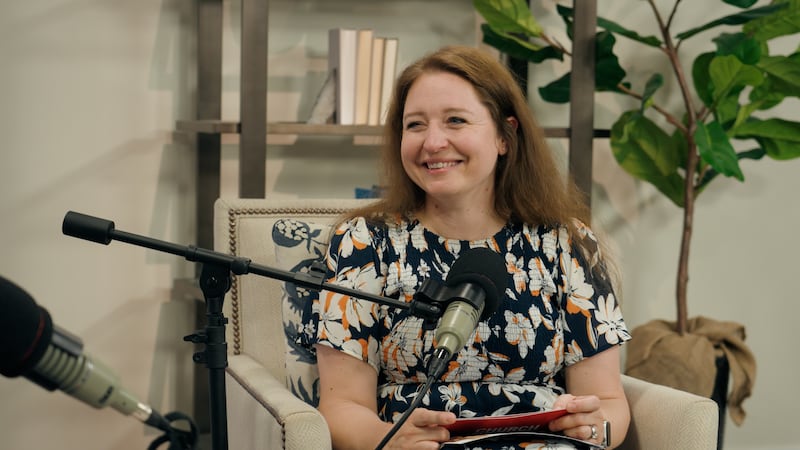
Elder David P. Homer, a General Authority Seventy and executive director of the Church’s Priesthood and Family Department, joins Church News reporter Mary Richards to explain what to know about the changes and how to prepare.
Listen to this episode of the Church News podcast on Apple Podcasts, Amazon, Spotify, bookshelf PLUS, YouTube or wherever you get podcasts.
Transcript:
Elder David P. Homer: This may be less about me being able to demonstrate my mastery of the information. It may be less about me sharing content from my favorite podcasts. There’s nothing wrong with podcasts. Here we are. They have their place. But I think this is more a deliberate effort to immediately get into what the scriptures or what the conference talks are teaching us so that we have the opportunity to discuss our experience with those things.
0:37
Mary Richards: This is Mary Richards, reporter at the Church News. Welcome to the Church News podcast. Today, we are taking you on a journey of connection as we discuss news and events of The Church of Jesus Christ of Latter-day Saints.
Starting this September, members of The Church of Jesus Christ of Latter-day Saints will have the opportunity to meet every Sunday in all of their classes and meetings.
So, how will this work, and how will we prepare? Joining me on this episode of the Church News podcast is Elder David P. Homer, General Authority Seventy and executive director of the Church’s Priesthood and Family Department.
Welcome, Elder Homer, to the Church News podcast.
Elder David P. Homer: Thank you. Happy to be here.
1:19
Mary Richards: Let’s talk about the logistics and timing of this change that’s coming up in September. Why is this happening?
Elder David P. Homer: Well, I think this starts probably, maybe the best context for that is what President [Dallin H.] Oaks said when he became President of the Church, when he just simply taught us that “Jesus Christ is the way.”
This is part of a long-going effort on the part of the Church to try and help members to become more devout and lifelong disciples of Jesus Christ. And I think that’s the place to start with really everything that’s happening. Of course, there are other things that will happen because of what’s going on here.
One of the other things that I think will be a great benefit of this is that this will connect what’s happening at home with what’s happening at church in a more direct way. And people might wonder: “What do you mean? What does that look like?”
Well, adults in the Church were only studying “Come, Follow Me” every other week. And then every other week, they were in priesthood quorums and they were in Relief Society. They were talking about general conference messages, all wonderful things. But they didn’t have the same experience that the youth were having or that the Primary children were having, where they had the opportunity to be discussing and studying that week’s study from “Come, Follow Me” every single week.
And so, one of the things that happens with this new schedule is that Sunday School meets every week, and we now have an opportunity to literally connect what’s happening at home with what’s happening at church for everyone. And so this is going to strengthen the home-centered and Church-supported changes that were announced a few years ago.
And there will be other things that will come, but I think those are some of the major things that will be beneficial about the change.
3:21
Mary Richards: When people ask why, we can point to these reasons in particular.
Elder David P. Homer: Yeah. I mean, I think this is everything in the Church right now, is an effort to try and help people to become converted and to be lifelong disciples of Jesus Christ. We all understand that starts at home and that what happens at church can help, but it starts at home. And this has a chance and the opportunity to strengthen that.
3:46
Mary Richards: You know, another benefit I love that was pointed out, besides these beautiful focuses, was to increase belonging in Church community and gathering as well. When we are meeting every week with each class, each quorum, each group, there’s more belonging that happens too.
4:03
Elder David P. Homer: Yeah. I mean, there are a couple of other things. One is that when we have the opportunity to be together every week, it doesn’t feel quite so disconnected.
The old schedule, which was fine, was a bit disconnected because I was only in Relief Society or in elders quorum every other week. And now it literally is every week. And so we’ll see each other in that setting every week.
The other thing that this does is it creates a space which allows for more discovery around some other things. And so the schedule will actually allow us to discuss more general conference talks because we’re doing it every week as opposed to every other week.
The other thing that this does is it gives us an opportunity to teach youth and Primary children some really important things that are in “Come, Follow Me” but can use more emphasis.
5:06
Mary Richards: Let’s go through each of those groups, then, about what this means for Sundays. And maybe we’ll start with the youth, this idea that they will be together each week. And there’s a slight change, too. We’ve been talking about the youth curriculum and the expansion, really, of the “For the Strength of Youth” guide. And that is connected to this as well, the 12 chapters now instead of what they had before.
5:29
Elder David P. Homer: The “For the Strength of Youth” guide used to have five chapters in it. It’s now been expanded so that it has 12. And the reason for that is, No. 1, that it gives us a chance to study some of these important principles and doctrine that maybe we weren’t getting with as much frequency before. The other thing is that now we have 12 chapters, and what happens is those 12 chapters, then, anchor the learning experience in the last part of the second hour for Young Men and Young Women.
I would also add that not in September, but in January, there will be a change in instruction for Primary children, which is very similar, with lessons that are contained in the “Come, Follow Me” materials. But instead of studying those once a quarter, they will study those lessons once a month on fast Sunday every month.
6:27
Mary Richards: Wonderful. I’m in my ward Primary presidency. I’m really looking forward to that — and having Primary children and youth in my family, this is exciting to think about what they will be learning on Sundays.
But also, like you said, “How can I be supporting them at home?” In our “Come, Follow Me” study, in these other ways of studying, we already have the new “For the Strength of Youth” guide for my boys. These are things also that maybe our listeners should be thinking about.
This isn’t something to leave for their teachers to do on Sunday, right? We’ve got so much of a purpose at home.
6:57
Elder David P. Homer: Yeah. I think there are two parts of this. One is I do think it strengthens what happens at church. But the purpose of that is to try and connect it to what’s happening at home so that the Church-supported part of home-centered, Church-supported is more effective. And that’s what some of this is intended to do.
7:22
Mary Richards: Yeah. Now, is Sunday School and Gospel Doctrine, for example — and you’ve told me this, and it made so much sense — we’ve, in meeting every two weeks, we had, what, about 50 minutes to go through two weeks? Now we have each week to go through that one week of material we’ve been reading at home.
7:37
Elder David P. Homer: Yeah. And I think initially when the changes were announced, people struggled to get their head around, “Wait a minute, 25 minutes, how does that work?” One of the points in that is what you just said, which is actually we have the same amount of instruction time. It just actually is structured differently. And then what we’re learning is that these 25-minute periods can be very effective if they’re approached in the right way.
8:04
Mary Richards: We’ve learned that in Primary. We’ve had our singing time for 25 minutes and then class time for 25 minutes. With that transition, our little children, we get them right to their classroom, and we’re going to start teaching.
I think there might be some who think, “How am I going to get down the hall to this classroom in this short amount of time?” It can be done.
8:23
Elder David P. Homer: It can. Think about what our high school students are doing. They’re moving from one class to another across an entire building, and they do it in five minutes’ time, and they don’t seem to have a problem with it there. This is different, maybe, than what we’ve had, but because it’s different doesn’t mean that it’s bad. We do have to be deliberate about it.
Everyone is mindful of the fact that we want church to be this warm and welcoming and very strong place where people belong. But maybe we can do that in moments that are not the transition periods, but other times. And I think if stake and ward leaders are really deliberate about that, they can think about how they can create those opportunities for that socialization.
So, we don’t lose it, because nobody wants to lose it. But I think we’re very capable of making the schedule work. Primary children have been doing this for about seven years, and it works just fine.
9:27
Mary Richards: One thing a lot of people are talking about is getting right into a lesson. There can be a lot of things that take our time in the beginning of gathering as a group or a class or a quorum.
What are some ways that maybe we can be better at getting into using the time wisely that we have?
9:43
Elder David P. Homer: I think this is such a good question. And maybe it’s one of the things that people are wrestling with the most. I think what we know is that we can do it. And it just is a matter of approaching things a little bit differently.
We’re not going to have time to do highs and lows the way that we used to. We’re not going to have time to let everyone in a class talk about what their week was like. Those are good things, and we can find opportunities and venues to do those things. When and where we say the themes in the Young Women classes or in the Aaronic Priesthood quorums, those are just all things that leaders are going to have to work their way through.
But I think what we know is that the greatest impact is going to come if we can just very quickly get into the material and the discussion that is there. Some of these other practices that we’ve had — which are good practices and are certainly very well-intended — will probably just have to be accomplished in a different way.

10:54
Mary Richards: Yeah. If I see my ministering sister in the hallway, I’m going to link her arm, and we’re going to go to Relief Society together, and then let’s talk after. “Let’s set up a time, and I’ll come see you.” And even though it might be tempting to just sit and chat with her forever on the couch, I can get to Relief Society with her. I say that for me, really. Whoever else listening, I don’t know what they do.
11:13
Elder David P. Homer: Well, we all love to see each other at church. It’s one of the joyous things about going to church, is that we have friends there, we feel like we belong there. And of course, we want to have those interactions. And these changes are not intended to diminish that at all. It’s just this is a way for us to achieve some of those other things that we’ve been talking about.
11:36
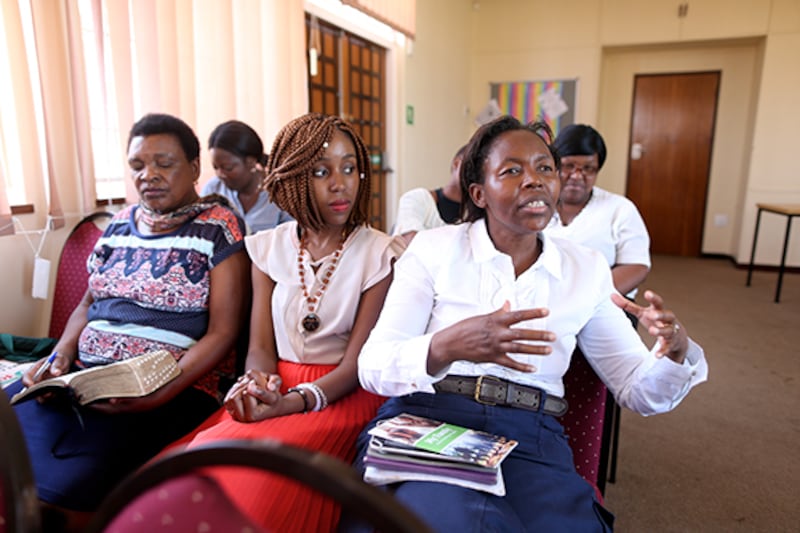
Mary Richards: So, we’ve talked a little bit about Sunday School and that with “Come, Follow Me,” our teachers can get right into the scriptures, and “Let’s bring out some principles, and let’s talk about what you’ve been learning at home.” Elders quorum and Relief Society, they’re talking and going through general conference talks.
And I think about something beautiful that President Camille N. Johnson, our Relief Society general president, talked to the Church News about recently, which was this idea of counseling kind of being a practice for this. We’ve been counseling in our Relief Societies for a while. Let’s use that concept to then talk about principles from these general conference addresses and get right into this doctrine and the gospel of Jesus Christ.
12:17
Elder David P. Homer: I think President Johnson teaches that so well. We’re just in the next step of this. We don’t take time at the beginning of the class to do the counseling anymore. And we’re talking now specifically to Relief Society and to elders quorum.
We don’t take that time at the beginning the way we used to, but we use the skills that we developed, and then the focus of the discussion becomes different. It’s not me repeating what the general conference talk said. It’s more of a discussion about: “What does that conference talk mean? What in that conference talk is important?” And maybe most importantly, “How does that relate to how I live my life or how we live our lives or any of the things that we do?”
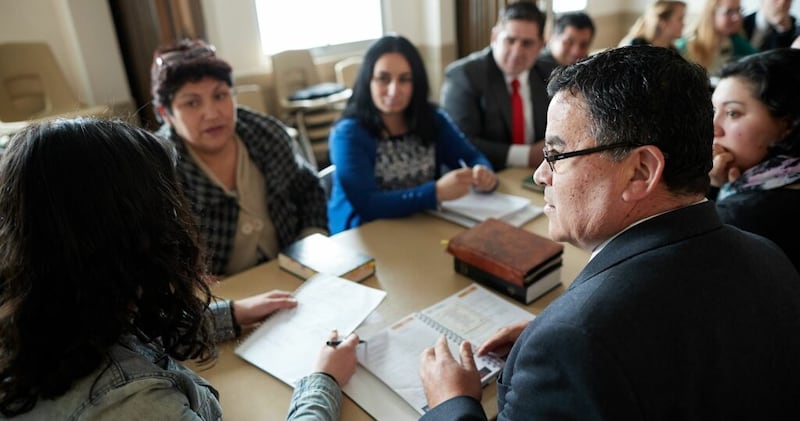
And so this is really just applying the skills that we’ve already developed. And the nature of the lesson is maybe different than some people think about lessons to be. Sometimes we perceive ourselves as, “Let me stand up in front of the class, and let me impart this important information that we have.” And that for sure is part of it. But it’s really more about helping people to share what they’re thinking, what they’re feeling and what they’re experiencing.
Because when people talk about what their experience is with the doctrine, when they talk about their experience trying to apply it, my experience — and maybe yours is the same — is that I feel the Spirit very strongly in those moments because I know what they’re talking about is real.
And so, not just in Relief Society and elders quorum, but thinking now back to Sunday School, this may be less about me being able to demonstrate my mastery of the information. It may be less about me sharing content from my favorite podcasts. There’s nothing wrong with podcasts. Here we are. They have their place. But I think this is more a deliberate effort to immediately get into what the scriptures or what the conference talks are teaching us so that we have the opportunity to discuss our experience with those things.
14:47
Mary Richards: In talking about Sunday School, what can a Sunday School presidency do to help with these changes?
Elder David P. Homer: I think one of the exciting things about this is that the new schedule actually allows teacher council meetings to be held with more frequency than they were before. And so, if I teach in Relief Society or in one of the priesthood quorums or in Young Women, during Sunday School, we can have a teacher council meeting. If I teach in Sunday School, we can have a teacher council meeting that’s held in that last period.
We’re now asking that those council meetings be held once a month. And we can do that now because the schedule allows for that to happen. And so, one of the things that Sunday School presidencies can do because of the new schedule is that I think they have a bigger opportunity to do the teacher council meetings on a more regular basis, which will help teachers remember that this is not so much about the knowledge that I can impart and is more about the experience that we’re helping people have when they’re together.
16:10
Mary Richards: I’m hearing, too, some thoughts for myself on better preparation as a teacher, maybe some inspired questions to ask. But also as a participant, that home piece of this, studying and reading a conference talk ahead of time. It’s right there in my Gospel Library app, it tells me what we’re going to be reading this next Sunday. Or “Come, Follow Me,” it says right there in my Gospel Library app, “This is where you are for our reading for this week.” These are ways that we can be prepared for this in September and not be too worried about what it’ll look like.
16:44
Elder David P. Homer: And of course, if I don’t have a chance to prepare and I come, I will still benefit.
Mary Richards: Yes.
Elder David P. Homer: But, if I have had a chance to prepare, even if it’s just a little bit, the experience will be richer because I will be able to understand what other people are talking about and also be able to share what my experience has been. And as President Oaks and others have taught us, actually when we verbalize the feelings that we have, it helps to build our testimonies, and it helps to strengthen our conversion.
17:25
Mary Richards: Putting it into words; your testimony grows as you speak the words out loud, really.
Elder David P. Homer: It does. And I know that’s a strange way of thinking. And when President Oaks taught about it, he said, “This is different than sometimes we think about it.” But here’s one of the remarkable things: that when we talk about what our experience is with the principles, with the doctrine, with our application of those things, it actually strengthens our testimony of that.
17:58
Mary Richards: I also love, like you mentioned, we’ll now have an opportunity to study more of these general conference addresses from our First Presidency members, from the Quorum of the Twelve Apostles. These messages, invitations, promised blessings that can truly enrich and bless our lives by studying them more deeply for the following six months.
18:18
Elder David P. Homer: It’s interesting that if you look at the number of opportunities that we’ll have to study a conference talk, the number of weeks available allows us to almost cover every talk given in a general conference. That was not the case before. Of course, we always want to prioritize what the First Presidency is saying, what members of the Twelve are saying, what general officers are teaching about their organizations and things. Those will always be a priority. But this actually gives us the opportunity, literally, to almost go through everything.
And then, at least my experience with that is that when I do that, suddenly I find that there are themes in conference that actually I missed the first time through. And that helps me to think about, “Well, what was it that God was trying to communicate to the Church, to the world, to me?”
And that happens as I get a chance to spend more time with more of what happens in conference. Because even though so many of the talks in conference are not given an assigned topic, there’s always a divine orchestration that comes together. Elder Gerrit W. Gong, I’ve heard him talk about that, that there’s this divine orchestration that comes when you look at the messages in total. It’s like, “Oh, ah, OK, that’s what He’s trying to help me understand as I’m trying to see this.”
And so this will be a tremendous blessing for us to be able to spend more time with more of those messages. Maybe people know, maybe they don’t know, but those who are preparing to speak in conference spend a lot of time on their knees, and they just labor over every single word, trying to get it to the right place and trying to have it be the message that they feel that the Lord wants them to deliver.
20:19
Mary Richards: Yes. And we can trust the Lord that these messages are for us right now and for the future. These are prophets, seers and revelators, and they’re giving us what we need to hear now and down the road.
20:32
Elder David P. Homer: President Henry B. Eyring taught a number of years ago that if we bring our problems, if we bring our questions, to conference and we listen to the messages with an open heart, we find that the Lord will answer our questions, that He’ll calm our fears, that He’ll give us the strength and courage that we need to go on. It’s a wonderful blessing.
20:54
Mary Richards: You’re making me excited for this change in September. And I keep thinking, “Well, why don’t we just start that this Sunday? Why don’t we start right away?” But there’s some preparation that can take place.
What are some of the things that teachers and leaders and members can look forward to in preparation for this coming in September? Trainings and other resources that are on the way and a fifth Sunday in August, too, I believe.
21:17
Elder David P. Homer: Yeah. This is exciting, and we would all love to run and start as soon as we possibly can. This is a worldwide Church, and we have parts of the world where it will be important to take some time to make sure that we’re prepared and we’re ready to do this.
The single-best resource that I could just point people to would be sunday.ChurchofJesusChrist.org. If you search for that, it will take you to a landing page that has all kinds of resources on it. There are actually 17 different questions on that landing page that, if I want to know, “Well, what’s the format of this meeting?” it’s on that landing page. If I want to understand, “Why did the Church make these changes?” it’s on that landing page. So all kinds of different questions are answered there. There are links to an implementation guide, which you have right there.
Mary Richards: I printed it out, actually.
Elder David P. Homer: Which really, what it does is it really does two things. The first thing that it does is it describes the flow of activity, everything from the announcement of the changes that are going to happen all the way through Sept. 6, when the whole Church then begins this new schedule. And it details the steps that come in all of that. This is available in 24 languages, and everything was available on June 1. So this is something that people should be able to get in their languages and be able to do that. We felt like that was important so that people would be able to spend some time and then with their ward councils think about: “OK, how are we going to do this? What changes are we going to make? How can we help to do all of those things?”
23:14
You mentioned the fifth Sunday in August. Let me talk about that, and let me talk about then the first Sunday in September. In the implementation guide, what you will see is a description of what’s supposed to happen on those Sundays, including some discussion questions that members can use as they’re in those meetings.
On Aug. 30, which is the fifth Sunday in August, before the whole Church starts the new schedule — so we’ll still be in the old schedule — but youth, children who will turn 12 in 2027, their parents and their leaders are invited to attend a meeting where there will be a video presentation that describes the new youth curriculum. And it’ll explain the expanded “For the Strength of Youth” guide. It will explain that there are supplemental materials available to help with the study of that that will be printed in the For the Strength of Youth magazine and also will be available in the Gospel Library.
That focus on Aug. 30 will really be about: “What are the changes to the schedule for youth? How does that period for young women, how does that period for Aaronic Priesthood holders, how does that work?” Of course, if a bishop decides that he’d like the whole ward to see that, they could involve the whole ward. But it’s designed for youth, for Primary children that’ll be turning 12 in 2027, for their parents and for their leaders. The reason that we put it on that day was so that when they get to Sept. 6, they can just be right into it.
So, the first thing is that there are some video resources that have been prepared. The first part of that is what would be used in that Aug. 30 time together, as I’ve described. Then on Sept. 6, when the Church starts the new schedule in Sunday School and then in Relief Society and in elders quorum, there will be additional video materials available to members of the Church that will describe what happens in Sunday School now, for example.
And it contains a wonderful example of a Sunday School teacher who shows how to get into a lesson in less than two minutes and shows what it looks like to have people sharing what they’re learning and what it looks like to only really talk about the most important things, because you’ll never have a chance to talk about everything. And so in Sunday School, adults and youth will have a chance to understand how Sunday School works.
26:13
Another part of what will be included in that Sunday School session is a wonderful video by Elder David A. Bednar and Elder Patrick Kearon, where they talk about Sunday, and they talk about sacrament meeting. Because in the middle of all of this, we don’t want to lose the fact that sacrament meeting is what is so important to what’s happening on that day. And so there will be a video, some instruction. The implementation guide has questions that members can use to talk about, “OK, what do we do at sacrament meeting?”

Another thing that will happen in that meeting with elders quorums and with Relief Societies is there will be a presentation, a video presentation, by President Camille N. Johnson, general Relief Society president, and Elder Arnulfo Valenzuela, who’s a member of the Presidency of the Seventy. They will talk a little bit about what’s supposed to happen now in this new format in Relief Society and in elders quorum.
And all of these videos actually have some very practical advice to be able to do that. These will all be available for the Church to see in the first week of August. So we’ll have weeks of time to digest them, plan how to use them and do all of that.
And so, the implementation guide that we’ve been talking about does those two things. It kind of generally talks about, “Here’s the way it works from announcement until we start.” And then it has actually outlines for each one of these classes that I’ve talked about, which include discussion questions that help us think about, “All right, we’re in a new situation, and how do we make this everything the Lord intends it to be?”
28:11
Mary Richards: Let’s involve Him in this, yes. And stay tuned, as they say. These resources are coming. These videos are coming. And they will be, it sounds like, greatly beneficial and helpful to us.
You mentioned sacrament meeting, and I would love to get your thoughts on how we can keep that — and I know, like you said, videos are coming and more on that.
But how can we make sure that this is such a focus of our Sabbath worship at church? We’re talking about the second hour, but sacrament meeting is also so crucial.
28:37
Elder David P. Homer: Yeah, and we don’t want the excitement, or maybe even the apprehensions, that people might have about the second hour, we don’t want that to crowd out the fact that sacrament meeting remains that most important moment where we have a chance to make covenants that will change who we are as people.
When we think about sacrament meeting, there are some basic things that I think we all would understand, and when you talk about them they seem obvious, but sometimes we may not spend as much time actually just thinking about them and what they do. And so I think about two dimensions of that. One of them is the preparation side of things, to make sure that we’re ready to provide that kind of experience for people. And the other is focus.
And so, what does preparation look like? Well, it means that the meeting space is clean, that it’s orderly, that it’s ready to receive the Spirit when the right kind of content and material is there. It means that we’re prepared to offer a welcoming environment. Young women welcoming people as they come to church with a smile and warmly inviting them to come and participate in the meetings. Young men who are participating in that ordinance who understand the sacred opportunity that they have to bring those emblems to members who are making covenants that will strengthen them in their lives.
And there are things we can do to make sure that those young men understand the ordinance, that they understand how to perform the ordinance without drawing attention to them. The sacrament is prepared well in advance. We’re not scrambling at the last minute trying to make sure that the preparations are finished.
And so, there are a lot of things that we can do in advance that will help to make the environment such that the Spirit will feel comfortable there. But of course, that happens most often when we’re focused on the Savior, we’re focused on the things that He taught. And so our focus would lead us to have talks that are concentrating on Him and His teachings, and there would be music that would be coordinated with those messages, and the tone and the feeling would be something that would have been considered ahead of time.
These are all just practical things. But if a ward council can spend some time with the bishopric — and the bishopric has the responsibility for sacrament meeting — but if they can spend some time talking about, “How do we make changes, or what do we reinforce, what do we keep doing, that will make sacrament meeting the kind of experience that it should be?” Then all of these changes come together to achieve what they’re intended to achieve, which is to help us be devout, lifelong disciples of Jesus Christ.
32:06
Mary Richards: Yeah, and prepare for His Second Coming, yes. The ward council and the stake council, they have some responsibilities here, some privileges, some ways that they can help with as we prepare for September as well.
Elder David P. Homer: They do. I think the simplest way to think about what stake and ward leaders can do is go to the landing page that we talked about, become familiar with every part of that, with every resource that is available. Pay particular attention when those Aug. 30 materials and the Sept. 6 materials are released so that they are familiar with them, they can help to make sure that wards and branches know where to find them, they can help the leaders in wards and branches, or the wards and branches can make sure that their teachers are familiar with those kinds of things.
This is just a deliberate consideration of, “How do we help the members in our ward or in our branch to make this change?” And again, change is not always easy, and it’s easy to try and poke holes in what the changes are. But I really believe that when we just embrace them and we just start to go forward with what we have here, I think members are going to be genuinely delighted with what they find their experience is.
33:36
Mary Richards: Let’s trust in the Lord. That scripture just popped into my mind from Proverbs: “Trust in the Lord with all thine heart; and lean not unto thine own understanding” (Proverbs 3:5). He will direct us, and we’ll be OK. We’ll be all right.
Elder David P. Homer: In recent general conference training, Elder Dale G. Renlund just talked about the implementation of this is going to be really important for us to realize the blessings that the Lord wants to shower upon His people. And that’s why we’re taking as much time as we are; to make sure that we’re able to facilitate that change.
I might add that in addition to the resources that I’ve mentioned, another thing that’s available in two locations in the Gospel Library, one of them is that landing page that we talked about. The other is in the Handbooks and Callings section, if you go to the general conference leadership materials. We’ve actually posted a panel discussion that Elder Renlund led with members of general organization presidencies that talk about all the ins and outs and the nuances of these changes, so many of the questions that people will have.
And so, when you find those resources, what you’ll see is you get a chance to hear what Elder Renlund said as we were getting ready to begin that panel discussion. You’ll also have a chance to hear what he said at the very end, which includes this comment that I just made about implementing this is an important part of the Lord being able to bless His people with the things that He wants them to be able to have.

35:22
Mary Richards: I love, too, that they’re modeling that discussion and counseling then that maybe would be a good thing for me to take to my own ward council, that idea of communication.
This is wonderful. There are resources there. And we’ve talked about those that people can look to and look forward to.
Elder David P. Homer: And we just want people to know that they’re there. And we’ve tried to provide some time so that members, leaders, ward councils, stake councils can actually spend some time with them and talk about what the implications are of what they’re learning.
35:57
Mary Richards: As a mom of some young men, I am really interested in the new youth curriculum. Let’s talk a little bit more about that.
Help me through what’s changing for the youth curriculum.
Elder David P. Homer: I mentioned this before, but this is an opportunity for us to teach young people some really important foundational things about the gospel and importantly about who they are. And so, if you look at what the new chapters are in the “For the Strength of Youth” guide, they cover important topics like “God has a plan for me” and “God wants to communicate with me,” “I can understand what priesthood keys are,” “I can understand why ordinances are important.” There’s some really important things that we get a chance to talk and to cover with them.
But if I can, let me just talk a little bit about, first of all, again, the resources that are available for this, where you can find them, but also to talk about the structure of the lessons for youth. And so, these resources, what the youth will do is they’ll use the “For the Strength of Youth” guide that has been shipped to units all over the world. And it should be in people’s hands already. And if they haven’t, they should find out why not, because these were shipped in the month of April. And so everyone should be able to have their own copy of the “For the Strength of Youth” guide.
That guide, as we talked about, has 12 chapters. And then, in the FSY magazine, there are additional lesson materials. Every month, we’ll have eight pages of materials that are intended to be used during the lessons, and also as ideas for activities when young women and young men come together for their activities.
Every month, the magazine will have these eight pages, which are intended to help to support their study of the “For the Strength of Youth” guide and apply it in their lives. Of course, it will be available in the Gospel Library in a digital format as well.
38:15
Let me just talk about how the lessons are supposed to work for a minute more. Because the Church’s schedule is variable — sometimes we have holidays, sometimes we have stake conference — if we talk about “first Sunday,” is it the first Sunday after the stake conference? Is it the Sunday before? We get a little bit confused about that. What you’re going to see is that the lessons reference fast Sunday and the last Sunday. And then there are lessons that are available to be used in the other weeks of the month.
The reason that we’ve done that is because the first Sunday lesson, which is where young people actually go into the guide, they study the eternal truths, they accept invitations, they consider the promised blessings on the fast Sunday, that that topic is considered. That’s kind of the anchor of the study for the month, and they start there.
On the last Sunday of the month — which, again, can be affected by stake conferences or holidays or whatever — on the last Sunday of the month, they are going to study a few different things. They’re going to study — this is really a time for them to consider: “Who am I? Who am I becoming? Who does the Lord want me to be?”
And so, in that last Sunday lesson, young women are going to study scripture heroes, women from the scriptures that demonstrate the principles that they’ve been studying all month long. Young men will have the same experience, where they study about scripture heroes that are men who are in the scriptures that typify what they’ve been studying that month.
40:14
And so there’s the fast Sunday lesson, which is the anchor and introduces the topic for the month. There’s the last Sunday lesson, which is intended to be a bit of a summation of what they’ve been learning, but really importantly allowing them to consider who it is that they are and who they’re going to become.
And so, in that lesson, there’s actually a statement that just talks about, “Who am I becoming?” And they’re going to talk about that as part of that lesson, because all of this is intended to help young people to better understand the truth and then consider what the implications are and how to apply it in their lives.
And so, not only are the materials important, not only is how we approach it important, but actually the sequence of the lessons is important. And if you have to make a trade-off, don’t lose the fast Sunday lesson, and don’t lose the last Sunday lesson. Make it one of those other lessons that are intended to support what you started to learn in the “For the Strength of Youth” guide.
41:29
Mary Richards: This divine identity is so crucial — who they are, why they’re here, who they can become. And those anchor pieces are what build that.
Elder David P. Homer: They are, and what we know about this generation is they are precisely who they were prophesied to be. Young people throughout the world are participating in the Church in higher numbers than ever before. This generation is amazing.
We can help them consider more about who they are intended to become. We like to talk about — the Children and Youth program has three pillars to it. It has gospel learning, it has service and activities, it has personal development. And those are great. But actually, if you think about it, those actually have intended outcomes.
And so we like to talk about gospel learning so that “I believe in Jesus Christ,” service and activities so that “I belong to Jesus Christ and to His Church,” and personal development so “I become who Jesus Christ wants me to become.” We want young people to believe. We want them to feel like they belong. And we want them to know who they are and who they are intended to become as this generation that has been prophesied will come.
43:03
Mary Richards: That is beautiful. And this is all inspired. All of these things are coming because we have a prophet on the earth today and other leaders who have said: “Let’s do this. Let’s move forward.” I love that. Thank you.
Elder Homer, I’ve so enjoyed our time together today on this episode and all that I’ve learned and looking forward to more. Our last question on the Church News podcast is always, “What do you know now?” And it’s an opportunity for our guests to have the last word.
And so, I would love to know what you know now about home-centered, Church-supported worship to bring us closer to the Savior, Jesus Christ, and progress along the covenant path.
43:46
Elder David P. Homer: Now, I know that you ask that question at the end, and so I gave that a little bit of thought before we came together. And I just found myself thinking about a scripture in the 14th chapter of John. This is verse 6: “Jesus saith unto him, I am the way, the truth, and the life: no man cometh unto the Father, but by me.”
I think the thing that I appreciate now more than I’ve ever appreciated before is the fact that this is the true and living Church of Jesus Christ and that He actually leads it personally. He inspires people. He inspires processes. He inspires considerations and discussions. And we’ve been working on this for a long time. He’s blessed us with prophets and apostles who have the ability to understand what His will is.
As I’ve watched this process, as I’ve been part of these discussions, I think the thing that I’ve come to appreciate more than anything is that He is the way. He is the life, and He is the truth. And in response to all the commotion and to all the chaos and to all the confusion of the world that we live in, His message is so simple: “Come, follow me.”
And so He’s trying to help us understand: Here are some ways that we can take a step closer to Him. Because as President Oaks told us, “Jesus Christ is the way.” I know that for myself. And I say that in the name of Jesus Christ, amen.
46:15
Mary Richards: Thank you for listening to the Church News podcast. I’m Church News reporter Mary Richards. I hope you learned something today about The Church of Jesus Christ of Latter-day Saints and had your faith in the Savior increase by looking through the Church News window as a living record of the Restoration. Please subscribe, rate and review this podcast so it can be accessible to more people. And if you enjoyed the messages we shared today, please share the podcast with others. Thanks to our guests and to others who made this podcast possible. Join us every week for a new episode. Find us on your favorite podcasting channels or with other news and updates about the Church on TheChurchNews.com or on the Church News app.
