





President Dallin H. Oaks, President of The Church of Jesus Christ of Latter-day Saints, has taught that the doctrine of the Church centers on the family. But marriages and birthrates are declining in places around the world — and so is dating.
The National Dating Landscape Survey, published earlier this year, looked at the opportunities and challenges of dating across the United States. Researchers found that young adults want serious relationships but are experiencing a dating recession, with only about 1 in 3 young adults actively dating.
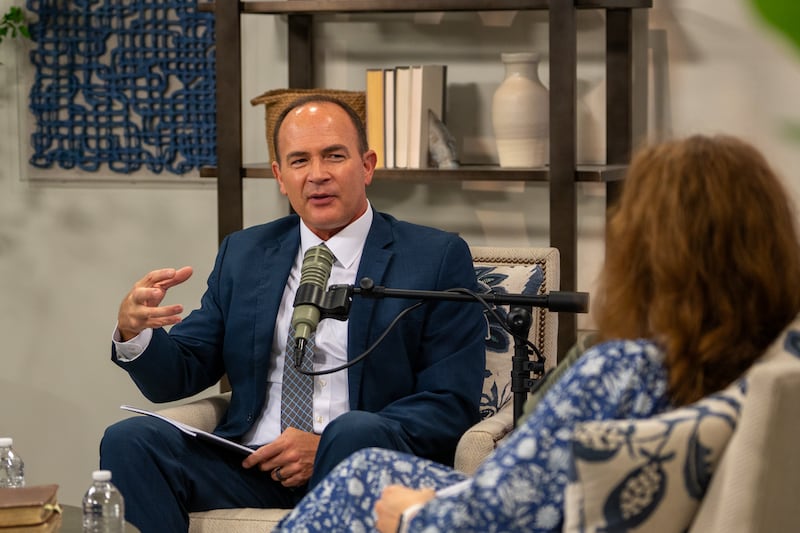
Jason S. Carroll, the Family Initiative director at the Wheatley Institute at Brigham Young University and a marriage preparation teacher for 20 years, joins Church News reporter Mary Richards to talk about the patterns found in this research and what the positive outliers can teach about creating a better dating and marriage culture.
Listen to this episode of the Church News podcast on Apple Podcasts, Amazon, Spotify, bookshelf PLUS, YouTube or wherever you get podcasts.
Transcript:
Jason Carroll: I have a little bit of trouble with the term “single” and “single adult,” because in God’s plan, nobody is single. Nobody is isolated or alone. We’re all a part of God’s family. But He’s also created this plan that gives us this deep opportunity to create marriages and families. And He cares deeply about that. He will bless us. It is truly His divine institution. We should trust in that providence.
0:26
Mary Richards: This is Mary Richards, reporter at the Church News. Welcome to the Church News podcast. Today, we are taking you on a journey of connection as we discuss news and events of The Church of Jesus Christ of Latter-day Saints.
President Dallin H. Oaks has taught that the doctrine of The Church of Jesus Christ of Latter-day Saints centers on the family. But marriages and birth rates are declining around the world, and so is dating. Researchers looked at the dating recession, what is happening and what can be done about it.
And joining me on this episode of the Church News podcast is Jason Carroll, the Family Initiative director at the Wheatley Institute of Brigham Young University and also a marriage preparation teacher for about 20 years.
Welcome, Jason, to the Church News podcast.
Jason Carroll: Thanks, Mary. I appreciate the invitation.
1:13
Mary Richards: I love that you have been a marriage prep teacher and also a professor at the School of Family Life at BYU, and now this Family Initiative director.
Jason Carroll: Yeah, this last summer, as a little stunt, I passed year 25 at BYU. So I’ve watched my students come onto the faculty and had some neat experiences. But yes, interacting with the students in marriage prep has just been a highlight of what I’ve been able to do in my time at BYU.
1:37
Mary Richards: Yes. You are teaching what you hope will happen: good marriages. Tell me about this research, “The Dating Recession.” And I’ve seen headlines pulling from this research from BYU and also the Institute for Family Studies together. Tell me about what you’ve found and some of the things.
1:55
Jason Carroll: So, back in 2025, we conducted a study that’s been referred to as the “National Dating Landscape Survey.” We surveyed over 5,000 young adults across the United States, ages about 22 to 35. And we just wanted to get a sense of what the dating landscape was. What were the opportunities? What were the challenges? Just to get a better sense of what was happening.
We published a report in February of 2026 that we released through the Wheatley Institute that was entitled “Dating Recession,” as you used that term, because one of the overall findings that we found was that only about 1 in 3 of young adults today are active daters, which was defined as going on at least one date, a date at least once a month.
And so that’s where I think a lot of the tension is, is that it’s called some conversation to a bit of this eroded dating culture. And we also were able to highlight that this isn’t a dating culture that’s by design. This is not what most young people said they want. They desire relationships. They desire the opportunity to move towards serious relationships.
So, the report just spends a little bit of time digging into the deeper understandings around that dating recession. There’s just a shifting and a change. And we’re also finding that the social script is a little bit different. So sometimes parents and other adults in the lives of young adults aren’t always sure how to navigate these online dating, other patterns in the timing of the scripts.
We’ve also done some research around things like AI companions and other kind of counterfeit connections that are all kind of in this mix. So this whole landscape is just shifting and changing. And what it’s creating, and what we can probably talk some more about, is we’re finding that it’s going to move us towards more of an intentional approach as parents and young adults themselves. How do I intentionally approach my dating experience, my dating opportunities, because the culture isn’t doing the greatest job of spontaneously creating those.
4:06
Mary Richards: Yeah. Yeah, I’d love to talk through that. So, we have these findings that you’ve found, and then we can talk about what we learn from that and the approach we can take from this, because we don’t want this to be all doom and gloom.
Jason Carroll: No, no.
Mary Richards: People are listening, thinking, “Oh no.”
4:19
Jason Carroll: And let me just say from the output, that’s one of our main ideas at the Wheatley Institute. We all see these big trends, and usually about once a week we get some new trend about the decline of marriage, the decline of family, decline of birth rates.
While those measures of central tendency, the middle trend line, if you will, the averages and whatnot, they don’t tell the full story. Because inside of those trends are also what we like to call positive outliers. So we can talk a bit about — we’ve been trying to — what do we learn from the positive outliers? What do we learn from the active daters? What makes them active daters? What do we learn from those that are marrying and forming families and have above-replacement fertility families and all these types of things? So there’s a lot of lessons from what is going right, although the headlines tend to emphasize what’s going wrong.
5:14
Mary Richards: Yes, those takeaways that only 1 in 3, like you said, not dating. Or young adults lack confidence in their dating skills was another. All these takeaways, let’s look at these and then see, “OK, but what are we learning from the positive outliers?”
So, some of these key trends, they lack confidence, or the dating culture isn’t quite what they would like to see towards forming a serious relationship. And then also some of these really struck me, as I’m starting to raise young adults myself, this idea of maybe some past hurts and past experiences, heartbreaks or rejection.
5:51
Jason Carroll: Yeah, we were surprised by that too. There’s a fair amount of — it seems like the need to help encourage what I call “rejection resilience,” that there’s been some negative experiences or maybe some efforts at dating that haven’t gone well. And many of the young people in our survey reported that they continue to hold onto that, and it makes them reluctant to kind of try again or put themselves back out there.
But there is some truth to the old adage that “love favors the bold,” and there’s a little bit about being, staying courageous and recognizing that those rejections are almost always a pretty thin slice. This isn’t a full evaluation of you as a person and who you are.
So, how can we stay a little bit resilient and not overly — it’s a little bit easier said than done. I appreciate that. But yeah, that element of staying committed to: “This can work out. I can keep taking —” It only takes once, right? You only need that one to go into work. So those things are meaningful.
6:52
Mary Richards: Yes, all of these I just love. And when we were talking about this too, what you’ve learned, and I love lists, and so we’re going to kind of go through some of the things you’ve learned from these key trends that now we’ve turned into your 5 C’s.
Jason Carroll: Yeah, the solution. So, in addition to this study, we’ve been paying a lot of attention in the Family Initiative at the Wheatley Institute around family formation and “What do we learn from these positive outliers?” And we organized it around these 5 C’s that I think are helpful for parents and leaders and for young adults themselves to say, “This is where we see things working.”
So, the first C, which won’t surprise anybody, is conversion. We see that young people, both inside and outside of the Church, who have sacred meaning when it comes to marriage and family, when they see this as something of God, something of the divine. And in the restored gospel of Jesus Christ, we’d emphasize marriage is a divine institution. This was created by our Father in Heaven as much as He created the earth, He created our bodies, He created marriage. And it’s as much a part of His plan for our eternal destiny as any other part of His plan.

So, when there is that conversion, the data is just very clear. Highly religious young adults are more likely to date. They’re more likely to marry and form families than are less-religious and nonreligious young people. So, in some ways, that gets us a little bit back to our bread and butter, so to speak. This focus on helping young people have deep experiences with the Spirit to feel their own sense of conversion. But we can add to that a conversion to the gospel of Jesus Christ, to the Atonement of our Savior.
But also in some very significant ways, a testimony around the centrality of marriage and family in that plan, that these are Christ’s doctrines. These are His teachings that are emphasizing this for our good. That’s all pretty important in a world today that often tends to cast marriage and family as a transition of loss. A lot of the talk is about what you’ll give up, what you’ll miss out on, what you’ll lose out on. This divine institution clearly is not only for our benefit now, but it’s a part of our eternal destiny.
So that’s a key part to start with as parents and others, that it’ll always be anchored to that first C of conversion. And plus, I think this also gives more confidence that if this is God’s institution, He will bless and help us. I watch young people — it’s been just a sweet, sweet thing to watch over my years at BYU — watch these young people who will go to the world and serve missions and accept these calls. And there’s this confidence that comes from: “This is God’s program. I was called by a prophet. I can go to the other side of the world and speak another language or go to a state that I’ve never been to or these types of things.”
It’s that same type of faith that we have to help foster in understanding marriage and family as God’s divine institution. His providence is there to bless His missionaries, but His providence is also there to bless His young couples and marrieds and families and all of those challenges that can come in family life, but gives us that rich meaning and purpose tied to that part of the plan.
10:33
Mary Richards: Oh, I love that. I’ve often thought that social media, depending on the algorithm and what you get sucked into, we could see more happy examples, more of marriage, of love, of dating. All those things could be out there.
Jason Carroll: Life is hard. Inside of families, outside of families, inside of marriage, outside of marriage. And so it’s appropriate to teach about the challenges, about preparation, about readiness. But we really miss something if we also don’t share the meaning and the purpose and the deep value that comes from that.
And again, in the marriage research, we find this to be the case as well, that there’s greater levels of happiness for those patterns of being highly religious, the married and family life pattern of it. So these narratives about the transition of loss, not only do they not match the fundamental teachings of the gospel, they don’t match what we see in the relationship sciences either.
So there can be some confidence there as we help young people have that first core vision that comes from being converted to the gospel of Jesus Christ and the centrality of marriage and family in His plan.
11:43
Mary Richards: President Oaks just teaches so strongly about the family as well. Some joyful experiences with — he’s always, it feels like, posting pictures with his grandchildren, great-grandchildren. We recently at the Church News were with him at a family reunion with an extended family. We see that joy and that beauty.
And I tell my children too — and maybe this is helpful, maybe not; you’re a professor, I’m going to get your advice on my family —
Jason Carroll: Careful.
12:09
Mary Richards: I’ll tell them Satan doesn’t have a body or a family, and so he’s going to be attacking those things. And so once you recognize that, then maybe you can then think, “Maybe I’m looking at some of these messages I’m receiving with that critical eye, and let me look at these positive messages that build my trust and my testimony in the gospel instead.”
Jason Carroll: I love what you’re saying there. Because you tie that to our understandings of eternal life and that this life is about preparing us for that, which when we have that deeper appreciation that eternal life is much more about living like our Father in Heaven, not just living with Him, then I think we have those broad understandings of: “We are here to gain a body. We’re here to become like our Father in Heaven in body. We’re here to become like Him in spirit and to grow spiritually and to learn to choose righteousness and to love righteousness and desire righteousness.”
But we are also here to become like our Father in Heaven in family. That’s another way that we were different than our heavenly parents in the pre-earth life and now.
13:17
Mary Richards: Right, that conversion. I love that. With that, then, with that conversion, that seems to me to kind of build to this idea of having confidence. Is that another one of the C’s?
Jason Carroll: Yeah, and that’s the second C. We extend it a little bit. The positive outliers research tells us that there are some unique patterns that young people can embrace. And here’s a good way to capture it. As I’ve been teaching the marriage preparation courses at BYU the last 20 years, I will ask the classes early in the semester, “How many of you have heard that there’s a 50% divorce rate in the United States?” Every hand goes up. It’s now just become this key understanding.
But as I probe a little deeper, I find that most of them think that that means that marriages are a 50/50 coin toss. And that gives them a lot of anxiety. And I tell them, “If your marriage is truly a 50/50 coin toss, you have my permission to be very anxious and be very concerned,” because who wouldn’t be?
Unfortunately, what we have not done a very good job of helping the rising generation understand is that not all marriages are created equally. The divorce rate, for example, is not uniform. And so while we look at an average that moves — and it’s not quite 50%; it’s actually gone down from that now and is closer to about 40% — but even then, that’s that center point, and you’re not looking at the positive outliers.
So what we do in the marriage preparation course, what I do in my course, is we talk about — I use the phrase of “a true temple marriage,” and we talk a bit about the idea that temple marriage isn’t a designation of where the marriage takes place, or at least it should be more than that understanding. It’s actually the designation of a type of marriage. And if we look at what our prophetic leaders and the scriptures and the gospel plan teaches, it emphasizes unique preparations, unique patterns, unique priorities and ultimately unique promises for a type of marriage that would be a true temple marriage that is living to that.
I mean, think about the emphasis right now by Church leaders around young people prioritizing their endowment and receiving their endowment. That is a form of preparation. If you truly live to ready yourself for covenants in the temple, that is a different form of preparation and readiness than you would see in typically for other foundations of marriage and family life. We teach and emphasize patterns. For example, the young people and couples who follow the law of chastity, the relationship sciences show that those individuals do better in marriage, have lower divorce rates. So a lot of this is just emphasizing.
And to me, that’s one of the most, I would say, is probably one of the deepest learnings of my entire career, is how much the relationship sciences validate and provide a second witness to gospel truths. These patterns that we are taught to emphasize of deep religiosity, to live the law of chastity, to avoid pornography, to stay away from these other risks and harms, to develop the maturity to care for others, to be endowed with charity, to do these — all of these things create different relationships, ultimately different marriages. And they don’t have anywhere near a 50% divorce rate.
Then there’s agency behind that. There’s choice behind that. And I think that can help us. That’s one way. It’s not the only way, but one way to also instill confidence that the marriage you desire is within your reach. You can exercise your agency towards this and trust and believe that those good, strong, resilient, happy, healthy marriages and families, they are there. They are out there.
And again, maybe they just don’t get the press and attention. They don’t make for very good reality television. Right now, the No. 1 direction of reality television is typically we need something that’s very chaotic, something very dysfunctional, something dramatic. That’s not what we see in people that are following these patterns that can give us real confidence.
17:33
Mary Richards: Yeah. I love that you pointed out agency, because as I’m looking at this study, and the first thinking is, “Oh, these key trends are all pretty depressing.” But then you realize with the positive outliers and with agency and things that are within your control and things that can change in your life and all of these things.
I’m approaching this as a parent, and so of course, I’m looking for solutions as a parent. But as others listening, institute directors and those professors and people who are involved in this sort of space might be looking for other things that they can use this data with.
So I also thought we could talk about capacity.
Jason Carroll: Yeah, that third C.
Mary Richards: Yes.
18:18
Jason Carroll: Yeah, I think that’s a great area where people can lean, because I don’t think what kids ultimately need is they need a whole bunch of statistics and a whole bunch of studies. I think at times it is helpful to show them to say these things really work. And we try to be that type of resource at the Wheatley Institute. And we publish all these studies, and they’re all available on the website that people can go to.
But yeah, this area of capacity. That’s that third one. We find that there are some areas of — we love to use the term “skills,” and skills is a good one, but we’re finding more and more the research tells us we should broaden it to “virtues and skills,” that there are virtues, there are those that sit behind that.
President [D. Todd] Christofferson talked about this in our most recent general conference. He talked to us about “The Character of Christ” and how do we emphasize the motivations, the intents and our desires as we seek after these virtues of forgiveness and virtue and sacrifice and compassion and charity towards others. Those are core. Those are core. And that makes perfect sense to understand as we apply that in the dating and marriage context.
Of course, somebody who is striving to, and sincerely striving to, acquire the character of Christ and be endowed with that through His sacred Atonement, that’s going to make for a different partner. That’s going to make for a different marriage, which is going to make for a different family. So yeah, those capacities.
And I think this ties in a lot, because one of those key findings from the study was “don’t feel confident.” And a lot of it has to do around initiation of dating opportunities. And we’ve kind of, as marriage is being pushed later and later in the life course for some, There’s a bit of a sense that we don’t focus on it perhaps as much in the teenage years, the young adult years, but that’s a time when so many are having those first experiences with “How do I initiate dating opportunities and create those types of opportunities?”
20:27
Mary Richards: Would you call it practice?
Jason Carroll: It’s practice. So, part of this I also would think about kind of like macro skills and micro skills a little bit. We talk quite a bit in the marriage preparation course about even this broad idea of stages of dating. I mean, sometimes young people don’t even have kind of like a framework of “How do we think about this?”
And my least favorite questions, my least favorite questions in my line of work, is when people ask me the question, so it’s always: “How long should someone date before they get engaged? How long should you be engaged before you get married?”
Mary Richards: We love metrics, yeah.
21:04
Jason Carroll: We love that. And I always ask, and I do, I return with a question of, “Why are we asking this question in the metric of time?” I’m not saying time doesn’t matter, and clearly things can go too fast or too slow in a dating process. But what those questions reveal is a lack of understanding of the developmental nature of these stages of dating.
How do you know a couple is ready to become exclusive? What are the developmental signs I should be looking for that a couple’s ready to move out of a more paired or open dating experience to an exclusive dating? When do you know a couple’s ready to be engaged? What’s the purposes of engagement?
So, talking a little bit more and helping just even have this broader understanding of: “Hey, when you’re dating when you’re 17, that’s a very different stage of dating than when you’re 23. The criteria is probably quite different, what your purposes should be, what your focus should be.” So I think as parents and leaders, we can do a lot more to engage around some of that discussion of stages and purposes of dating, giving that overall kind of sense.
And I do think a big part of that in today’s environment is going to be around some cautions about counterfeit connections, which is these issues of pornography, AI companions, these other types of kind of digital distractions that are there are definitely in some of the research we’ve done and some other reports we’ve done are also showing up in the landscape.
So all of this, I think, is just a more open conversation about: “This is a priority. This is important.” Young people often get messages around the importance of their schooling, the importance of their education, their importance of serving a mission. Those are all good and right and positive. Do they also receive as much emphasis on the importance of their preparation and readiness for dating, for marriage and family, for that approach to it?
But then from those macro skills — that’s kind of the big macro, like, see the lay of the land — we do need some micro skills. We do need to help coach young people how to feel, you know, basic kind of active listening. How do you show interest in somebody? How do you ask those questions that keep a conversation going that can help you feel a little bit more prepared, particularly in initiating dating opportunities or first-date opportunities? How do I feel a little bit more prepared of what to do, and I’m not just fearing the awkward silence that is going to dominate this moment or those kinds of patterns?
So, yeah, it is a little bit of practice. It’s a little bit of consequence tracing. “If I do this, then this; and then if this, then this.” And a little bit of that coaching and helping with that and being able to listen and turn the attention to others and get to know more about them. And also to clear send your thoughts and expectations and patterns. So a lot of that basic communication is what we emphasize in the marriage preparation course. Learning some of those skills and patterns can be really helpful for young people to just, again, it’s a capacity, but from that capacity also hopefully addresses a little bit of that confidence to take those steps.
24:13
Mary Richards: Yes. And confidence, too. You’d said earlier about — I’m misquoting it — but “fortune favors the bold.”
Jason Carroll: Love favors the bold.
Mary Richards: “Love favors the bold.” But also too — and you mentioned earlier, and we can touch on this again too — being rejected: “Probably not going to go on a date with you. That doesn’t mean you’re a terrible person.”
24:32
Jason Carroll: No. And we — yeah, there’s a whole understanding of that. We spend quite a bit of time with that in the marriage preparation class because of how much it can create an anxiety and a reluctance to date. And so a lot of young people kind of hope that there’s this — “Is there a path where I don’t have to be vulnerable and I don’t have to be right?” And just kind of — and so this understanding of saying —
An interesting little parallel here. I’m not equating them as exactly the same, but, boy, do we teach our missionaries to say, “Stick with it.” Rejection isn’t — no, someone who turns you down at the doorstep did not hear the whole gospel message. They did not understand and turn away from it. Your early efforts to date or to ask someone out or to do those types of patterns.
But it also means this ties into needs that start even quite young, parents and others. I think this also ties into our general efforts around emotional resilience and being mindful of that. We thankfully have, I think, a better generational sensitivity to this.
I think the Church has some amazing resources as well that we could probably better utilize about, “What are some of the skills of developing stronger emotional resilience and the ability to handle that in a wide variety of situations in life?” And then this kind of becomes a bit of a specific application of, “Can we help with some of that rejection experience?” Just because our data, that was such a strong finding, that so many said that a negative dating experience was now making them reluctant to take new steps and new opportunities.
Mary Richards: They don’t want to be hurt.
Jason Carroll: Yeah.
Mary Richards: I understand that.
26:13
Jason Carroll: Oh, it’s understandable. But it also might be a part, too, where parents and others in appropriate ways can also share a little bit about their dating history. I think sometimes young people only see a little bit of the final product. They only see that, but a little bit of that ups and downs and experience of it.

My mother was open with us and even with her grandkids, my kids, about a dating experience where she — I was in this relationship, and it didn’t work, and here I am. And so I know for a couple of my children, when they went through experiences of breakups or what could feel like rejection or things not working out, they took some real solace and understanding to say, “Hey, wait a minute, people that ended up in really great marriages and have really great role models in this, their dating life wasn’t a straight line either.” Maybe that’s OK, and maybe we can kind of support and be there for each other.
All of this, in some ways also — and we could bring this in right now at this point, as we keep talking about capacity — is that fourth C. We started shoving our C’s in to make sure we could get our 5 C’s.
Mary Richards: I love a list.
27:22
Jason Carroll: Because I don’t love this one, this term, as much, but we use the term “coaching,” and it’s really meant to capture parent support. In some ways too, we just know that as much as possible, parents being engaged, parents showing that this is a priority, that this is important, and we’re here to support.
We have a culture now that, perhaps unintentionally, many parents are unintentionally adopting what we’ve come to call a “capstone model of marriage,” which is where young adults navigate as a single adult, you have a more extended period getting your personal life together and whatnot. And then there’s a capstone that later you put this on.
What this tends to do is take the milestones that we’ve seen for generations — finishing school, getting established in work and career, owning a home, these types of things, starting a family — those instead of being the early milestones of marriage and family life are increasingly becoming for many of our young people a sense of, “No, no, these are the prerequisites before marriage.” And that’s quite different than these patterns of the cornerstone model.
So we think about a “cornerstone approach” versus a “capstone approach.” Parents should be mindful that the broader culture, the same way we said young people having some discernment about the messages that come their way, parents and others should also be mindful and have some discernment about embracing this capstone model of marriage to push it later, to go that kind of direction, actually has some unintended side effects that often creates somewhat of a diminished dating pool sometimes later that’s not quite the same opportunities for dating. It makes that a bit more challenging.
29:17
It can also create some paradoxical marriage preparation. We have found out that there’s some different risk behaviors and patterns that people are a little more susceptible to in the single years of life. There’s just some ways to be very thoughtful about also trusting this emphasis around placing that priority and understanding around marriage and family in those young adult years.
But my favorite study that I think is the most intriguing has actually started to look at this not just the one variable compared to the one variable — age compared to marital outcome — it’s looking at it as a constellation. And so this study found that young people who marry in their 20s, so their early-to-mid-20s, who are highly religious and who don’t live together before marriage — which has become more of the norm in America, which we could look at and say, “Oh, that would kind of fit gospel ideals, that would fit gospel patterns” — those couples have the lowest divorce rates of any couples that we know in our current society.
So, again, back to the “It works.” That true temple marriage pattern, those types of preparations and patterns, living a pattern committed to equal partnership, that shared power between husband and wife, the shared decision-making, living those gospel patterns of how we treat each other with respect and love and charity around that, those patterns work. And these preparation patterns of avoiding cohabitation, of living the law of chastity, staying away from and avoiding pornography and all these kinds of things, they are being shown to be the modern risk factors of marriage. That’s what elevates so many of those risk factors. When we trust that pattern and we follow that, statistically even, it’s such a different pattern than what we see. These are truly second witnesses to the primary witnesses of the scriptures and the prophets.
One other area of whether we call this virtue or skills or it’s about creating the opportunity for that is all that we can do to create low-pressure socializing. There’s actually a bit of a paradox. Sometimes if we emphasize marriage and marriage as the purpose of dating, we get this weird dynamic of, “I’m trying to find out on a first date if you’re the person I’m supposed to marry.” That is probably a situation where you don’t want to begin with the end in mind. I get in the bigger purpose, you’re dating towards that end, but you don’t by the end of the date need to know. That creates just a lot of pressure. It creates a reluctance to even ask on dates because you just —
So, the more we can have — and President Oaks has been emphasizing this for years; he’s been talking to us about a dating culture that creates these low-pressure opportunities to socialize, to interact, to go on one-on-one dates that are low cost. That’s another finding from the study. We’re building this commercial culture of dating that if I don’t have — people start to think of the first date that those of us that are married say, “Well, that looks a lot like a 20th wedding anniversary date.”
Mary Richards: Yes.
32:32
Jason Carroll: And those create odd symbols for a couple if early on there’s these big expenditures and dating. So, how do we find these ways to create? There’s some great patterns that we’ve seen recently at the Church universities, at BYU —
Mary Richards: Date nights.
Jason Carroll: Those date nights — BYU–Idaho, other patterns where just creating some opportunities for a date or socializing and interacting, those can do so much to create more natural opportunities to initiate dating and those types of things.
So, paradoxically, to create what we want in the long run, I think initially we don’t want it to be too much of the focus. We just need an opportunity to date and socialize. That’s where things like the YSA conferences that the areas are doing and other types of gathering, those too have a real place in what we’re trying to encourage, to just give a chance, an opportunity to gather. Plus, that also creates such a beautiful just sense of belonging and a sense of connection. “We’re in this together. Other people are a part of this as well.” I love that part. So that’s a part, too, that I think we want to try to foster and encourage.

33:43
Mary Richards: Absolutely. This last C we should probably cover is —
Jason Carroll: The last C isn’t so much a new area. We just included “compassion” because as we study this, yes, there are some of these trends that we see, some of this dating recession and whatnot, does reflect among some young people in our broader culture prioritizing other things than marriage and family life. But for many — and I think particularly inside of highly religious individuals and particularly among devout members of the Church — this isn’t a matter of choice. It’s often them feeling constrained.
And so sometimes we need to be very mindful that as we promote, as we teach, as we emphasize the ideals of the proclamation on the family and we emphasize the teachings of our prophetic leaders, there should always be a real compassion and an understanding that to some this has been a frustrating part of their discipleship and their efforts and their agency has not yet borne the fruit that they hoped for.
And so again, we’re a bit back to this covenant belonging. This isn’t your only connection point and standing inside of the community that we have of followers of Christ. And then this is also President Oaks and others have been emphasizing, that we do need to emphasize the key fundamental doctrine that if eternal families are a fundamental part of eternal life, our Savior has promised us that this will be our opportunity and our possibility.
President Oaks talks about this being available to all of the faithful. President Christofferson has talked about that no one is destined to receive less than all that our Father in Heaven has. So, sometimes there’s a trusting and a waiting patiently on the Lord and letting those patterns happen. We need to learn how to teach the ideal and at the same time nurture and stand with each other in the real. And that’s the new context that we have.
So, there should always be deep compassion, deep understanding and never an assumption that somehow this is because someone doesn’t have the right priorities or isn’t trying. Or for a time or season, maybe there is enough hurt or struggle from a previous experience.
Gentleness, meekness and love unfeigned. We are to stand with each other, particularly inside of our families, particularly with our children, but also inside of our chances as members of the Church in support of each other. We live in a fallen world, and that fallen world has definitely touched our eroded dating culture. And so this rising generation, they really do need help and support as they try to intentionally navigate the dating landscape that’s before them now.
36:35
Mary Richards: Well this, I think, leads well to our last question on the Church News podcast. We always ask our guests, “What do you know now?” And it’s an opportunity for them to have the last word and to share what’s in their heart.
I think as we’ve been talking about this and all your decades of marriage preparation classes and your research and understanding these topics, but also as a member of The Church of Jesus Christ of Latter-day Saints, what do you know now about our Heavenly Father’s love for us, His plan of happiness and the Savior at the center of that?
37:08
Jason Carroll: Yeah, I love that. Two things, I guess, I would say, that “What do I know now?” Our dear Prophet has been emphasizing to us the centrality of marriage and family in God’s plan. Salvation is a family affair, and that ties to the broad understanding of God’s family as a whole that we’re all a part of and that we should always be connected.
I always say a little bit, I have a little bit of trouble with the term “single” and “single adult,” because in God’s plan, nobody is single. Nobody is isolated or alone. We’re all a part of God’s family. But He’s also created this plan that gives us this deep opportunity to create marriages and families. And He cares deeply about that. He will bless us. It is truly His divine institution. We should trust in that providence.
The other that I would add is just from my vantage point as someone who’s been able over the last years, and now decades, to study marriage and family. I am amazed at how much the relationship sciences provide this second witness to the truths of the scriptures and of living prophets. It truly provides this added witness, this added confidence, that it works. As President Oaks said, this is real. This is real, and it works.
And so we can have confidence in that, and we need to help the rising generation have that confidence as well, that ultimately God is teaching us. This is His institution. These are His patterns. And even in trying times, those patterns will be there, and it will all work out because of our Savior, Jesus Christ.
His plan has so much mercy, so much opportunity, so much possibility that even when things don’t seem to fit those ideals in the moment, we hold on, we trust on, and ultimately we will see His loving, beautiful hand through His sacred Atonement bring us to what our Father in Heaven’s intended this entire plan to be for each of us.
