





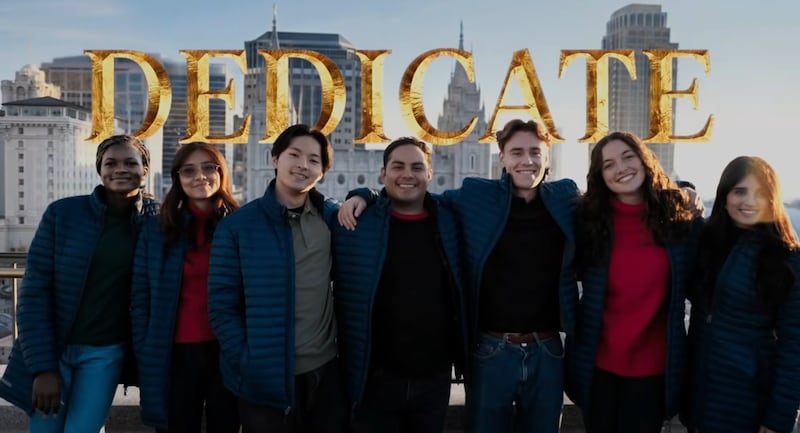
The Church of Jesus Christ of Latter-day Saints has begun releasing episodes in a six-part video series called “Dedicate.” In this series, seven young adults from different countries tour the Salt Lake Temple to see its renovations. They share how they have worked to build testimonies of the Savior, of temples and of temple covenants.
The seven young adults are from Brazil, the Philippines, France, the United States, Japan, Ghana and Mexico.
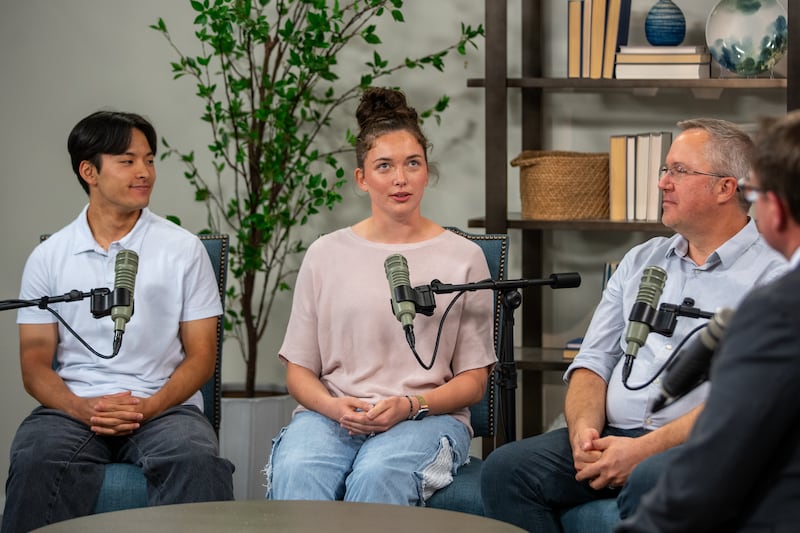
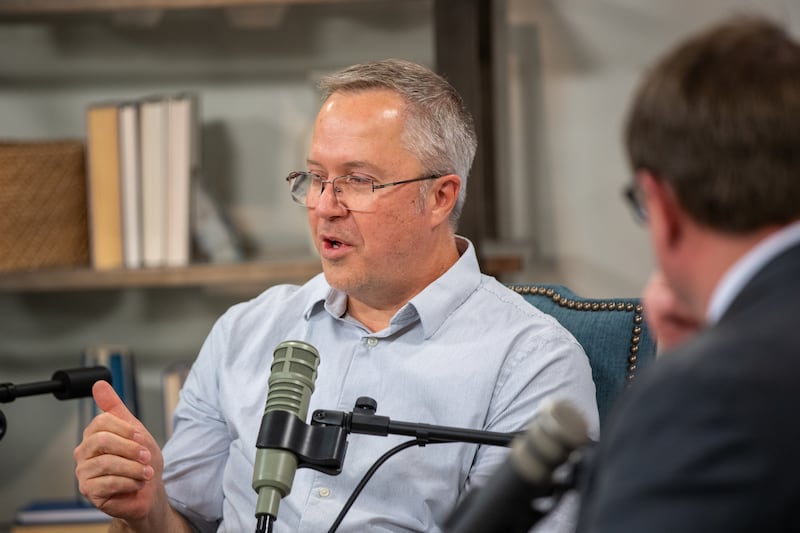
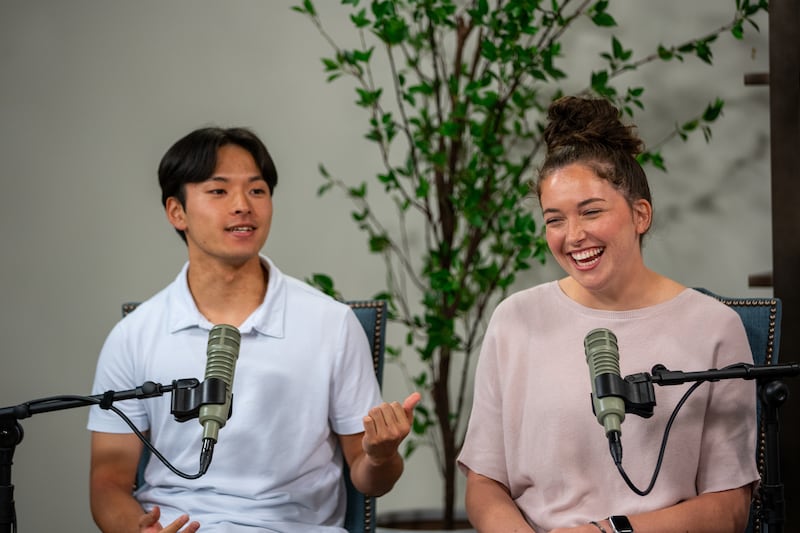
In this episode of the Church News podcast, Church News editor Jon Ryan Jensen speaks with Aaron Merrell, the producer of “Dedicate,” along with Sora Murata from Japan; and Alexandra Cazier from Huntsville, Alabama.
Listen to this episode of the Church News podcast on Apple Podcasts, Amazon, Spotify, bookshelf PLUS, YouTube or wherever you get podcasts.
Transcript:
Jon Ryan Jensen: I’m Ryan Jensen, editor of the Church News. Thank you for joining us for today’s episode of the Church News podcast.
The Salt Lake Temple Celebration is just around the corner, and to help Latter-day Saints prepare for the celebration, the Church has produced a brand-new docuseries which features young adults from around the world, from different countries, who were able to come and share their own experiences, build their own testimonies and to engage with each other as they toured around Temple Square.
Today, we are joined by three of the individuals responsible for “Dedicate.” One, Aaron Merrell, is the producer. You may recognize him. He also has been on the Church News podcast before as the producer of the Book of Mormon Videos.
We also have with us two of the young adults who are on the show: Sora Murata from Japan. Sora, thanks for being with us.
Sora Murata: Thank you for having me here.
Jon Ryan Jensen: And Alex Cazier Hovermale, who was also on the show, from Huntsville, Alabama.
Aaron Merrell: Yes sir.
0:58
Jon Ryan Jensen: Aaron, I want to start with you. “Dedicate” is maybe not a new entry by the Church into this type of series, but featuring young adults and having this tied to the Salt Lake Temple Celebration is a really unique way for the Church to introduce the temple to Latter-day Saints and to friends of the faith.
Why did the Church decide to take this approach in doing this kind of video series?
1:25
Aaron Merrell: That’s a great question. And first of all, thanks for making sure everyone’s clear I’m not one of the young adults. I thought everyone was going to be a little confused at first about that.
But yeah, really part of the purpose of this series is we understand that not everybody’s going to make it to the Salt Lake on-site celebration experience, because it’s just not really — not everyone’s able to do that. So the Church has made a couple different ways for us to get this great messaging, all the excitement and the joy, being able to rejoice in Christ throughout the world.
And so, when the project was brought to me, there was that whole concept of “How do we get this out there for the world, not just right here in Salt Lake?” So that was one of the things, as we were coming up with the ideas, we really realized: For everybody outside of Salt Lake, we all understand the importance, the beauty, the majesty, how awesome the Salt Lake Temple is. But really, around the world, everybody’s individual temple is their temple in their home country.
And so we wanted to just show that it’s not just the Salt Lake Temple that we’re celebrating. The house of the Lord is all around the world, and what better way to show that than to experience this with some of these really beautiful stories of these individuals’ lives, of people around the world, where temples are there and available to have and feel the love of Heavenly Father and Jesus Christ?
2:46
Jon Ryan Jensen: So, safe to say the Salt Lake Temple is a little far away from your hometowns, respectively.
So, Sora, Alex, how did you get involved in “Dedicate”? And how did you get to participate in this filming?
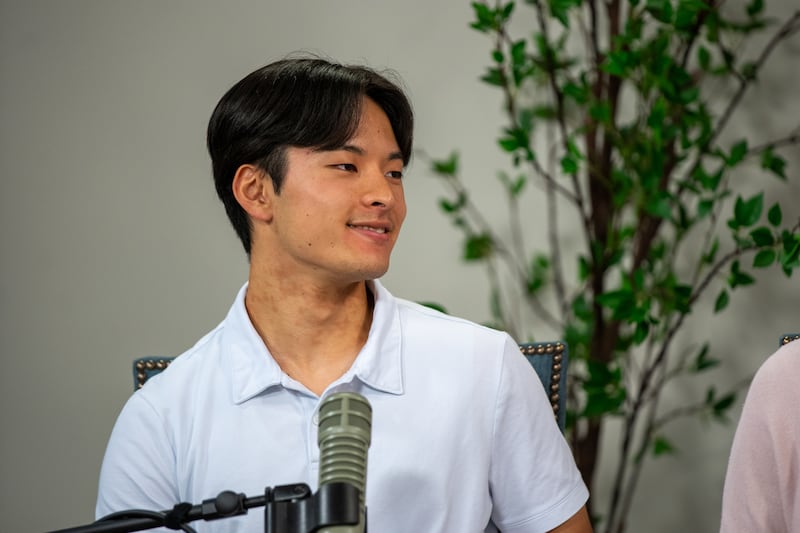
Sora Murata: How did I get involved in this? So, I actually live in Provo. So it’s not actually that far from the Salt Lake Temple. So I live in Provo, and I go to a Japanese ward in Provo. And so the production were looking for a person who can speak English and Japanese. And they came to my ward and found me, and somehow I got selected and got to get involved in this great project.
3:34
Jon Ryan Jensen: Yeah. And you’re a student, right?
Sora Murata: I am, yeah.
Jon Ryan Jensen: And it’s not in acting. So this wasn’t — we weren’t looking for actors who were young adults.
Aaron Merrell: Right.
Jon Ryan Jensen: What are you studying?
Sora Murata: I’m studying linguistics.
Jon Ryan Jensen: Yeah. So you’re studying linguistics and coming in, getting an opportunity to participate representing Japan.
3:52
Aaron Merrell: Could I, before you talk, I just don’t want to understate too much the miracle that it was when we found Sora. He’s kind of — he’s a humble guy, so he’s not saying how amazing it was, but we were having some challenges finding somebody to really represent the Asian area. We found a couple people who we thought were great, and for different reasons, they didn’t work out. And we were getting really close to the time to need to film. And we, as me and my producing and directing partners, we were praying and just desperate for a miracle.
And the fact that we were able to discover this awesome of a guy who was able, he was available to do it, he had the right visa situation to do it. We were able to go back home and film him in his hometown with his family. And really, just the casting of Sora alone was one of the many miracles that we saw.
Of course, Alex, you were a miracle as well. But it’s almost kind of fun because, I think, Alex, you were one of the first that we decided on, and you were the last. So, good representation here. But sorry, I don’t want to step on your story panning out too.
4:55
Jon Ryan Jensen: Yeah, Alex, what was your experience?
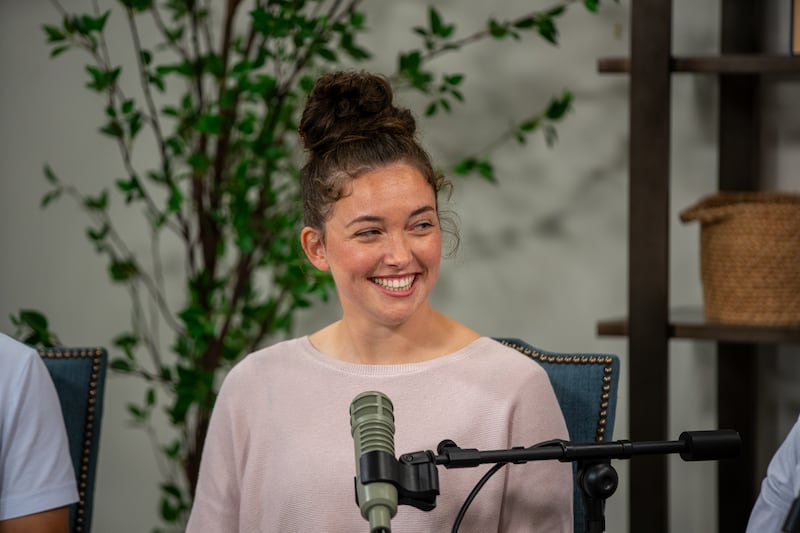
Alexandra Cazier Hovermale: So mine, actually, I learned about this whole process — one of my companions, actually, she sent me the link with all the info. And she was like, “Sister Cazier, you should audition for this.” And I was like, “Girl, what are you talking about?” And she’s like, “No, I really think you should do that.” So I did the whole process, and somehow I got it.
5:17
Jon Ryan Jensen: So, similarly, never having had a background in something like this.
Alexandra Cazier Hovermale: No, absolutely not.
Jon Ryan Jensen: And I think that’s true for everybody who’s in the cast, right?
So, you get cast, you find out you get to do this. Did any of you know each other?
Alexandra Cazier Hovermale: No.
Sora Murata: Not at all.
5:32
Jon Ryan Jensen: So, I want you to walk me through that.
What is it like to find out you’re doing this with a whole bunch of complete strangers? What’s going through your head as that process continued to roll forward?
5:44
Sora Murata: It was weird. It was fun. It was entertaining for me. Because as a Japanese guy from outside of the Church, joined the Church in Utah, so most of the Church friends, most of them are from the U.S. So, it was like the first time to see actual humans in the Church from other countries.
Aaron Merrell: Yeah.
Sora Murata: So it was just really interesting, and I think in a way it strengthened my testimony that churches all over the world and anywhere, that God’s work can be done anywhere.
6:26
Alexandra Cazier Hovermale: Yeah, I love that. Yeah, it was super cool. And I was just more excited to get to meet new friends from all over the place. It’s convenient that Sora is here. He got to come to my wedding reception. It was super fun. And so we’ve stayed friends with everyone.
And yeah, it was just cool to hear all the different stories and different points of, like Sora said, he joined the Church more recently. And then you have people who have been in the Church their entire lives and people who have served missions. And it was just really cool to kind of get a combination of people from all over the world.
7:01
Jon Ryan Jensen: Aaron, I want to come to you because I think there are probably some people who hear about “Dedicate” and think, you know, “Is this really a super scripted thing?” I’m sure there are things that you wanted people to see as part of this experience.
But where was that intersection between things you wanted people to see as part of the series and allowing Alex, Sora and the others to really express themselves?
7:26
Aaron Merrell: Yeah, so we definitely had an outline of “This is the plan that we want to do. We want to be able to show these different things, teach these different principles, share these different thoughts, see different places within the temple.” But all the experiences within, all the personal things that they shared, those are all 100% this great cast.
So yeah, it wasn’t us saying, “OK, now Alex, we want you to say this, this, this, this.” It was more our directors just asking the questions, and they would bring up their own personal experiences, their thoughts. And that’s kind of one of the cool things for me as a filmmaker, is to see these completely real, wonderful people with all their individual experiences, but they still come from a different place, not just geographically but just in their lives as well. I know Sora mentioned he’s only been a member for a short time. Alex has been a member for her whole life. But really, still, they all were able to feel the love of Heavenly Father and Jesus Christ and have this experience through temples of experiencing the house of the Lord.
8:28
Jon Ryan Jensen: So, I got a little bit of a sneak peek into some of the episodes. And so I’ve got some other questions as well, because all of you are agewise in similar places, but geographically, like Aaron said, different.
Did you find yourselves creating a bond with each other where you were able to talk each other through the different challenges that you were experiencing as you recorded?
8:52
Sora Murata: Yeah, yeah, I think so. It just — one thing that came to my mind was just: I’m not really talkative. I more tend to listen to people talk, for example like Alex. I mean, I’m not saying she talks a lot, but I mean, she’s humorous.
Alexandra Cazier Hovermale: Thank you.
Sora Murata: So yeah, I think I usually just listen to other people talk, and I think that’s the way I make bonds in that group, I think.
9:24
Alexandra Cazier Hovermale: As people will see in the series, there’s some really vulnerable parts, like vulnerable where it’s just like, “Oh gosh, I shared that, and people are going to see that.” And I think that it brought us closer together as a group. And, I mean, there were definitely times where we got emotional on set and off set. And just the conversations we had at the house we were staying at, all the way to conversations we were having in the basement of the temple.
Like, there’s a whole spectrum of different types of vulnerability, I think, that we were able to experience. And I think all of it brought us closer together, because I think when you share your deep things with other people, it’s an opportunity to connect. And I think our group did a fantastic job of doing that.
10:06
Jon Ryan Jensen: So, you talked about the basement of the temple. And again, I don’t want to give away everything that happens in the videos, but you get to see a lot of different places within the temple itself and pertaining to the temple.
Alex, do you have a favorite place or experience from the filming?
Alexandra Cazier Hovermale: One of my favorites was actually in the sealing room with Elder Kearon. It was so cool. And that’s one of the spots where I kind of got emotional. And I was just asking — I won’t give it away, what I was talking about — but Elder Kearon, he was just answering and saying, like, testifying that the temple is just this place where we feel the pull of God’s love. And it was just so powerful.
And I actually was reading my journal right before I came in here, and I was like, “OK,” from that time, and there was, I said, “President Uchtdorf helped me feel so understood,” and I got — it was just so cool to get to ask these heroes of mine just questions that have been on my heart and that I’ve spent hours studying, like all these different things, getting to ask them and them just be like, “OK, here’s an answer.” It’s like, “That’s so cool.”
11:09
Jon Ryan Jensen: Yeah, you get Elder Patrick Kearon from the Quorum of the Twelve Apostles in a sealing room. You get President Dieter F. Uchtdorf, the acting president of the Quorum of the Twelve Apostles, talking to you at the Christus statue.
Alexandra Cazier Hovermale: Yes, it was so cool.
11:20
Jon Ryan Jensen: I can only imagine.
Sora, what about you? Do you have one of your most memorable parts?
Sora Murata: I think one of my favorite places in the temple was the baptism font.
Jon Ryan Jensen: Yeah, in the Salt Lake Temple.
Sora Murata: Yeah, the Salt Lake Temple. I think we were with Elder [Quentin L.] Cook.
Alexandra Cazier Hovermale: I think it was Elder [Neil L.] Andersen.
Sora Murata: Elder Andersen, right. Yeah. And here’s — we’re talking about 12 oxen in the baptism font. And I didn’t really know the deep meaning of it. And I kind of knew that they mean 12 tribes of Israel, but I didn’t really know what they actually mean in depth.
So yeah, I really loved talking with them about baptism. And, I mean, baptism for the dead is my favorite ordinance in the temple. So it was just really cool to be in the — I was at the font in the Salt Lake Temple, and I really felt a strong spirit there. So I loved that moment.
12:19
Jon Ryan Jensen: I’m excited to show that part to my own children, because that was the first place where I ever did baptisms for the dead, was in the Salt Lake Temple baptistry. And so that’s — it was really fun to see that again and to be brought back to those emotions. And I can only imagine listening to Elder Neil L. Andersen, what that was like for you all.
Aaron, what about you?
12:38
Aaron Merrell: There are so many places that we’re able to visit and see. And yeah, it was just really great to be able to get inside there and just the experiences within, because it is kind of interesting as the filmmaker who’s trying to make sure all these different levels of — we’ve got logistics that we’ve got to figure out, we’ve got the story that we’ve got to figure out, we’ve got the individuals we’ve got to get in and out, we’ve got to work around construction. And there are just a lot of challenges going in there.
But every time we’d get in there with the leaders, it was kind of like the challenges went away. And just hearing them have their conversation with the leaders of the Church in these very special places, the Spirit was always so strong, the love that the leaders had for you guys, I hope you felt it, because back behind the camera we could definitely feel it.
And sometimes it was even, not disruptive to production, but it was actually kind of fun — when you guys were in the font area, it was almost hard to get going with the filming, because when Elder Andersen came in, he was bonding so quick with this group, and they were having such fun conversations that were off camera that we’re like, “This is great, we love this, but we’ve got to get filming.” And he’s like, “Oh, no, I just want to talk for a bit.” It was just really great to see that personal interaction.
And then for me as well, just being able as we’re doing all the prep with the leaders and finding out how we’re going to approach these stories and just building that relationship with them and feeling the love that they had, already in advance for this group but for everybody that they’re representing as well. The love they have for Heavenly Father, for Jesus Christ, and being able to experience that in the temple is amazing.
And just another cool thing is while we’re in there, it was all scaffolding and paint tarps and construction equipment. You always heard a band saw somewhere.
Jon Ryan Jensen: Not what you typically think of with the temple.
Aaron Merrell: Exactly. But you still feel the Spirit wherever you go in there. The Spirit is still in there. And yeah, it definitely is the house of the Lord. And I’m excited for when it’s dedicated and the band saws are quiet, because I’m just excited for everyone to be able to experience that.
14:41
Jon Ryan Jensen: You and I first met on the set of the Book of Mormon Videos, and I think it was 100-something degrees at that point in time. And I know that there were some unique challenges of filming the Book of Mormon Videos in different parts of the world and in different circumstances.
Are there, you know, some main similarities, main differences as you look back at those two huge projects for the Church?
15:07
Aaron Merrell: I guess the 110 degrees, some of the places we filmed in, AC was not working yet, and so some of it was pretty toasty. But yeah, there’s definitely a difference in filming a big narrative series as opposed to a documentary series, where here we get the outline, we figure out where the story’s going to go based on their experiences, whereas for Book of Mormon, it’s a very, very strictly —
Jon Ryan Jensen: The book’s already written, literally.
15:32
Aaron Merrell: Yes, we just have to bring from the page to the screen. So it is a different approach, but still I’d say the one thing that we rely on the most is the guidance of the Spirit. We can’t do it without prayer. We can’t do it without those who we work with, so it’s a lot of great collaboration.
For me as a producer, always any project that we make is chaos from the beginning to the end. And it’s my job to kind of organize and bring — make sense of the chaos. So it’s really important for me to have the right people with me, to get the right people on the team with the directors, the other producers, the cinematographers, the cast. So if I can get the right team together, whether it be a big, giant filming set like Book of Mormon, or if it’s more of an intimate set with just some wonderful people talking to other wonderful people, as long as we have the Spirit there, somehow we figure it out.
16:21
Jon Ryan Jensen: I think part of that question for me came up because they’re talking about meeting with those Church leaders who were there. And I know that you had Church leaders on set with the Book of Mormon Videos as well. Most of us only get to see Church leaders at general conference, when they’re speaking about a very specific topic.
What have you learned from being there and watching them give feedback on this kind of production?
16:43
Aaron Merrell: I’d say, first of all, it all starts with love. And now I’m doing what you did in the room. The emotion’s coming out. But I really always did feel the love from them, even when it was challenging and giving feedback. We had some really great opportunities to feel that love from the leaders of the Church.
Yeah, I’d say that’s one of the best takeaways that I’ve had. And taking that example in whatever I do, knowing that I’ve got to have that same kind of love as a leader of a production, as a leader of a ward, as a father, as a friend, it all starts with that pure love of Christ, and that’s definitely one thing that they exemplified to me and that I hope to bring.
I think another just — I hope this isn’t too personal, but with Elder Kearon, he gave a great example of anytime we were having a break, he would kind of just step off to the side, and he would just do a little personal prayer to help him to know what to say and how to do it, and inviting Heavenly Father into the work. He was just such a great example. They were all great examples of that. But I really love that it wasn’t like a step-away-and-hide type prayer, but it was just right there. He just had a prayer in his heart the whole time. And I really appreciated seeing that.
17:59
Jon Ryan Jensen: I love that. I love that you shared that too. Thank you.
We talked about the fact that you got to go back to your hometowns as part of this experience as well. And as I was watching parts of these stories unfold, I was reminded of Elder David A. Bednar from the Quorum of the Twelve Apostles saying that there are no small temples. Every temple has every ordinance necessary for salvation done within them.
And as you are at the Church’s principal temple here in Salt Lake, and then you get to go home and consider the temples closest to you.
Sora, we’ll start with you. What was that like to go back to Japan? What are the emotions that you felt? And what are some of the spiritual feelings that maybe you experienced in that?
18:47
Sora Murata: I think it was a bit weird and also really exciting for me. I mean, I usually live in Provo here, so it was just fun, always fun, to go back to Japan and see my family and friends. But it was actually the first time to go back to Japan as a member of the Church when we filmed in Japan. So it was the first opportunity for me to talk about the Church with my friends and family and stuff.
Jon Ryan Jensen: And there’s a segment, I think, where you’re talking with some of them about that.
19:19
Sora Murata: Yeah, in the first episode, yeah. So it was just a really difficult thing for me to talk about it. I mean, in Japan, Christianity is not a major culture, a part of culture in Japan, so they have no idea what that is. So it was a bit difficult, but once I start talking about it, all my friends and family started showing their understanding, their respect, their love to me.
And seeing that is just really wholesome, and I really loved it. And it just — I felt the love from them, and it just — that experience just strengthened my testimony and my faith in Jesus Christ. And they’re not members of the Church, but they also taught me how to love other people, and I really loved that experience.
20:20
Jon Ryan Jensen: I love that. Alex?
Alexandra Cazier Hovermale: I loved it. It was so cool. And there was also a little bit of pressure, where I remember at one point Chantelle, our director, she was doing my personal interview, and I was feeling nervous. She’s like, “Alex, you’re representing America. OK, calm down.”
Jon Ryan Jensen: No big deal.
Aaron Merrell: No pressure.
Alexandra Cazier Hovermale: And I was like, “Queen, that is not the way to calm me down.” But it was so cool to get to share these parts of my life that were routine for me but maybe opened up different doors to other people to get to see, “Oh, this is what it’s like in Alex’s life.” And I got to involve — I’m sure not all of the footage is included in the show, but bringing in some of my best friends who I’ve been friends with for years and years and years, and some of whom aren’t members of the Church.
It was just so cool to get to share that with them, and getting to go to the Birmingham temple. I love the Birmingham Alabama Temple. That was my first temple where I did baptisms for the dead, and I received my endowment there, and I was sealed there. So it’s a special temple for me. So I loved getting to share that.
Jon Ryan Jensen: That’s a lot of fun. I love that.
21:24
Aaron Merrell: Can I share a little bit?
Jon Ryan Jensen: Please.
Aaron Merrell: A really cool thing is we were filming her at the Birmingham temple. One of the gentlemen who works there came out and was talking to us as we were doing it. And he’s just asking, “Why did you choose to film at our temple?” And I could just tell that he was so touched because he loves that temple so much. I could just feel the love that this man had for that temple.
And it was really powerful to me to kind of experience that and witness that and just know that everywhere around the world, there are some people who really just have that deep love for their temple. And I was grateful for that learning opportunity with you when you were filming there.
22:00
Jon Ryan Jensen: Alex, you mentioned that some of your friends who aren’t members of The Church of Jesus Christ of Latter-day Saints know that you were doing this.
Alexandra Cazier Hovermale: Yeah.
Jon Ryan Jensen: Now that it’s near completion, the series, what’s something that you hope that they get out of it when they watch it?
22:15
Alexandra Cazier Hovermale: I just really hope that they know how much I love them through my love of Jesus Christ. Because that’s something that’s so cool about the South, is there’s a big — I’d almost call it Jesus culture. So many people in the South love Jesus Christ, and they are striving to live by His teachings.
And I just want to share — my close friends know that I love Jesus Christ, but not everyone in the South understands that members of The Church of Jesus Christ of Latter-day Saints love Jesus Christ. And so that’s what I’m hoping; even if they have someone who’s talking about “the Mormons” and saying something that isn’t true, they can be like: “Oh, my friend is in this show. You can look at this and see what their Church is really all about and that they really love Jesus Christ.” That’s what I’m hoping.
23:09
Jon Ryan Jensen: I love that. And for your friends in Japan?
Sora Murata: Yeah, I love what Alex said. Yeah, also my friends can watch my video and learn about the Church or even who Jesus Christ is and how God loves us and how we, members of the Church, love even people outside the Church, and how members of the Church want people outside of the Church to come unto Christ and feel God’s love and how Jesus Christ loves all of us.
23:45
Jon Ryan Jensen: I love that because the two of you come from completely different cultures, and yet what you’re hoping for your own friends and people who you love is the same thing, that they’ll see Jesus Christ through all of those things that you’re experiencing and that are there.
Aaron, when you look back on this whole process, what do you think that people should take away or will take away when they watch it?
24:11
Aaron Merrell: Yeah, I hope when they watch this, they take away, first of all, that God’s love is represented throughout the entire world, that really His love does spread literally to the four corners of the world. We represent people from Alabama, Japan, France, Ghana, Brazil, Philippines, Mexico. And the love of Heavenly Father and Jesus Christ is the same wherever we are. The house of the Lord is there. Their opportunity to feel that love is there. And the temples are just a great way to find that peace and that love and truly experience that from Heavenly Father and Jesus Christ.
24:48
Jon Ryan Jensen: We haven’t mentioned this, but where will people be able to watch the show?
Aaron Merrell: They’ll be able to watch primarily through Church channels. Church YouTube is going to be probably the primary place to watch this. It’ll also be on the Church website. We are going to have distribution on BYUtv and KSL, and we’re looking at other opportunities to get the message and the content out more broadly than that.

25:09
Jon Ryan Jensen: Multiple languages?
Aaron Merrell: Yes, yeah. So, it’ll be in the languages of the cast. So the original, the initial translation will be in 12 languages.
25:18
Alexandra Cazier Hovermale: And one of my friends, actually, she texted me. She’s like, “Alex, I work for a translation company where we do ASL.” She goes, “Guess what my biggest project is right now?” And I was like, “What?” So that was cool.
Aaron Merrell: That is nice.
Jon Ryan Jensen: Translating you.
Alexandra Cazier Hovermale: Yes.
25:35
Jon Ryan Jensen: I want to get personal for a second, if I can, because I know, again, from having talked with individuals who’ve done other big video projects, that you can’t come away from something like this without having your own testimony of perhaps a specific principle of the gospel strengthened.
So, is there one part through all of this, is there one part of your testimony, that you can look back and say, “My time working on this, this part of my testimony really grew”?
26:04
Sora Murata: Yeah. The first thing that came to my mind was when we were talking about covenants at Goshen with Elder [Jorge T.] Becerra and President — I think it was Freeman — President [Emily Belle] Freeman. And I had one question I asked them, that why do we make promises with Jesus Christ and God to make covenant promises to get blessings from them? Like, why can’t it be easier? They, you know, God can just choose to bless us anytime He wants, and why do we need to make that promises?
The thing President Freeman told us stood out to me. It was: “God wants us to choose constantly. God loves our intentions to choose God and keep choosing God and keep staying on the covenant path.” And my favorite part was that she said to have love for something, we need to sacrifice something. And that’s how it goes.
And Jesus Christ is the greatest example for that. He sacrificed Himself to love, because He loves all of us. And He became basically love. He became love through sacrificing Himself. And so, I really love the conversation with them. And I grew my testimony and the faith in Jesus Christ and the covenants that we have.
27:41
Jon Ryan Jensen: I love that. The Savior embodies the greatest sacrifice and the greatest love. And covenants are how those are manifest. That’s great.
Alex?
Alexandra Cazier Hovermale: That was amazing. I love that. The thing that came to mind for me is that temples are just so symbolic of Jesus, and everything there points to him. The grace that flows out of temples, everything that makes a temple a temple is Jesus. Without Jesus Christ, a temple would just be a building.
Jon Ryan Jensen: It is a power.
Alexandra Cazier Hovermale: It is, yeah. And it’s just the embodiment of goodness and grace. And something that I don’t know if it’s going to be included, but President Uchtdorf, he said — and this was super small, but it meant so much to me — was he said, “It’s OK if you only read one verse of scriptures a day.”
And I think one of the other big things that I learned throughout this whole experience, this whole journey, was that it’s all about relationship. It’s not about routine. It’s all about relationship. So if you haven’t gone to the temple in 30 years, that’s OK. Today’s a perfect day to go back. And Jesus is like: “Today’s a perfect day. Today is a fantastic day for you to come feel loved by me.” And I think that’s the whole point. We talk about going, like Sora was saying, sacrificing and going and loving. But I just think that the biggest thing is that the Savior wants us to feel loved by Him. And that’s the whole point of the temple.
And every time you go to the temple, you may not feel the exact same powerful love, but you just keep going back. It’s like the scriptures. Every time you read, you’re not going to get an insight. At least I don’t; every time I read, I don’t always get an insight. I’m like: “That was cool. I did it.” But I keep going back because going back to Jesus is the best thing you could ever do.
29:26
Jon Ryan Jensen: Great learning. Aaron?
Aaron Merrell: You can tell why we cast these.
Jon Ryan Jensen: Yeah. You’ve got some great people here.
Aaron Merrell: And we had seven of them, and they’re all so amazing. Like, seriously. We were filming all the time. We were kind of behind the camera wiping away tears because they just — thank you for everything that you guys taught me throughout this, because you guys are amazing.
I’d say one big takeaway for me is we call the temples the house of the Lord, and we call it that for a reason because literally it is the house of the Lord. And — dang it, with all these cameras, I didn’t want to get all emotional, but here we go. It is a house of the Lord because it’s where He is. And that’s where we can go for safety and refuge through Him.
One thing that was kind of amazing through this whole thing is both with all of the cast, but also just those of us behind the scenes, none of us went through unscathed through this process, through anything in life. And my partners in this — Adam Anderegg and Chantelle Squires — we’ve recognized several times that it was not — we didn’t go through easy times for this. We all had a lot of challenges, both in the work for this, but also challenges in life, in home, in health, in relationships and everything.
There’s a lot of challenges, but the house of the Lord is where we know that we can go for that refuge, for that strength, to get the help and the love literally from our Father and our Brother to help us through those challenges so we can go back home to be with them, to feel the comfort, to feel the strength and to feel the love.
31:03
Jon Ryan Jensen: I love that. That’s perfect. You guys get a chance to talk about cast members who are not here. So I’m really interested to know, when people watch this, if they want to look for somebody who’s funny.
Is there somebody on the cast who is always going to make them laugh when they watch this?
31:20
Sora Murata: Lehi from Mexico. He is really funny, and his testimony is really strong too. And he became, I think, one of my best friends throughout the filming. I know he thinks I am his best friend throughout the filming. And yeah.
Alexandra Cazier Hovermale: They were so adorable because they’re so opposite, but they were a perfect match. It was awesome.
31:49
Aaron Merrell: Well, let me just say: I was just with Mathéo in France a couple weeks ago, and he actually said the same thing about you guys too. He loved you guys so much, the three of them. They were so fun to watch together.
Sora Murata: Yeah. I think Mathéo was a good fit with us too. I think Mathéo was kind of like between us. Like, he can talk, and he can match with me and Lehi too. So we both, three, I kind of feel like we’re all brothers and we somehow got really close. And yeah, I really loved the relationship that I have with them.
32:26
Jon Ryan Jensen: What about questions? Was there somebody on the group who always had great questions that left you all, “Oh”?
Alexandra Cazier Hovermale: I feel like everyone had good questions.
Sora Murata: Yeah. If I had to say some specific person, I would say Bella, because, as a convert — she’s also a convert — so she always had a great question from the convert side.
32:48
Jon Ryan Jensen: Did you find yourself having the same questions that she had?
Sora Murata: Yes. I mean, I didn’t come up with that, but once she asked, I’m like: “That’s a great question. I want to know that.” Yeah.
Alexandra Cazier Hovermale: And I think Bella was super real, too. She was one of the ones that, at least when I think about it, was the most vulnerable in sharing her story about how it’s not always perfect, cookie-cutter testimony, like sometimes you don’t know, and that’s OK. And I love that she shared that.
33:20
Jon Ryan Jensen: You said that, and I immediately thought of one specific part, and that hit for me, being about your same age. And I really respect the vulnerability that you guys shared and the whole range of emotion and experience. And you can really watch and see your testimonies grow throughout the process.
So, I think this will be really exciting, and I hope that people go and get everything they can out of that. If they want to have their own experiences, while maybe not everybody’s going to get to go down into the basement to see what you guys saw or up on the roof to do what you did, again, got to go watch it.
But people can still get tickets for the Salt Lake Temple by going to TempleSquare.org. And there’ll be a virtual experience on there as well to see some of the things that perhaps you guys experienced while you were there.
We have a tradition here on the Church News podcast, where to conclude, we like to give our guests the final word. And we do that by asking you what you know now. And so, we’ll just come down the line.
Sora, Alex, Aaron, what do you know now, having participated in this experience of producing “Dedicate”?
34:28
Sora Murata: What I know is that Jesus Christ loves us. Throughout the series, I think basically we talk about how Jesus, God loves us, and the temple is a house of love. Every aspect of the gospel, like the plan of salvation or the fact that we can repent, everything of the gospel is basically about love of Jesus Christ, I think. So, throughout the series, I think I learned so much about how Jesus Christ and God love us and how They show love to us and how we can feel it.
35:12
Alexandra Cazier Hovermale: I love that. That was amazing. I know that Jesus is real and, like Sora said, His love is so real, and it is the foundation of the temple. It’s the foundation of His Church. It’s the foundation of everything. It’s the foundation of covenants. And I just know that He has our back and that His grace is real. His goodness is better than we can imagine.
I just want people to know, when they watch this, I think so often we think about Judgment, and it sounds scary, but I think that what will happen is that we will be blown away at the goodness of Jesus Christ and knowing how much He loved you the whole time. And that when you’re going through a hard time, it doesn’t mean anything about His love for you except that He understands, and He’s going to use your story in a way that will bless you, but it’ll bless people around you.
And that’s something that my mom taught me. She said, “Everything you go through, you go through for yourself and to help someone else.” And that’s the story of Jesus, is He came and He experienced the hardest things ever, for Him and for us. And I just want people to know that He’s real.
36:34
Aaron Merrell: I think I’ve learned today that it’s really not fair that you have me following these two with such — thank you for sharing that, both of you guys. That’s so amazing.
Really, yeah, just a strong takeaway is that the house of the Lord is a house of love. It is the place where we really do go to feel like we are in the presence of Heavenly Father. It’s where we represent going through our lives to make covenants, make promises with Heavenly Father, to return to His presence to be with Him forever. I just love that the house of Lord is that representation of the love, like you said, sort of everything about the gospel is about love.
And from the temples to all the experiences with the leaders, we felt so much love from them. I think they’re just such great examples of love. I think that was a really strong takeaway from me, because we get to see our leaders in general conference, we get to see them in special moments, but to know that these are just regular people who just really are great examples of the true love of Jesus Christ, the everlasting love of Jesus Christ.
I’m so grateful for them and the example that they gave to me, both in the filming but always, and for the love that they shared with us as we were with them in these short little moments. And I testify that the temples are the house of God. I testify that the leaders of the Church are called by God. And I say that in the name of Jesus Christ, amen.
