





Why does The Church of Jesus Christ of Latter-day Saints invest so much in preserving historic sites?
Jacob W. Olmstead, a manager in the Historic Sites Division of the Church History Department, said the answer is connected to the Old Testament story of Joshua crossing the Jordan River to enter the promised land, recorded in Joshua 4.
Joshua memorialized the event by commanding 12 men, one each from the tribes of Israel, to retrieve a stone and build a monument (see Joshua 4:1-9).
Why?
“So that when the children [and] future generations see these stones, they will remember the great things the Lord has done for the Israelites,” he said, adding that the principle is the same for the Historic Sites Division.
Historic sites, he added, “help us remember the great things the Lord has done for us in this dispensation.”

As guests on the Church News podcast, Olmstead and Benedicte Dansie, a curator with the Historic Sites Division in the Church History Department, described how the Church’s historic sites do more than preserve history — they help visitors connect with the Savior, Jesus Christ.
“The ultimate goal is to tie those stories, events and individuals back to the Savior,” Olmstead said. “History is important, and it can strengthen faith. But it is ultimately connecting it to the Savior — that is something we strive for.”
Historic sites
People can visit more than 25 Church historic sites in the United States, most hosted by missionaries, with more internationally. These places — free museums, sites, monuments and markers — show the events of the Restoration and the stories of Latter-day Saints who sacrificed to build the kingdom of God.
“Across the globe, there are thousands that document the Lord’s hand in the continuing Restoration,” Olmstead said.
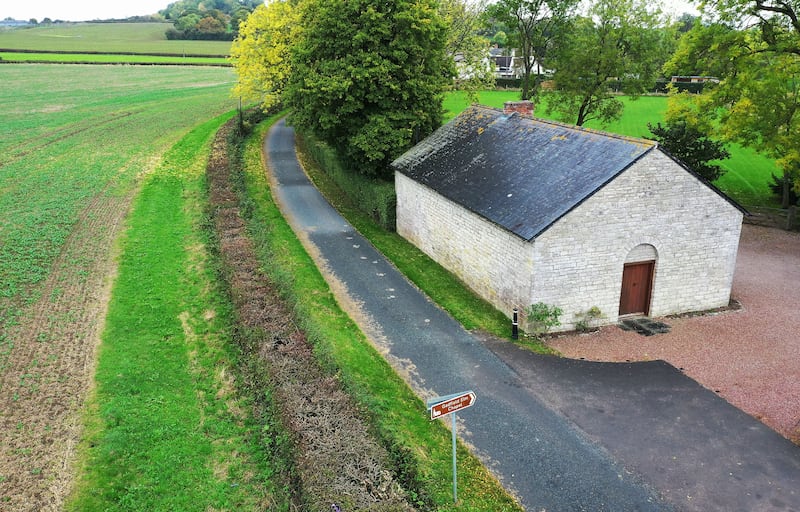
Some of the historic sites in Europe include the Gadfield Elm and Hyde Park chapels in England, Nowy Świat in Poland, and a church in Germany that informs about Helmuth Hübener and his work during World War II.
“So there are sites all over the world that we like to be able to share the history with so that you can see the history that happens here in the U.S. but that the history of the Church continues globally,” Dansie said.
Historic sites pages on ChurchofJesusChrist.org provide information on the Church’s historic sites.
More options
Most Latter-day Saints around the world will not likely have the opportunity to visit the Church’s historic sites in person. Can they still have a historic sites experience in New York, Pennsylvania, Ohio or Illinois?
One option is to schedule a live, virtual tour guided by missionaries or watch a prerecorded video tour. Some sites offer integrated Google walkthroughs with an adjustable map showing different angles.

Missionaries, Dansie said, “take you around using iPhones and different technology to allow you to have almost like a FaceTime experience. You can talk one-on-one with a missionary, and they can guide you through the sites.”
Olmstead said reaching the global audience through a virtual experience is “uncharted territory” for the Historic Sites Division. To make historic sites more accessible, the Church is piloting virtual-tour options, including short documentary-style videos and interactive 360° walkthroughs.
The Church hopes these virtual experiences can help visitors connect with the spirit, geography and message of each site — with plans to offer them in multiple languages.

“They bear witness to the truths of the Restoration in a very tangible and immersive way,” Olmstead said. “Many people come to the historic sites and have a powerful spiritual experience. Their testimony is strengthened or found anew or for the first time by feeling the Spirit in that place.”
Recent projects
Olmstead and Dansie highlighted recent projects at Church historic sites, including:
- The Kanesville Memorial, Council Bluffs, Iowa.
- The Hill Cumorah Historic Site, near Palmyra, New York.
- The Nauvoo Temple Visitors’ Center and restoration of the Brigham and Mary Ann Young Home, Nauvoo, Illinois.

A multiyear restoration project on the Beehive and Lion houses on Temple Square will be completed in the near future.
Olmstead and Dansie agreed that it’s inspiring to see the Lord’s hand clearly visible in the work of historic sites.
“As we work to develop these historic sites, roadblocks are unblocked, answers come, prayers are answered in knowing how to communicate the messages, and that’s really inspiring to me,” Olmstead said. “But more important is the connection to the Savior and His role in our lives. ... It’s amazing to be a part of that work and see and feel that Spirit and see it impact the lives of others.”

