



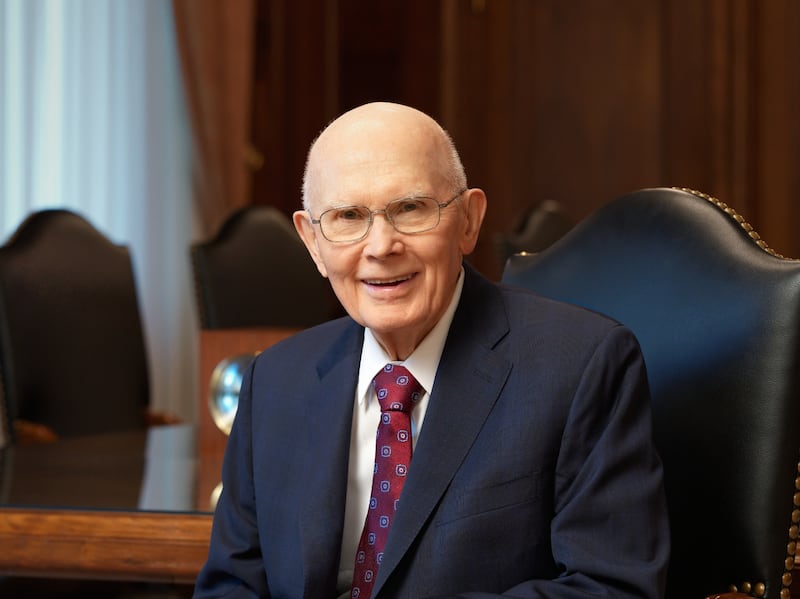

Prophets are God’s representatives on the Earth, both anciently and in the latter days. God speaks to His children through prophets.
The scriptures teach that in biblical and Book of Mormon times, God chose prophets to guide His people and point them to Jesus Christ. Today, through a living prophet, people learn about Jesus Christ and receive God’s guidance specific to these times.
As the living Prophet of God today, President Dallin H. Oaks, 18th President of The Church of Jesus Christ of Latter-day Saints, invites everyone to follow Jesus Christ and feel God’s love. His teachings have emphasized God’s divine plan of happiness, the Atonement and Resurrection of Jesus Christ, the teachings of Jesus Christ, covenants and responsibilities, the two great commandments, repentance and the family.
The Church’s Gospel Principles manual, Chapter 9, titled, “Prophets of God,” explains that prophets are God’s representatives on the earth.
“Many people live in darkness, unsure of God’s will. They believe that the heavens are closed and that people must face the world’s perils alone. How fortunate are the Latter-day Saints. We know that God communicates to the Church through His prophet. With grateful hearts, Saints the world over sing the hymn, ‘We thank thee, O God, for a prophet to guide us in these latter days’.”
Prophets are special witnesses of Jesus Christ. They testify of His divinity, teach His gospel and prepare the world for His Second Coming.
A prophet teaches truth, calls the unrighteous to repentance and invites all to keep the commandments and make sacred covenants with God. Prophets are also seers and revelators — foretelling coming events and receiving revelations and directions from the Lord for the benefit of mankind.
Amos 3:7 says, “Surely the Lord God will do nothing, but he revealeth his secret unto his servants the prophets.”
When a prophet speaks for God, it is as if God were speaking. Doctrine and Covenants 1:38 says, “What I the Lord have spoken, I have spoken, and I excuse not myself; and though the heavens and the earth pass away, my word shall not pass away, but shall all be fulfilled, whether by mine own voice or by the voice of my servants, it is the same.”
Elder Ulisses Soares of the Quorum of the Twelve Apostles said that “having prophets is a sign of God’s love” (“Prophets Speak by the Power of the Holy Spirit,” April 2018 general conference).
President Wilford Woodruff, the fourth President of the Church, said that a prophet will never be allowed to lead the Church astray:
“The Lord will never permit me or any other man who stands as President of this Church to lead you astray. It is not in the programme. It is not in the mind of God. If I were to attempt that, the Lord would remove me out of my place” (Teachings of Presidents of the Church: Wilford Woodruff [2004], 199).

The living prophet and president of the Church has the right to revelation for the entire Church. He holds “the keys of the kingdom” (see Matthew 16:19), meaning that he has the authority to direct the entire Church and kingdom of God on earth and holds the sacred priesthood keys to administer the ordinances of salvation and exaltation.
More scriptural teachings
The scriptures teach the following:
- God speaks through prophets (Numbers 12:6).
- A prophet is called a seer (1 Samuel 9:9).
- God reveals His secrets to the prophets (Amos 3:7).
- A seer can know of things past and things to come (Mosiah 8:16–18).
- God speaks through prophets (Luke 1:70).
- God speaks today as in days of old (Doctrine and Covenants 45:10, 15).
- Things are made known to prophets by the Spirit (1 Nephi 22:2).
- When the Lord’s servants speak as moved by the Holy Ghost, it is the mind, will and voice of the Lord (Doctrine and Covenants 68:3–5).
- The duties of the President of the Church (Doctrine and Covenants 107:65–67, 91–92).
- Only the prophet is authorized to receive revelations for the Church (Doctrine and Covenants 43:1–7).
- Church members are commanded to receive the prophet’s words “in all patience and faith” with the Lord’s promise to “disperse the powers of darkness from before [us], and cause the heavens to shake for [our] good” (Doctrine and Covenants 21:5–6).
Using the ancient Hebrew prophets as examples, the Bible Dictionary also explains that a prophet acts as God’s messenger and makes known His will.

Prophets “taught men about God’s character, showing the full meaning of His dealings with Israel in the past” and therefore preserved and edited the records of the nation’s history. “It was also the prophet’s duty to denounce sin and foretell its punishment and to redress, so far as he could, both public and private wrongs. He was to be, above all, a preacher of righteousness.”
When people fell away from true faith in Jehovah, the prophets tried to restore that faith and remove false views about the character of God and His requirements. “In certain cases, prophets predicted future events, such as the very important prophecies announcing the coming of Messiah’s kingdom; but as a rule a prophet was a forthteller rather than a foreteller.”
Prophets of old
Prophets in the Old Testament include Adam, Noah, Abraham, Isaac, Jacob, Moses, Isaiah, Jeremiah, Ezekiel and Daniel. In the New Testament, John the Baptist came before Jesus Christ to prepare the way for Him and teach and testify of Him.
In the lands of the Book of Mormon, numerous prophets delivered God’s word, including Lehi, Nephi, Jacob, King Benjamin, Alma, Amulek, Mormon and Moroni.

These prophets shared God’s commandments and His will with the people. They gave hope as they taught about how Jesus Christ would come to the earth. After He came to earth, prophets testified of His Resurrection and His gospel.
Prophets were sent to warn people about famines, wars or other disasters. They also testified of the consequences of sin.
Each spoke to the people in their language, time and place, giving inspired direction and timely warnings, explains a page called “The Role of Prophets" in the Church and Gospel Questions section from the Church’s website.
At times, people believed the words of the prophets and lived righteous lives, explains ChurchofJesusChrist.org. At other times, people rejected God’s messages and turned away from Him. This is known as apostasy. Times of apostasy eventually ended as people repented and listened to God’s chosen prophets again.
Prophets today
Jesus Christ called 12 apostles when He was on the earth. Over time, people around the world fell into apostasy, and important gospel truths and the priesthood authority from God were lost.
The Restoration began in 1820, when Joseph Smith saw God the Father and Jesus Christ. Joseph Smith later became the first Prophet of this dispensation, chosen by God to restore Jesus Christ’s Church to the earth.

“The Role of Prophets” states: “The Prophet Joseph Smith received authority from God to administer gospel covenants and priesthood ordinances and restore the Church of Jesus Christ. He also received revelation clarifying important truths about God and His plan for His children. His successors as president of the Church have had the same authority to receive revelation to add to gospel knowledge and to guide the Church. This principle of continuing revelation is a central feature of the restored gospel.”
Since the Church was formally organized on April 6, 1830, there have been 18 presidents, from Joseph Smith to President Dallin H. Oaks today.
Today, the Prophet and President of the Church leads the Church. With the First Presidency and Quorum of the Twelve Apostles, the Prophet helps guide the day-to-day work of the Church — including overseeing missionary work, building temples, providing humanitarian aid and welfare, updating Church curriculum, making sure Church facilities are maintained, guiding Church-run universities and building positive relationships between the Church and governments around the world, explains ChurchofJesusChrist.org.
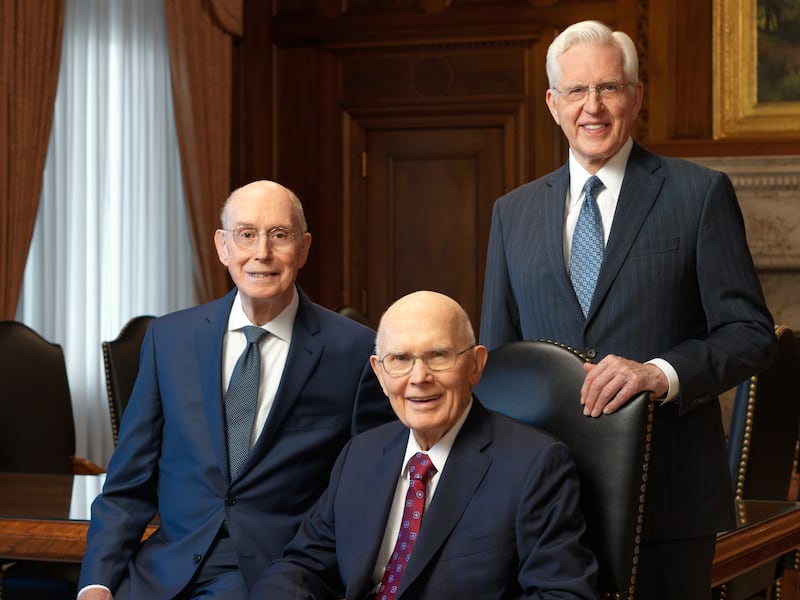
The Prophet speaks to the world every six months during April and October general conferences. He also regularly shares messages on social media accounts and through interviews done at temple dedications or personal ministries.
Latter-day Saints sustain the President of the Church, his counselors in the First Presidency, and members of the Quorum of the Twelve Apostles as prophets, seers and revelators.
President Dallin H. Oaks
As a prophet of God, President Dallin H. Oaks invites all to follow Jesus Christ and feel God’s love. His teachings emphasize loving God and our neighbor, the Atonement and Resurrection of Jesus Christ and God’s divine plan of happiness.
Almost three months after becoming the 18th President of The Church of Jesus Christ of Latter-day Saints, President Dallin H. Oaks said he feels the responsibility of the “mantle of the prophet.”
“It is heavy and continuous, and it is a very holy responsibility. I am trying to grow into it,” he said during an interview Saturday, Jan. 10, in Burley, Idaho, one day before dedicating a new temple in the city.
President Oaks succeeded President Russell M. Nelson, who died Sept. 27, 2025. “I never aspired to that position. I have never had the impression that I would occupy that position.”
Latter-day prophets are chosen through succession. When the Prophet dies, the most senior Apostle — by length of service, not age — becomes the new Prophet.

The Church News has written about succession in this way:
“The appointment of a new president of the Church happens in an orderly way that — remarkably in today’s world — avoids any trace of internal lobbying for position or rank. Viewed by members as a divinely revealed process, it is devoid of electioneering whether behind the scenes or in public.
“Moreover, it is not only the structure of Church organization that governs this process. There is also a deeply ingrained tradition in the Church that personal aspiration for leadership at any level is inappropriate. Instead, the emphasis is on personal worthiness and a humble willingness to serve when invited.”
And when there is a vacancy in the Quorum of the Twelve Apostles, the Prophet chooses a new person to serve, through inspiration from God.
