



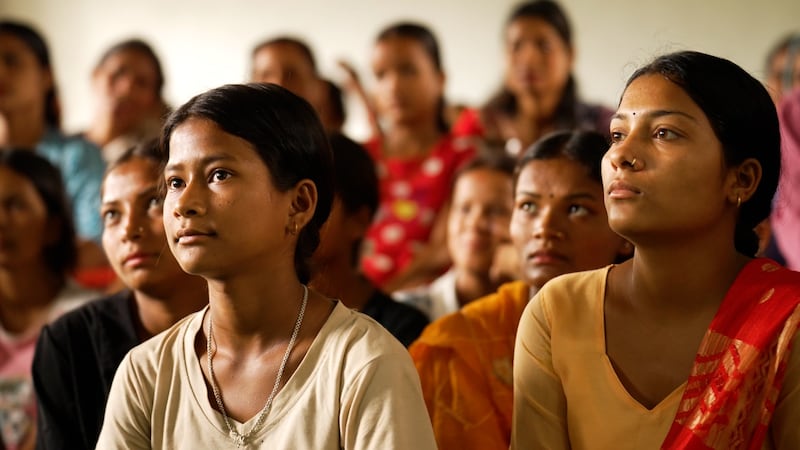

Donations made through Light the World Giving Machine stations, a seasonal initiative sponsored by The Church of Jesus Christ of Latter-day Saints, are helping bring education, menstrual kits and confidence to girls and women in communities across Nepal.
Donations given to Days for Girls International through the initiative with red vending machines support efforts to eliminate the stigma of menstruation and improve health, education and economic opportunities for women and girls, reports a recent article and video on ChurchofJesusChrist.org.

Donations through the Giving Machine initiative are providing resources and education to women in Nepal who “face troubling traditions,” the video reports. In western Nepal, girls are often sent away from their homes for days each month, part of a tradition that affects millions of women worldwide.
Facing harmful traditions
“I was terrified,” a young woman in Nepal said in the video of her first period. She turned to her grandmother, who told her it was nothing to worry about — but also that she could not come in the house until her cycle ended. Instead, she was required to stay outside, because “the gods and goddesses would be angry” and she was considered “unclean” while menstruating.

Her experience is not uncommon in western Nepal, where many women and girls face a practice called “chhaupadi.” Despite laws against it, menstruating women are often considered impure, kept apart from their families and required to live in small sheds.
Another young woman, Jayanti Ayer, explained, “We are not allowed to enter the house. … They force us to stay outside, get food separately and not be touched for six days.” She said that girls’ time in isolation varies from 10 to 12 days, while others are required to separate themselves for as long as 22 days.

In Nepal, entrenched traditions, stigma and limited resources have made school attendance difficult for many girls — some even stop going to school, said Rekha Budha Kshetri.
“Girls will menstruate for 3,000 days in their lifetime,” said Tiffany Larson, chief executive officer of Days for Girls. “If they can’t fully engage during that time, that’s a problem — they’re needed in their families, communities and the world.”

Education and supplies bring change
Larson also said 25% of women worldwide lack needed menstrual supplies. In addition to classes about menstruation, Giving Machine donations provide kits with reusable pads.
Maya Kahitu, country director of Days for Girls Nepal, travels across the country educating women and girls about their menstrual cycle and distributing these reusable pad kits.
“If we give them education and ... the products they need, it will change so much,” said Kahitu, noting that with openness and access, lives — and even the nation — can be transformed.
Young woman Pabitra Jaishi has seen these changes already happening in her own family.
“They don’t make us stay outside anymore,” she said in the video. “These days, there has been a lot of change, even at home.”
The young woman who was previously terrified about her period and the stigma surrounding it said that because of the program and supplies made possible through Days for Girls and the Giving Machine donations, she now feels “proud to be a woman.”


