




During Christ’s mortal ministry, most of those around Him failed to recognize Him for who He was. Much of the religious culture around Him had focused on certain scriptures and certain scriptural interpretations. This led them to look for a conquering messiah who would bring political deliverance to them.
To be fair, there are many prophecies about the Messiah that are reasonably interpreted that way. Many of the Savior’s acts clearly fulfilled prophecies, and many of His contemporaries recognized Him as the Messiah as a result.

Still, there were many prophecies that were not fulfilled during Christ’s ministry, especially those about a deliverer who would end the temporal oppression of Israel and bring them an era of political peace. Those who focused on only part of the prophecies about the Messiah did not see Christ for who He really was. They failed to recognize the true Messiah.
I worry that we run the same risk today. We clearly want to come to know Christ. We have been counseled by President Russell M. Nelson that we should draw His power more fully into our lives by learning about Him (see “Drawing the Power of Jesus Christ Into Our Lives,” April 2017 general conference).
One place to learn about Christ is by studying the New Testament, especially the Gospels. Such a study is rich, powerful and poignant. It is a necessary part of coming to know who Christ is. It is necessary but not sufficient. If we want to truly learn about Christ, we must study the rest of scripture.
Another place we naturally tend to look is the Book of Mormon. Between its powerful teachings about Christ’s atoning sacrifice and the story of the Savior’s visit to the Nephites, we learn more about our Redeemer through this, the most correct book on earth. What a blessing. What power this can draw into our lives.
Yet in terms of sheer number of pages and stories, the Old Testament provides more opportunity to learn about our Savior than any other book of scripture. In fact, the word “atonement” appears more times in the book of Leviticus than it does in the entire Book of Mormon, which has far more uses of that word than does the entire New Testament.
Yet ofttimes people fail to come to learn more about Christ while studying the Old Testament. As members of The Church of Jesus Christ of Latter-day Saints, we know that Jehovah is Jesus Christ. But too often we fail to remember that as we read Old Testament stories. Each of these stories, each page of the Old Testament, is an opportunity to learn something about the nature of Christ.
Learning more about Christ
This is crucial, because the Old Testament can teach us something about Christ’s nature and character that the New Testament will not. While the most crucial part of His mission was fulfilled in the stories told in the Gospels, Christ did not fulfill all of His mission nor all of His roles during His mortal ministry. If we fail to look to the Old Testament to learn about Christ’s nature, we run the risk of being similar to those who did not recognize Christ when He came during His mortal ministry.

Is it possible that by focusing on only some scriptural teachings about Christ that we may, like them of old, come to expect a Savior that does not match He who will come again? Might we fail to recognize our Messiah at the Second Coming because He doesn’t match the image we have created for ourselves by examining only some of the many facets of our Redeemer and His nature and character?
Story after story, teaching after teaching and prophecy after prophecy in the Old Testament present us with knowledge about and experiences with Jehovah, our Lord. Personally, as I look at each story and each teaching asking myself what I learn about the nature and character of Christ, I find myself richly rewarded.
Christ as a Deliverer
For example, in my opinion, the Old Testament teaches more about Christ as a Deliverer or Savior or Redeemer than anywhere else. The story of the Exodus highlights His willingness to plead with the Egyptians to end their oppression, and His ability to deliver the oppressed even when the oppressor will not heed His warnings (see Exodus 7-15).
The story of the miraculous delivery of Jerusalem from the Assyrians (see 2 Kings 18-19) teaches me that when we repent and renew and keep our covenants, Christ will conquer our enemies and bring us true deliverance.

I am inspired by the delivering power of the Great Jehovah when King Asa is faced with overwhelming numbers arrayed against his army. This king of Judah pleaded with the Lord, acknowledging that, for the Lord, it didn’t matter how much smaller Asa’s army was than that of their enemies (see 2 Chronicles 14:11-12). The Lord delivered Judah after Asa’s mighty prayer, as He can me when I am faced with overwhelming odds but turn to my God.
His patience and long-suffering
In my study of the Old Testament, I also learn a tremendous amount about God’s patience and long-suffering. When Israel reaches heights of wickedness, God sends many great prophets to plead with them to repent, such as when Amos, Isaiah, Hosea and Micah all tried to get Israel to change her ways. Or when Jeremiah, Lehi, Ezekiel and Habakkuk warned Judah that they must repent. In both of these cases, the people did not repent as they should have. As a result, Jehovah humbled them.
The Assyrians conquered the Kingdom of Israel and took them captive, and the Babylonians conquered the Kingdom of Judah and took them captive. In both cases, the Lord would eventually gather His humbled people back to Him. For the Kingdom of Judah, they were gathered to Jerusalem about 70 years after they were taken from it.
For the Kingdom of Israel, God is gathering them to Himself 2,500 years after their scattering. Think of the patience of our Savior. Think of how willing He is to humble us and continue to work with us and to do whatever is necessary to bring us home to Him.
Covenant Israel and His mercy
I draw even more from these stories when I realize that what God does with His covenant people, He does with covenant individuals. As a member of covenant Israel, I can expect God to work with me as He did Israel of old. He will plead with me to repent and come back to Him. He will humble me when necessary. He will always be willing to accept me back if I am willing to return to Him.
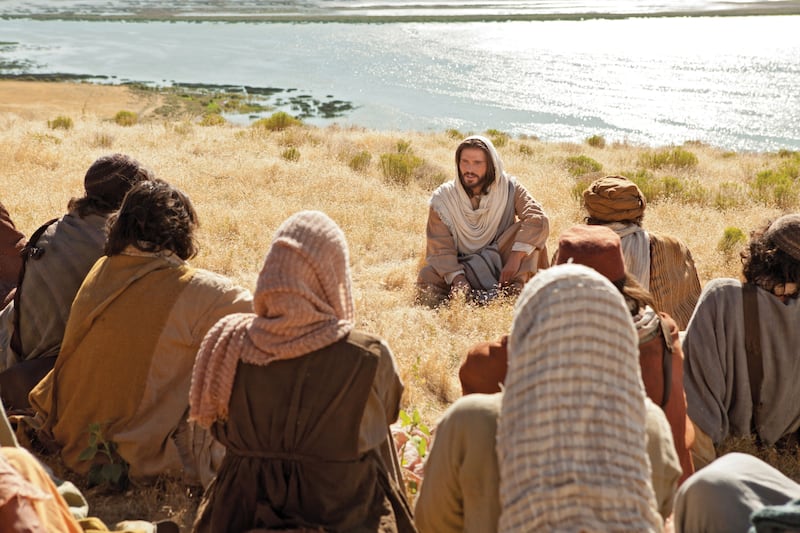
I love the stories of mercy that I see demonstrated in the mortal ministry of our Savior. I equally love the stories of mercy that I see again and again as I study the Old Testament. I believe His mercy is on greater display there than anywhere else. In the Old Testament, Jehovah is ever extending mercy. He covenants, He pleads, He humbles, He shows signs, He sends prophets and warnings and He invites Israel back.
While I learn about Christ’s suffering and death and Resurrection in the Gospels, I learn more about His ability and willingness to be a deliverer in the Old Testament. I revel in the opportunity to learn more about our majestic, loving, saving Savior and Redeemer.
Nature of Jehovah
This year is an opportunity to become better prepared to recognize the Messiah when He comes again. If each week of 2026, as we do our “Come, Follow Me” reading, we will ask ourselves what that reading teaches us about the nature of Jehovah, then we will find that each week we come to better know our Messiah. His infinite and perfected nature is beyond what we are capable of understanding, but we will grow closer to Him, and will be better able to draw on His transformative power, as we avail ourselves of every opportunity to understand another facet of His divine character. There are some facets we will understand only as we study the Old Testament — the book of scripture in which Christ said we could find eternal life and of which He said testified of Him (see John 5:39).
— Kerry Muhlestein is a professor of ancient scripture at Brigham Young University.

