




For Ron Dalgliesh, chief development officer at Edesia, the efforts to help those in need starts with a strip of paper.
That strip of paper is used to measure the width of a child’s upper arm to determine whether they are malnourished.
“This is the upper-arm circumference of a 3-year-old who has severe acute malnutrition,” Dalgliesh said while holding up the strip of paper rolled into a small circle. “That’s about the size of a quarter. … I think this just brings it home in terms of the urgency of need for children who are suffering from this.”

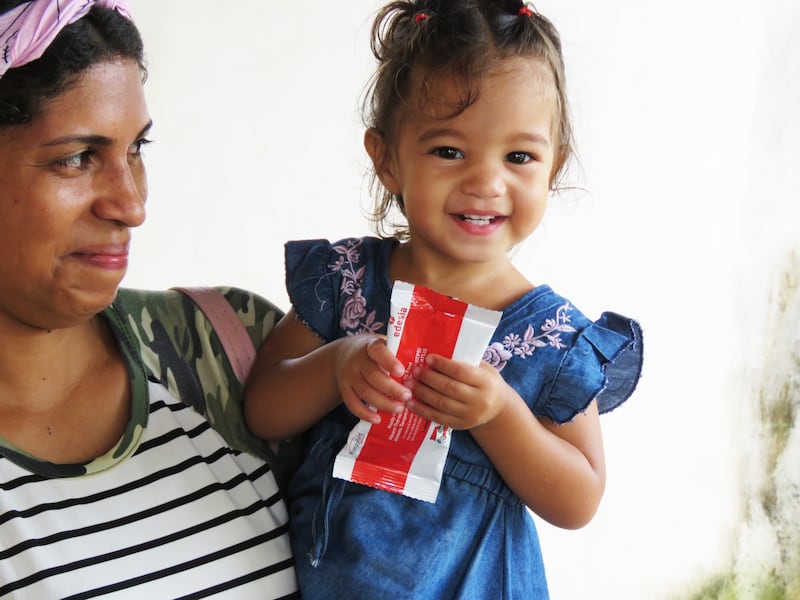
In contrast to the small circle representing the child’s arm, Dalgliesh holds up a small pack of food.
“This is the hope,” he said. “This little miracle called ‘Plumpy’Nut.’ … You take two to three packets of this for seven to eight weeks, you’ll transform a child.”
Dalgliesh said he’s seen children who were previously malnourished turn into healthy, happy children thanks to this food.
“It’s unbelievable. It’s remarkable. It’s a miracle.”

A full treatment — with several weeks worth of Plumpy’Nut for a single child — costs about $50 according to Dalgliesh. And because of a collaboration with The Church of Jesus Christ of Latter-day Saints, Edesia is getting this food to more children in need.
The Church’s efforts to care for those in need
Dalgliesh spoke about the efforts Edesia is making to solve the problem of malnutrition around the world along with leaders of the Church on Tuesday, March 10, 2026, in Salt Lake City.
Edesia is a nonprofit organization that makes Plumpy’Nut and distributes it throughout the world to mothers and children in need.
In 2025, the Church expended $1.58 billion in 196 countries and territories in efforts to care for those in need. The Church also donated 37,063,409 pounds of food through bishops’ storehouses and contributed to 569 emergency relief projects.
President Dallin H. Oaks and his counselors, President Henry B. Eyring and President D. Todd Christofferson, wrote that the Church seeks to follow Jesus Christ “by ministering to the sick, feeding the hungry and comforting the afflicted.”
“Every meal shared, every shelter built, every kindness offered becomes part of the Lord’s work. As we serve others, we are truly serving Him (see Matthew 25:40). In this way, each of us is answering His call to be a light to the world and to follow the Savior’s pattern of loving our neighbor.”

The Church works with other charitable organizations and nonprofits around the world to maximize the impact of these caring efforts. Edesia is one of these organizations, and Dalgliesh said he’s seen the real impact of the Church’s charitable donations in the lives of people in need.
Presiding Bishop W. Christopher Waddell said that when someone donates to the Church’s humanitarian fund, 100% of the money goes to humanitarian efforts.
“So if someone donates a dollar and you add all those dollars together, it means there’s a meal, it means there’s the $50 box, it means there’s shelter, it means we’re eliminating certain diseases,” he said.

Losing a home and finding a home
Kerri Murray, president of ShelterBox USA, said The Church of Jesus Christ of Latter-day Saints is “the most important partner in humanitarian relief, period.”
“They do so much to help bring emergency shelter to people who’ve lost everything — their homes, their livelihoods — in an instant,” Murray said.
ShelterBox has a mission to make sure everyone around the world has a safe place to call home. They do this by providing emergency shelter, tools and household supplies to displaced families.

Although the scale of the issues ShelterBox is trying to confront is massive, Murray said “we actually can have an impact, and we have a massive impact around the world.”
“It really always comes down to that one family that we were able to get back on their feet again,” Murray said.
Murray said she is inspired by one woman in particular whose story is emblematic of so many others.
“Her name is Esther, and she was a teenager living in Nigeria when Boko Haram stormed her village,” Murray said. “And they brutally raped and murdered her mother, and they killed her father and brothers. And she was able to run in the middle of the night and make it to the border of Cameroon, where she has lived ever since.”
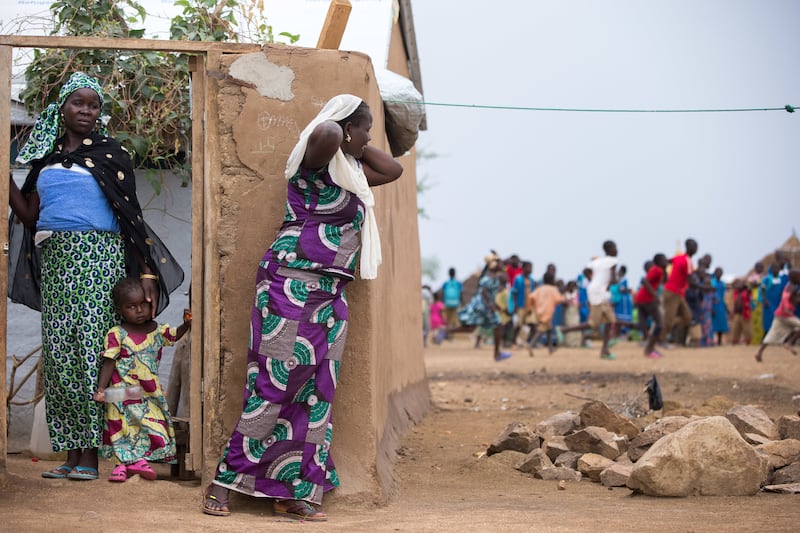
Murray said Esther experienced incredible trauma “like so many refugees and so many of them women and children.” But despite this, Esther was able to establish herself at the Minawao Refugee Camp, where ShelterBox was providing tents for new arrivals.
“She was able to take a sewing class, and she’s become the best seamstress in her block of the camp,” Murray said. “She’s now lived in that camp half her life. But she’s able to have a productive life as a seamstress. She’s able to get married, and she has two young children.”
Murray said the Church has provided support to enable Esther — and others like her — to be resilient.
“That is the reason why we do this work,” Murray said. “These problems often seem very far away, or they seem insurmountable, or you get fatigued because you’re hearing about them so much. But the reality is that we can actually make an impact in the lives of these families.”
Building self-reliance
In addition to working with collaborating organizations around the world to provide for those in need, the Church also offers free self-reliance courses to help people develop skills and build self-reliance through education, employment, finances and other topics.
Courses are completed individually or in small groups and focus on combining spiritual principles with practical skills. Job seekers, displaced persons and prospective students can all be blessed through these courses. Classes are Emotional Resilience, Personal Finances, Starting and Growing My Business, Education for Better Work, Find a Better Job and EnglishConnect.

Blaine Maxfield, managing director of the Church’s Welfare and Self-Reliance Services, said the Church tries to focus on giving people “a hand up rather than just a handout.”
From receivers to givers
Maxfield said during a recent Church News interview that he was also recently inspired by a woman in Honduras who received eggs as part of a poultry program from iDE — a nonprofit organization that empowers entrepreneurs to end poverty — with the support of the Church.
Berta Hernandez learned how to raise chickens in the program and quickly turned it into a productive business. Inspired by what she was able to accomplish, she created a group called Manos Unidas, or United Hands, in the remote Indigenous community of Monte de los Negros. She has become a pivotal figure in driving positive change in her community by taking the lead in the poultry program.

“As women in remote Indigenous communities, we often lack opportunities like this project provides,” Hernandez said. “I am proud to lead and bring positive change, showing that our efforts and sacrifices have a purpose.”
Another woman in the group, Yuri Guerra, is leading women in her own remote community of Sesesmil Primero.
For Guerra, the initiative was not just about raising chickens; it was a way to acquire more knowledge about poultry care and management.
“Knowledge is the basis of every human being, and so it is nice to have and to know how to handle the birds,” she said.
Guerra has gained more confidence to tackle challenges and grow in her personal and professional life. She also sees how her fellow community members have gained resilience.

“It has been a great opportunity for us,” Guerra said. “We are very motivated by the opportunity that was given to us.”
Guerra would like to see the initiative become a way to have a broader economic development. By expanding the group to include more participants, more women will have direct income opportunities, better employment and financial stability.
The collective effort of the women has led to success. With all the hens among the women’s groups, 1,500 people in the community gained access to higher-quality eggs at more affordable prices.

Said Maxfield: “First they were receivers, and now they’re givers. Now they’re going out to bless others in remarkable ways.”
Feeding the hungry
In 2025, the Church donated 37,063,409 pounds of food through bishops’ storehouses, equating to more than 30 million meals for people around the world.
In one community, a donation of food came at just the right time to help fill an empty food bank.
When Cheryl Jackson, the owner of Minnie’s Food Pantry in Plano, Texas, opened her food bank, she promised God that as long as there was food, she would continue to serve those who are hungry.
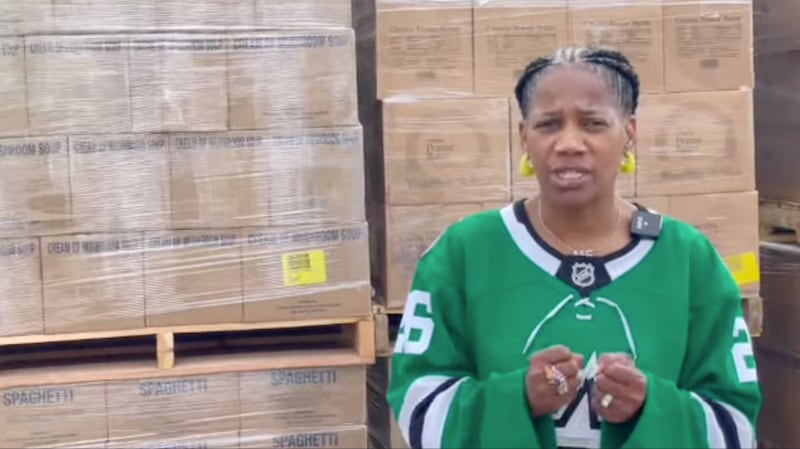
But that became difficult in May 2025 when, she said, the number of families seeking assistance grew every week, food costs rose, and there was a sharp decline in donations.
Jackson posted about the bare shelves on May 16, 2025, and less than a week later, the Church responded with a truck from Salt Lake City with 20,000 pounds of food for Minnie’s Food Pantry and 10,000 pounds for another nearby food bank in need, the All Community Outreach.
After the donation, Jackson said, “the need is great, but our God is so much greater that He touches your heart to say hunger is unacceptable in our community.”
Serving the one
In addition to the Church’s efforts to care for those in need worldwide, individual members of the Church offer up their own time and service to care for those in need in their own communities.

The Church teaches — and its members affirm through their actions — that selfless service is how one can follow the Savior’s two great commandments: to love God and love one another.
“Service is an imperative for those who worship Jesus Christ,” President Dallin H. Oaks said in the October 1984 general conference.
Ben Arkell and his family in Lehi, Utah, have been serving together for several years.
Although they’ve taken part in many organized service projects, Arkell said they frequently visit the elderly in their community together.

“We have built so many incredible bonds through that habit,” Arkell said. “We have seven children, and I have always felt like they were our secret weapons, because people are always willing to have these cute little kids visit them.”
The Primary service initiative began in 2025, where all Primaries around the world were invited to organize an annual service activity. After the invitation was issued, Primary children around the world responded in many different ways to serve others.
Arkell said he has learned that as he works to take care of others, he feels Heavenly Father and Jesus Christ are taking care of him.
“I want to be God’s hands. It’s one of my purposes in life,” he said.
Arkell has found fulfillment in serving others, especially in helping people know they are not forgotten.
He said during one activity with his family where they delivered special notes to old friends, one gentleman opened the door, chatted with the Arkell family and then said: “Thank you so much. It’s nice to know that I’m not forgotten.”
Said Arkell: “Those words have never left me. That was 10 years ago, but I still remember them and am so happy we made someone know that we care.”
