




Members of The Church of Jesus Christ of Latter-day Saints have long cherished the instruction found in Doctrine and Covenants 88:118, which reads in part, “Seek ye out of the best books words of wisdom.”
President Dallin H. Oaks reaffirmed the value of good books during October 2007 general conference when he said, “Of course it is good to view wholesome entertainment or to obtain interesting information. But not everything of that sort is worth the portion of our life we give to obtain it. Some things are better, and others are best. When the Lord told us to seek learning, He said, ‘Seek ye out of the best books words of wisdom.’”
In honor of World Book Day, celebrated April 23, here are 15 times that Church leaders have quoted classic literature during general conference.
Jane Austen

“Some selfishness exists even in good people. Jane Austen’s character Elizabeth mused, ‘I have been a selfish being all my life, in practice, though not in principle’ (Jane Austen, ‘Pride and Prejudice’). The selfish individual has a passion for the vertical pronoun ‘I.’ Significantly, the vertical pronoun ‘I’ has no knees to bend, while the first letter in the pronoun ‘we’ does.”
— The late Elder Neal A. Maxwell, then a member of the Quorum of the Twelve Apostles, October 1990 general conference, “Put Off the Natural Man, and Come Off Conqueror”
Charlotte Brontë

“One of my favorite books is the British classic ‘Jane Eyre,’ written by Charlotte Brontë and published in 1847. The main character, Jane Eyre, is a penniless, teenage orphan who exemplifies what it means to be true. In this fictional account, a man, Mr. Rochester, loves Miss Eyre but is unable to marry her. Instead, he begs Miss Eyre to live with him without the benefit of marriage. Miss Eyre loves Mr. Rochester as well, and for a moment she is tempted, asking herself, ‘Who in the world cares for you? Or who will be injured by what you do?’
“Quickly Jane’s conscience answers: ‘I care for myself. The more solitary, the more friendless, the more unsustained I am, the more I will respect myself. I will keep the law given by God. … Laws and principles are not for the times when there is no temptation: they are for such moments as this. … If at my individual convenience I might break them, what would be their worth? They have a worth — so I have always believed. … Preconceived opinions, foregone determinations, are all I have at this hour to stand by: there I plant my foot.’
“In a desperate moment of temptation, Jane Eyre was true to her beliefs, she trusted in the law given by God, and she planted her foot in resistance to temptation.”
— Sister Ann M. Dibb, then the second counselor in the Young Women general presidency, April 2011 general conference, “I Believe in Being Honest and True”
Lewis Carroll

“Most of you are familiar with Alice in Lewis Carroll’s classic novel ‘Alice’s Adventures in Wonderland.’ You will remember that she comes to a crossroads with two paths before her, each stretching onward but in opposite directions. As she contemplates which way to turn, she is confronted by the Cheshire Cat, of whom Alice asks, ‘Which path shall I follow?’
“The cat answers, ‘That depends where you want to go. If you do not know where you want to go, it doesn’t matter which path you take.’
“Unlike Alice, we know where we want to go, and it does matter which way we go, for the path we follow in this life leads to our destination in the next life.”
— The late President Thomas S. Monson, then the president of the Church, April 2016 general conference, “Choices”
Charles Dickens
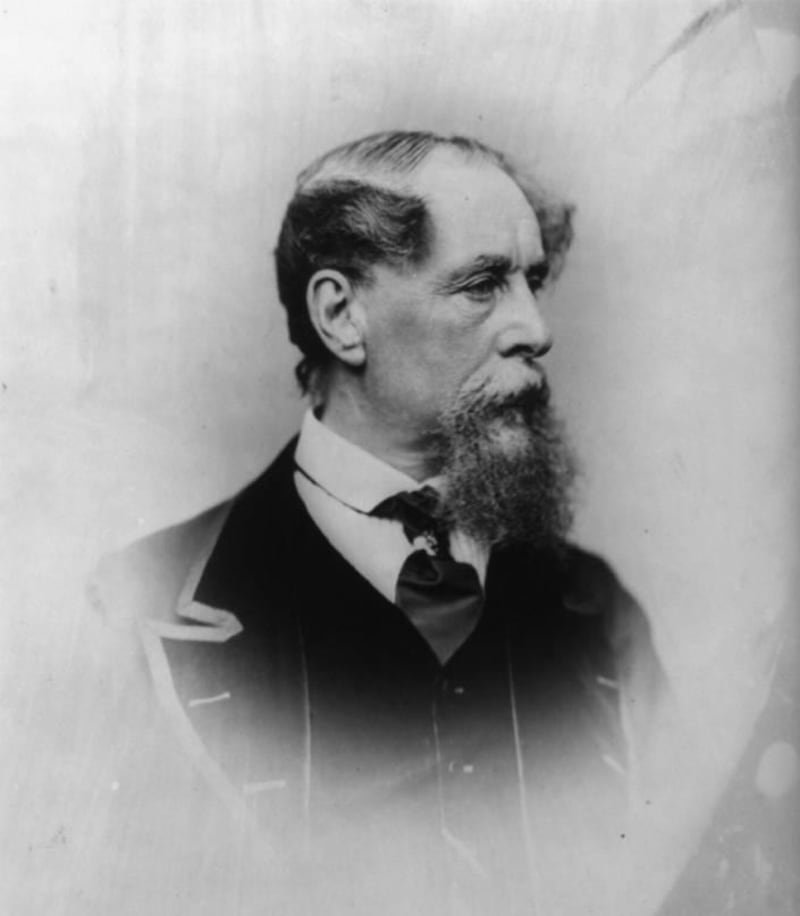
“Charles Dickens famously began his classic novel ‘A Tale of Two Cities’ with the assertion that ‘it was the best of times, it was the worst of times.’ In a sense, this is true in our day.
“We live in a turbulent time when ‘the whole earth [is] in commotion’ (Doctrine and Covenants 45:26). President Russell M. Nelson’s admonition to be peacemakers, as followers of Jesus Christ… is an essential part of fostering unity, peace and healing for ‘the worst of times.’
“We also live in ‘the best of times’... The Lord is truly hastening His work in our time. We should be profoundly grateful for the hastening, which has occurred and is occurring despite these challenging times. We live in a day when the Lord’s followers are privileged to hear His voice and respond with open hearts and minds. Members of The Church of Jesus Christ of Latter-day Saints, who are committed to the Savior and His commandments, are finding purpose and profound personal peace.”
— Elder Quentin L. Cook of the Quorum of the Twelve Apostles, October 2025 general conference, “The Lord Is Hastening His Work”
“Long ago the renowned author Charles Dickens wrote of opportunities that await. In his classic volume entitled ‘Great Expectations,’ Dickens described a boy by the name of Philip Pirrip, more commonly known as Pip. Pip was born in unusual circumstances. He was an orphan. He wished with all his heart that he were a scholar and a gentleman. Yet all of his ambitions and all of his hopes seemed doomed to failure. Do you young men sometimes feel that way? Do those of us who are older entertain these same thoughts?
“Then one day a London lawyer by the name of Jaggers approached little Pip and told him that an unknown benefactor had bequeathed to him a fortune. The lawyer put his arm around the shoulder of Pip and said to him, ‘My boy, you have great expectations.’
“Tonight, as I look at you young men and realize who you are and what you may become, I declare, ‘You have great expectations’ — not as the result of an unknown benefactor but as the result of a known benefactor, even our Heavenly Father, and great things are expected of you.”
— The late President Thomas S. Monson, then the first counselor in the First Presidency, April 2004 general conference, “The Call for Courage”
“Why is the story ‘A Christmas Carol’ so popular? Why is it ever new? I personally feel it is inspired of God. It brings out the best within human nature. It gives hope. It motivates change. We can turn from the paths which would lead us down and, with a song in our hearts, follow a star and walk toward the light. We can quicken our step, bolster our courage and bask in the sunlight of truth. We can hear more clearly the laughter of little children. We can dry the tear of the weeping. We can comfort the dying by sharing the promise of eternal life. If we lift one weary hand which hangs down, if we bring peace to one struggling soul, if we give as did the Master, we can — by showing the way — become a guiding star for some lost mariner.”
— The late President Thomas S. Monson, then the first counselor in the First Presidency, October 2001 general conference, “Now Is the Time”
C.S. Lewis

“When our two oldest daughters… were little, one of their favorite stories was ‘The Chronicles of Narnia: The Lion, the Witch and the Wardrobe’ [by C.S. Lewis]. We all fell in love with the lion, Aslan. One of our most memorable nights reading the book was when the great lion gave his life for Edmund. Memorable because parents and daughters shed tears as the lion’s life was taken on the Stone Table by the Witch. Memorable because hope persisted, despite the tragedy, until the spectacular happened. Squeals of joy resounded in that little bedroom when Aslan was resurrected and said, ‘If [the Witch knew the true meaning of sacrifice], … she would [know] that [if] a willing victim who had committed no treachery [died] in a traitor’s stead, the [Stone] Table would crack and Death itself would [begin to unwind].’
“Jesus Christ heals all wounds. Jesus Christ makes it possible to live again.”
— Elder Jeremy R. Jaggi, General Authority Seventy, October 2025 general conference, “Humble Souls at Altars Kneel”
“Many believe that for service to be meaningful it should consist of having elaborate plans and forming a committee. Although many of these worthwhile projects help, much of the service needed in the world today relates to our day-to-day associations with each other. Often we find these opportunities within the confines of our own home, neighborhood, and ward.
“The following advice, given by the deceitful Screwtape to his nephew Wormwood in C.S. Lewis’s ‘The Screwtape Letters,’ describes a common malady afflicting many of us today: ‘Do what you will, there is going to be some benevolence, as well as some malice, in your patient’s soul. The great thing is to direct the malice to his immediate neighbours whom he meets every day and to thrust his benevolence out to the remote circumference, to people he does not know. The malice thus becomes wholly real and the benevolence largely imaginary.’”
— Elder Michael J. Teh, then a General Authority Seventy, October 2007 general conference, “Out of Small Things”
William Shakespeare

“William Shakespeare’s famous words pronounce that missed opportunities can bind our future:
“‘There is a tide in the affairs of men
“‘Which, taken at the flood, leads on to fortune;
“‘Omitted, all the voyage of their life
“‘Is bound in shallows and in miseries’ (William Shakespeare, ‘Julius Caesar,’ act 4, scene 3, lines 249-52).
“Choices do have consequences, but we know in the gospel of Jesus Christ that when we lose our way spiritually, the Savior still allows us to change.”
— Elder Clark G. Gilbert of the Quorum of the Twelve Apostles, April 2026 general conference, “Come Home”
“Surely each of us could cite an endless array of old scars and sorrows and painful memories that this very moment still corrode the peace in someone’s heart or family or neighborhood. Whether we have caused that pain or been the recipient of the pain, those wounds need to be healed so that life can be as rewarding as God intended it to be. Like the food in your refrigerator that your grandchildren carefully check on your behalf, those old grievances have long since exceeded their expiration date. Please don’t give precious space in your soul to them any longer. As Prospero said to the regretful Alonso in ‘The Tempest,’ ‘Let us not burden our remembrance with a heaviness that’s gone’ (William Shakespeare, ‘The Tempest,’ act 5, scene 1, lines 199-200).”
— The late President Jeffrey R. Holland, then a member of the Quorum of the Twelve Apostles, October 2018 general conference, “The Ministry of Reconciliation”
“While political independence, economic freedom, and free agency may contribute to liberty of the soul, they do not guarantee it. …
“Cardinal Wolsey learned, to his sorrow, how little political independence and even political power can contribute to true liberty. You may recall that he gave a long life in the service of two English sovereigns, enjoying all the while great freedom and political power. Finally, however, he was shorn of all his greatness by an impatient king. As he stood, disillusioned, among the ruins of his life, he lamented to his friend,
“‘O Cromwell, Cromwell!
“‘Had I but served my God with half the zeal
“‘I served my king, he would not in mine age
“‘Have left me naked to mine enemies’ (William Shakespeare, ‘Henry VIII,’ act 3, scene 2).”
— The late President Marion G. Romney, then the second counselor in the First Presidency, October 1981 general conference, “The Perfect Law of Liberty”
“Caring for others, like the ‘quality of mercy,’ is ‘twice blest: Bless[ing] him that gives and him that [receives]’ (William Shakespeare, ‘The Merchant of Venice,’ act 4, scene 1, lines 184, 186-87). In giving we grow in patience, humility, faith — all the elements of that pure love called charity. Every sister, whether she is single or married, living alone or in a family, needs the opportunity to develop these Christlike attributes.”
— The late Sister Shirley W. Thomas, then the second counselor in the Relief Society general presidency, April 1980 general conference, “Welfare Principles in Relief Society”
Robert Louis Stevenson
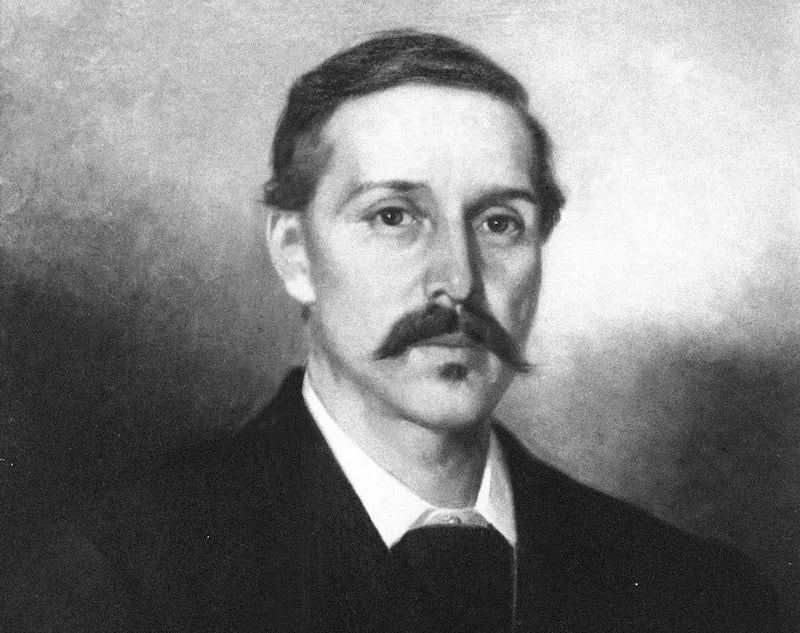
“I should like to speak about the battle that each of us has to wage within ourselves. …
“Robert Louis Stevenson captured this constant struggle between good and evil in the classic novel about Dr. Jekyll and Mr. Hyde. The story tells us that in the beginning, ‘Dr. Jekyll is a highly respected London physician, a good and kindly man, who in his youth had showed inclinations toward evil which, however, he succeeded in suppressing. Interested in drugs, the doctor now chances upon one which enables him to change his external form to that of a repulsive dwarf, the very embodiment of evil, whom he calls Mr. Hyde. A similar dose permits him to return to the form and personality of the benevolent doctor. Many times the doctor becomes Mr. Hyde, thereby giving this side of his nature more and more power. Jekyll finds it increasingly difficult to regain his virtuous entity and also finds himself occasionally becoming Hyde without the use of the drug’ (in Hiram Haydn and Edmund Fuller, ‘Thesaurus of Book Digests (1949),’ page 206). In the character of Mr. Hyde, he commits murder, and when the drug will no longer restore him to the kindly Dr. Jekyll, the truth is discovered and Hyde kills himself. The misuse of drugs destroyed his life. So it can be in real life.
“Now the key to never turning into an evil, wicked Mr. Hyde is to determine not to yield to destroying temptations. Never, never experiment with any addictive substance. Do not ever use tobacco in any form or take any other enslaving substances. Stay away from intoxicating liquor. Addictions bring tragic consequences that are hard to overcome. Blessings come from holding true to our principles.”
— The late President James E. Faust, then the second counselor in the First Presidency, October 2000 general conference, “The Enemy Within”
J.R.R. Tolkien
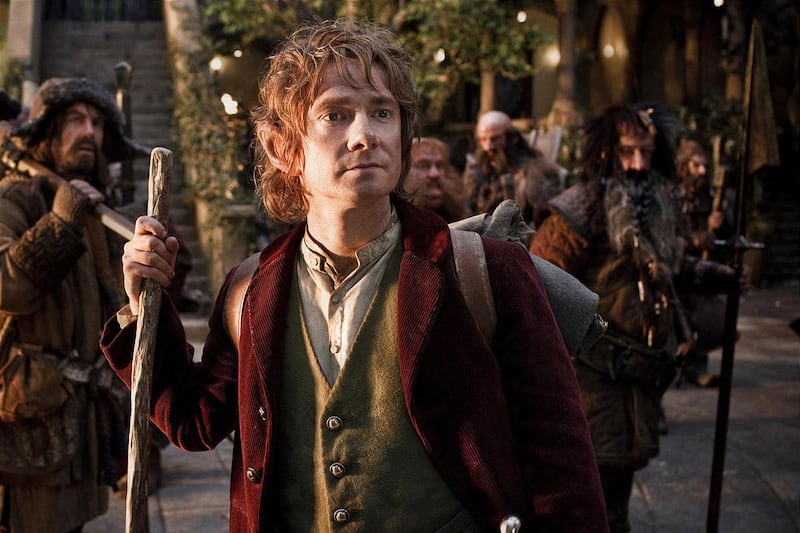
“A beloved children’s fantasy novel written many years ago begins with the sentence ‘In a hole in the ground there lived a hobbit’ (J.R.R. Tolkien, ‘The Hobbit or There and Back Again’).
“The story of Bilbo Baggins is about a most normal and unremarkable hobbit who is presented with a most remarkable opportunity — the wonderful chance at adventure and the promise of a great reward. …
“Perhaps one of the reasons this story resonates with so many is because it is our story too. Long, long ago, even before we were born, in an age dimmed by time and clouded from memory, we too were invited to embark on an adventure. It was proposed by God, our Heavenly Father. Accepting this adventure would mean leaving the comfort and security of His immediate presence. It would mean coming to earth for a journey filled with unknown danger and trial.
“We knew it would not be easy. But we also knew that we would gain precious treasures, including a physical body and experiencing the intense joys and sorrows of mortality. …
“And so, trusting the promises and power of God and His Beloved Son, we accepted the challenge. I did. And so did you. We agreed to leave the security of our first estate and embark on our own great adventure of ‘there and back again.’”
— President Dieter F. Uchtdorf, then a member of the Quorum of the Twelve Apostles, October 2019 general conference, “Your Great Adventure”
“We may not be able to fix the whole world, but we can strive to fix what may be amiss in our own families. Tolkien reminds us: ‘It is not our part to master all the tides of the world, but to do what is in us for the succour of those years wherein we are set, uprooting the evil in the fields that we know, so that those who live after may have clean earth to till. What weather they shall have is not ours to rule’ (J.R.R. Tolkien, ‘The Return of the King’).
“Therefore, brothers and sisters, in our own little family plots, we can bequeath to the succeeding generations ‘clean earth to till.’ Thus not only does charity begin at home, but so does hope.”
— The late Elder Neal A. Maxwell, then a member of the Quorum of the Twelve Apostles, October 1998 general conference, “Hope through the Atonement of Jesus Christ”
