


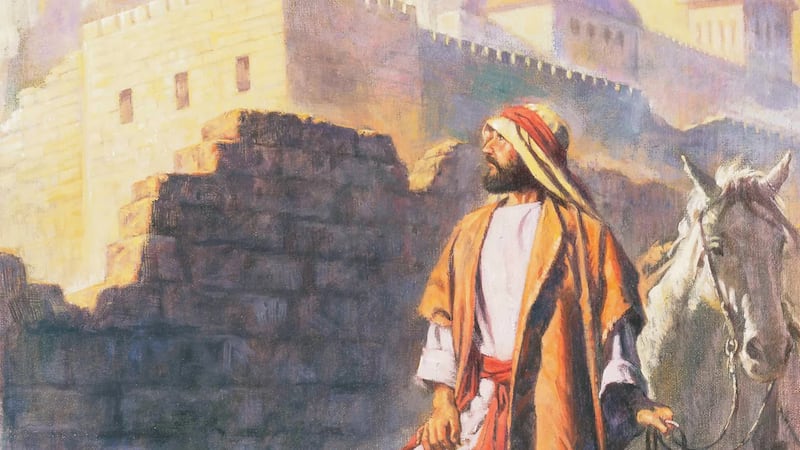

This week’s “Come, Follow Me” study guide covers Ezra 1, 3-7; and Nehemiah 2, 4-6 and 8, which includes Nehemiah rebuilding Jerusalem’s walls.
Following are a few quotes from past and present leaders of The Church of Jesus Christ of Latter-day Saints about these chapters of scripture.
‘I am doing a great work’
“Nehemiah of the Old Testament is a great example of staying focused and committed to an important task. Nehemiah was an Israelite who lived in exile in Babylon and served as cupbearer to the king. One day the king asked Nehemiah why he seemed so sad. Nehemiah replied, ‘Why should not my countenance be sad, when the city, the place of my fathers’ [graves], lieth waste, and the gates thereof are consumed with fire?’ (Nehemiah 2:3)
“When the king heard this, his heart was softened, and he gave Nehemiah the authority to return to Jerusalem and rebuild the city. However, not everyone was happy with this plan. In fact, several rulers who lived near Jerusalem grieved exceedingly ‘that there was come a man to seek the welfare of the children of Israel’ (Nehemiah 2:10). These men ‘took great indignation, and mocked the Jews’ (Nehemiah 4:1).
“Fearless, Nehemiah did not allow the opposition to distract him. Instead, he organized his resources and manpower and moved forward rebuilding the city, ‘for the people had a mind to work’ (Nehemiah 4:6).
“But as the walls of the city began to rise, opposition intensified. Nehemiah’s enemies threatened, conspired and ridiculed. Their threats were very real, and they grew so intimidating that Nehemiah confessed, ‘They all made us afraid’ (Nehemiah 6:9). In spite of the danger and the ever-present threat of invasion, the work progressed. It was a time of stress, for every builder ‘had his sword girded by his side, and so builded’ (Nehemiah 4:18).
“As the work continued, Nehemiah’s enemies became more desperate. Four times they entreated him to leave the safety of the city and meet with them under the pretense of resolving the conflict, but Nehemiah knew that their intent was to do him harm. Each time they approached him, he responded with the same answer: ‘I am doing a great work, so that I cannot come down’ (Nehemiah 6:3).
“What a remarkable response. With that clear and unchanging purpose of heart and mind, with that great resolve, the walls of Jerusalem rose until they were rebuilt in an astonishing 52 days.
“Nehemiah refused to allow distractions to prevent him from doing what the Lord wanted him to do. ...
“I wonder, my dear brethren of the priesthood, what could be accomplished if we all, like the people of Nehemiah, ‘had a mind to work.’ I wonder what could be accomplished if we ‘put away childish things’ (1 Corinthians 13:11) and gave ourselves, heart and soul, to becoming worthy priesthood bearers and true representatives of the Lord Jesus Christ. ...
“We live in times of great challenges and great opportunities. The Lord is seeking men like Nehemiah — faithful brethren who fulfill the oath and covenant of the priesthood. He seeks to enlist unfaltering souls who diligently go about the work of building the kingdom of God — those who, when faced with opposition and temptation, say in their hearts, ‘I am doing a great work and cannot come down.’"
— President Dieter F. Uchtdorf, then the second counselor in the First Presidency, April 2009 general conference, “We Are Doing a Great Work and Cannot Come Down”
Pray and watch
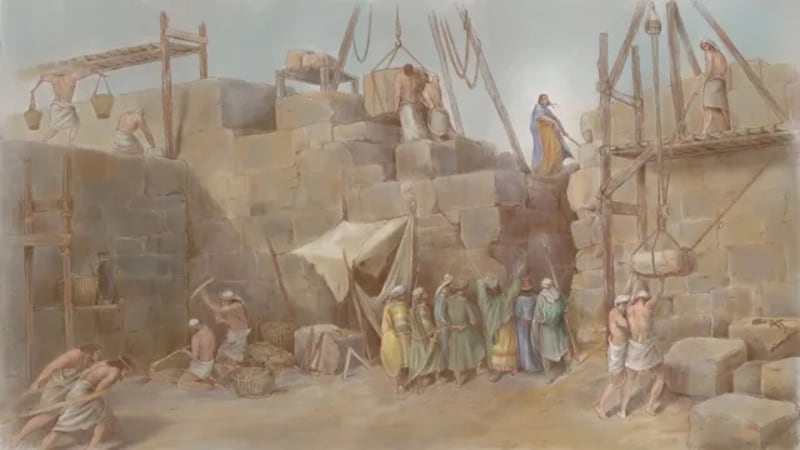
“When the Israelites returned from their long captivity in Babylon, they found their city in ruins. The protecting walls of Jerusalem lay in rubble. Their enemies moved among them with great influence and the Israelites were subject to them.
“Then came Nehemiah the prophet, known now as ‘the wall builder.’ He rallied the Israelites to their own defense. Under his direction they began to rebuild the wall.
“At first their enemies ridiculed them. Tobiah, the Ammonite, mocked them, saying, ‘Even that which they build, if a fox go up, he shall even break down their stone wall’ (Nehemiah 4:3).
“But Nehemiah consoled his people and set to work. The enemy was everywhere. ‘Nevertheless,’ he recorded, ‘we made [a] prayer unto our God, and set a watch against them’ (Nehemiah 4:9).
“Sisters, think carefully upon that. They ‘made a prayer,’ and ‘set a watch,’ and proceeded with their work.”
— The late President Boyd K. Packer, then a member of the Quorum of the Twelve Apostles, October 1980 general conference, “The Circle of Sisters”
The temple of Zerubbabel
“Prophets such as Isaiah and Jeremiah warned Jerusalem’s citizens that if they continued breaking their covenants with the Lord, the city and their temple would be destroyed. This prophecy proved true when Babylon initially invaded Judah around 600 B.C., destroying its villages, towns, cities and religious life.
“Jerusalem finally fell in 587 B.C., and the exiled Jews were forced out of their destroyed homeland (see Psalm 137:1). A few people remained in and around Jerusalem — including the Samaritans, who eventually intermarried with non-Israelites (see Jeremiah 40:7, 11-12). Later the exiles began to return to Palestine and to rebuild their homes and religious life (see Ezra 3). The temple in Jerusalem, finally rebuilt by 515 B.C., once again became the center of Jewish worship.
“Because the Jews rejected the Samaritans’ offer to help reconstruct the temple, the Samaritans built an alternate temple in the late fourth century on Mount Gerizim, some 40 miles (64 km) north of Jerusalem. Thus, the worship of and belief in Jehovah fragmented between the new temple at Mount Gerizim and the Jerusalem temple because they offered competing claims of priesthood authority (see John 4:20).”
— S. Kent Brown, professor emeritus of ancient scripture at Brigham Young University, and Richard Neitzel Holzapfel, then a professor of Church history and doctrine at BYU, in their December 2014 Liahona article, “The Lost 500 Years: From Malachi to John the Baptist”
“Thus, about 600 years before the earthly advent of our Lord, Israel was left without a temple. The people had become idolatrous and altogether wicked, and the Lord had rejected them and their sanctuary. The kingdom of Israel, comprising approximately 10 of the 12 tribes, had been made subject to Assyria about 721 B.C., and a century later the kingdom of Judah was subdued by the Babylonians. For 70 years the people of Judah — thereafter known as Jews — remained in captivity, even as had been predicted (see Jeremiah 25:11-12; 29:10).
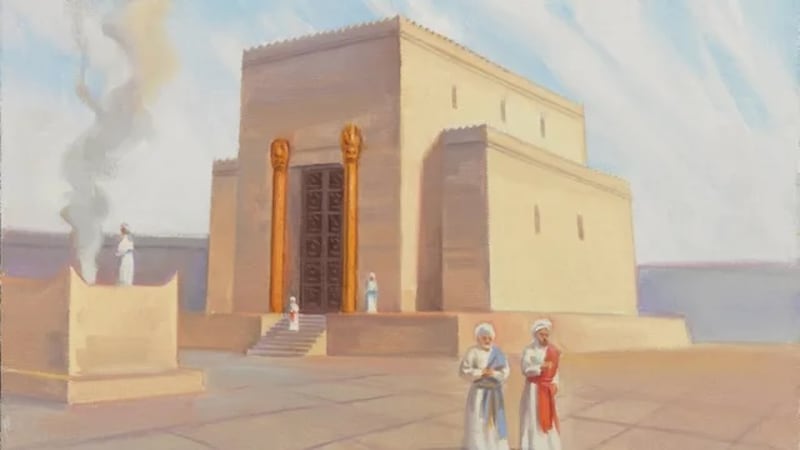
“Then, under the friendly rule of Cyrus (see Ezra 1, 2) and Darius (see Ezra 6), they were permitted to return to Jerusalem and once more to raise a temple in accordance with their faith. In remembrance of the director of the work, the restored temple is known in history as the temple of Zerubbabel. While this temple was greatly inferior in richness of finish and furniture as compared with the splendid Temple of Solomon, it was nevertheless the best the people could build, and the Lord accepted it as an offering typifying the love and devotion of His covenant children.”
— The late Elder James E. Talmage, former member of the Quorum of the Twelve Apostles, in the October 2010 Liahona article, “A History of Temples”
Temple building
“The Church has now entered the most committed era of temple building in its history. … This is an extraordinary blessing for us as members of the Church. The Old Testament describes some of the joy that comes from people building these holy places: ‘And they sang together… in praising and giving thanks unto the Lord. … And all the people shouted with a great shout, when they praised the Lord, because the foundation of the house of the Lord was laid’ (Ezra 3:11; see also verses 10, 12-13).
“Watching these new temples being built, I believe that we too will have occasion to praise the Lord and weep for joy.”
— The late Elder David E. Sorensen, then a General Authority Seventy, October 1998 general conference, “Small Temples — Large Blessings”
Feast on the scriptures
“Perhaps if we were hungrier for the scriptures, they would be even sweeter and more precious to us. …
“Imagine the spiritual hunger we might feel if we had no scriptures on which to feast. Through the ages many people have been without a record of the law. Think of… times in the Old Testament when the people either did not have the book of the law or had forgotten it, as when Ezra and Nehemiah had to reeducate the Jews returning from captivity in Babylon in the book of the law (see Nehemiah 8:1-13). … We should learn early in our lives to love the scriptures, to feast upon them and to learn from them.”
— Sister Susan W. Tanner, then the Young Women general president, in her September 2005 Brigham Young University devotional, “Scriptures — More Precious Than Gold and Sweeter Than Honey”
Cyrus the Great
“Cyrus the Great (date of birth unknown) was a descendant of a line of kings ruling in Anzan (Babylonian Ansan), a country known to the nations west of it as Edom (highland). Although much is missing of the details of the life and activities of Cyrus the Great, there is enough to establish him as a great leader, a useful son in the Lord’s plan for his children, especially for ancient Israel. Living something more than 500 years B.C., he figured in the prophecies of the Old Testament — mentioned in 2 Chronicles 36:22-23 and Ezra 1:1-2 and by the prophets Ezekiel, Isaiah and Daniel. …
“‘And whosoever remaineth in any place where he sojourneth, let the men of his place help him with silver, and with gold, and with goods, and with beasts, beside the freewill offering for the house of God that is in Jerusalem.
“‘Then rose up the chief of the fathers of Judah and Benjamin, and the priests, and the Levites, with all them whose spirit God had raised, to go up to build the house of the Lord which is in Jerusalem.
“‘And all they that were about them strengthened their hands with vessels of silver, with gold, with goods, and with beasts, and with precious things, beside all that was willingly offered. Also Cyrus the king brought forth the vessels of the house of the Lord, which Nebuchadnezzar had brought forth out of Jerusalem, and had put them in the house of his gods;
“‘Even those did Cyrus king of Persia bring forth by the hand of Mithredath the treasurer, and numbered them unto Sheshbazzar, the prince of Judah.
“‘And this is the number of them: thirty chargers of gold, a thousand chargers of silver, nine and twenty knives,
“‘Thirty basins of gold, silver basins of a second sort four hundred and ten, and other vessels a thousand.
“‘All the vessels of gold and of silver were five thousand and four hundred. All these did Sheshbazzar bring up with them of the captivity that were brought up from Babylon unto Jerusalem’ (Ezra 1:4-11).
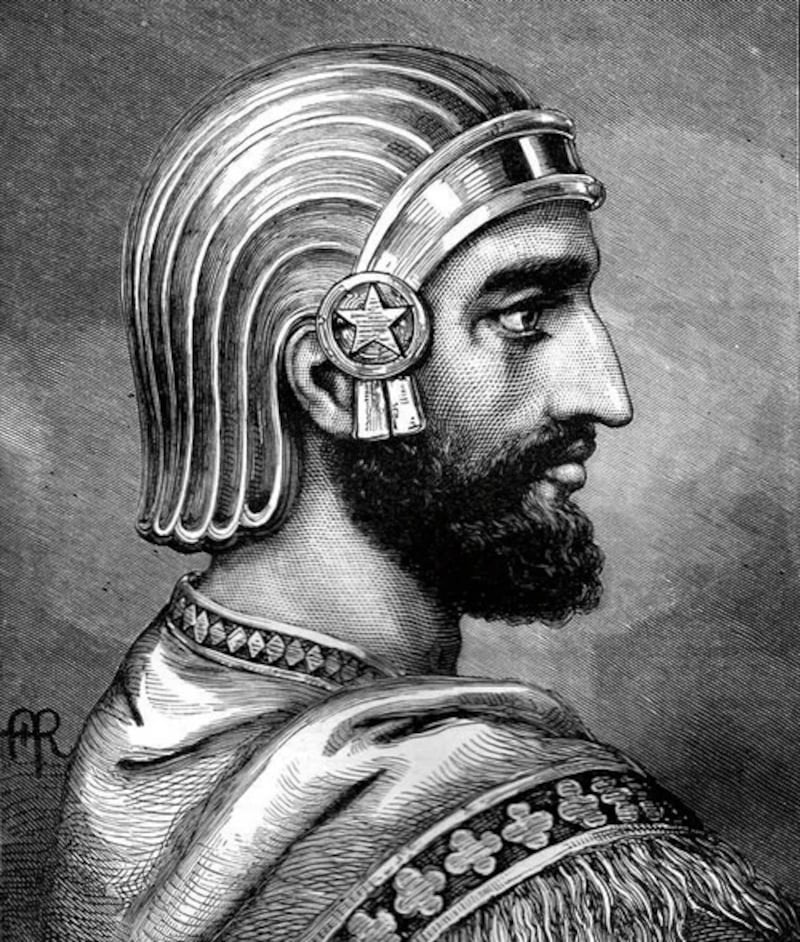
“Cyrus repaired the shrines and pacified tributary peoples by restoring to them the images of their gods. Among those whose religious feelings he thus regarded were the captive Hebrews, to whom he at the same time restored certain political and social rights. The coming of this deliverer had been foretold to them by the prophets, and no doubt the faithful welcomed him with hope and joy. He gave them permission to return to Jerusalem and directed that Jehovah’s temple should be there rebuilt at the expense of his own treasury. The Lord of us all used this powerful leader as an instrument to accomplish His purposes, as He had done before and will do many times again in the days ahead. Cyrus the Great is reported to have spent the last years of his life reducing to order the affairs of his vast empire to the blessing of the people. He apparently was politic and considerate, knowing how to use the sentiments of others for large, beneficial and political ends. And even if his friendly treatment of the Hebrews sprang mainly from a desire to have attached subjects on a threatened frontier, he was nonetheless their deliverer from bondage.
“Cyrus has been referred to as a nonreligious leader with religious, Christian ideals. … Yes, God, our Father, uses the men of the earth, especially good men, to accomplish His purposes.”
— The late President Ezra Taft Benson, then the president of the Quorum of the Twelve Apostles, in his May 1973 Brigham Young University devotional, “People — World Celebration in Iran”
