





This week’s “Come, Follow Me” study guide covers 2 Chronicles 14-20, 26 and 30, which includes the stories of Uzziah and Hezekiah.
Following are a few quotes from past and present leaders of The Church of Jesus Christ of Latter-day Saints about these chapters of scripture.
Follow the prophet
“My friends, we are blessed to be led by prophets, who are inspired men called to speak for the Lord. They are called to make known God’s will and His true character through their teachings. We can always trust the living prophets. Their teachings reflect the will of the Lord. … In 2 Chronicles in the Old Testament, we read, ‘Believe in the Lord your God, so shall ye be established; believe his prophets, so shall ye prosper’ (2 Chronicles 20:20).”
— Elder Ulisses Soares of the Quorum of the Twelve Apostles in the June 2023 Liahona article “Light, Truth and Our Walk With Jesus Christ”
“Unfortunately, messengers of divinely mandated commandments are often no more popular today than they were anciently … . ‘Hate’ is an ugly word, yet there are those today who would say with the corrupt Ahab, ‘I hate [the prophet Micaiah]; for he never prophesied good unto me, but always [prophesied] evil’ (2 Chronicles 18:7). That kind of hate for a prophet’s honesty cost Abinadi his life. As he said to King Noah: ‘Because I have told you the truth ye are angry with me. … Because I have spoken the word of God ye have judged me that I am mad’ (Mosiah 13:4) or, we might add, provincial, patriarchal, bigoted, unkind, narrow, outmoded and elderly. …
“Be strong. Live the gospel faithfully even if others around you don’t live it at all. Defend your beliefs with courtesy and with compassion, but defend them. A long history of inspired voices … point you toward the path of Christian discipleship.”
— The late President Jeffrey R. Holland, then a member of the Quorum of the Twelve Apostles, April 2014 general conference, “The Cost — and Blessings — of Discipleship”
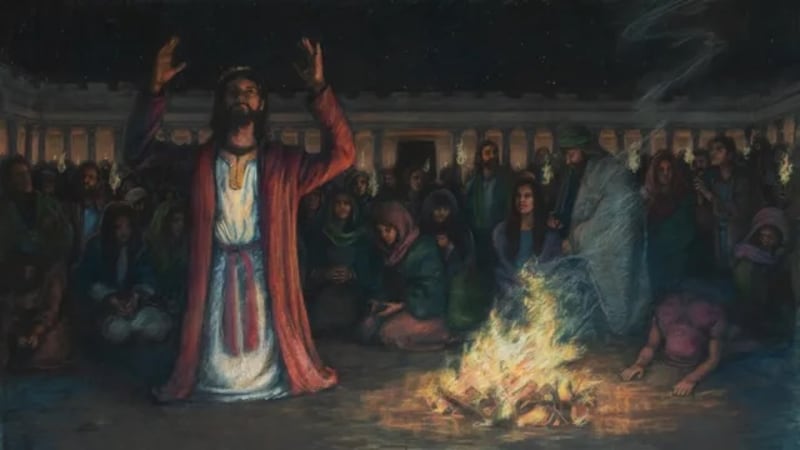
“The prophets of old taught well the importance of listening to the voice of prophets. The story of Jehoshaphat found in 2 Chronicles 20 is an example. King Jehoshaphat had several great armies coming to battle with him in an attempt to possess his land. Understandably, he was seized with dreadful fear, so he proclaimed a fast throughout all his kingdom and gathered the people of Judah together to plead for guidance from the Lord. Jehoshaphat humbly and earnestly prayed, ‘O our God, … we have no might against this great company that cometh against us; neither know we what to do: but our eyes are upon thee’ (2 Chronicles 20:12).
“Then came the answer of the Lord through the prophet Jahaziel: ‘Hearken ye, all Judah, and ye inhabitants of Jerusalem, and thou king Jehoshaphat, Thus saith the Lord unto you, Be not afraid nor dismayed by reason of this great multitude; for the battle is not yours, but God’s. …
“‘Fear not, nor be dismayed; … for the Lord will be with you’ (2 Chronicles 20:15, 17).
“Jehoshaphat and all the inhabitants of Jerusalem fell in thankful prayer before the Lord.
“Jehoshaphat then gave very important counsel that we today would do well to obey. Indeed, just as the people of Judah, our lives may depend upon it — even our eternal lives: ‘Believe in the Lord your God, so shall ye be established; believe his prophets, so shall ye prosper’ (2 Chronicles 20:20).
“As promised, the Lord protected the good people of Judah. As Jehoshaphat’s forces looked on, those armies which came to battle against them fought so fiercely among themselves that they completely destroyed one another before they ever reached the people of Judah. Listen to a prophet’s voice and obey. There is safety in following the living prophet.”
— The late Elder Robert D. Hales, then a member of the Quorum of the Twelve Apostles, April 1995 general conference, “Hear the Prophet’s Voice and Obey”
Trust in the Lord
“The book of 2 Chronicles tells of a time when the enemies of the Kingdom of Judah had gathered to destroy them. Survival seemed impossible. The people fasted and prayed for deliverance. On the night before the battle was to occur, Jahaziel the priest declared to King Jehoshaphat, ‘Be not afraid nor dismayed by reason of this great multitude; for the battle is not yours, but God’s’ (2 Chronicles 20:15). When the morning came, the enemies turned on each other, and Judah was not harmed (see 2 Chronicles 20:1-30). There is great wisdom and comfort in those words: ‘The battle is not yours, but God’s.’ In fact, we get in trouble when we rely solely on our own strength.”
— Elder Gary B. Sabin, then a General Authority Seventy, in the November 2023 Brigham Young University devotional “Fear Not and Return With Honor”
“Even when the winds of adversity blow, our Father keeps us anchored to our hope. … Even when our trials seem overwhelming, we can draw strength and hope from the sure promise of the Lord: ‘Be not afraid nor dismayed … for the battle is not yours, but God’s’ (2 Chronicles 20:15).”
— The late Elder Joseph B. Wirthlin, then a member of the Quorum of the Twelve Apostles, October 1998 general conference, “Cultivating Divine Attributes”
“How well are we doing with what we have, with what we know? I am only hours away from a sobering interview with another beautiful young person who has apparently experienced failure of relationship at every level — with family, friends, leaders, teachers, even with God, she felt. She seemed so alone in the presence of great pressures that she surrendered to the enemy for a time. Now she has some help. She has learned that Christ the Lord has the answer; she will be liberated because she is looking to Him who is strengthening her in this and all things. …
“Asa, king of Judah, commissioned of God to the conflict, facing an enemy army of more than a million soldiers, gave us the key. He said, ‘We rest on thee, and in thy name we go’ (2 Chronicles 14:11).”
— The late Elder Marion D. Hanks, then an assistant to the Council of the Twelve, October 1972 general conference, “Every Man in His Own Place”
Uzziah
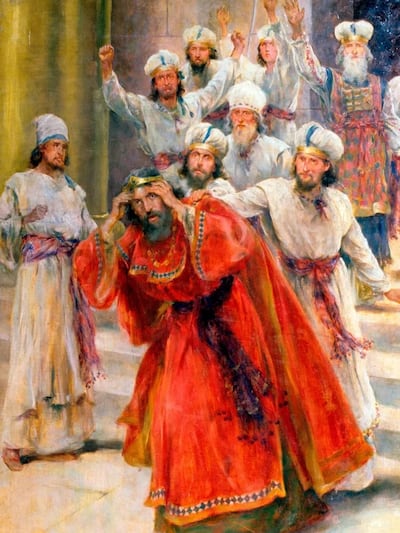
“I recently was reading about Uzziah — or Azariah — one of the kings of Judah who lived between 792 to 740 B.C. His name in Hebrew, Uziyah, means ‘Jehovah is my strength’ or ‘Jehovah’s strength.’ …
“At first, Uzziah was known as someone who always remembered the Lord in his life. Even his own name helped him remember the Lord. Uzziah began his reign by seeking, listening to and worshipping the Lord. The Bible states:
“‘And he [Uzziah] did that which was right in the sight of the Lord. …
“‘And he sought God in the days of Zechariah, who had understanding in the visions of God: and as long as he sought the Lord, God made him to prosper’ (2 Chronicles 26:4-5).
“It was during the reign of Uzziah that the kingdom of Judah experienced the greatest period of prosperity and influence since the reign of King Solomon. But unfortunately, pride in his military triumphs and pride in his great power and wealth caused him to forget the Lord. Because of this sin, Uzziah was struck with leprosy. Because of his disease, Uzziah was forced to live isolated from his people until he died (see 2 Chronicles 26:21-23).
“Uzziah prospered in every way in his life while he remembered the Lord, but when he forgot Him, Uzziah experienced heartbreak, disappointment and sorrow for his sin (see 2 Chronicles 26:16-23).
“Based on what happened to Uzziah, how can a special generation like yours that has received so many promises avoid the cycle of prosperity and pride? How can you avoid being affected by modern-day leprosies that destroy us and afflict us? How can you apply Uzziah’s experience in your life and always remember the Lord in all you do? These are the same questions I ask myself.
“In light of Uzziah’s story, let us consider one of the covenants that we renew weekly when we partake of the sacrament — the covenant to ‘always remember him,’ the Savior (Doctrine and Covenants 20:77, 79). This covenant is repeated in both sacrament prayers. An important word of this covenant is ‘remember.’ …
“In the Hebrew context, the word ‘remember’ involves a knowledge that is accompanied by appropriate action. Thus, ‘doing’ is an essential part of the remembering.
“That is exactly what happened with Uzziah, the king of Judah, isn’t it? Even Uzziah’s own name reminded him where he was to turn for help during his life as he made decisions. In summary, the more we remember the Lord, the more power we will have to keep on the path doing what the Lord expects from us.”
— Elder Ulisses Soares of the Quorum of the Twelve Apostles, during a February 2019 Brigham Young University devotional, “Always Remember Him”
Hezekiah
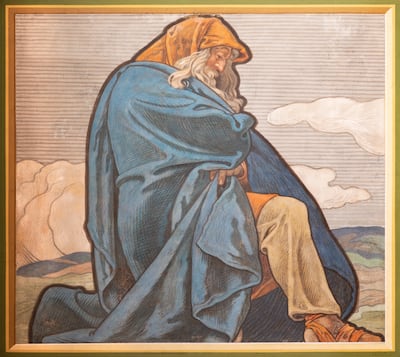
“Hezekiah gathered together the priesthood bearers of the day and said, ‘Hear me, ye Levites, sanctify now yourselves, and sanctify the house of the Lord God of your fathers, and carry forth the filthiness out of the holy place’ (2 Chronicles 29:5). ‘Be not ye like your fathers, and like your brethren, which trespassed against the Lord God … but yield yourselves unto the Lord … and serve the Lord your God’ (2 Chronicles 30:7-8).
“In response to this assertive leader, who was supported by the prophet Isaiah, ‘the Lord hearkened to Hezekiah, and healed the people’ (2 Chronicles 30:20), and ‘in their set office they sanctified themselves in holiness’ (2 Chronicles 31:18).
“From King Hezekiah, as from King Benjamin (see Mosiah 2-5), we can learn a very positive lesson on leadership: circumstances do not always need to remain the same. Leaders can make a difference. Faith in the Lord and high expectations can bring about a mighty change of heart among an entire people.”
— Elder Spencer J. Condie, then a General Authority Seventy, April 1990 general conference, “Some Scriptural Lessons on Leadership”
