



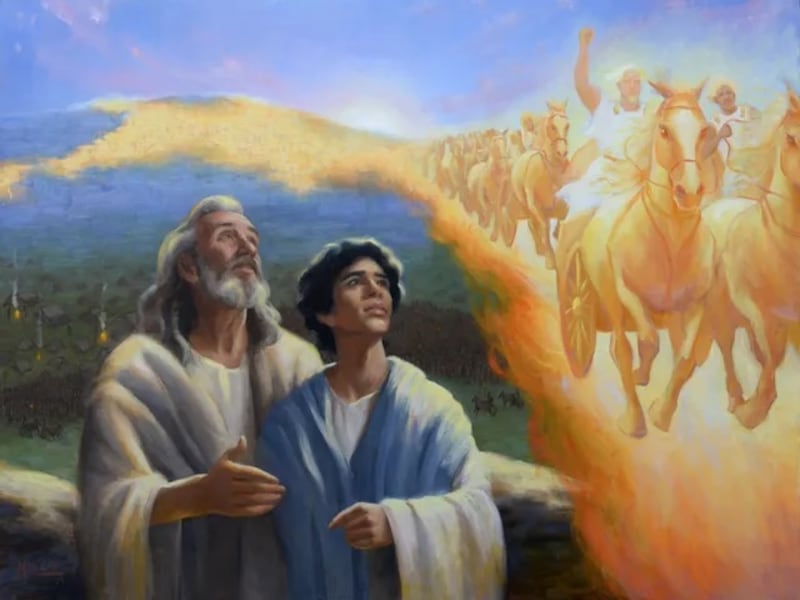

This week’s “Come, Follow Me” study guide covers 2 Kings 2-7, which includes the prophet Elisha and the story of Naaman’s healing from leprosy.
Following are a few quotes from past and present leaders of The Church of Jesus Christ of Latter-day Saints about these chapters of scripture.
2 Kings 2
“Elijah was an Old Testament prophet through whom mighty miracles were performed. … At the conclusion of Elijah’s mortal ministry, he ‘went up by a whirlwind into heaven’ (2 Kings 2:11) and was translated.
“‘We learn from latter-day revelation that Elijah held the sealing power of the Melchizedek Priesthood and was the last prophet to do so before the time of Jesus Christ’ (Bible Dictionary, ‘Elijah’). … This sacred sealing authority is essential for priesthood ordinances to be valid and binding both on earth and in heaven.
“Elijah appeared with Moses on the Mount of Transfiguration (see Matthew 17:3) and conferred this authority upon Peter, James and John. Elijah appeared again with Moses and others on April 3, 1836, in the Kirtland Temple and conferred the same keys upon Joseph Smith and Oliver Cowdery. …
“The restoration of the sealing authority by Elijah in 1836 was necessary to prepare the world for the Savior’s Second Coming and initiated a greatly increased and worldwide interest in family history research.”
— Elder David A. Bednar of the Quorum of the Twelve Apostles, October 2011 general conference, “The Hearts of the Children Shall Turn”
“In conclusion, let’s turn to the story of Elijah and Elisha. Elijah had gone from his duties to go up to a cave. The Lord came to him, and he was called to go back to his duties. He had not had a convert for some period of years, but when he went back he found Elisha, who immediately followed him (see 1 Kings 19).
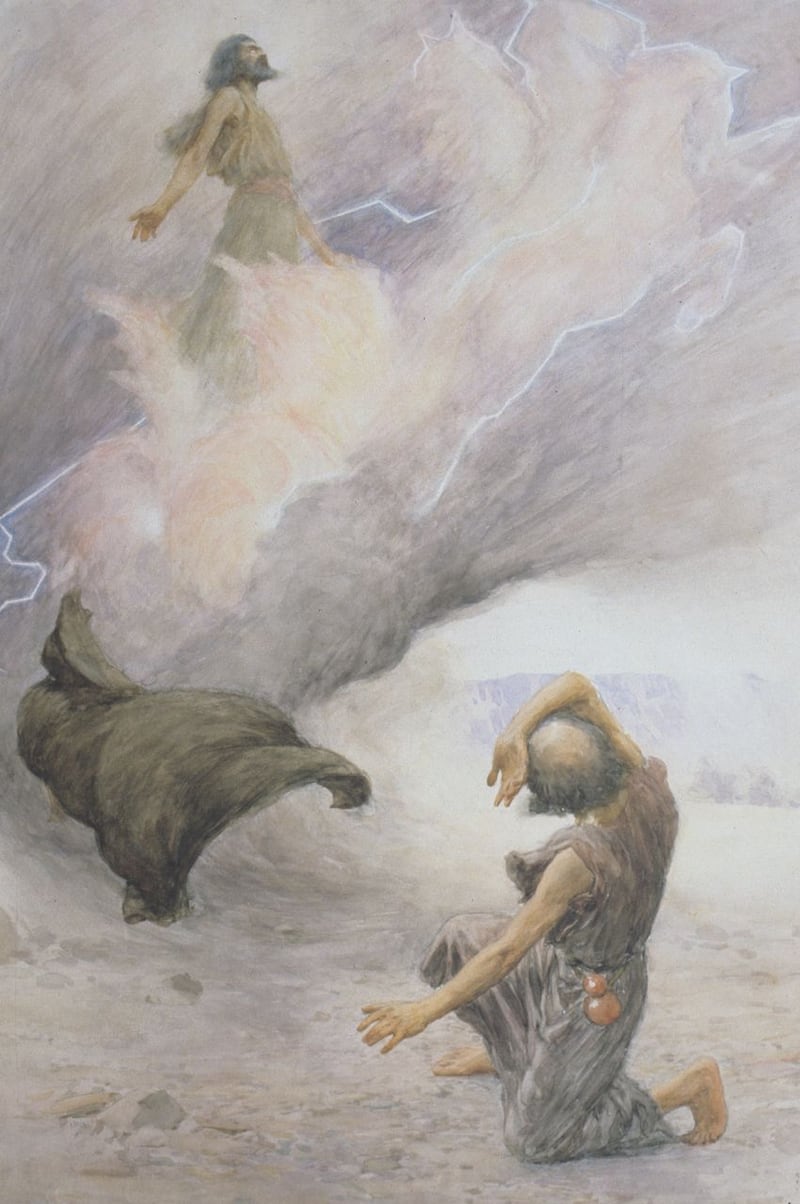
“They dwelt and worked together for a few years until the time came when all the priesthood leaders knew that it was time for Elijah to be translated. Elijah and Elisha stood at the banks of the River Jordan. Fifty other priesthood holders stood in view far off as the two stood by the Jordan. ‘And Elijah took his mantle, and wrapped it together, and smote the waters, and they were divided hither and thither, so that they two went over on dry ground.’ And Elijah said to Elisha, ‘Ask what I shall do for thee.’ Can you imagine? Then Elijah was translated and departed in a flaming chariot, and the only thing that was left was his mantle. Elisha picked up the mantle, then turned toward the 50 priesthood leaders who were standing afar off. He had to return over the river, so he picked up the cloak, smote the River Jordan and it parted (see 2 Kings 2:1-15).
“I now stand at the Jordan with two sweet counselors… as we attempt to cross the River Jordan to serve together. I ask for the blessings of… all those who are here, that my counselors and I might also have that river part so we may return and go about our mission.”
— The late Elder Robert D. Hales, then the presiding bishop, April 1985 general conference, “The Mantle of a Bishop”
2 Kings 4

“Today I am sharing an Old Testament story I read at your age which left me wanting to be like its protagonist. The Bible does not tell us her name, so we will call her the woman of Shunem because this is the name of her town.
“One day the prophet Elisha was passing through Shunem, and we read that there ‘was a great woman; and she [invited] him to eat bread. And so it was, that as oft as he passed by, he turned in… to eat bread” (2 Kings 4:8). I imagine the prophet Elisha was so happy with the invitation to eat at her house. He had already gone several times, when one day the woman said to her husband, ‘Now, I perceive that this is an holy man of God’ (2 Kings 4:9).
“The woman says, ‘Now, I perceive.’ It seems she invited Elisha to her house without knowing he was the prophet; she received her testimony through the Holy Ghost by listening carefully to what Elisha said and taught. (Remember, there were no pictures at that time. So it was hard to recognize the prophet just by his face.)
“But the story does not end there. One day the woman said to her husband, ‘Let us make a little chamber… and let us set for him there a bed, and a table, and a stool, and a candlestick: and it shall be, when he cometh to us, that he shall turn in’ (2 Kings 4:10). This faithful woman was willing to build a room in her house so that the prophet, passing through the city, would have a place to stay.
“Today we can learn a powerful lesson from this experience. The Lord testified to the woman of Shunem that Elisha was a prophet of God, and she acted by opening her house to receive him. We too can receive a personal testimony of God’s prophets today and open our hearts and minds — our house — to the message that our Heavenly Father has for us in these latter days.”
— Sister Andrea Muñoz Spannaus, second counselor in the Young Women general presidency, October 2025 general conference, “Prophets of God”
“In the book of Kings we read about a woman who came weeping to Elisha, the prophet. Her husband had died, and she owed a debt that she could not pay; and the creditor was on his way to take her two sons and sell them as slaves.
“By a miracle Elisha enabled her to acquire a goodly supply of oil. And he said to her: ‘Go, sell the oil, and pay thy debt, and live thou and thy children of the rest’ (2 Kings 4:1-7).
“’Pay thy debt, and live.’ How fruitful these words have ever been. What wise counsel they are for us today. …
“Our inspired leaders have always urged Latter-day Saints to get out of debt, live within our means and pay as we go. Our own pioneer forefathers have left us a heritage of thrift — of saving — of freedom from debt. Surely they would counsel us today: ‘Pay thy debt, and live.’”
— The late President Ezra Taft Benson, then a member of the Council of the Twelve Apostles, during April 1957 general conference
2 Kings 5

“The Old Testament account of Naaman, the military leader who was healed of leprosy by the prophet Elisha, is a particular favorite of mine. The story illustrates how the firm faith of a ‘little maid’ altered the course of one man’s life and, for all believers, revealed the reach of God’s mercy to those who place their trust in Him and His prophet. Though nameless, this young girl also helped to push our understanding forward. And Naaman’s belief on her testimony inspired him to take his petition for healing to God’s chosen servant.
“Naaman’s response to the prophet Elisha’s instructions to wash in the river Jordan was at first skeptical and indignant. But an invitation for him to be obedient to the prophet’s counsel made way for his healing and his dramatic understanding that God was real (see 2 Kings 5:1-15).
“We may find that some of our spiritual petitions have reasonably discernible answers and may not create significant discomfort for us. Or, like Naaman, we may find that other needs are more challenging and may create difficult and complex feelings within us. …
“One significant caution from Naaman’s account is that resisting obedience to God’s laws and commandments may prolong or delay our growth. We are blessed to have Jesus Christ as our Master Healer. Our obedience to God’s laws and commandments can open the way for our Savior to provide the understanding and healing He knows we need, according to His prescribed treatment plan for us.”
— Sister Tracy Y. Browning, second counselor in the Primary general presidency, October 2024 general conference, “Seeking Answers to Spiritual Questions”
“It is surprising how much difference a sprinkling of salt makes in the flavor of what we eat. And yet salt is one of the least expensive and simplest ingredients.
“In the book of 2 Kings, we read of ‘a little maid’ (2 Kings 5:2) who was captured by the Syrians and became a servant to the wife of Naaman, captain of the Syrian army. She was as salt; she was young, of no worldly importance, and her life as a slave in a foreign country was clearly not what she had hoped for.
“However, she spoke two sentences with the power of God, testifying to Naaman’s wife: ‘Would God my lord were with the prophet that is in Samaria! for he would recover him of his leprosy’ (2 Kings 5:3).
“Her words of faith were relayed to Naaman, who acted on her words, allowing him to be healed both physically and spiritually.
“We often focus on the servants who convinced Naaman to bathe in the river Jordan, as the prophet Elisha directed, but Naaman would not have even been at Elisha’s door without ‘a little maid.’
“You may be young or feel of no importance, but you can be as salt in your family, at school and in your community.”
— Primary General President Susan H. Porter, then the first counselor in the Primary general presidency, April 2022 general conference, “Lessons at the Well”
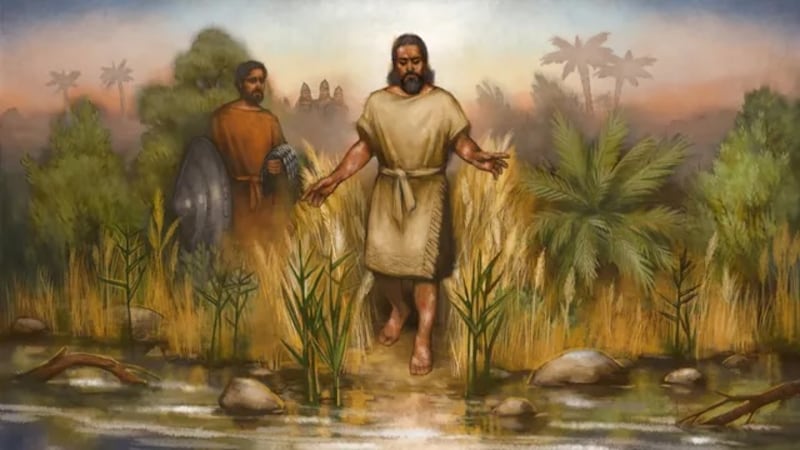
“Naaman, a Syrian war hero, ‘a mighty man in valour’ (2 Kings 5:1), traveled from his native country to Israel and approached the king, Jehoram, to be healed of leprosy (see 2 Kings 5:5-6).
“Naaman was directed to the prophet Elisha. ‘And Elisha sent a messenger unto him, saying, Go and wash in Jordan seven times … and thou shalt be clean’ (2 Kings 5:10).
“Despite this prophetic promise to be cured, Naaman was offended that Elisha did not greet him in person and even more insulted with the prophet’s direction to wash seven times in the small and muddy Jordan River. His pride demanded something more noteworthy and grand, something matching his stature and place in the community and nation.
“Fortunately for Naaman, his servants convinced him that regardless of what the prophet asked him to do, if obeyed, it would bring the Lord’s blessings. Naaman washed himself in the Jordan River as directed and, as a result of his obedience, was cured of his leprosy (see 2 Kings 5:11-14).
“Obedience to the Lord’s commands, in spite of how trivial or unimportant we believe them to be, will surely bring His promised blessings.”
— Elder Bruce A. Carlson, then a General Authority Seventy, April 2010 general conference, “When the Lord Commands”
2 Kings 6
“I love the Old Testament story of a young man who served the prophet Elisha. Early one morning the young man woke up, went outside and found the city surrounded by a great army intent on destroying them. He ran to Elisha: ‘Alas, my master! how shall we do?’
“Elisha answered, ‘Fear not: for they that be with us are more than they that be with them.’
“Elisha knew the young man needed more than calming reassurance; he needed vision. And so ‘Elisha prayed … Lord, ... open his eyes, that he may see. And the Lord opened the eyes of the young man; and he saw: and, behold, the mountain was full of horses and chariots of fire round about Elisha’ (2 Kings 6:15-17).
“There may be times when you, like the servant, find yourself struggling to see how God is working in your life — times when you feel under siege — when the trials of mortality bring you to your knees. Wait and trust in God and in His timing, because you can trust His heart with all of yours. But there is a second lesson here. My dear sisters and brothers, you too can pray for the Lord to open your eyes to see things you would not normally see.”
— Sister Michelle D. Craig, then the first counselor in the Young Women general presidency, October 2020 general conference, “Eyes to See”
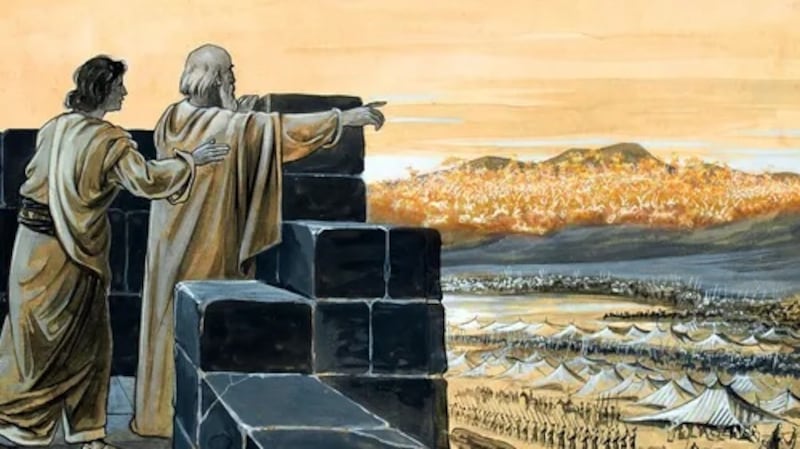
“Since ancient times, fear has limited the perspective of God’s children. I have always loved the account of Elisha in 2 Kings. The king of Syria had sent a legion that ‘came by night, and compassed the city about’ (2 Kings 6:14). Their intent was to capture and kill the prophet Elisha. We read:
“‘And when the servant of the man of God was risen early, and gone forth, behold, an host compassed the city both with horses and chariots. And his servant said unto him, Alas, my master! how shall we do?’ (2 Kings 6:15) That was fear speaking.
“‘And [Elisha] answered, Fear not: for they that be with us are more than they that be with them’ (2 Kings 6:16).
“But he didn’t stop there. ‘Elisha prayed, and said, Lord, I pray thee, open his eyes, that he may see. And the Lord opened the eyes of the young man; and he saw: and, behold, the mountain was full of horses and chariots of fire round about Elisha’ (2 Kings 6:17).
“We may or may not have chariots of fire sent to dispel our fears and conquer our demons, but the lesson is clear. The Lord is with us, mindful of us and blessing us in ways only He can do. Prayer can call down the strength and the revelation that we need to center our thoughts on Jesus Christ and His atoning sacrifice.”
— Elder Ronald A. Rasband of the Quorum of the Twelve Apostles, October 2018 general conference, “Be Not Troubled”
