



Editor’s note: “The Spoken Word” is shared by Derrick Porter each Sunday during the weekly Tabernacle Choir at Temple Square broadcast. This will be given Sunday, Aug. 16, 2026. This week is No. 5,057 of the broadcast.
Please note: Reservations are needed to attend “Music & the Spoken Word” in the Salt Lake Tabernacle. Find out more about how to make reservations here.
Carl Gustav Jacob Jacobi was one of the world’s great mathematicians. Yet what made him especially interesting was not only the discoveries he made but actually the way he approached difficult problems.
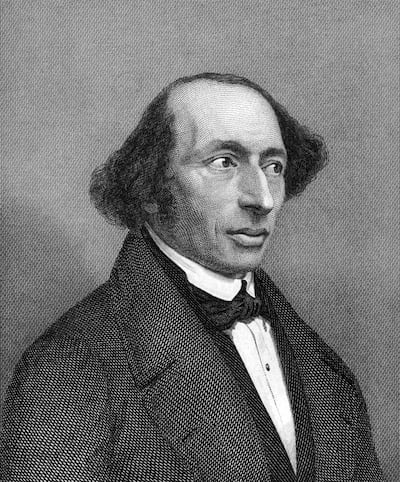
Jacobi believed that when trying to solve a challenging problem, it helped to turn it around looking at it from the opposite direction. He is credited with saying, “One must always invert.” (See Carl Gustav Jacob Jacobi, in Harish Keswani, “Inversion Thinking,” Decisions Matter, decisionsmatter.in.) In other words, we often understand an idea more fully when we consider not only what it is but also what it is not.
Take, for example, the attribute of charity. Paul, the ancient Apostle, taught about this pure form of love by describing both what it is and what it is not. Charity “suffereth long, and is kind.” It “rejoiceth in the truth” and “beareth all things, believeth all things, hopeth all things, endureth all things.” But Paul also taught that charity “envieth not,” “is not puffed up,” “seeketh not her own,” and “is not easily provoked” (see 1 Corinthians 13:4-8). In other words, love is patient and kind; it is not proud, selfish or resentful.
The practice of inversion can help us understand not only the things of this world but also the things of heaven. It can help us see our lives, our relationships and even our trials from a higher perspective.
At a recent award ceremony, the guest of honor rose to speak. He chose his words carefully, each phrase coming with great effort due to a condition affecting his voice.
He said, “I’m grateful to God for everything He has given me, including my disease.”
His faith and perspective inspired all who heard him. In a sense, he had inverted his challenge. Instead of seeing only what his illness had taken, he could also see what it had taught. That higher perspective enabled him to move forward with faith, even amid great trial.
May we seek to more fully understand life’s problems by viewing them not only for what they are but also for what they are not. As we do, we open our minds and hearts to heaven. We begin to see our challenges in a new light — not only as obstacles that interfere with our happiness but as opportunities to grow, to learn and to progress.
Tuning in …
The “Music & the Spoken Word” broadcast is available on KSL-TV, KSL News Radio 1160AM/102.7FM, KSL.com, BYUtv, BYUradio, Dish and DirecTV, SiriusXM (Ch. 143), tabernaclechoir.org, youtube.com/TheTabernacleChoir and Amazon Alexa (must enable skill). The program is aired live on Sundays at 9:30 a.m. Mountain Time on these outlets. Look up broadcast information by state and city at musicandthespokenword.com/viewers-listeners/airing-schedules.
