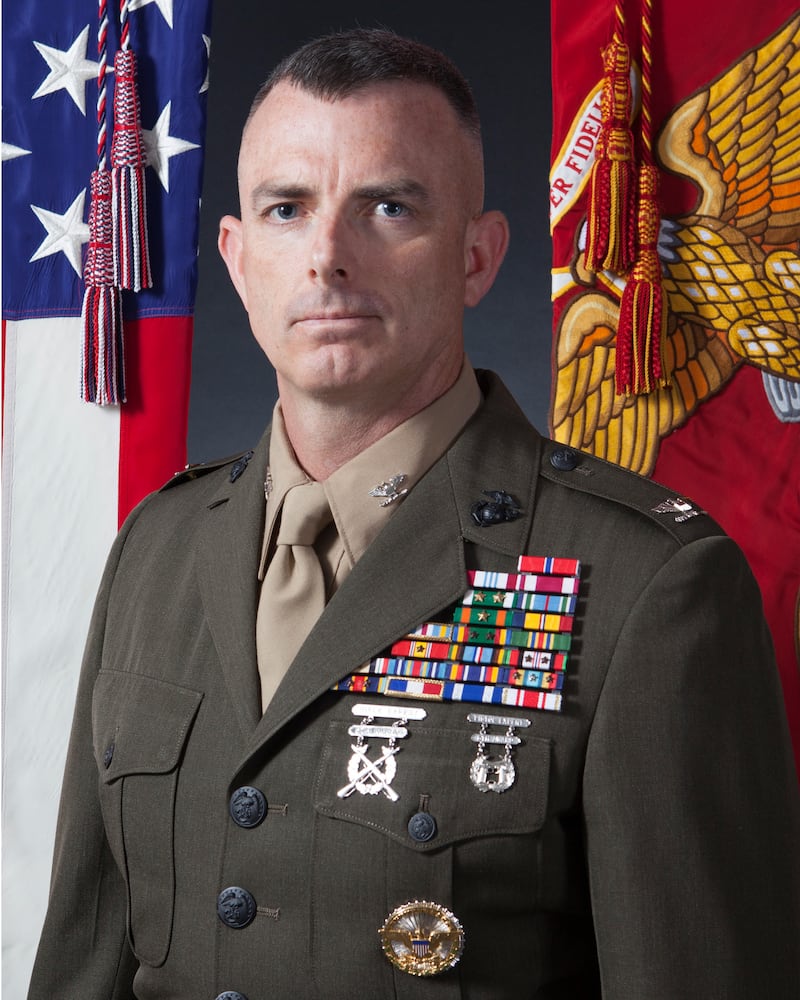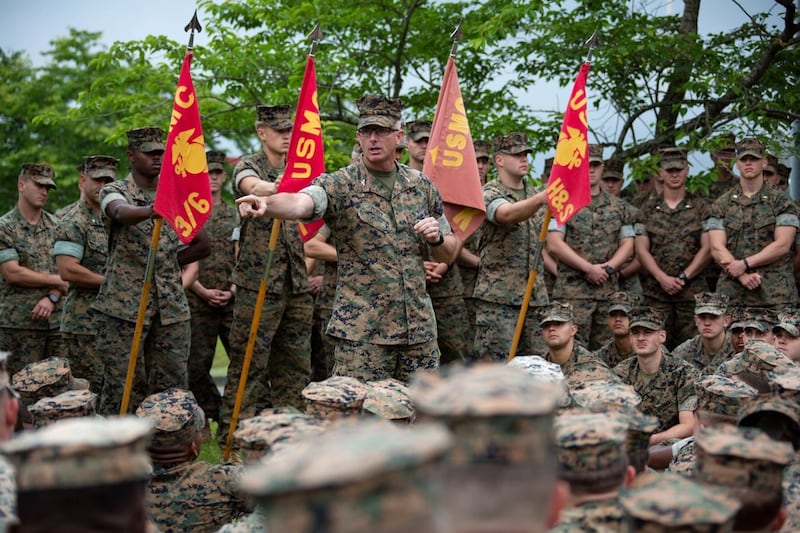

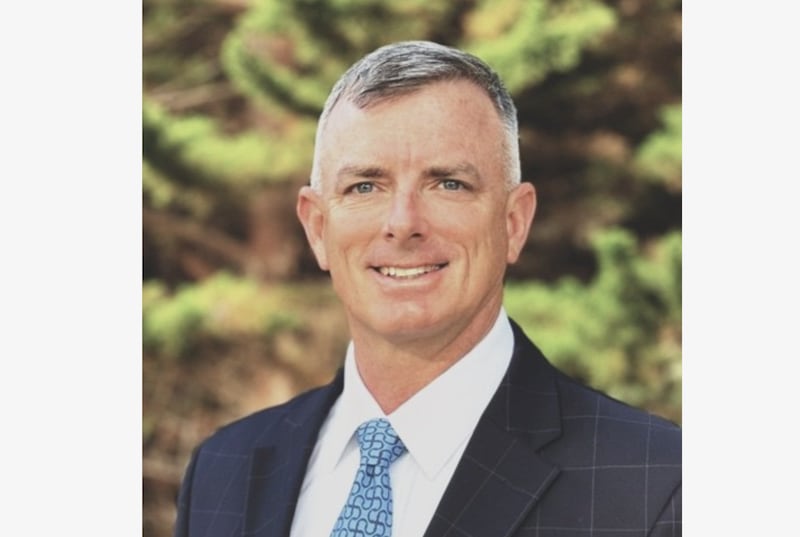
While a battalion commander during a tour in Helmand Province, Afghanistan, now-retired U.S. Marine Corps Col. Jason S.D. Perry led a big operation with a lot of fighting.
Afterward, he had the heavy job of writing condolence letters to mothers and fathers of those who had died in the line of duty.
His second-in-command came into his office to tell him an unexpected helicopter was inbound and someone on the helicopter was looking for him.
It was a chaplain from The Church of Jesus Christ of Latter-day Saints who had flown to the forward operating base in the middle of Musa Qala in Helmand Province, Afghanistan, “just to say hi to me,” Perry said on the Church News podcast.
Perry said it was not easy to get to where he was and rather dangerous. “And yet he came out looking for me. On that day, I was the one.”
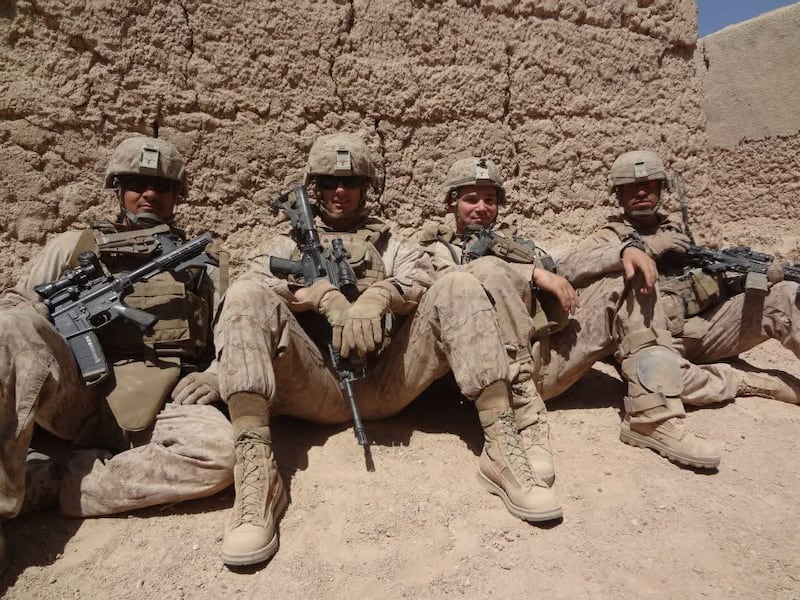
They spent two hours together, and he was able to take the sacrament again. Perry didn’t know at the time that he was under that much stress until the burden was lifted off his shoulders by that visit.
“You can be in a little village in Helmand, Afghanistan, and somebody knows where you are,” Perry said. “And your Heavenly Father, who loves you perfectly, knows that. And whether it’s a person that He sends on a helicopter, or if it’s just a small, peaceful moment of comfort that you might have in the middle of a more chaotic situation, He knows you.”
After a 30-year career in the Marines taking him and his family around the world, Perry has seen the blessings and strength that came from serving his country and from his membership in The Church of Jesus Christ of Latter-day Saints.
On Veterans Day in the United States, Perry, who is currently the director of wargaming at the Naval Postgraduate School in Monterey, California, pays tribute to all those who have put the uniform on and served — and their families.
”We remember all of you,” he said.
Resources and Church support
Perry’s father was a Marine, so he grew up on Marine Corps bases. From that experience and his own career moving for different assignments — and now living in a ward in California with many military members — Perry has some advice.
First, he would say military members and families are used to moving and know how to make friends quickly in a new place when they don’t have much time to waste. They are good at diving into new communities and are ready to work. He invited new military members to jump in as well.
The Church has a new self-identification system in Member Tools that gives people the option to voluntarily identify whether they are active-duty military or a veteran. This can be helpful for military members and a valuable resource for local Church leaders to see where needs are and help meet those needs.
Local Church leaders should not be shy about bringing those families in, wrapping their arms around them and inviting them early on to serve, Perry said. Even though a military member or military family will be moving again, they can and should have callings and assignments.
“Sometimes I think maybe there’s a perception that military service is so hard that we need to treat military members with kid gloves,” Perry said, adding, “The trials are never removed, but they’re made lighter through our association with the Church.”
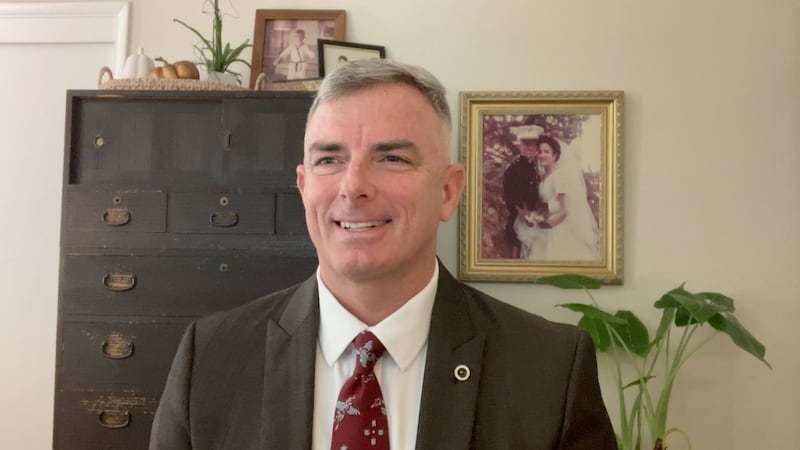
Perry also pointed people to the updated Military Relations page at ChurchofJesusChrist.org/callings/military-and-chaplain, which offers support for members serving in the military as well as resources for family members, friends and ministering brothers and sisters who support service members.
Stake military relations committees and military relations missionaries do incredible work, Perry said, as they connect young people to the community of members and to give them a place where they can go and associate with each other.
Task, purpose, method and end state
Operational planning often comes with talking about task, purpose, method and end state. Perry has seen how all these relate to the gospel.
“We are children of our Heavenly Father. This gives us purpose. It gives us a task. We know what we are here to do. We know why we are here. The method is called the plan of happiness, the plan of salvation,” Perry said. “And the end state is ultimately us inheriting everything that our Father has one day when we leave this earth and we continue to progress.”
He said his full-time mission to Japan changed his life. Many times in his career — which often connected back to Japan — he saw the blessings and lessons from his mission coming back to help him.
He said young men thinking about serving in the military should go on a mission.
“Prepare yourself, obviously, physically to go into the service, but then prepare yourself spiritually, because that building your foundation of faith is something that you will stand on for the entirety of your enlistment or your career, whichever you choose to pursue,” he said.
Perry said he joined the Marine Corps in some ways because he wasn’t sure he was up to the challenge. Every time he felt overwhelmed, he felt a strength beyond his own keeping him up — from the Lord, his family and his fellow Marines.
“I think the gospel’s the same way. We minister to others, we are ministered to. Sometimes we’re called upon to lead, and sometimes we’re called upon to follow,” he said. “And I think those are all lessons that I saw in very real terms during my time in the military.”