



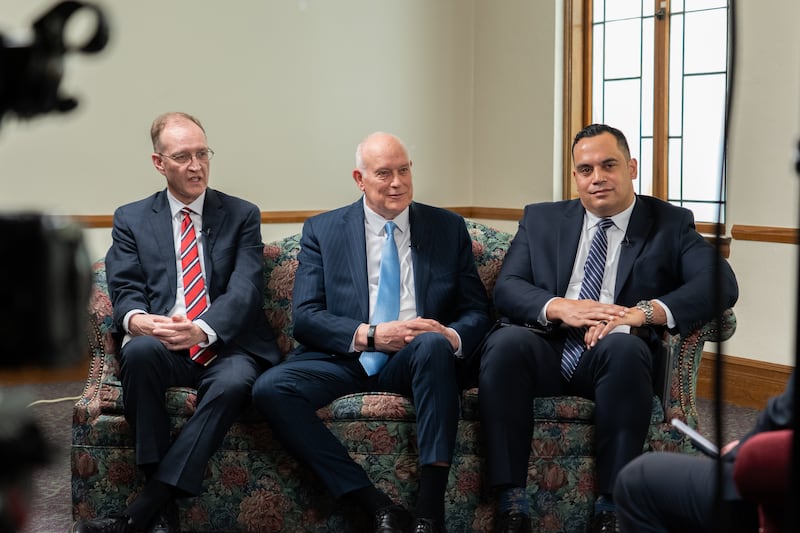


In 2026, members of The Church of Jesus Christ of Latter-day Saints are studying the Old Testament and reading the words of prophets as they prepared for the first coming of the Messiah.
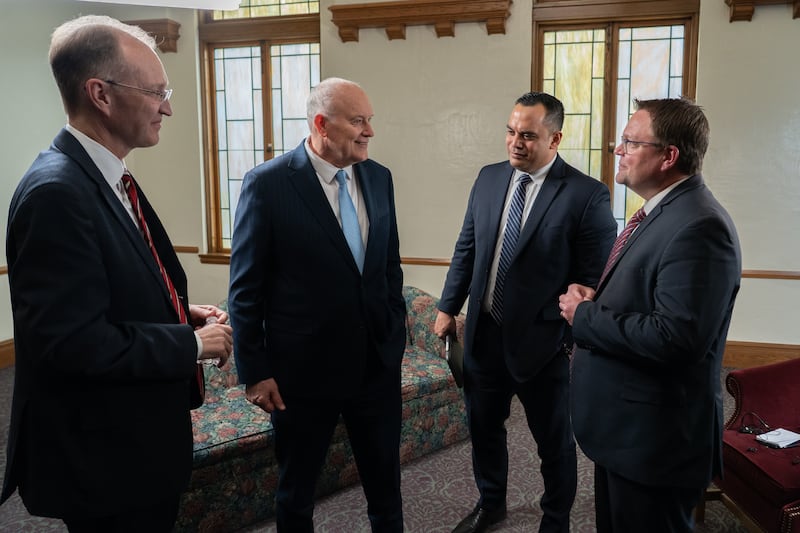
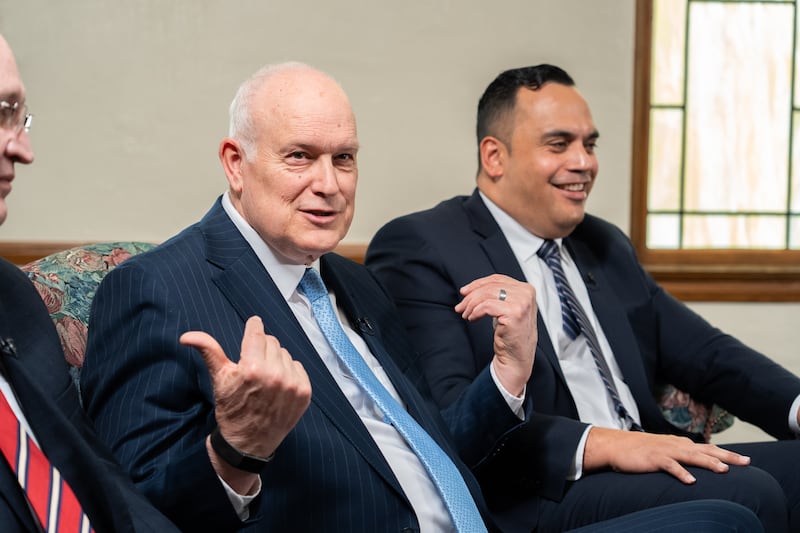
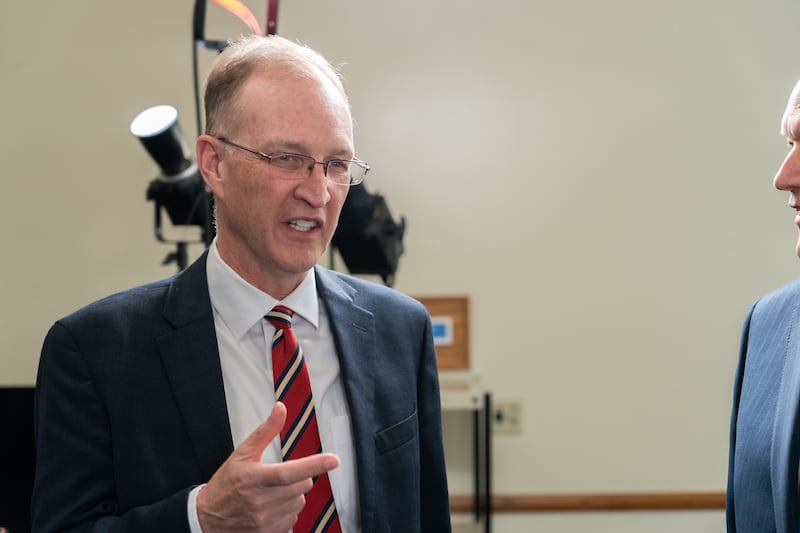
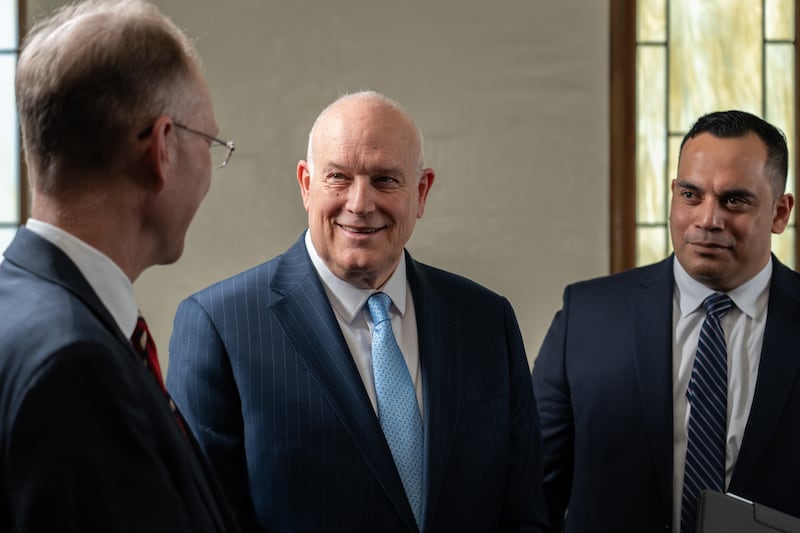
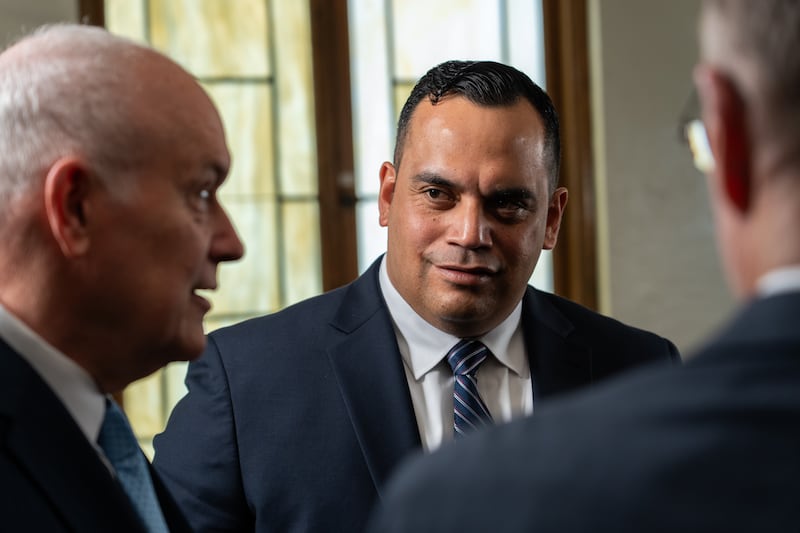
President Paul V. Johnson, Brother Chad H Webb and Brother Gabriel W. Reid joined Church News editor Ryan Jensen on the Church News podcast to talk about the Old Testament and how members of the Church can study it more fully this year in life’s different scenarios.
“The Lord says that ‘his mercies [are] according to the conditions of the children of men’ (Doctrine and Covenants 46:15),” President Johnson said. “He dealt with them according to the conditions that they were in. He deals with us according to the conditions we’re in.”
President Johnson and his counselors share this and other observations from their time together as a presidency. They also say they hope members of the Church will better understand the role of counseling together both at church and at home as individuals study the scriptures together.
Listen to this episode of the Church News podcast on Apple Podcasts, Amazon, Spotify, bookshelf PLUS, YouTube or wherever you get podcasts.
Transcript:
President Paul V. Johnson: I think if we can realize that these events and these people lived thousands of years ago and their culture was so different, and if we were transported in time back to their time, it would be a shock to us to see some of these things. You know, in the Doctrine and Covenants, in section 46, the Lord says that “his mercies according to the conditions of the children of men.” He dealt with them according to the conditions that they were in. He deals with us according to the conditions we’re in. And I think if we can open up our hearts a little and say, “Yeah, you lived in a whole different world” and not be so judgmental about those people that we read about, I think it’ll help us as we’re reading there.
0:54
Jon Ryan Jensen: This is Jon Ryan Jensen, editor of the Church News. Welcome to the Church News podcast. Today, we are taking you on a journey of connection as we discuss news and events of The Church of Jesus Christ of Latter-day Saints.
Each year, members of The Church of Jesus Christ of Latter-day Saints study individually, in families and as wards and branches around the world one book of scripture. This year, 2026, members of the Church are studying the Old Testament and reading the words of prophets as they prepared for the coming of the Messiah.
We’re excited today to welcome the Church’s general Sunday School presidency — President Paul V. Johnson, Brother Chad H Webb and Brother Gabriel W. Reid — to talk about the Old Testament and how members of the Church can study it more fully this year in all of those different scenarios.
Brethren, thank you for being with us today.
President Paul V. Johnson: Nice to be with you. Thank you.
1:45
Jon Ryan Jensen: So, I want to start out with the fact that you’ve now been in your calling together for more than a year.
How are you feeling about the chance you’ve had to serve together and the things you’ve seen around the world as you’ve served?
1:55
President Paul V. Johnson: Well, it’s been great to serve with these two brethren and to see the Saints around the world — we love them — and to see what’s happening. And I feel really comfortable to be with these two and to work with them closely. Still trying to figure out the best way we can bless the lives of people around the world too. So we’re still at it.
2:17
Jon Ryan Jensen: That sounds like every Sunday School president around the world, Sunday School presidency, is they figure out how they can help members of their ward.
Well, I want to dive in and talk a little bit about the Old Testament. And one of the first questions that I have is: What are the reasons that we have that we should be studying and should be engaged in this study of the Old Testament?
2:35
President Paul V. Johnson: That’s a good question. The reason we do all gospel study and learning in the Church is to deepen conversion to Jesus Christ. And so, that’s the Old Testament, too. It’s the same as with other scriptures. And I’ll let my counselors chime in here on the reasons why we’re studying the Old Testament.
2:56
Brother Chad H Webb: Yeah, I think that’s the first and most important answer is: It’s the Old Testament, a testament of the God of the Old Testament. There’s the New Testament; another testament of Jesus Christ, the Book of Mormon. But I think if we just start with the premise that the purpose of the Old Testament is to be a witness of Jesus Christ, His premortal role, His role as Jehovah in the Old Testament, the messenger of the covenant of the Old Testament, and the coming Messiah and His role in His mortal ministry and beyond. I think if that’s our primary purpose for studying the Old Testament, we’ll find the Savior there and deepen our conversion to Him and our faith in Him.
3:36
Jon Ryan Jensen: I really like that, because I think we see in “Come, Follow Me” that there are major themes that recur throughout the history in the Old Testament.
To you, what are some of those major themes that stand out and that may be relevant to members learning today?
3:51
Brother Gabriel W. Reid: Yeah, no, thank you. I think one of the themes, at least for me, that really sticks out to me is covenants. That’s one that you see over and over again in the Old Testament. And also the promise that the Lord will deliver us. And that’s something that’s very comforting for me personally. And as I think about my own family and just knowing that that’s — you can see that all throughout the Old Testament, that the Lord covenants with His people and that He promises to provide a way and to deliver them. And that’s just one of the themes that really stick out to me.

4:24
Jon Ryan Jensen: I love how you just described that, because one of the scripture chapters that we were studying just this week in my family was Genesis 18. And when the Lord asks, “Do you think anything is too hard for me?” (see verse 14). And so that topic of covenants and recognizing how much power Heavenly Father has as we live those covenants, I just love that that is one of those recurring themes that we see: Nothing’s too hard for Him.
4:48
President Paul V. Johnson: You know, some of the other themes you find there, the whole concept of the house of Israel. I think it’s crucial to understand even other scriptures if we understand the history there. And the role of prophets, we really get a view of that in the Old Testament. It just seems critical for us as we look at this span of human history and God’s dealings with His children over the course of human history.
5:13
Jon Ryan Jensen: Well, and that brings up part of the need that we have to study scriptures, because none of us were alive when the Savior was born, but neither had they lived at a time when the Savior was born.
And so as we study the Old Testament, where do you see Jehovah, and why is it important for us to learn from how they were looking forward or learning from Jehovah as they look toward His birth?
5:41
Brother Chad H Webb: You know, there’s a lot of things that come to mind when you ask that question. You certainly see Jehovah and the coming of the Messiah in the prophecies of Old Testament prophets. In fact, if you understand the prophecies of the Old Testament prophets, you actually see in the New Testament Jesus kind of clothing Himself in these prophecies that are coming, being very overt about the fulfilling of these prophecies, vindicating the words of His prophets in the Old Testament, and you see a connection between the Old and the New Testament.
I think you also see Him, as has been mentioned, in the covenant, in the Abrahamic covenant, as, again, the messenger of that covenant and the fulfillment of that covenant as He’s going to come and fulfill the promises of the covenants that He has made with us. I also think you see the Messiah or the Savior in types and shadows of the Old Testament. You can look at — there’s so many remarkable stories and characters in the Old Testament.
The Old Testament is so much fun to read. The stories are so rich. The people that you come to know there are just so wonderful, and you can see in their lives things that will point your mind to the Savior, starting with Adam, who walks into a garden and allows himself to take upon himself death so that we have the opportunity to live, and all the way through his story and the story of Joseph and the story of Isaiah and Elijah and on and on. Even Ruth and Abigail and these people of the Old Testament, their stories and their experiences can point us to characteristics and attributes of the Savior that we see in them.
7:27
Brother Gabriel W. Reid: Can I mention something on that? Just to Chad’s point, that’s where I see Jehovah as well, are in the stories. I know that sometimes it takes a little bit of effort to really try to unpack where the Savior is represented, or Jehovah is represented, in the stories.
Chad mentioned a bunch of stories, but one that just sticks out to me recently was actually as we studied the story of Noah and the ark. And there was so much discussion in our Sunday School class regarding the dimensions of the ark and all the different things. And someone made the comment about how the ark also is maybe even a type of Christ, where there’s safety there as we have a relationship with Him and that we, as we — the door representing also our Savior and our relationship with Him. And so I just thought that that was a great comment and one thing that we’re able to find Jehovah just in the different stories. And sometimes it takes a little bit of effort, but it’s there, I guess is my point.
8:28
President Paul V. Johnson: It’s probably been 35 years ago, one of my colleagues was doing a little study looking at the book of Moses in the Pearl of Great Price and comparing it to the first few chapters in Genesis. And he was looking at plain and precious things that maybe aren’t still in the Bible but were originally there. And he came away, and he said, “It’s so fascinating what I’ve found. The things you don’t see in Genesis, but they’re in the book of Moses, is clearly the Savior, Jesus Christ. Faith in Him, repentance, baptism, the gift of the Holy Ghost, the role Satan plays.” He said, “It’s just really fascinating.”
So, if you think about that, as we go into the Old Testament, if we realize the gospel of Jesus Christ and a knowledge of Him has been had from the very beginning, from Adam, it changes the way you view some of your reading in the Old Testament to realize it’s there. And the way to visualize it is to think about the Book of Mormon. Most of the Book of Mormon is during Old Testament times. And yet, here they are, they have the law of Moses, and they keep the law because it points them to Jesus Christ.
And yet, even with the law of Moses — now, you have to think: Old Testament people, we talk of Christ, we prophesy of Christ, we preach of Christ, and we look forward to Him. It’s the only name that they can be saved. And that is at the core of the gospel through the ages. And I think it’s helpful to think about that as we’re reading through the Old Testament too. The gospel’s there. Sometimes it’s harder to see because it’s obscured or for whatever reason.
10:13
Jon Ryan Jensen: I had an institute teacher once who taught similarly and invited us to look at the way the stories were taught, the way the gospel was taught in the Book of Mormon, and then look for the way the gospel was taught in the Old Testament. Because if you get caught up in the “Do this, don’t do that,” the “How many cubits for the ark?” versus “What is the ark?” And you see a ship in both the Old Testament times of the Book of Mormon. And so you can make some of those comparisons back and forth and really see the Savior.
10:44
Brother Chad H Webb: You know, I think another way to see Him is a simple question about: “What does this story teach us about Him?” You can read a story and not even notice His presence in the story. You think it’s a story about Joseph in Egypt, but to stop and just say, “What does this teach us about our Heavenly Father and the Savior, that He allowed this to happen or that He fulfilled this prophecy?” Just stopping to pause and say, “Where do we see the Savior in this story? What do we learn about Him?”
Even in the Creation, we’ll study the Creation and the events and what happened, but just to pause long enough and say, “What does this teach us about the Creator and who He is that this happens?”
11:21
Brother Gabriel W. Reid: I love that. And just to your earlier question about why we study the Old Testament, I have a greater appreciation for the Book of Mormon: Another Testament of Jesus Christ because I’m studying the Old Testament. As we talk about covenants and the promises to Abraham, Isaac and Jacob, because we’re studying and unpacking the Old Testament, I have a greater appreciation for the Book of Mormon: Another Testament of Jesus Christ. And so, just with the comments that were made today was just a reminder of that.
11:53
President Paul V. Johnson: You know, in fact, the Old Testament helps us understand the other scriptures better. And the other scriptures help us understand the Old Testament better too. It really works both ways.
12:01
Jon Ryan Jensen: Back and forth. I have heard it said that an understanding of the Old Testament can be foundational for understanding those other scriptures.
Why do you see that? What’s the foundational part of the Old Testament that can help build a better testimony of the other scriptures?
12:18
President Paul V. Johnson: Well, for one thing, if you think about when it comes up in the other scriptures — like in the Book of Mormon, when they talk about the serpent on the pole — you don’t get the whole story. They just say, “Hey, if they looked, they were saved.” If you know the Old Testament, you get the whole context of it. Or, how about Acts chapter 7, when Stephen is being grilled, and he goes through a history, really, of the Old Testament, the house of Israel. And it’s just a little bit here, a little bit, a little bit, a little bit. If you understand the stories behind them, it’s much more rich and very, very helpful.
Jon Ryan Jensen: Which they would have at that time, because it was all they had.
President Paul V. Johnson: They knew. That’s right.
12:59
Jon Ryan Jensen: I love that. As we look at the Old Testament, one of the stumbling blocks for some members is, “Well, this is law of Moses, and that was fulfilled. So, if we don’t live the law of Moses, how much of that do I really need to understand?”
So, if you were sitting in a ward and sitting in a Sunday School class where someone said, “If we don’t live this, what does this matter to me?” how do you explain that?
13:23
Brother Chad H Webb: I’ve got a couple of thoughts. I would start with: The thing that has helped me understand the temple more than anything is to understand the Old Testament tabernacle. It is a huge blessing to understand Leviticus and to understand Isaiah and some of the teachings about the Lord’s temple in the Old Testament.
I also think there’s something to the idea that all of that was in preparation for the coming of the Messiah, so it pointed their minds forward. They would perform sacrifices from the very beginning, with Adam and Eve offering a sacrifice on an altar and not understanding why and being taught, “This is in the similitude of the Only Begotten of the Father” (see Moses 5:7). And so, all that they did was symbolic to point their minds forward in anticipation to the coming Messiah, who would be the offering, who would make Himself a sacrifice.
We now do the same thing in different ways. We partake of the sacrament every Sunday, remembering the sacrifice, looking back to that. And when you understand the Old Testament and what they were doing, it connects those ceremonies to our ceremonies and the central purpose being Jesus Christ. It also helps us to look forward to the Second Coming and preparing for Him as they were preparing for His First Coming. There’s just so many rich things in the Old Testament to help us see that.
14:41
Brother Gabriel W. Reid: I love that. I love that, what you mentioned, Chad, about the different components and elements of the law of Moses, and he mentioned so many great things. But the other part of it too, for me at least, is that there was a prophet, and we have a prophet today who’s also testifying and helping us draw closer to our Savior, in addition to the covenants and the altars and the ordinances, but we have a prophet today.
15:05
President Paul V. Johnson: So, when Abinadi was facing the priests of Noah, He’s telling them that they’ve kind of missed the boat on the law of Moses. And then he’s explaining a little, and he says, “Therefore there was a law given them, yea, a law of performances and of ordinances, a law which they were to observe strictly from day to day, to keep them in remembrance of God and their duty towards him” (Mosiah 13:30). And then he says, “Behold, I say unto you, that all these things were types of things to come” (Mosiah 13:31), like Brother Webb said.
So, they had these performances and ordinances to keep them in remembrance of their God. And so one of the questions is: “So, that’s what the Old Testament people had. What do we have today? What performances, what things daily put us in remembrance of our God and get us closer to them?”
And so, we can see how people reacted to the law of Moses. Like I say, in the Book of Mormon, they lived the law of Moses, but it brought them to Christ, the ones who did it in the right way. And so I think it really is critical that we can see. You even take the book of Leviticus, if you go in the first chapter of Leviticus, it talks about how to do a burnt offering. You think, “Well, we don’t do those anymore.” We don’t, but if we read through the chapter, it tells us about the person who’s offering the sacrifice actually brings the animal to the tabernacle and then puts their hands on its head and then actually has to kill the animal. The person has to kill the animal. It isn’t the priests that do that for a burnt offering. And so they’re very involved in this sacrifice.
And you think about: “What things do we put on the altar? And are we willing to actually bring them to the altar and lay them there?” And even though that’s a burnt offering, we don’t do it, the concepts there that an individual of their own will takes and lays something on the altar, a sacrifice to the Lord. And in Leviticus 1, it says it makes a sweet savor to God (see Leviticus 1:9). And when we sacrifice or consecrate things and we lay them on the altar and we do it with a proper attitude and feeling, it’s a sweet savor to God.
17:22
Jon Ryan Jensen: President Johnson, that hits hard. That’s a — thinking about that, because the things that we are asked to sacrifice of broken spirit, contrite heart, contrition is a personal decision, and the broken heart isn’t someone else breaks my heart; I have to come with the broken heart to say, “It needs bettering that only the Lord can provide.” I love that comparison.
Some of these conversations are conversations that, in a ward or in a branch, they might enjoy having. And we have a process that they can go through to have that with teacher council meetings.
What have you learned about teacher council meetings as they’re happening around the world? And how do you feel that wards can make use of teacher council meetings to have this kind of discussion and improve teaching in their homes and wards?
18:14
Brother Gabriel W. Reid: Well, one thing that we have learned and studies have shown is that teacher council meetings are actually very effective. We’ve also learned that there are a lot of wards that aren’t having them, and it’s an underutilized resource. We feel that if people actually hold their teacher council meetings, it will be a great resource for them to improve learning and teaching.
I’ll give you an example. Each time I have an opportunity to be with these wonderful brethren, who are my brothers, I learn so much by asking questions and listening and learning and sharing some of my thoughts. And there’s power in council. Specifically as we talk about and we’re studying the Old Testament, that’s a wonderful opportunity to counsel together and to have trainings and to learn from other people who may know a little bit more about certain scriptures in the Old Testament. And that’s surely the case with me, with these two. I’ve learned so much from them.
19:15
President Paul V. Johnson: I’d say also on the teacher council meetings, we’re hoping that the bulk of the time will actually be used in practicing, practicing some skills that will help them in their teaching. And we’ve tried to consolidate some resources in the Gospel Library app under Teaching and Learning that will really help people — Sunday School presidencies or teachers individually — that will help them in their teaching and to help the teacher council meetings go well.
19:44
Jon Ryan Jensen: I know in our ward, one of the things that has helped us is we rotate. We have a teacher council meeting where teachers generally attend, but we also have the parent teacher council meeting. And those meetings have been the ones where I’ve learned the most, because my particular ward, we have a location in our ward boundaries where there are a lot of individuals who are retired and living all together.
And so they come, and they bring a perspective that, as a dad of teenagers, it is invaluable for me to listen to them and hear them give me a little bit of hope that things are going to be OK. But to hear from their experiences and their testimony growth and their experiences as parents. And I imagine, like you’re saying, listening to the experience of others who have taught and been where you are.
The other thing that changed a little bit, an adjustment that happened in the Church this year, was the encouragement, perhaps, to make use of versions of the Bible that are perhaps easier to understand at a different reading level than the King James Version or standard version that members have been accustomed to.
And I’d really love to get your perspective on how that can help. Again, family scenarios, learning the Old Testament from maybe a different version. And then in a ward scenario, what’s the right place, and what’s the right balance of using some of these additional translations?

21:11
President Paul V. Johnson: Oh, that’s a good question. I’ll start here, and then they can add too. This is a really helpful move that we have that officially you can use these other versions. These versions have been done, translated by really faithful people that are trying to do the right thing. They’re excellent.
And I think it’s very helpful in our personal study, our study at home, to use them. It’s not bad to use them in a class, either. I think the one challenge in a class is if everybody’s using the same text, it’s a little easier to stay together, but a teacher may say, “Here’s another rendering of this,” or someone in the class may say, “I read this, and it helped me understand that better.”
So, I’m just really positive about it. I don’t think we need to be nervous about using these. And I think — I’m old, so I grew up in a time when it was King James Version, and that’s it. And we almost were a little nervous about using something else. But I think this has opened the door and will really help families and individuals understand the Old Testament better.
22:18
Brother Gabriel W. Reid: So, I just want to share a personal experience. So, I was born and raised in American Samoa. In our home, we spoke Samoan and English. And then I got called to serve Spanish speaking. And so sometimes, I’ll be honest, sometimes I’m not comfortable speaking English, or sometimes there’s words in English that are maybe difficult for me to understand. And so I often revert to either a translation in Spanish or in Samoan.
So, to have this other translation available, I have thoroughly enjoyed it, where I will have my King James Version open, but I’ll also have the other version open as well. So in any moment where maybe my English is lacking a little bit, I’ll go and reference that. And it’s been, for me personally, has deepened my conversion and just the joy of unpacking the Old Testament.
23:16
Jon Ryan Jensen: I feel like that gives a different meaning to the scriptures where we learn that the Spirit will talk to us in the language of our heart, because the language of your heart understands different spoken or written languages, and whichever one that is, the Spirit will meet you there.
Brother Webb?
23:30
Brother Chad H Webb: I just might say in a balance to that, because I 100% agree with what’s been said, but I can also picture a teacher with five different translations and studying and taking an inordinate amount of time to check all the translations. And I would suggest to a teacher who’s worried about that side of it to just teach the King James Version, to refer to the others as a resource and a help, but not to give them all equal weight or time. Is that a fair balance?
President Paul V. Johnson: Yeah, that’s good.
Brother Gabriel W. Reid: Yeah, I like that. That’s great.
23:59
Jon Ryan Jensen: And King James in English is going to be the one that stays in the Gospel Library.
Brother Chad H Webb: Right. And there’s others in other languages, right? Whatever’s in the Gospel Library would be what “Come, Follow Me” is based on and will reference as it gives you the helps.
President Paul V. Johnson: I like that.
24:12
Jon Ryan Jensen: That’s great. I do remember sitting once in a devotional where Elder Erich Kopischke, a General Authority Seventy — it was about Christmastime — and similar to what your experience was, he said, “The Christmas story in German, it feels so different to me when I read it in German versus when I read it in English.” And he read it to us in German without stopping. He read that from Luke. And you could just feel — I don’t speak one single word of German, but I could feel how much it mattered to him to read that there. And so there’s great experience in feeling and studying in a way that touches your own personal heart.
Brother Webb, I think what you’re saying comes to another point that I had, or question that I had, which was about doctrinal purity. Because when you have different versions, the question can arise: Well, if we’re looking at all of these, we go back to the Joseph Smith question of which of all these is true. He’s asking about churches, but now are we in a position where we’re asking that about scripture.
Do we always come back to King James, and in other languages, do they have one specific that they need to come back to?
25:21
President Paul V. Johnson: I think we really come back and measure it against all the standard works and the teachings of the prophets. So, if you’re wondering about the way something is explained, I just measure it against, well, the King James in English, but also the Book of Mormon, the Doctrine and Covenants, Pearl of Great Price and the teachings of the prophets. I think that’s the easiest way to do it.
25:41
Jon Ryan Jensen: Yeah. We talked about Gospel Library and how it’ll keep, again, in English, King James Version. But you also said that there are some helps for teacher council in Gospel Library. There are other helps there for learning and teaching the Old Testament as well.
Do you want to share about any of those that you hope people will use?
President Paul V. Johnson: Go ahead.
25:59
Brother Chad H Webb: So, one of them that I’ve found really valuable are called Scripture Helps in the Gospel Library in English. If you just go to the app, you see the different tiles, and in one of those is Teaching and Learning.
President Paul V. Johnson: Well, here’s the other thing. Those Scripture Helps you’re talking about, they’re actually embedded in the “Come, Follow Me,” the digital version. So in each one, you’ll have scripture helps, and you can click on it, and it’ll take you to some background. Go ahead.
26:29
Brother Chad H Webb: Well, I was just to make sure I knew, it is in “Come, Follow Me.” It’s also under the tile Books and Lessons. When you click on Books and Lessons, you see down the fourth tile, it’s Scripture Helps. And it was actually created by seminaries and institutes to replace their institute student manuals. And so it’s somewhat of a prophetic commentary, a gathering of prophetic commentary, and other scholars and trusted scholars in the Church to just help answer questions. In the Old Testament, it’s super helpful to understand some of the cultural things and history of the Old Testament. So that’s a resource that I’ve found very valuable.
Jon Ryan Jensen: I didn’t realize those were there. I still have my institute manuals marked up, and so I need to go through that and make some markings as well.
27:14
President Paul V. Johnson: You know, I think “Come, Follow Me” itself has some great resources. The related items that you can click on, there’s conference talks, there are other scriptures. It’s just fantastic.
And then, I think if we think about what things are available to us, there’s so much in the Gospel Library app. It’s amazing that that’s available to anybody who’s studying the scriptures. And then I think that other people in the class or the family are a great resource too, that we sometimes forget about. But in our personal study, we have so much available.
One of the things we’ve had for so long, and those are the scripture footnotes, the Guide to the Scriptures, the Topical Guide, the Bible Dictionary, the cross-references that have been built in for years that have been underutilized. They are so helpful. And in the Old Testament particularly, let’s not miss the Joseph Smith Translation additions that we have there.

28:18
Jon Ryan Jensen: I think when I go back to the beginning of the late President Russell M. Nelson’s time as President of the Church, when he talked about his use of those resources and studying about the Savior and studying about covenants and studying, there are so many things — he would say something in a general conference message that felt brand new, but it was just because we’re not as perhaps well-versed in those study helps as we should be.
But I like what you said, and I’m interested in carrying that forward another step to talk about maybe some best practices. Because we talk about this being a home-centered, Church-supported system of studying the gospel.
And so, twofold question here. One is: What are some best practices for individuals as they’re studying in their wards, in their Sunday School classes? And what are some best practices for perhaps that study in personal study and otherwise at home?
29:13
Brother Chad H Webb: So, there’s some principles in “Teaching in the Savior’s Way” that I find really valuable, both for personal study and for teaching. So, there’s three that I’d suggest. One is focus on Jesus Christ, one is to teach the doctrine, and one is to invite diligent learning.
Even in my personal study, when I read, I try to understand the storyline, and I try to understand the history, the background, but basically just the storyline. After doing that, I think it’s worth the time to identify the principles that are preserved in those stories. It’s not often in the Old Testament that they stop and say, “Here’s the moral of this story.” David and Goliath is a story in the Old Testament where nobody moralizes and says, “Here’s what you were supposed to learn.” But even though it’s not a stated principle, it’s accurate to assume that we’re supposed to learn certain principles from the story of David and Goliath, that when we trust in the Lord, He’ll protect us. And so I think it’s worth time to pause in our personal study and say, “OK, I understand the story, but do I understand the truths that this story is intending to preserve and to teach?”
And then a third level would be back to the principle of focusing on Jesus Christ and, again, asking yourself, “What does this teach me about Him, who He is, His example, the principles I’m studying, the promises, what He offers me as I strive to follow the teachings that I’m finding here in the Old Testament?”
So I think in my personal study, if I can have that three levels of: “Do I understand the story? Do I identify and understand the principles? And do I see the Savior here?” That really helps me in my personal study. I would take those same principles into a classroom and think that that’s a pretty easy model to just say, “OK, do we understand what we’ve read, the storyline? What truths do we see, and how do they apply to us?” Analyze those and discuss them, their relevance and their application in our lives. And then for sure to take time to stop and say, “What do we learn about the Savior because of what we’ve studied?”
31:15
Jon Ryan Jensen: I love that explanation, because in a time of if you can just open up the scripture and search “Jehovah” or “Jesus,” and you’re supposed to be studying David and Goliath, and those words don’t pop up, you have to do a little bit of extra work. It doesn’t mean that the story is not valid or it doesn’t point you to the Savior. It just means you need to understand that story and do a little more prayerful digging.
31:36
President Paul V. Johnson: I was just going to say a couple of practical things. Have it as a constant daily study, not just, “OK, I’ve got 20 minutes before we go to church, and we’re going to have a lesson.” If you can study the scriptures daily, it really makes a difference.
And then another thing is the balance between studying the scriptures themselves and all the other materials. If our core is the scriptures and the other resources are to help us understand the scriptures, that’s different than, “The core is the other resources, and I’ll throw a scripture in here or there.” And I think that really makes a difference. That’s a best practice that the central part of our study is really with the scriptures.
32:23
Brother Gabriel W. Reid: Just as they were sharing their thoughts, I just thought of my role as a parent. I have one teenager at home, and as we’re studying the Old Testament — and Chad mentioned a wonderful resource in “Teaching in the Savior’s Way” and those three elements of teaching the doctrine by diligent learning and focus on Jesus Christ. That’s a reminder for me, too, as I’m teaching my children about the story of David and Goliath or the army of Gideon and all the different things, and making sure — like I always say, you keep the main thing the main thing, and that’s our Savior, Jesus Christ. And so, as we’re teaching those things, there’s just so many wonderful resources out there to help us teach as well as study.
33:07
Brother Chad H Webb: May I just add a couple other very brief thoughts? I learned one years ago, in a meeting with President Oaks, when he was asked about scripture study. And his first response in that meeting was to always pray before you study. He said we pray to ask a blessing on the food before we eat it, that it will nourish us physically. We should pray before we study the scriptures, that our experience will nourish us spiritually, and that that puts our minds in the right mindset to receive inspiration.
Which connects to the other thought that he’s taught and President Nelson taught, that the primary reason to study the scriptures is to hear the voice of God. So it’s not just the black-and-white print, but it’s the inspiration that comes when we open the scriptures and allow the Holy Ghost to teach us what we need to learn that day.
33:53
Jon Ryan Jensen: Boy, those are all great points for any of us who are studying the Old Testament this year. I’m excited to move forward.
We typically have done this podcast interview at the beginning of January, and we talked a little bit before the recording started. I’m glad that we’re doing this a little bit later this year, because as we get into that first meet of the Old Testament, now that we’re through the Pearl of Great Price, I think this is going to give people a great jump start in their study and teaching of the Old Testament.
34:22
President Paul V. Johnson: Can I make one other comment?
Jon Ryan Jensen: Please, President.
President Paul V. Johnson: Maybe specific to the Old Testament. Sometimes we’re reading in the Old Testament and there are things that come across very strange and so foreign to us. And I think if we can realize that these events and these people lived thousands of years ago and their culture was so different, and if we were transported in time back to their time, it would be a shock to us to see some of these things.
And I think we need to give a little grace and think about it. Assume that they were transported to our time, and they would see what social and cultural pressures and things that our members are facing today. And how shocked they would be of things that they would say, “That is so weird. How can you do that? How can you do that?” It’s like when we read those, we think, “You guys are crazy or something.”
You know, in the Doctrine and Covenants, in section 46, the Lord says that “his mercies according to the conditions of the children of men.” He dealt with them according to the conditions that they were in. He deals with us according to the conditions we’re in. And I think if we can open up our hearts a little and say, “Yeah, you lived in a whole different world” and not be so judgmental about those people that we read about, I think it’ll help us as we’re reading there. They’d be shocked if they came to our world.
36:01
Jon Ryan Jensen: I feel just in this past week, we had a conversation, my wife and I, with our four children. Our oldest has submitted his mission papers, and he’s getting ready to serve a mission. And we’ve talked about the difference between raising an oldest child and youngest children. And the kids accuse us of having changed as parents. We don’t treat them equally across the board. And if it can change that much across a 10-year span, how much does it change across multiple generations?
And yet, we feel like we’re being fair to the children and just expressing as much love as we can. And of course, the Lord will share as much of His love and grace as He can throughout that time.
Well, as we get ready to wrap up this interview as we typically do, we would like to give you as our guests the final word. And so I’d invite you to share your testimony and share what it is that you know now — as we’ve talked about the Old Testament and the study of the Old Testament — what is it that you know now through your study of the Old Testament?
36:57
Brother Gabriel W. Reid: I have a great love for our Savior, Jesus Christ. And as I study Him, even by name, one of my favorite names is the Deliverer, and that is so prevalent in the Old Testament, that He promised to deliver us. And I have a great love and a greater appreciation for our Savior, for His role, for His Atonement and His promise to deliver us in time of need. And He’s showing it over and over again.
And so, I love Him, I’m grateful for the scriptures, I have a greater appreciation for prophets because I studied and studied the Old Testament. I know that God lives and that Jesus is the Christ. He is the Jehovah of the Old Testament, and I’m drawing closer to Him because of that particular scripture. And I have a greater appreciation for our Savior and for all the other scriptures because of the Old Testament. And I share that with you in the name of Jesus Christ, amen.
37:59
Brother Chad H Webb: Amen. I was just thinking as we were talking about how the Savior loved the people and the stories of the Old Testament. When He was tempted in the Sermon on the Mount, He says, “It is written,” and He refers to Old Testament teachings. He quoted Isaiah and Micah and other Old Testament prophets. He talked about the sign of Jonah. He referred to them often. And I just think there’s something very interesting about that.
In fact, I wonder what Isaiah must have felt like if, from the other side of the veil, he was able to hear the Savior say, “Study the words of Isaiah, for great are the words of Isaiah.” To have the Savior say that about his writings would, of course, be an interesting experience for him.
But even in modern times, maybe one other quick example, where He says to Joseph Smith, “Thou art like my servant Job still, with what you’re going through,” that He actually pointed to a real person in Old Testament times in a story that Joseph would have known to sustain him and lift him.
And so, I guess my concluding testimony is that there is power in scripture. There is power in the Old Testament. These are real people with real experiences, and we can learn how Heavenly Father deals with His children as we watch Him deal with the people in the Old Testament and how He blesses them and protects them and delivers them. And it gives us hope that He will do the same for us, that the God of Abraham and Isaac and Jacob is the same God that we worship today, and we can count on those same promises and blessings that we see in the stories of the Old Testament.
And just to also add my testimony of the Savior, I’m so grateful for Him and for His gospel and restored Church on the earth and the opportunity to learn of Him every day as we open the scriptures and as we have the chance to study together in our wards and branches to come to know Him better and to strive to be more like Him. What a blessing it is to have the scriptures, and I say that in the name of Jesus Christ, amen.
39:55
President Paul V. Johnson: Amen. Thank you. Well, I have similar feelings as these brethren, but I am so grateful for the scriptures, for the Old Testament, where we see the hand of God in His work, in individuals’ lives and in the whole world across the world. I’m just so grateful that His gospel has been here from the beginning. It’s made available, and we get a chance to make that available across the world today.
You’ve got a son getting ready to go on a mission to preach the same gospel that was taught to Adam and Eve. And it’s just incredible that He is so consistent over the generations and so loving. I love that even when the children of Israel were backsliding, His arms were stretched out still, and He could redeem them.
He’s the Redeemer, and He can redeem me, and I know that’s true. I love Him, and I know our Heavenly Father lives and His Son lives. In the name of Jesus Christ, amen.
41:08
Jon Ryan Jensen: Thank you for listening to the Church News podcast. I’m your host, Church News editor Jon Ryan Jensen. I hope you learned something today about The Church of Jesus Christ of Latter-day Saints and had your faith in the Savior increase by looking through the Church News window as a living record of the Restoration. Please subscribe, rate and review this podcast so it can be accessible to more people. And if you enjoyed the messages we shared today, please share the podcast with others. Thanks to our guests; to my producer, KellieAnn Halvorsen; and to others who make this podcast possible. Join us every week for a new episode. Find us on your favorite podcasting channels or with other news and updates about the Church on TheChurchNews.com or on the Church News app.
