





This week’s “Come, Follow Me” study guide covers Judges 2-4, 6-8 and 13-16, which includes the stories of Deborah, Gideon and Samson.
Following are a few quotes from past and present leaders of The Church of Jesus Christ of Latter-day Saints about these chapters of scripture.
Judges 2
“We read again and again in the Bible and in modern scriptures of God’s anger with the wicked (see, for example, Judges 2:12-14, Psalm 7:11 and Doctrine and Covenants 5:8 and 63:32) and of His acting in His wrath against those who violate His laws. How are anger and wrath evidence of His love? … God’s love is so perfect that He lovingly requires us to obey His commandments because He knows that only through obedience to His laws can we become perfect, as He is. For this reason, God’s anger and His wrath are not a contradiction of His love but an evidence of His love. Every parent knows that you can love a child totally and completely while still being creatively angry and disappointed at that child’s self-defeating behavior.”
— President Dallin H. Oaks, then a member of the Quorum of the Twelve Apostles, October 2009 general conference, “Love and Law”
“The book of Judges records that after Joshua died, ‘there arose another generation … which knew not the Lord, nor yet the works which he had done for Israel’ (Judges 2:10).
“Despite the astonishing heavenly interventions, visitations, rescues and miraculous victories the children of Israel witnessed during the lifetimes of Moses and Joshua, within a generation the people had abandoned the way and began walking according to their own desires. And, of course, it did not take long before they paid the price for that behavior.
“Sometimes this falling away takes generations. Sometimes it happens in a matter of years or even months. But we are all susceptible. No matter how strong our spiritual experiences have been in the past, as human beings we tend to wander. That has been the pattern from the days of Adam until now.”
— President Dieter F. Uchtdorf, then a member of the Quorum of the Twelve Apostles, October 2021 general conference, “Daily Restoration”
Judges 4
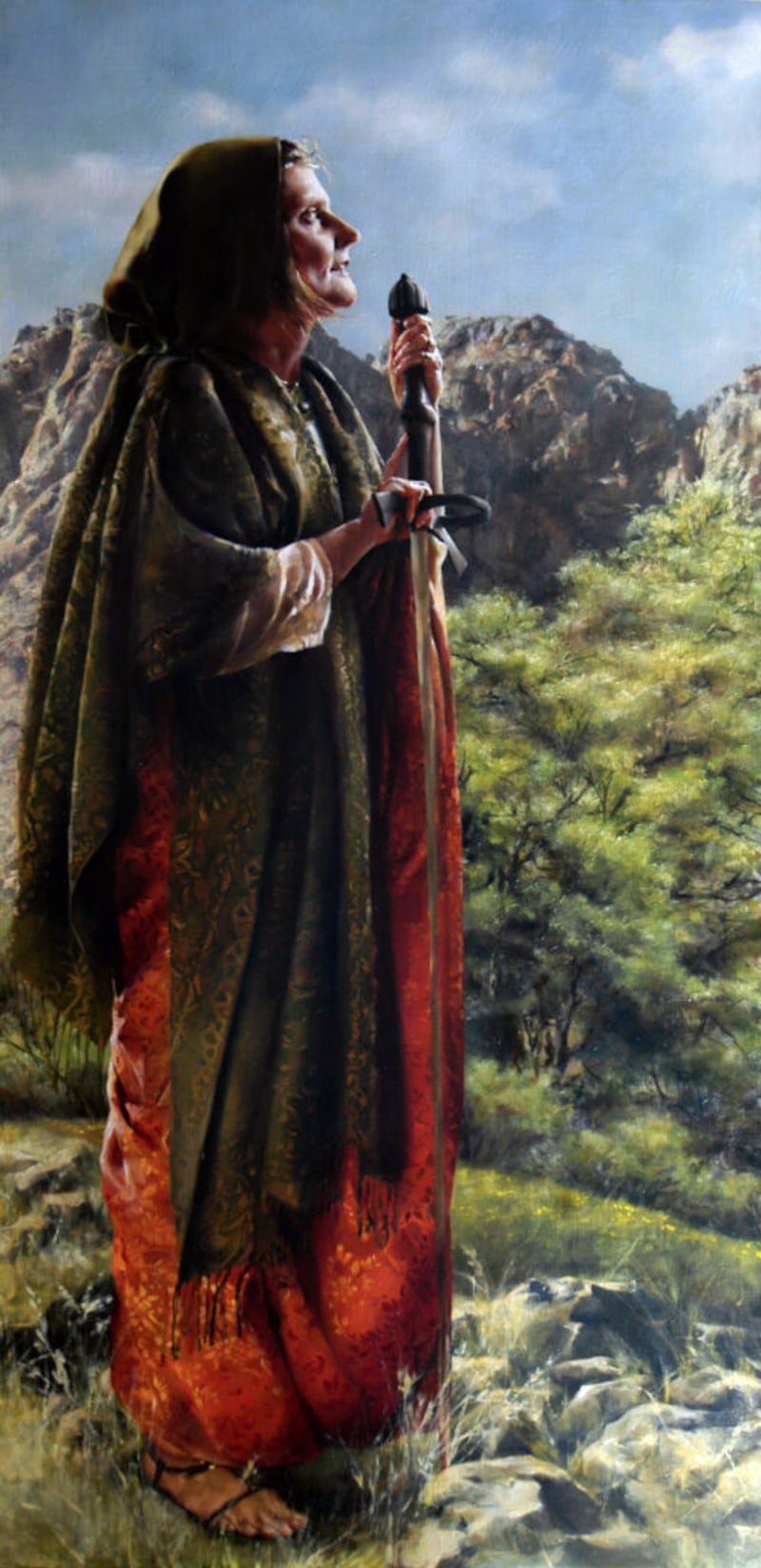
“As I stand here today I remember Deborah, a mother, a poetess, a judge in Israel who rallied her wavering and oppressed countrymen to battle to accomplish the work needed to save the children of the Lord in her day (see Judges 4). Deborah’s greatness lay not in her physical strength but in her moral leadership, in the confidence she inspired that the Lord would aid those who fought for a righteous cause. May we have that same greatness.”
— The late Sister Barbara B. Smith, then the Relief Society general president, in the February 1976 Brigham Young University devotional “America — the Land of Promise”
Judges 6
“I learned in my life that we don’t need to be ‘more’ of anything to start to become the person God intended us to become. God will take you as you are at this very moment and begin to work with you. All you need is a willing heart, a desire to believe and trust in the Lord.
“Gideon saw himself as a poor farmer, the least of his father’s house. But God saw him as a mighty man of valor (see Judges 6:12-16). …
“My dear brothers and sisters, if we look at ourselves only through our mortal eyes, we may not see ourselves as good enough. But our Heavenly Father sees us as who we truly are and who we can become. He sees us as His sons and daughters, as beings of eternal light with everlasting potential and with a divine destiny.”
— President Dieter F. Uchtdorf, then the second counselor in the First Presidency, October 2015 general conference, “It Works Wonderfully!”
“The Lord has a great work for each of us to do. You may wonder how this can be. You may feel that there is nothing special or superior about you or your ability. Perhaps you feel, or have been told, that you are stupid. Many of us have felt that, and some of us have been told that. Gideon felt this when the Lord asked him to save Israel from the Midianites. Gideon said, ‘My family is poor in Manasseh, and I am the least in my father’s house’ (Judges 6:15). He had only 300 men, but with the help of the Lord, Gideon defeated the armies of the Midianites. The Lord can do remarkable miracles with a person of ordinary ability who is humble, faithful and diligent in serving the Lord and seeks to improve himself.”
— The late President James E. Faust, then the second counselor in the First Presidency, October 1995 general conference, “Acting for Ourselves and Not Being Acted Upon”
Judges 7

“Sometimes the task appears overwhelming. We can take fresh courage from the experience of Gideon of old, who, with his modest force, was to do battle with the Midianites and the Amalekites. You will remember how Gideon and his army faced an overwhelming strength of forces vastly superior in equipment and in number. The book of Judges in the Old Testament records that the united enemy, the Midianites and the Amalekites, ‘lay along in the valley like grasshoppers for multitude; and their camels were without number, as the sand by the sea side for multitude’ (Judges 7:12). Gideon went to Almighty God for his strength.
“To his surprise, Gideon was advised by the Lord that his forces were too many in number for the Lord to deliver the enemy into their hands, lest they say, ‘Mine own hand hath saved me’ (Judges 7:2). Gideon was instructed to proclaim to his people: ‘Whosoever is fearful and afraid, let him return and depart … from mount Gilead. And there returned of the people twenty and two thousand; and there remained ten thousand’ (Judges 7:3).
“Then the Lord said, ‘The people are yet too many’ (Judges 7:4). He instructed Gideon to take the men to water to observe the manner in which they should drink of the water. Those who lapped the water were placed in one group, and those who bowed down upon their knees to drink were placed in another. The Lord said unto Gideon, ‘By the three hundred men that lapped will I save you, and deliver the Midianites into thine hand: and let all the other people go every man unto his place’ (Judges 7:7).
“Gideon returned to his forces and said to them, ‘Arise; for the Lord hath delivered into your hand the host of Midian’ (Judges 7:15). Then he divided the 300 men into three companies, and he put a trumpet in every man’s hand, with empty pitchers and lamps within the pitchers. And he said unto them:
“‘Look on me, and do likewise: and, behold, when I come to the outside of the camp, it shall be that, as I do, so shall ye do.
“‘When I blow with a trumpet, I and all that are with me, then blow ye the trumpets also on every side … and say, The sword of the Lord, and of Gideon.’ He then said in effect, ‘Follow me.’ His exact words were, ‘As I do, so shall ye do’ (Judges 7:17-18).”
“At the leader’s signal, the host of Gideon did blow on the trumpets and did break the pitchers and did shout, ‘The sword of the Lord, and of Gideon.’ The scripture records the outcome of this decisive battle: ‘And they stood every man in his place’ (Judges 7:18, 21), and the victory was won.”
— The late President Thomas S. Monson, then the first counselor in the First Presidency, April 2003 general conference, “Stand in Your Appointed Place”
“As if comparative obscurity, smallness as to scale, and ample human imperfection in the membership of His Church were not enough, the Lord wants a humble as well as a pure people. Thus, the lesson taught ancient Israel is still relevant: Only 300 warriors were used by Gideon to triumph over Israel’s enemies, ‘lest Israel vaunt themselves’ (Judges 7:2).”
— The late Elder Neal A. Maxwell, then a member of the Quorum of the Twelve Apostles, October 1984 general conference, “Out of Obscurity”
“Recently I recalled for a wonderful group of great young Latter-day Saints the thrilling story of Gideon of old, humble in the face of a seemingly insuperable challenge but called of God, who, through his resourcefulness and the strength of the Almighty, won a battle. His rallying cry is remembered: ‘The sword of the Lord, and of Gideon’ (Judges 7:18).
“One other line from that marvelous story is so important that I call it to your attention: ‘They stood every man in his own place round about the camp’ (Judges 7:21). The battle was won.”
— The late Elder Marion D. Hanks, then an Assistant to the Council of the Twelve, October 1972 general conference, “Every Man in His Own Place”
Judges 13 and 14
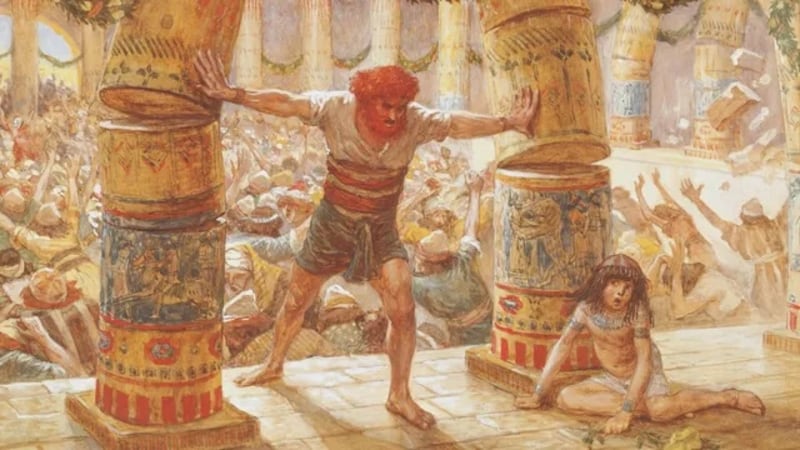
“In the book of Judges in the Old Testament, we learn about Samson. Samson was born with great potential. His mother was promised, ‘He shall begin to deliver Israel out of the hand of the Philistines’ (Judges 13:5). But as Samson grew, he looked more to the world’s temptations than to God’s direction. He made choices because they ‘pleaseth [him] well’ (Judges 14:3) rather than because those choices were right. Repeatedly, the scriptures use the phrase ‘and he went down’ (Judges 14:7) as they tell of Samson’s journeys, actions and choices. Instead of arising and shining forth to fulfill his great potential, Samson was overcome by the world, lost his God-given power and died a tragic, early death.”
— Sister Ann M. Dibb, then the second counselor in the Young Women general presidency, April 2012 general conference, “Arise and Shine Forth”
Judges 16
“The Bible contains excellent examples of men who otherwise would have been great. But when they broke the law of chastity it broke them. For example, Samson, a man of powerful physical strength, with an uncontrollable lust for women, was betrayed by Delilah and finally committed suicide while in chains of bondage to the Philistines (see Judges 16). …
“Men and women cannot defile the fountain of life and reap a fullness of joy. Happiness and purity of heart and mind go hand in hand.”
— The late Elder Milton R. Hunter, then a member of the First Council of the Seventy, April 1971 general conference, “Thou Shalt Not Commit Adultery”
