


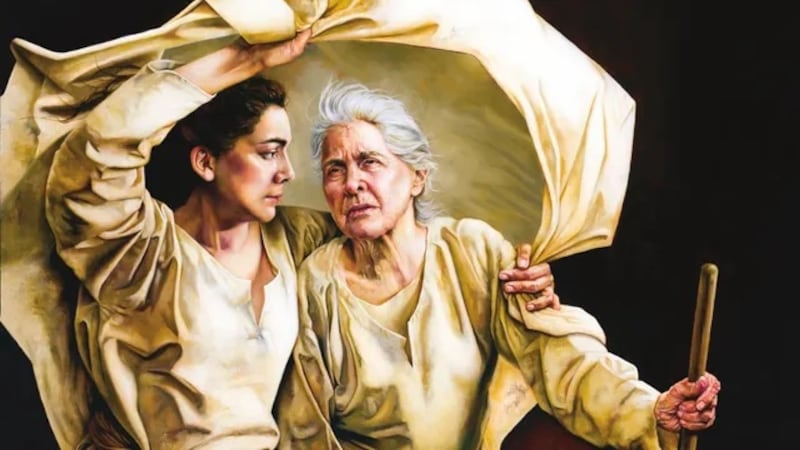

This week’s “Come, Follow Me” study guide covers Ruth and Samuel 1-7, which includes the stories of Ruth, Hannah and Samuel.
Following are a few quotes from past and present leaders of The Church of Jesus Christ of Latter-day Saints and scholars about these chapters of scripture.
Ruth
“A model of ideal womanhood is Ruth. Sensing the grief-stricken heart of her mother-in-law, Naomi — who suffered the loss of each of her two fine sons — feeling perhaps the pangs of despair and loneliness that plagued the very soul of Naomi, Ruth uttered what has become that classic statement of loyalty: ‘Intreat me not to leave thee, or to return from following after thee: for whither thou goest, I will go; and where thou lodgest, I will lodge: thy people shall be my people, and thy God my God’ (Ruth 1:16). Ruth’s actions demonstrated the sincerity of her words.
“Through Ruth’s undeviating loyalty to Naomi, she was to marry Boaz, by which she — the foreigner and Moabite convert — became a great-grandmother of David and, therefore, an ancestor of our Savior, Jesus Christ.”
— The late President Thomas S. Monson, then the first counselor in the First Presidency, October 2002 general conference, “Models to Follow”
“A good example of the kinds of real circumstances good people face in this life can be found in the Old Testament in the very short, five-page book of Ruth. Each time I read it I see something new. Lately I have been thinking of it as a story of conversion, of courage and decision making. It is about another time, another culture, yet it is about us too.
“Naomi and her husband, Elimelech, and their two sons had gone into the enemy country of Moab because there was a great famine in Israel, their home. In due time their sons married Moabite wives, named Orpah and Ruth. Then in a 10-year period, the father and the two sons died. Naomi had heard that the famine had lifted in Judah, and she wanted to return to her people. She counsels her daughters-in-law to return to their mothers’ homes. Naomi called them her daughters and kissed them, and they wept with their love for her. (Now isn’t that quite remarkable? I fail to understand how this clear and well-known record hasn’t had more influence on all the unfunny mother-in-law jokes that abound in the world.) But eventually Orpah decides to stay in Moab, and again Naomi says to Ruth, ‘Behold, thy sister in law has gone back to her people, and unto her gods: return thou after thy sister in law’ (Ruth 1:15).
“At this point, in majestic Hebraic poetry, Ruth announces her decision and confirms her conversion. ‘Intreat me not to leave thee, or to return from following after thee: for whither thou goest, I will go; and where thou lodgest, I will lodge: thy people shall be my people, and thy God my God’ (Ruth 1:16).
“When Naomi, herself realistic and wise, saw Ruth’s steadfastness, she ‘left off speaking to her’ (see Ruth 1:18), which does not mean she stopped talking with her, but that she quit trying to convince her of the difficulties she would face in Israel. Ruth, the Moabitess, would face bigotry, poverty and much insecurity, but she was converted, and she had decided. She and Naomi became a great team, facing together not only the problems before them but the opportunities that would come also.
“In time, Ruth married Boaz, and a child was born to them. ‘And the women said to Naomi, Blessed be the Lord … for thy daughter in law, which loveth thee, which is better to thee than seven sons, hath born [a child].
“‘And Naomi took the child … and became nurse unto it.
“‘And the women her neighbours gave it a name, saying, There is a son born to Naomi; and they called his name Obed: he is the father of Jesse, the father of David’ (Ruth 4:14-17).
“Now that was a kind of a prophecy which is very important to us. In a culture hostile to the leadership of women, these women — Naomi and Ruth — lived to bring about an end the scripture’s writer carefully emphasizes: Obed, the father of Jesse, the father of David, through whose lines, which are carefully detailed for us in the first chapter of Matthew, came Jesus who is called Christ. Would you ever have expected the small book of Ruth to foretell such a great event?
“Ruth confidently met hardships not uncommon in our time — the death of a loved one, loneliness in a new place and the need to work hard for her bread. Her small efforts, linked significantly to a later great event, tell me that each of us can take seriously the importance of our daily lives and decisions as we choose to follow God.”
— The late Sister Aileen H. Clyde, then the second counselor in the Relief Society general presidency, October 1992 general conference, “Confidence through Conversion”
1 Samuel 1

“I testify that God hears our prayers when we pray with faith and sincere hearts. Hannah is a powerful example of this — she went to the house of the Lord to pour out her soul in prayer (see 1 Samuel 1:7, 15). Her deep faith and willingness to keep her covenant were evident. ‘The Lord remembered her’ (1 Samuel 1:19), just as He remembers us, even when it feels otherwise. Yet we must also remember our part: we cannot expect His remembrance if we ignore our part of the covenant. Hannah remained faithful to her covenant and fulfilled her promise by giving Samuel to serve the Lord (see 1 Samuel 1:28).”
— Elder Wayne Maurer, Area Seventy, in the June 2026 Liahona article, “God Hears and Speaks to His Children”
“Faithful daughters of God desire children. … Some women are not given the responsibility of bearing children in mortality, but just as Hannah of the Old Testament prayed fervently for her child (see 1 Samuel 1:11), the value women place on motherhood in this life and the attributes of motherhood they attain here will rise with them in the Resurrection (see Doctrine and Covenants 130:18). Women who desire and work toward that blessing in this life are promised they will receive it for all eternity, and eternity is much, much longer than mortality. There is eternal influence and power in motherhood.”
— Sister Julie B. Beck, then the Relief Society general president, October 2007 general conference, “Mothers Who Know”
1 Samuel 2
“In reflecting on the need to cultivate the virtue of temperance, I am reminded of the words of Hannah, the mother of the prophet Samuel — a woman of remarkable faith who, even after great trials, offered a song of gratitude to the Lord. She said, ‘Talk no more so exceeding proudly; let not arrogancy come out of your mouth: for the Lord is a God of knowledge, and by him actions are weighed’ (1 Samuel 2:3). Her song is more than a prayer — it is a self-addressed invitation to act with humility, self-control and moderation. Hannah reminds us that true spiritual strength is not expressed in impulsive reactions or haughty words but in temperate, thoughtful attitudes aligned with the Lord’s wisdom.”
— Elder Ulisses Soares of the Quorum of the Twelve Apostles, October 2025 general conference, “Adorned with the Virtue of Temperance”
“In 1 Samuel 2:12-17, 22-34, we learn of the evil done by the sons of Eli the priest. They took advantage of their father’s position to break the covenant of the priesthood. They sought to fulfill their lustful desires as they indulged in immoral conduct with female worshippers and as they corruptly took for themselves the meat of the sacrifices of the people of Israel. The Lord pronounced severe judgments against Eli’s sons and against Eli himself for failing to restrain them.
“Such carnal desires can be overcome by a determination to keep our covenants with God… If we are overcome by temptation, the desire to restore our relationship with Heavenly Father will lead us to sincere repentance. The Atonement of the Savior Jesus Christ then helps us to become worthy once again.”
— Elder Joseph W. Sitati, then a General Authority Seventy, in the July 2016 Liahona article, “Honoring God by Honoring Our Covenants”
1 Samuel 3

“We can bring to our children’s attention when they are hearing and feeling the Spirit. Let’s go back in time to the Old Testament to see how Eli did just this for Samuel.
“Young Samuel twice heard a voice and ran to Eli, saying, ‘Here am I.’
“‘I called not,’ responded Eli.
“But ‘Samuel did not yet know the Lord, neither was the word of the Lord yet revealed unto him.’
“By the third time, Eli perceived that the Lord had called Samuel and told Samuel to say, ‘Speak, Lord; for thy servant heareth’ (see 1 Samuel 3:4-10).
“Samuel was beginning to feel, recognize and hearken to the Lord’s voice. But this young boy didn’t start to understand until Eli facilitated this recognition. And having been taught, Samuel could become more familiar with the still, small voice.”
— Sister Mary R. Durham, then the recently released second counselor in the Primary general presidency, April 2016 general conference, “A Child’s Guiding Gift”
“Eli served as the high priest in Israel during the childhood of Samuel the prophet. The scriptures explain that the Lord rebuked him severely ‘because his sons made themselves vile, and he restrained them not’ (1 Samuel 3:13). Eli’s sons never did repent, and all of Israel suffered because of their folly. The story of Eli teaches us that parents who love their children cannot afford to be intimidated by them.”
— Elder Larry R. Lawrence, then a General Authority Seventy, October 2010 general conference, “Courageous Parenting”
“You need to keep your minds clean so you can recognize and respond to the quiet whisperings of the Spirit. Select with care the information you allow to enter your mind. Avoid the cluttered clamor of the world. Television, movies and especially the internet can provide an open window through which you can peer into the far reaches of the world. They can bring to you information that is uplifting, good and inspiring. But if used improperly, these media technologies can fill your mind with such unwholesome thoughts that you will be unable to hear the gentle prompting of the Spirit. Live each day so that you are able to be in tune with the Spirit like the boy prophet Samuel and you are able to respond to the Lord and say, ‘Speak [Lord]; for thy servant heareth’” (1 Samuel 3:10).
— The late Elder Harold G. Hillam, then a General Authority Seventy, April 2000 general conference, “Future Leaders”
1 Samuel 7
“In 1 Samuel 7 we read that the Israelites were under attack by the Philistines. Outnumbered and in fear for their lives, they pled with the prophet Samuel to pray for God’s help. Samuel offered a sacrifice and prayed for protection. In response the Lord smote the Philistines, and they retreated to their territory. This victory is recorded in verse 12: ‘Then Samuel took a stone, and set it between Mizpeh and Shen, and called the name of it Eben-ezer, saying, Hitherto hath the Lord helped us.’
“In Hebrew the word ‘ebenezer’ means ‘stone of help.’ This raised stone was a reminder to the Israelites of what the Lord had done for them. This Eben-ezer quite literally was a monument set to remember the great help that God granted the one raising the stone. The Old Testament is replete with examples of the children of Israel forgetting the many miracles and spiritual experiences given to them by the Lord. …
“Remembering our own spiritual experiences and recognizing that these experiences, given to us by the Lord, have brought us to where each of us is today. In other words, by remembering we are raising our own Ebenezer.”
— Curt Holman, then the associate chair of the Brigham Young University Department of Dance, during his July 2013 BYU devotional, “Raising Your Ebenezer: A Monument to Remember”
