


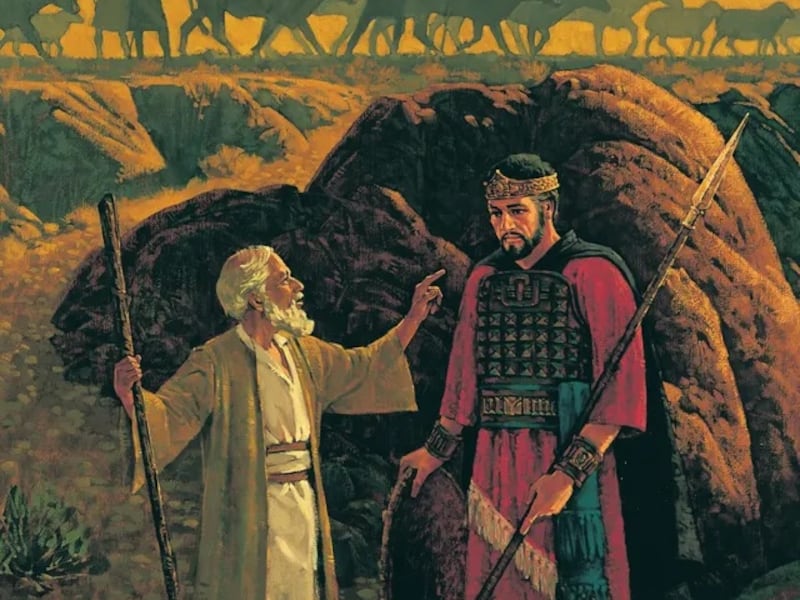

This week’s “Come, Follow Me” study guide covers 1 Samuel 8-10, 13, and 15-16, which includes the story of Saul and the anointing of David to be king of Israel.
Following are a few quotes from past and present leaders of The Church of Jesus Christ of Latter-day Saints and scholars about these chapters of scripture.
1 Samuel 8
“Under the prophet-judge leadership of Samuel, Jehovah smote and ‘thundered with a great thunder’ upon Israel’s enemies (1 Samuel 7:10). Historically, as long as Israel heeded Jehovah’s counsel through His prophets, triumph and prosperity followed.
“But eventually — and this part amazes me — Israel grew weary of Samuel’s judgeship. They considered him and his leadership outdated and behind the times. After all, the elders of Israel told him, ‘thou art old’ (1 Samuel 8:5). And, in their minds, so was the idea of a judge, even if he was also a prophet. It was time to reject ecclesiastical anachronisms and adopt the more fashionable ways of the world. It was time for a king.
“‘Now make us a king to judge us like all the nations,’ they cried (1 Samuel 8:5), with the lesson that we should be careful what we wish for because we are likely to get it. When Samuel prayed about this request, Jehovah told him, ‘They have not rejected thee, but they have rejected me, that I should not reign over them’ (1 Samuel 8:7).
“Of course, as noted above, this wasn’t the first time Israel had shown disdain for Jehovah and His prophets.
“‘According to all the works which they have done since the day that I brought them up out of Egypt even unto this day, wherewith they have forsaken me, and served other gods, so do they also unto thee,’ the Lord told Samuel (1 Samuel 8:8). Then, in a forthright demonstration of justice, the Lord told him to ‘hearken unto their voice’ (1 Samuel 8:9) but to warn the people of the ways of unrighteous kings.
“Obeying, Samuel foretold of abuse of power and threats to family and property. In informing Israel that their wish had been granted, he warned in prophecy:
“‘Ye shall cry out in that day because of your king which ye shall have chosen you; and the Lord will not hear you in that day.
“‘Nevertheless the people refused to obey the voice of Samuel; and they said, Nay; but we will have a king over us;
“‘That we also may be like all the nations; and that our king may judge us, and go out before us, and fight our battles’ (1 Samuel 8:18-20).
“The painful irony here is that they already had a king who went before them and fought their battles. He was Jehovah, King of all, but no longer would they have Jehovah to rule over them. No longer would they have Him to fight their battles. And consistent with the theme of so many history lessons, painful consequences came when it was too late to avoid them. The people later lamented, ‘We have added unto all our sins this evil, to ask us a king’ (1 Samuel 12:19).”
— The late President Jeffrey R. Holland, then a member of the Quorum of the Twelve Apostles, in the June 2022 Liahona article “Choose the Lord and His Prophet”
1 Samuel 10
“Of course, we all have some habits or flaws or personal history that could keep us from complete spiritual immersion in this work. But God is our Father and is exceptionally good at forgiving and forgetting sins we have forsaken, perhaps because we give Him so much practice in doing so. In any case, there is divine help for every one of us at any hour we feel to make a change in our behavior. God gave Saul ‘another heart’ (1 Samuel 10:9). … Clearly the possibility of change and living at a more elevated level has always been one of the gifts of God to those who seek it.”
— The late President Jeffrey R. Holland, then a member of the Quorum of the Twelve Apostles, October 2021 general conference, “The Greatest Possession”
1 Samuel 13
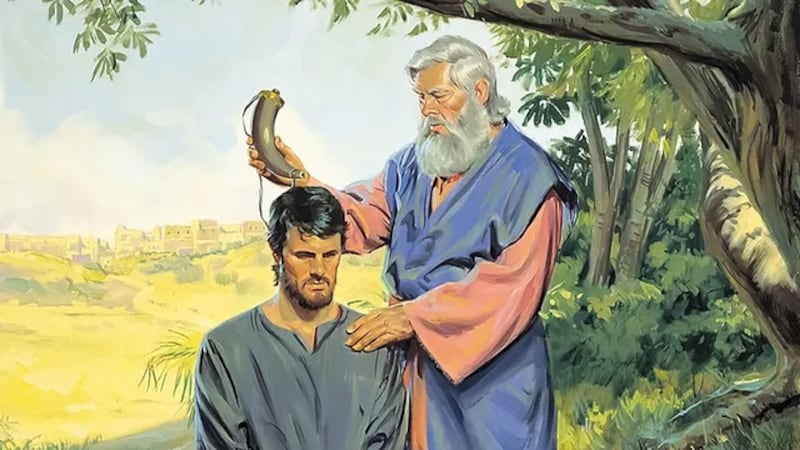
“I testify to you that the promises given by our dear Prophet are the promises given by the Savior Himself. I invite all of us to ‘hear Him’ in every thought and follow Him with all our heart in order to obtain the strength and courage to say ‘no’ and ‘get thee hence’ to all the things that might bring unhappiness into our life. If we do so, I promise that the Lord will send an added measure of His Holy Spirit to strengthen and comfort us and we may become individuals after the Lord’s own heart (see 1 Samuel 13:14).”
— Elder Ulisses Soares of the Quorum of the Twelve Apostles, October 2020 general conference, “Seek Christ in Every Thought”
“When he had the Lord’s help, Saul was a magnificent king. He united Israel and defeated the Ammonites, who had invaded their land. Soon a much greater problem faced him — the Philistines, who had a terrible army with chariots and horsemen ‘and people as the sand which is on the sea shore in multitude’ (1 Samuel 13:5). The Israelites were so terrified of the Philistines that they hid ‘themselves in caves, and in thickets, and in rocks’ (1 Samuel 13:6).
“The young king needed help. The prophet Samuel sent word for him to wait and that he, the prophet, would come and offer sacrifice and seek counsel from the Lord. Saul waited seven days, and still the prophet Samuel had not arrived. Finally, Saul felt he could wait no longer. He gathered the people together and did something he had no priesthood authority to do — he offered the sacrifice himself.
“When Samuel arrived, he was brokenhearted. ‘Thou hast done foolishly,’ he said. If only the new king had endured a little longer and not deviated from the course of the Lord, if only he had followed the revealed order of the priesthood, the Lord would have established his kingdom forever. ‘But now,’ Samuel said, ’thy kingdom shall not continue’ (1 Samuel 13:13-14).
“On that day, the prophet Samuel recognized a critical weakness in Saul’s character. When pressured by outside influences, Saul did not have the self-discipline to stay on course, trust the Lord and His prophet, and follow the pattern God had established. …
“Small errors and minor drifts away from the doctrine of the gospel of Jesus Christ can bring sorrowful consequences into our lives. It is therefore of critical importance that we become self-disciplined enough to make early and decisive corrections to get back on the right track and not wait or hope that errors will somehow correct themselves.”
— President Dieter F. Uchtdorf, then the second counselor in the First Presidency, April 2008 general conference, “A Matter of a Few Degrees”
1 Samuel 15
“We, with Jesus, can walk the path of obedience. It will not always be easy, but let our watchword be the heritage bequeathed us by Samuel: ‘Behold, to obey is better than sacrifice, and to hearken than the fat of rams’ (1 Samuel 15:22). Let us remember that the end result of disobedience is captivity and death, while the reward for obedience is liberty and eternal life.”
— The late President Thomas S. Monson, October 2014 general conference, “Ponder the Path of Thy Feet”
“Contrary to the world’s secular teaching, the scriptures teach us that we do have agency, and our righteous exercise of agency always makes a difference in the opportunities we have and our ability to act upon them and progress eternally.
“For example, through the prophet Samuel, the Lord gave a clear commandment to King Saul: ‘The Lord sent me to anoint thee to be king … : now therefore hearken thou unto the voice … of the Lord. …
“‘Go and smite Amalek, and utterly destroy all that they have’ (1 Samuel 15:1, 3).
“But Saul did not follow the Lord’s commandment. He practiced what I call ‘selective obedience.’ Relying on his own wisdom, he spared the life of King Agag and brought back the best of the sheep, oxen and other animals.
“The Lord revealed this to the prophet Samuel and sent him to remove Saul from being king. When the prophet arrived, Saul said, ‘I have performed the commandment of the Lord’ (1 Samuel 15:13). But the prophet knew otherwise, saying, ‘What meaneth then this bleating of the sheep in mine ears, and the lowing of the oxen which I hear?’ (1 Samuel 15:14).
“Saul excused himself by blaming others, saying the people had kept the animals in order to make sacrifices to the Lord. The prophet’s answer was clear: ‘Hath the Lord as great delight in burnt offerings and sacrifices, as in obeying the voice of the Lord? Behold, to obey is better than sacrifice, and to hearken [to the commandments of the Lord] than the fat of rams’ (1 Samuel 15:22).
“Finally, Saul confessed, saying, ‘I have sinned: for I have transgressed the commandment of the Lord, and thy words: because I feared the people, and obeyed their voice’ (1 Samuel 15:24). Because Saul did not hearken with exactness — because he chose to be selectively obedient — he lost the opportunity and the agency to be king.
“My brothers and sisters, are we hearkening with exactness to the voice of the Lord and His prophets? Or, like Saul, are we practicing selective obedience and fearing the judgments of men?”
— The late Elder Robert D. Hales, then a member of the Quorum of the Twelve Apostles, October 2010 general conference, “Agency: Essential to the Plan of Life”
1 Samuel 16
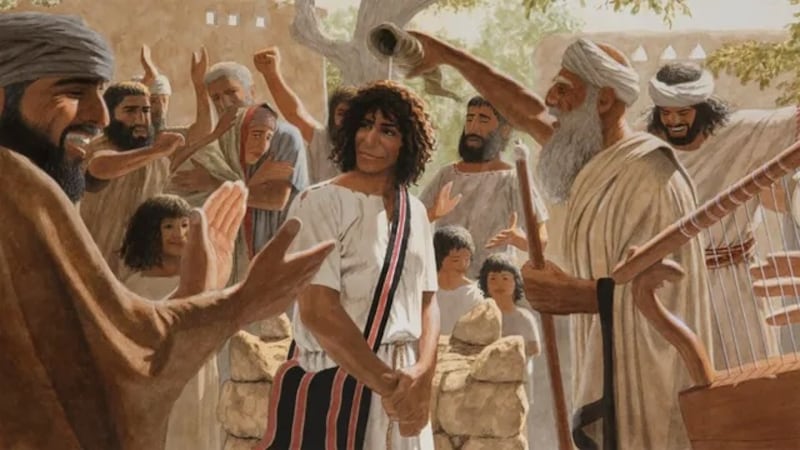
“When commanded to choose the new king of Israel from among the sons of Jesse, the prophet Samuel, upon looking at Jesse’s oldest son, Eliab, exclaimed with enthusiasm, ‘Surely the Lord’s anointed is before him.’ But Eliab was not the Lord’s chosen servant. The Savior warned Samuel: ‘Look not on his countenance, or on the height of his stature; because I have refused him: for the Lord seeth not as man seeth; for man looketh on the outward appearance, but the Lord looketh on the heart’ (1 Samuel 16:6-7).
“While David may not have been physically the strongest or most skilled of his brothers, his heart was strong in the sight of God. He loved God with all his heart and had a deep desire to obey Him. He had unwavering faith in God’s love, power and promised blessings, as he later demonstrated when he fearlessly fought and defeated Goliath with the Lord’s help. This story teaches us that all God needs to accomplish His purposes and to help us become who He wants us to become is for each of us to turn our hearts fully to Him.”
— Elder Ronald M. Barcellos, General Authority Seventy, October 2025 general conference, “The Lord Looketh on the Heart”
“A sense of belonging is important to our physical, mental and spiritual well-being. Yet it is quite possible that at times each of us might feel that we don’t fit in. In discouraging moments, we may feel that we will never measure up to the Lord’s high standards or the expectations of others. We may unwittingly impose expectations on others — or even ourselves — that are not the Lord’s expectations. We may communicate in subtle ways that the worth of a soul is based on certain achievements or callings, but these are not the measure of our standing in the Lord’s eyes. ‘The Lord looketh on the heart’ (1 Samuel 16:7). He cares about our desires and longings and what we are becoming.”
— President D. Todd Christofferson, then a member of the Quorum of the Twelve Apostles, October 2022 general conference, “The Doctrine of Belonging”
“We need to consider that it is not easy to understand all the circumstances that contribute to someone’s attitude or reaction. Appearances can be deceptive and oftentimes do not represent an accurate measurement of someone’s behavior. Unlike you and me, Christ is capable of clearly seeing all facets of a given situation. Even knowing all our weaknesses as He does, the Savior does not rashly condemn us but continues to work with us compassionately over time, helping us to remove the beam from our eye. Jesus always looks on the heart and not on the appearance (see 1 Samuel 16:7).”
— Elder Ulisses Soares of the Quorum of the Twelve Apostles, October 2021 general conference, “The Savior’s Abiding Compassion”
“Walking with the Savior in priesthood service will change the way you look at others. He will teach you to see them through His eyes, which means seeing past an outward appearance and into the heart (see 1 Samuel 16:7). … If you walk with the Savior long enough, you will learn to see everyone as a child of God with limitless potential, regardless of what his or her past may have been. And if you continue walking with the Savior, you will develop another gift He has — the ability to help people see that potential in themselves and so repent.”
— President Henry B. Eyring, first counselor in the First Presidency, April 2017 general conference, “‘Walk With Me’”
