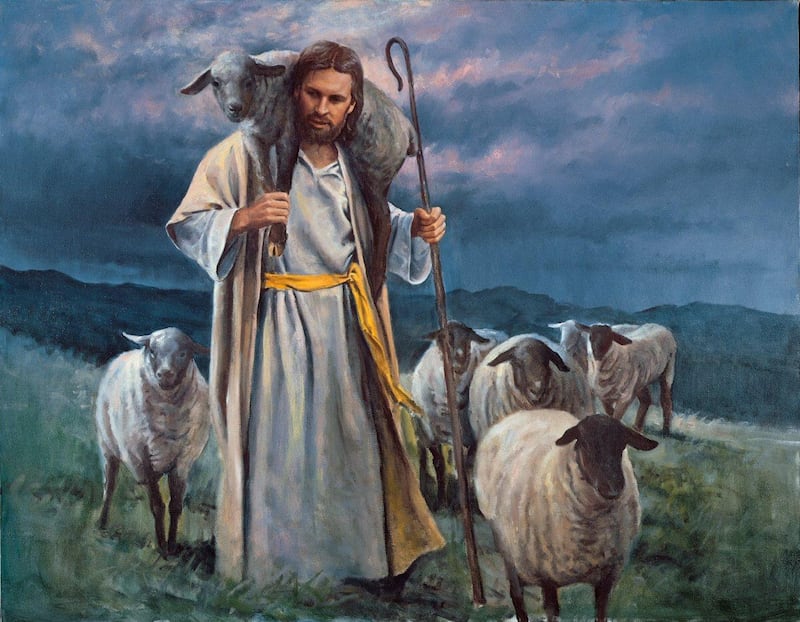

This week’s “Come, Follow Me” study guide covers 1 Samuel 17-18, 24-26 and 2 Samuel 5-7, which includes the story of David and Goliath.
Following are a few quotes from past and present leaders of The Church of Jesus Christ of Latter-day Saints and scholars about these chapters of scripture.
1 Samuel 17
“Another favorite example of God’s protecting care is the shepherd boy David. David had a firm faith in the God of Israel, and that faith gave him great courage.
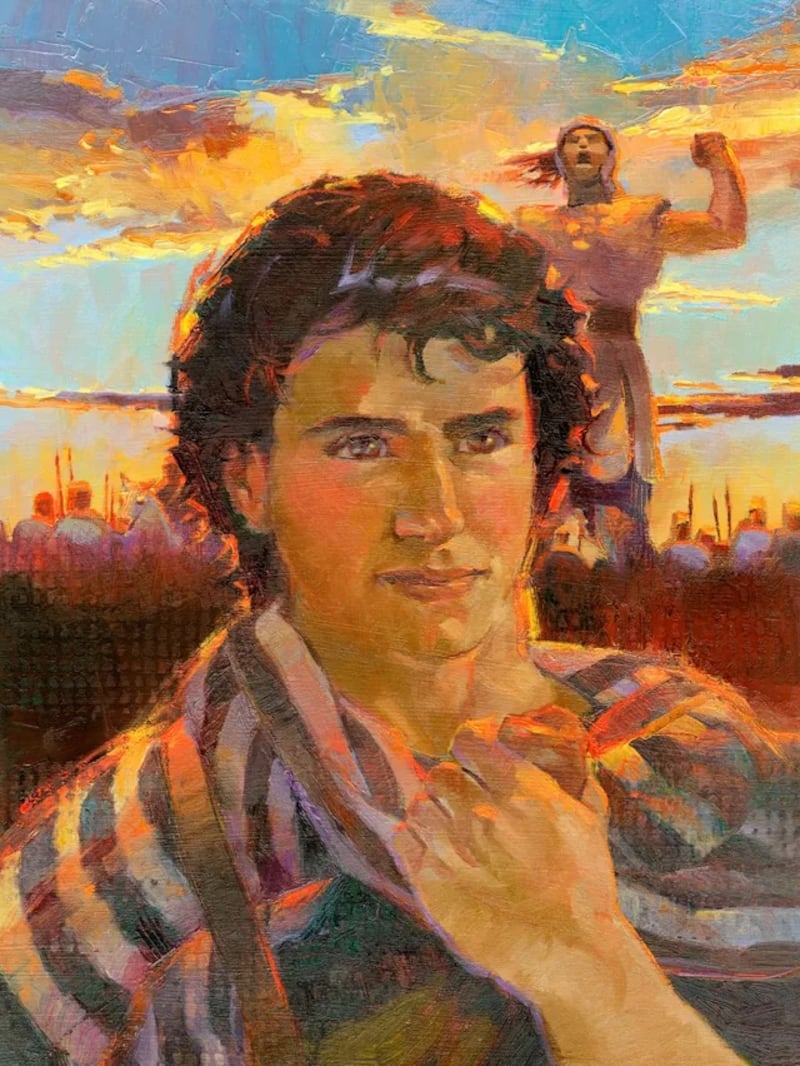
“When the armies of the Philistines were gathered to battle against the Israelites, the mighty Goliath came forward and hurled his challenge to individual combat. King Saul and all Israel ‘were dismayed, and greatly afraid’ (1 Samuel 17:11). Day after day he renewed his challenge, but no one would face him.
“When young David came to the camp of Israel to deliver provisions, he heard Goliath’s roar. In surprise David asked, ‘Who is this uncircumcised Philistine, that he should defy the armies of the living God?’ (1 Samuel 17:26). David asked if he could fight the man. The king refused, saying, ‘Thou art but a youth’ (1 Samuel 17:33). David replied with courage and faith: ‘The Lord that delivered me out of the paw of the lion, … he will deliver me out of the hand of this Philistine’ (1 Samuel 17:37).
“As David went onto the field of battle, Goliath mocked him for his youth, cursed him by his gods, and shouted that he would feed his flesh to the birds and beasts of the field (see 1 Samuel 17:42-44).
“David’s reply is one of the great expressions of faith and courage in all our literature. It thrilled me as a boy, and it still thrills me.
“‘Thou comest to me with a sword, and with a spear, and with a shield: but I come to thee in the name of the Lord of hosts, the God of the armies of Israel, whom thou hast defied.
“‘This day will the Lord deliver thee into mine hand; and I will smite thee, and take thine head from thee; and I will give the carcases of the host of the Philistines this day unto the fowls of the air, and to the wild beasts of the earth; that all the earth may know that there is a God in Israel.
“‘And all this assembly shall know that the Lord saveth not with sword and spear: for the battle is the Lord’s, and he will give you into our hands’ (1 Samuel 17:45-47).
“You all know what happened next. David stunned the Philistine with a sling-stone and cut off his head with his own sword. Frightened by the fall of their champion, the Philistines fled. Shouting in triumph, the armies of Israel pursued them and won a great victory.
“Countless young people have been inspired by this marvelous instruction in righteousness. At times all of us must stand against those who mock and revile. Some of us, sometime, will face some earthly power as mighty as Goliath. When that happens, we should emulate the courage of David, who was mighty because he had faith and he went forth in a righteous cause in the name of the Lord of Hosts.”
— President Dallin H. Oaks, then a member of the Quorum of the Twelve Apostles, October 1992 general conference, “Bible Stories and Personal Protection”
1 Samuel 18
“Now, my young brothers, remember that every David has a Goliath to defeat, and every Goliath can be defeated. He may not be a bully who fights with fists or sword or gun. He may not even be flesh and blood. He may not be nine feet tall; he may not be armor-protected, but every boy has his Goliaths. And every boy has his sling, and every boy has access to the brook with its smooth stones.
“You will meet Goliaths who threaten you. Whether your Goliath is a town bully or is the temptation to steal or to destroy or the temptation to rob or the desire to curse and swear; if your Goliath is the desire to wantonly destroy or the temptation to lust and to sin, or the urge to avoid activity, whatever is your Goliath, he can be slain. But remember, to be the victor, one must follow the path that David followed: ‘David behaved himself wisely in all his ways; and the Lord was with him’ (1 Samuel 18:14).”
— The late President Spencer W. Kimball, then the president of the Church, October 1974 general conference, “The Davids and the Goliaths”
1 Samuel 24
“The part of the story I want to focus on is the part where Saul, hearing that David was in the wilderness, ‘took three thousand chosen men out of all Israel, and went to seek David and his men upon the rocks of the wild goats’ (1 Samuel 24:1-2). This is the part where David and his men were hidden in the very cave into which Saul entered to take a nap. And the men of David said unto him, ‘Behold the day of which the Lord said unto thee, Behold, I will deliver thine enemy into thine hand, that thou mayest do to him as it shall seem good unto thee’ (1 Samuel 24:4)
“Now, under these circumstances, what thoughts might have passed through David’s head? It was obvious to him that Samuel, and the Lord, had rejected Saul, that Saul was a belligerent and mean-spirited man whose principal activity was to hunt David for his life, that the people of Israel loved David, that David was their hero, and, most of all, that he, David, had been selected by God and anointed by the prophet to replace Saul as king.
“So what did David do? The record tells us that he crept quietly forth and cut off the skirt of Saul’s robe. And when Saul rose up out of the cave and departed, David let him go a safe distance and then called after him, holding up the skirt of the robe, saying, ‘My lord the king. And when Saul looked behind him, David stooped with his face to the earth, and bowed himself’ (1 Samuel 24:8).
“Then, realizing what had happened, how his life had been in the hands of David and that David had spared him and was at that moment kneeling before him, ‘Saul lifted up his voice, and wept’ (1 Samuel 24:16).
“Now, are we not impressed with the conduct of David? Under the circumstances, has he not acted admirably? But wait. There are two more verses that we must read.
“‘And it came to pass afterward, that David’s heart smote him, because he had cut off Saul’s skirt.
“‘And he said unto his men, The Lord forbid that I should do this thing unto my master, the Lord’s anointed, to stretch forth mine hand against him, seeing he is the anointed of the Lord’ (1 Samuel 24:5-6).
“When I consider this story and the admirable perspective and actions of David, I am awed. I cannot think of another account that compares to this one as an example of honoring an anointed servant of the Lord, even when that servant, by any accounting, did not appear worthy of it.”
— R. Kent Crookston, then the dean of the College of Biology and Agriculture at Brigham Young University, in his March 2001 BYU devotional, “The Natural Law of Blessings”
1 Samuel 25
“The book of 1 Samuel includes a lesser-known story of David, the future king of Israel, and a woman named Abigail.
“After Samuel’s death, David and his men went away from King Saul, who sought David’s life. They provided watchcare for the flocks and servants of a wealthy man named Nabal, who was mean-spirited. David sent 10 of his men to salute Nabal and request much-needed food and supplies.
“Nabal responded to David’s request with insult and sent his men away empty-handed. Offended, David prepared his men to go up against Nabal and his household, saying, ‘He hath requited me evil for good’ (1 Samuel 25:21). A servant told Abigail, Nabal’s wife, about her husband’s ill treatment of David’s men. Abigail quickly gathered the needed food and supplies and went to intercede.
“When Abigail met him, she ‘fell before David on her face, and bowed herself to the ground,
“‘And fell at his feet, and said, Upon me, my lord, upon me let this iniquity be. …
“‘Now therefore, … the Lord hath withholden thee from coming to shed blood, and from avenging thyself with thine own hand. …
“‘Now this blessing which thine handmaid hath brought unto my lord, let it even be given unto the young men. …
“‘I pray thee, forgive the trespass of thine handmaid. …
“‘And David said to Abigail, Blessed be the Lord God of Israel, which sent thee this day to meet me:
“‘And blessed be thy advice, and blessed be thou, which hast kept me this day from coming to shed blood, and from avenging myself with mine own hand. …
“‘So David received of her hand that which she had brought him, and said unto her, Go up in peace to thine house; … I have hearkened to thy voice, and have accepted thy person’ (1 Samuel 25:23-24, 26-28, 32-33, 35).
“They both departed in peace. In this account, Abigail can be seen as a powerful type or symbol of Jesus Christ. Through His atoning sacrifice, He can release us from the sin and weight of a warring heart and provide us with the sustenance we need.
“Just as Abigail was willing to take Nabal’s sin upon herself, so did the Savior — in an incomprehensible way — take upon Him our sins and the sins of those who have hurt or offended us. In Gethsemane and on the cross, He claimed these sins. He made a way for us to let go of a vengeful heart. That ‘way’ is through forgiving — which can be one of the most difficult things we ever do and one of the most divine things we ever experience. On the path of forgiveness, Jesus Christ’s atoning power can flow into our lives and begin to heal the deep crevasses of the heart and soul.”
— Sister Kristin M. Yee, second counselor in the Relief Society general presidency, October 2022 general conference, “Beauty for Ashes: The Healing Path of Forgiveness”
1 Samuel 26
“The book of Proverbs is filled with advice on mistakes or errors, and the word most frequently applied to the person who fails to behave appropriately in these areas is ‘fool.’ Our dictionary defines a fool as a person lacking in judgment or prudence. A fool is a fool, not a sinner. … The Old Testament’s usage of the word fool is evident in Saul’s confession: ‘I have played the fool, and have erred exceedingly’ (1 Samuel 26:21).”
— President Dallin H. Oaks, then a member of the Quorum of the Twelve Apostles, in his August 1994 Brigham Young University devotional, “Sins and Mistakes”
2 Samuel 6

“The Old Testament story of Uzzah is instructive. David had just been anointed king of Israel and was transporting the ark of the covenant to Jerusalem. The ark was the symbol of God’s presence, of His glory and majesty. When first given to Israel, the ark was placed in the Holy of Holies in the tabernacle, and only the high priest could approach it — and then only on the Day of Atonement. When transporting the ark, the priests were required to use poles running through rings on the sides to carry it.
“As the ark crossed Nachon’s threshing floor, it became unstable — ‘for the oxen shook it’ — and ‘Uzzah put forth his hand to the ark of God’ to steady it (2 Samuel 6:6). The punishment was swift and severe: ‘God smote him there for his error; and there he died by the ark of God’ (2 Samuel 6:7).
“The symbolism for today is obvious: Don’t steady the ark. Only the Lord and those He appoints — the First Presidency — are allowed to steady or lead the Church. Only those who hold the keys are permitted to ‘touch the ark.’”
— Elder Kevin S. Hamilton, then a General Authority Seventy, during his January 2023 Brigham Young University devotional, “Why a Church?”
2 Samuel 7
The third part of the threefold office of Christ is king. Of the three, this is probably the Savior’s best-known title. … His mortal claims to kingship are due to both His earthly parents being descendants of King David, for it was prophesied by Samuel that one of David’s descendants would rule over God’s everlasting kingdom (see 2 Sam. 7:12-16). Like David, this Messiah would be a shepherd king who would save Israel.”
— John P. Hoffman, professor in the Brigham Young University Department of Sociology, during his May 2012 BYU devotional, “Prophet, Priest, and King”